Quick Answer: Does a Toyota Electric Highlander Exist Yet?
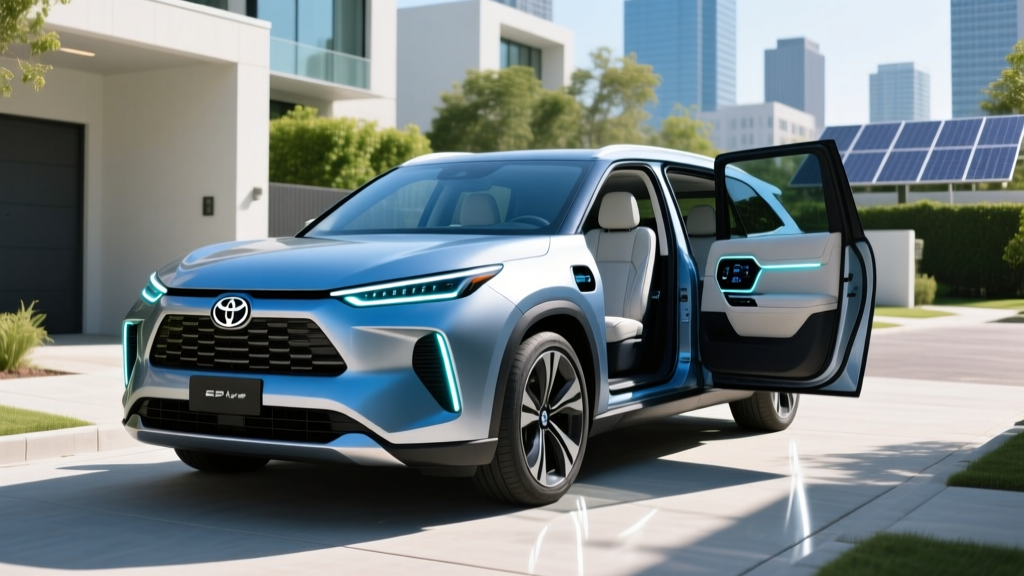
As of early 2026, Toyota has not yet released or officially detailed a fully electric Highlander. The current Highlander lineup remains a conventional hybrid (HEV) and the Grand Highlander Hybrid. Toyota has announced a broad EV expansion including multiple 3-row SUVs built on its e-TNGA platform, and an electric Highlander successor is widely expected to arrive for the 2027 or 2028 model year. If you need a 3-row EV SUV today, alternatives like the Kia EV9 (300 mi EPA, ~$54,900), Hyundai Ioniq 9, or Rivian R1S are already on sale. This guide covers what we know about Toyota's electric 3-row plans, how it would compare to the gas/hybrid Highlander, and what ownership costs would look like based on Toyota's existing bZ platform data.
Toyota's Electric 3-Row SUV Plans: What We Know
Toyota has committed to launching 30 battery electric models globally by 2030, with a significant push into the North American SUV market. The automaker's current EV offering, the bZ4X, is a compact crossover with 252 miles of EPA range and a 71.4 kWh battery. A larger, 3-row electric SUV would logically extend this platform or use Toyota's next-generation EV architecture announced in 2023.
Here's what industry analysis and Toyota's own roadmap suggest for an electric Highlander or equivalent 3-row EV:
| Attribute | Estimated Spec | Basis |
|---|---|---|
| EPA Range | 280–320 mi | bZ4X efficiency scaled to larger pack |
| Battery Capacity | 90–105 kWh (usable) | Competitive with EV9's 99.8 kWh |
| Chemistry | NMC (likely), LFP possible for base | Toyota's bipolar LFP development |
| Peak DC Fast Charge | 150–180 kW | bZ4X peaks at 150 kW |
| 10–80% Charge Time | ~28–35 min (est.) | bZ4X does 10-80% in ~30 min |
| Drivetrain | AWD (dual motor) standard or optional | Toyota's e-TNGA AWD architecture |
| Horsepower | 300–380 hp | Competitive segment output |
| 0–60 mph | 5.5–6.5 sec | Weight and power estimates |
| Seating | 7 or 8 passengers | Highlander tradition |
| Base MSRP (est.) | $48,000–$55,000 | Segment positioning vs. EV9/Ioniq 9 |
Important caveat: All figures above are estimates based on Toyota's existing EV platform performance, competitive positioning, and industry reporting. Final specs will not be confirmed until Toyota makes an official announcement. Toyota's bZ4X has drawn criticism for charging speeds and real-world range falling short of estimates — the company will need to show significant improvement in a larger, heavier 3-row vehicle.
Electric vs. Hybrid Highlander: The Numbers That Matter
For buyers currently cross-shopping the existing Toyota Highlander Hybrid against a future electric version, here's how the economics and practicality compare:
| Factor | 2025 Highlander Hybrid AWD | Electric Highlander (Projected) |
|---|---|---|
| Base MSRP | ~$42,820 | ~$50,000–$55,000 |
| EPA Combined | 35 MPG | ~90–100 MPGe (est.) |
| Fuel/Energy Cost (15k mi/yr) | ~$1,950/yr (gas at $3.50/gal) | ~$650–$900/yr (home charging at $0.14/kWh) |
| Annual Maintenance | ~$450–$600 | ~$150–$250 (no oil, fewer fluids) |
| Federal Tax Credit | None (HEV) | Up to $7,500 (if §30D eligible) |
| 5-Year Energy + Maint. Cost | ~$12,000–$13,500 | ~$4,000–$6,000 |
| Refueling/Recharging Time | 5 min at gas station | 30 min DC fast / 8–10 hr Level 2 home |
| Cold-Weather Range Loss | ~10–15% MPG drop | ~20–30% range loss |
The hybrid Highlander remains a strong choice for buyers without reliable home charging access or those who frequently tow (the hybrid is rated for 5,000 lbs). The electric version would deliver significantly lower running costs — potentially saving $6,000–$8,000 over five years in fuel and maintenance — but requires a higher upfront investment and charging infrastructure.
Real-World Ownership: What First-Time EV Buyers Must Know
If you've never owned an EV, the transition involves more than just plugging in. Here are the practical realities that will shape your daily experience with any 3-row electric SUV, including a future Toyota:
Home Charging Is Non-Negotiable for Convenience
Public-only EV ownership is possible but adds friction. A Level 2 home charger (240V, 32–48 amps, delivering 7.7–11.5 kW) will fully replenish a ~100 kWh battery overnight in roughly 9–12 hours. Installation costs typically run $800–$2,500 depending on your electrical panel's capacity. If your home has a 200-amp panel with spare capacity, expect the lower end. A panel upgrade to 200A can add $1,500–$3,500.
Without home charging, you'll rely on public DC fast chargers, where costs range from $0.30–$0.55/kWh — potentially erasing much of the fuel-cost advantage over a hybrid. Plan your charging access before committing to an EV purchase.
Real-World Range vs. EPA Stickers
Toyota's bZ4X has shown that real-world range can fall notably below EPA estimates, particularly in cold weather or at sustained highway speeds. A 3-row electric SUV with a projected 300-mile EPA rating should realistically be expected to deliver:
- Highway driving (70+ mph, mild weather): ~250–270 miles
- Mixed driving, moderate temps: ~270–290 miles
- Cold weather (below 30°F): ~210–240 miles
- Cold weather + highway: ~190–220 miles
This matters for road trips. A 400-mile journey would require one 25–35 minute DC fast-charge stop in mild conditions, but potentially two stops in winter. Toyota will need to equip the vehicle with battery preconditioning — warming the pack before arriving at a charger — to achieve advertised charge speeds. The bZ4X lacked robust preconditioning at launch, which hurt real-world charging performance.
Charging Curve Realities
When manufacturers advertise "150 kW peak charging," that rate only applies at low state-of-charge (typically 10–30%). Above 60%, charging speed tapers significantly to protect battery health. Expect a ~100 kWh pack to charge at:
- 10–40% SoC: near peak rate (150–180 kW)
- 40–60% SoC: ~100–120 kW
- 60–80% SoC: ~60–80 kW
- 80–100% SoC: ~20–40 kW (trickle)
This is why the 10–80% metric matters more than peak kW. A 30-minute 10–80% charge is usable for road-trip stops; charging to 100% at a DC fast charger wastes time and accelerates battery wear.
Federal Tax Credit Eligibility: Current §30D Rules
If Toyota launches an electric Highlander, the $7,500 federal tax credit under IRS §30D could substantially reduce the effective purchase price. However, eligibility is far from guaranteed and depends on several factors that change annually:
§30D Tax Credit Eligibility Checklist (2026 Rules)
- MSRP Cap: SUVs/vans/pickups must be ≤$80,000 MSRP (likely met)
- Buyer Income Cap: AGI ≤$300,000 (joint), $225,000 (head of household), $150,000 (single)
- Final Assembly: Must be assembled in North America
- Battery Component Sourcing: Increasing percentages must be manufactured in the US or FTA-partner countries (phases up annually)
- Critical Minerals: Increasing percentages must be sourced from US or FTA partners
- FEOC Restriction: No battery components from Foreign Entities of Concern (China, Russia, etc.) — this has disqualified several competitors
- Point-of-Sale Transfer: Eligible buyers can apply the credit as an immediate dealer discount rather than waiting for tax filing
Rules are subject to change. Always verify current eligibility on IRS.gov and consult a tax professional before purchasing.
Toyota's battery supply chain has historically relied on Japanese manufacturing (Panasonic partnership). Whether a US-built electric Highlander would meet the increasingly strict sourcing requirements is uncertain and will depend on where Toyota establishes battery cell production for this model.
Cost of Ownership: 5-Year Breakdown
| Cost Category | Highlander Hybrid AWD | Electric Highlander (Proj.) |
|---|---|---|
| Purchase Price (base) | $42,820 | $52,000 |
| Federal Tax Credit | $0 | –$7,500 (if eligible) |
| Effective Purchase | $42,820 | $44,500 |
| Home Charger Install | $0 | $1,500 |
| Fuel/Energy (5 yr, 75k mi) | $9,750 | $3,750 |
| Maintenance (5 yr) | $2,500 | $1,000 |
| Insurance (5 yr, est.) | $7,500 | $8,500 |
| Total 5-Year Cost | $62,570 | $59,250 |
The electric Highlander could break even with the hybrid within 3–4 years if the buyer qualifies for the full tax credit and charges primarily at home. Without the credit or with heavy reliance on paid public charging ($0.40+/kWh), the payback period extends to 6+ years, and the hybrid becomes the more economical choice.
Insurance for EVs tends to run 10–20% higher than equivalent gas/hybrid models due to higher repair costs and battery replacement risk. Get quotes from your insurer before committing.
Common Misconceptions About Toyota EVs
| Misconception | Reality |
|---|---|
| "Toyota doesn't make EVs" | The bZ4X has been on sale since 2023. Toyota is expanding its EV lineup, just more slowly than some competitors. |
| "EV batteries need replacing every 5 years" | Modern EV batteries are warrantied for 8 years/100,000 miles (federal minimum). Real-world degradation data shows most packs retain 85–90% capacity at 100k miles. Toyota's hybrid battery track record (Prius packs lasting 200k+ mi) suggests strong longevity engineering. |
| "A 3-row EV can't tow" | The Kia EV9 tows up to 5,000 lbs, and the Rivian R1S tows 7,700 lbs. Towing does reduce range by 30–50%, but capability exists. Toyota's truck heritage suggests competitive tow ratings. |
| "I'll save $7,500 on any new EV" | The §30D credit has strict sourcing, income, MSRP, and assembly requirements. Many EVs on sale in 2026 qualify for only partial credit or none at all. Always verify before purchasing. |
| "Charging takes too long for road trips" | A 10–80% DC fast charge in 25–30 minutes aligns with a typical rest/food stop. Most EV road-trippers charge once every 2.5–3 hours of driving, which matches recommended break intervals. |
Decision Framework: Should You Wait or Buy Now?
If-Then Decision Guide
Wait for the Toyota Electric Highlander if:
- You have home charging (or can install it) and drive under 300 miles daily
- You're loyal to Toyota's reliability record and dealer network
- Your current vehicle has 1–2 years of life left
- You want Toyota Safety Sense integrated with a dedicated EV platform
- You expect to qualify for the full $7,500 federal credit at purchase time
Buy a 3-row EV now (Kia EV9, Hyundai Ioniq 9, Rivian R1S) if:
- You need a 3-row EV within the next 6 months
- You want proven specs, reviews, and real-world range data today
- You're comfortable with non-Toyota service networks
- The Kia EV9's 300-mile EPA range and ~18-minute 10–80% DC charging meet your needs
Stick with the Highlander Hybrid if:
- You lack home charging and don't want to install it
- You regularly drive in extreme cold (below 10°F) with long distances between stops
- You tow heavy loads frequently (5,000+ lbs) and can't afford 40% range reduction
- You live in an area with sparse DC fast-charging infrastructure
- Your budget is firm at $40,000–$45,000 and you can't absorb the EV premium
Frequently Asked Questions
Will Toyota make an electric Highlander?
Toyota has announced plans for 30 EVs by 2030 and has confirmed multiple 3-row SUVs for North America. While not officially named "Electric Highlander," a 3-row electric SUV in the Highlander's size and price class is highly probable for the 2027–2028 timeframe. Toyota has not released official specs as of early 2026.
How much will the Toyota electric 3-row SUV cost?
Based on competitive positioning against the Kia EV9 (~$54,900 base), Hyundai Ioniq 9, and the current Highlander Hybrid ($42,820), expect a starting MSRP in the $48,000–$55,000 range. Higher trims with larger batteries and AWD could reach $60,000–$65,000.
What range should I expect from a 3-row Toyota EV?
With a projected 90–105 kWh battery and Toyota's efficiency tuning, expect an EPA rating of 280–320 miles. Real-world highway range will likely be 250–270 miles in mild weather and 210–240 miles in cold conditions. These are estimates pending official data.
Can I get the $7,500 tax credit on a Toyota electric SUV?
It depends on the vehicle's battery sourcing, your income, and the MSRP. Toyota's battery supply chain has historically involved Japanese manufacturing. Whether a US-assembled electric Highlander will meet the critical-mineral and battery-component requirements under §30D is uncertain. Check IRS.gov for the current qualifying vehicle list when the model launches.
How does the Toyota electric SUV compare to the Kia EV9?
The EV9 is already on sale with a 99.8 kWh battery, 300-mile EPA range (LR RWD), 201 kW peak DC charging, and 10–80% in approximately 18 minutes. A Toyota competitor would need to match or exceed these specs to be competitive. Toyota's advantages would likely include its dealer network, projected long-term reliability, and potentially more conservative (achievable) EPA estimates.
Is a hybrid Highlander better than waiting for the EV?
If you need a vehicle now, lack home charging, or regularly drive in conditions that hurt EV range (extreme cold, heavy towing, remote areas), the Highlander Hybrid at 35 MPG combined is an excellent, proven choice. If you can wait 1–2 years, have home charging, and want lower running costs, the EV version will likely save you money over 5+ years of ownership.