The Short Answer: Cybertruck Color Options for 2026
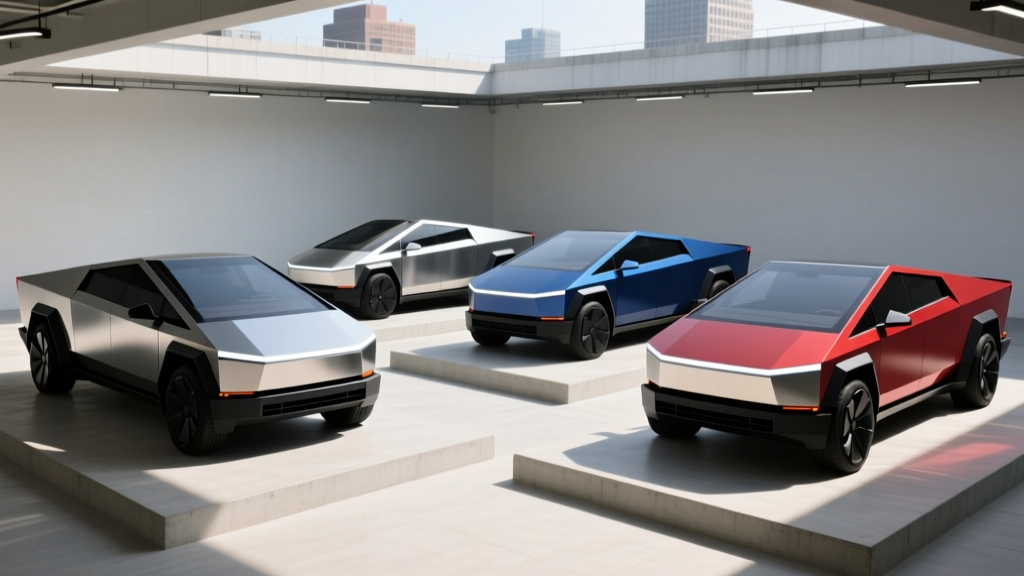
If you're asking what colors does the Cybertruck come in, the honest answer is simpler—and more complicated—than you might expect. From the factory, every Tesla Cybertruck rolls off the line in the same unpainted ultra-hard 30X cold-rolled stainless steel exoskeleton. There is no traditional automotive paint on the body panels. However, Tesla offers several factory-installed color wraps and has introduced limited painted editions, giving buyers more visual variety than the raw steel look alone.
Here's the full breakdown of how to get color onto a Cybertruck in 2026, followed by the complete range, charging, pricing, and ownership specs you need before ordering.
Factory Color Options: Steel, Wraps, and Painted Editions
Tesla's approach to Cybertruck color is unconventional because the stainless steel skin serves as both structure and finish. Here's what's available:
1. Raw Stainless Steel (Standard, No-Cost)
The default finish is the brushed, industrial-grade stainless steel. It's dent-resistant (Tesla claims it can withstand 9mm handgun rounds in testing) and requires no paint booth in manufacturing. The downside: it shows fingerprints, water spots, and fine scratches readily. Owners report that bird droppings and tree sap can etch the surface if not removed quickly.
2. Tesla Factory Color Wraps
Tesla offers several factory-installed vinyl wraps at the point of purchase. As of early 2026, the available wrap colors include:
- Satin Black — the most popular option, gives a stealth-military aesthetic
- Satin White — high contrast against the angular geometry
- Satin Gray / Stealth Gray — a subtle, monochrome look
- Satin Forest Green — introduced late 2025, limited availability
- Satin Blue — added to the configurator in early 2026
Factory wraps typically cost $3,000–$4,500 depending on the color and are installed before delivery. They come with a limited warranty against peeling and bubbling but are not covered under the vehicle's paint warranty since they are vinyl.
3. Aftermarket Wraps and Paint Protection Film (PPF)
Because the stainless steel is unpainted, many owners opt for aftermarket full-body PPF or custom vinyl wraps. A quality full-body wrap from a reputable installer runs $5,000–$8,000, while PPF (which preserves the steel look while adding protection) costs $4,000–$7,000. The Cybertruck's angular panels and large flat surfaces actually make wrapping somewhat easier than on curved vehicles, but the sheer surface area drives cost.
4. Limited Painted Editions
Tesla has released small batches of painted Cybertrucks for special events and foundation-series early buyers. These are not standard configurator options. If Tesla expands painted offerings in the future, they would likely carry a significant upcharge given the manufacturing complexity of painting stainless steel.
Cybertruck Specs: Range, Battery, and Efficiency
Color choices are subjective, but the numbers that determine whether the Cybertruck fits your life are not. Here are the core specifications for the current 2026 lineup:
| Spec | AWD (Dual Motor) | Cyberbeast (Tri Motor) |
|---|---|---|
| EPA Range | 340 miles | 320 miles |
| Battery (usable) | ~123 kWh (NMC) | ~123 kWh (NMC) |
| 0-60 mph | 3.9 seconds | 2.6 seconds |
| Horsepower | 600 hp | 845 hp |
| Drivetrain | Dual-Motor AWD | Tri-Motor AWD |
| MPGe (combined) | ~60 MPGe | ~56 MPGe |
| Efficiency | ~56 kWh/100 mi | ~60 kWh/100 mi |
| Towing Capacity | 11,000 lbs | 11,000 lbs |
| Payload | 2,500 lbs | 2,500 lbs |
The battery pack uses NMC (nickel manganese cobalt) chemistry, which provides higher energy density than LFP but is more sensitive to sustained high states of charge. Tesla recommends daily charging to 80% for NMC packs and 100% only when needed for long trips. Source: Tesla Cybertruck Design Page.
Charging Speed: DC Fast, Level 2, and the 48-Volt Architecture
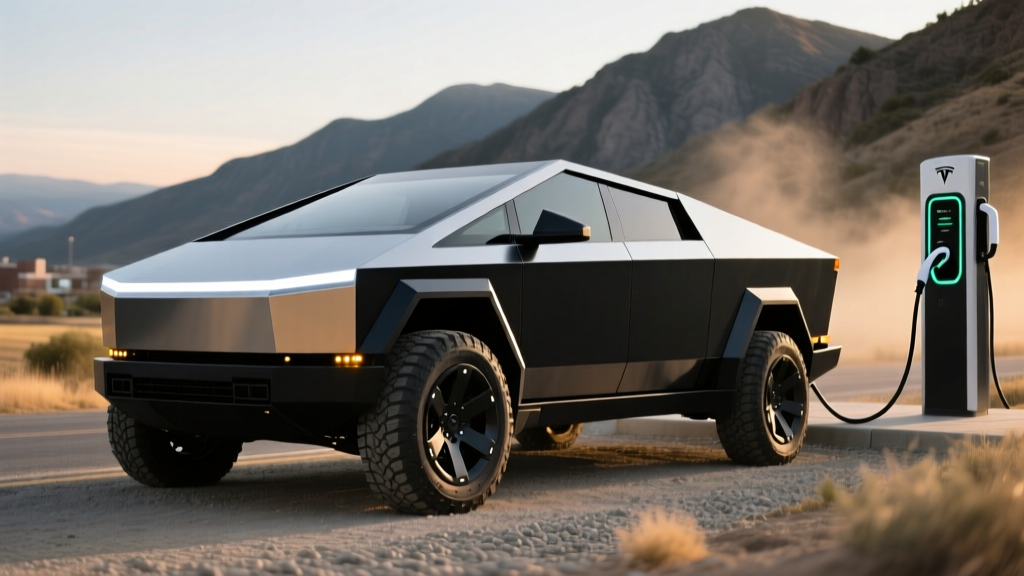
The Cybertruck runs on Tesla's 800-volt architecture, which enables faster charging and more efficient power delivery than older 400V platforms. Here's what that translates to in practice:
| Charging Level | Power | Speed (approx.) | Notes |
|---|---|---|---|
| Level 1 (120V) | ~1.4 kW | ~3 mi/hr | Emergency only; full charge takes days |
| Level 2 (240V, 48A) | ~11.5 kW | ~25 mi/hr | Overnight home charging; ~13 hrs for 10-100% |
| DC Fast (V4 Supercharger) | Peak 350 kW | ~15 min (10-80%) | Sustained rate tapers above 60% SoC |
Charging curve reality: The Cybertruck can peak at 350 kW on Tesla's latest V4 Superchargers, but that peak is brief. The charge curve tapers significantly above 60% state of charge, and charging from 80% to 100% can take nearly as long as 10% to 80%. For road trips, plan stops around the 10-80% window to minimize time at the charger.
The Cybertruck uses the NACS (North American Charging Standard) connector natively, meaning it accesses the full Tesla Supercharger network without adapters. It can also use CCS stations via adapter, though at reduced speeds on many networks.
Pricing, Trims, and Federal Tax Credit Eligibility
| Trim | Base MSRP | §30D Tax Credit | Effective Price* |
|---|---|---|---|
| AWD (Dual Motor) | $79,990 | $0 (exceeds MSRP cap) | $79,990 + dest. |
| Cyberbeast (Tri Motor) | $99,990 | $0 (exceeds MSRP cap) | $99,990 + dest. |
*Effective price assumes no state incentives. Destination charge adds ~$1,995.
Interior, Cargo, and Technology
The Cybertruck's interior is minimalist in typical Tesla fashion—a single 18.5-inch front touchscreen handles virtually all vehicle functions, with a smaller 9.4-inch rear screen for back-seat passengers. There are no physical buttons for climate, mirrors, or glovebox; everything is screen-controlled.
Cargo and Passenger Dimensions
- Bed length: 6 feet (with tailgate closed); extends to ~7 feet with tailgate down
- Bed width: ~4 feet between wheel wells
- Bed volume: ~67 cu ft (bed), expandable with the motorized tonneau cover retracted
- Frunk (front trunk): ~7 cu ft, lockable
- Front legroom: ~41.5 inches
- Rear legroom: ~37.5 inches (tight for tall adults on long trips)
- Seating: 5 passengers (3-across rear bench)
The motorized stainless steel tonneau cover is a standout feature—it seals the bed, supports up to 300 lbs on top, and retracts electrically. The bed also features built-in 120V and 240V outlets, enabling vehicle-to-load (V2L) capability for powering tools, appliances, or even a campsite.
Driver Assistance and Tech
The Cybertruck comes standard with Tesla's Autopilot (adaptive cruise + lane centering). Full Self-Driving (Supervised) is available as a $8,000 one-time purchase or $99/month subscription.
Other notable tech includes steer-by-wire (no mechanical connection between the yoke and wheels), four-wheel steering for a tighter turning radius than expected for a vehicle this size, and an adaptive air suspension that can raise the ride height by up to 16 inches for off-road clearance.
Notable Drawbacks
- Yoke steering: The rectangular yoke is polarizing and requires a learning curve, especially in parking lots and U-turns. No round steering wheel option is available.
- Visibility: The angular design creates significant blind spots. The rear camera is essential for backing up.
- Stainless steel maintenance: Fingerprints, smudges, and water spots are constant companions without a wrap or PPF.
- Size and weight: At over 6,800 lbs (AWD) and nearly 7,000 lbs (Cyberbeast), tire wear is accelerated and some parking structures have weight restrictions.
- Insurance: Cybertruck insurance premiums run 30-50% higher than comparable trucks due to repair costs for the stainless steel body and limited body shop familiarity.
Who Should Buy the Cybertruck (And Who Shouldn't)
- You need serious towing (11,000 lbs) and payload (2,500 lbs) with electric torque
- You want V2L capability for job sites, camping, or emergency backup power
- You value the stainless steel body's dent and corrosion resistance
- You're a Tesla ecosystem loyalist who wants Supercharger access and OTA updates
- You want a truck that stands out—nothing else on the road looks like this
- You need maximum range for frequent 400+ mile road trips (Rivian R1T or Ford F-150 Lightning extended range may serve better)
- You want a traditional truck interior with physical controls and familiar ergonomics
- Your budget is under $80,000 and you want the federal tax credit
- You prioritize quiet, refined ride quality over aggressive performance
- You need a crew cab with genuine adult-friendly rear seating
Cybertruck vs. Key Competitors: Quick Comparison
| Attribute | Cybertruck AWD | Rivian R1T Dual Max | Ford F-150 Lightning Ext. Range |
|---|---|---|---|
| EPA Range | 340 mi | 410 mi | 320 mi |
| Starting Price | $79,990 | $99,900 | $74,995 |
| 0-60 mph | 3.9 sec | 3.5 sec | ~5.0 sec |
| Towing | 11,000 lbs | 11,000 lbs | 10,000 lbs |
| §30D Credit | Borderline (see above) | No (over MSRP cap) | Eligible (qualifying trims) |
| Colors | Steel + wraps | 7 paint colors | 8 paint colors |
The F-150 Lightning remains the pragmatic work-truck choice with a more conventional layout and tax-credit eligibility on certain trims. The Rivian R1T offers superior range and a more refined interior but at a premium price. The Cybertruck occupies a unique niche: maximum attention, maximum performance, and an ownership experience unlike any other truck on the market. Data sourced from fueleconomy.gov and manufacturer specifications.
Warranty Coverage
- Basic Vehicle: 4 years / 50,000 miles
- Battery & Drive Unit: 8 years / 120,000 miles (whichever comes first), with a minimum 70% capacity retention threshold
- Stainless Steel Body: Covered under basic warranty for corrosion; cosmetic issues (scratches, fingerprints) are not warranty items
The 8-year/120,000-mile battery warranty is competitive within the EV truck segment. However, Tesla's warranty claims process has drawn mixed reviews from owners, and stainless steel body repair options remain limited to Tesla-approved collision centers.
Frequently Asked Questions
What colors does the Cybertruck come in from the factory?
The Cybertruck comes in raw stainless steel as the standard (no-cost) finish. Tesla offers factory-installed satin wraps in black, white, gray, forest green, and blue for an additional $3,000–$4,500. There are no traditional paint options on the standard configurator as of 2026.
Can you paint a Cybertruck?
Technically yes, but painting stainless steel requires specialized preparation and adhesion promoters. Most owners who want color opt for vinyl wraps or PPF instead, which are reversible and less expensive. A few custom shops have painted Cybertrucks, but it voids any factory finish warranty and costs $10,000+.
Does the Cybertruck qualify for the $7,500 federal tax credit?
Likely not in practice. The AWD trim's $79,990 MSRP sits just under the $80,000 truck cap, but destination charges and any factory options push it over. The Cyberbeast at $99,990 is well above the cap. Even if the AWD somehow qualifies on MSRP, buyers must also meet income limits and battery-sourcing requirements under IRS §30D.
What is the real-world range of the Cybertruck?
While the EPA rates the AWD at 340 miles, expect roughly 270–290 miles on the highway at 70-75 mph, and 230–250 miles in freezing temperatures. Towing cuts range dramatically to 150–180 miles. The truck's boxy aerodynamics are the primary efficiency penalty at highway speeds.
How fast does the Cybertruck charge at home?
On a 240V Level 2 home charger at 48 amps (~11.5 kW), the Cybertruck gains roughly 25 miles of range per hour. A full overnight charge (8-10 hours) adds approximately 200-250 miles—sufficient for most daily driving. A full 10-100% charge takes about 13 hours on Level 2.
Is the Cybertruck worth buying over an F-150 Lightning or Rivian R1T?
It depends on your priorities. If you want maximum range, the Rivian R1T Max Pack (410 mi EPA) wins. If you want a practical work truck with tax-credit eligibility and conventional ergonomics, the F-150 Lightning is the rational choice. The Cybertruck is for buyers who want head-turning design, Tesla's Supercharger network, V2L capability, and don't mind the compromises in rear-seat space, visibility, and stainless steel maintenance.
Does the stainless steel body actually resist dents?
Yes—Tesla's 30X cold-rolled stainless steel is significantly harder than conventional automotive aluminum or steel panels. It resists door dings and minor impacts well. However, it can still dent from significant force, and when it does, repair is far more difficult and expensive because the panels cannot be easily reshaped like traditional steel. Replacement is often the only option.
Specifications reflect 2026 model-year data available at time of publication. Pricing, tax credit eligibility, and available options are subject to change. Always verify with Tesla's configurator and the IRS before making a purchase decision.