Quick Answer: Should You Buy the Toyota C-HR Electric SUV?
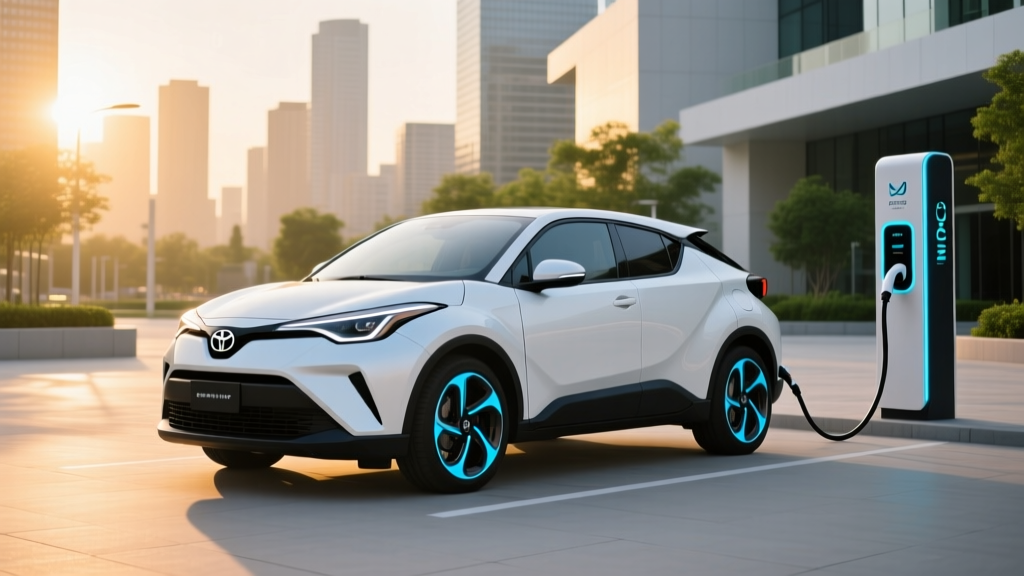
The Toyota C-HR Electric (badged as the bZ3X in select markets and previewed globally as the next-generation C-HR BEV) is Toyota's entry into the subcompact electric crossover segment. For the 2026 model year, it is expected to offer an EPA-estimated range of approximately 250–280 miles from a ~65–72 kWh battery pack, DC fast charging at up to 150 kW (10–80% in roughly 30 minutes), and a starting MSRP near $35,000–$38,000 before incentives. If you want a mainstream, reliability-focused electric subcompact SUV with Toyota's dealer network behind it, the C-HR Electric is a strong contender — but it faces stiff competition from the Hyundai Kona Electric, Kia Niro EV, and Volvo EX30. Here's everything you need to decide.
What Is the Toyota C-HR Electric SUV?
Toyota retired the gas-powered C-HR in the U.S. after the 2022 model year, replacing it initially with the Corolla Cross. However, Toyota's global electrification roadmap — announced in 2023 and updated through 2025 — confirmed a next-generation C-HR built on the e-TNGA platform, the same architecture underpinning the bZ4X and Subaru Solterra. For North American buyers in 2026, this vehicle arrives as Toyota's most affordable dedicated BEV (battery electric vehicle), positioned below the bZ4X in price and size.
The C-HR Electric targets urban and suburban drivers who want a compact footprint, elevated seating position, and zero tailpipe emissions without stepping up to a midsize crossover. It competes directly with:
- Hyundai Kona Electric (EPA 261 mi, ~$33,000)
- Kia Niro EV (EPA 239 mi, ~$39,600)
- Volvo EX30 (EPA 275 mi, ~$36,000)
- Chevrolet Equinox EV (EPA 319 mi, ~$33,000)
Toyota has historically prioritized hybrids over BEVs in the U.S. market, so the C-HR Electric represents a strategic shift — offering a fully electric option in a segment where Toyota previously had none.
Range, Battery, and Efficiency Specs
Based on Toyota's e-TNGA platform specifications and global pre-release data, here's what buyers can expect from the 2026 C-HR Electric:
| Specification | Expected Figure |
|---|---|
| Battery Capacity (usable) | ~65–72 kWh (NMC chemistry) |
| EPA Range (est.) | 250–280 miles |
| Real-World Highway Range | ~210–240 miles (70–80 mph, moderate climate) |
| Cold-Weather Range (20°F) | ~180–210 miles (25–30% reduction) |
| Efficiency (est.) | ~110–120 MPGe combined |
| Energy Consumption | ~28–32 kWh/100 mi |
| Drivetrain | FWD standard; AWD available (dual-motor) |
| Horsepower | ~201 hp (FWD) / ~215 hp (AWD) |
| 0–60 mph | ~7.5 sec (FWD) / ~6.8 sec (AWD) |
Real-World Range vs. EPA Sticker
The EPA estimate assumes a mix of city and highway driving at moderate temperatures. In practice:
- Highway driving at 75+ mph reduces range by 10–15% due to aerodynamic drag.
- Cold weather (below 32°F) can cut range by 20–30%, especially without preconditioning.
- Mountain driving with sustained elevation gains will further reduce range, though regenerative braking recovers energy on descents.
If your daily commute is under 60 miles round-trip, even the cold-weather range is more than sufficient. For road trips, plan charging stops every 180–200 miles to maintain a comfortable buffer.
Charging Speed and Infrastructure
Charging capability is where the C-HR Electric's e-TNGA platform shows both strengths and limitations compared to rivals like the Hyundai Ioniq 5's 800V architecture.
| Charging Level | Power (kW) | Miles Added per Hour | Typical Use Case |
|---|---|---|---|
| Level 1 (120V household) | ~1.4 kW | ~4–5 mi/hr | Overnight trickle; emergency top-up |
| Level 2 (240V home/public) | ~7.2–11 kW | ~25–37 mi/hr | Home charging; workplace; shopping centers |
| DC Fast Charging | Up to 150 kW (peak) | ~150+ mi in 30 min (10–80%) | Road trips; highway corridor charging |
DC fast charging reality check: The C-HR Electric is expected to peak at ~150 kW under optimal conditions (battery preconditioned, SoC between 10–40%, moderate ambient temperature). Like most EVs, the charge curve tapers significantly above 80% — expect 10–80% in roughly 28–32 minutes, but 80–100% can take an additional 20+ minutes. This is adequate for road-trip stops but slower than the Hyundai/Kia E-GMP platform's 18-minute 10–80% capability.
The C-HR Electric will use the NACS (North American Charging Standard) connector, giving it native access to Tesla's Supercharger network — a significant practical advantage over CCS-equipped rivals that require adapters.
Pricing, Trims, and Tax Credit Eligibility
Based on Toyota's global pricing strategy and U.S. market positioning, here's the expected MSRP structure for the 2026 C-HR Electric:
| Trim | Est. MSRP | Key Features |
|---|---|---|
| LE (base) | ~$35,000–$36,500 | FWD, 17" wheels, Toyota Safety Sense 3.0, 8" touchscreen |
| XLE | ~$38,000–$39,500 | Heated seats, power liftgate, wireless charging, 12.3" display |
| Limited / AWD | ~$41,000–$43,000 | AWD dual-motor, panoramic roof, premium audio, 360° camera |
Federal EV Tax Credit (§30D) — 2026 Rules
The C-HR Electric may qualify for up to $7,500 in federal tax credits, but eligibility depends on multiple factors that change frequently. Per current IRS guidance:
- MSRP cap: SUVs must be priced at or below $80,000 (C-HR Electric clears this easily)
- Buyer income cap: AGI ≤ $150,000 (single) / $300,000 (joint)
- Battery sourcing: Critical minerals and battery components must meet phased-in domestic/free-trade-agreement thresholds — this is where many Toyota models have historically struggled
- Point-of-sale transfer: Eligible buyers can apply the credit as an immediate dealer discount rather than waiting for tax filing
Important: Toyota's battery supply chain has been less domesticated than GM's or Tesla's. The C-HR Electric may qualify for only $3,750 (half credit) or potentially $0 depending on 2026 sourcing rules. Always verify at fueleconomy.gov before purchasing. Consult a tax professional for your specific situation.
EV vs. Gas vs. Hybrid: Cost Comparison
How does the C-HR Electric stack up against its gas and hybrid counterparts? Let's compare a 5-year ownership scenario assuming 15,000 miles/year, $3.50/gallon gas, and $0.14/kWh home electricity:
| Category | C-HR Electric (est.) | Corolla Cross Gas | Corolla Cross Hybrid |
|---|---|---|---|
| Purchase Price (MSRP) | $37,000 | $28,000 | $31,000 |
| Fed. Tax Credit | −$3,750* | $0 | $0 |
| Effective Purchase | $33,250 | $28,000 | $31,000 |
| Fuel/Energy (5 yr) | $3,150 | $8,750 | $5,830 |
| Maintenance (5 yr) | $1,800 | $3,500 | $3,200 |
| Insurance (5 yr est.) | $9,500 | $7,500 | $8,000 |
| 5-Year Total Cost | $47,700 | $47,750 | $48,030 |
*Tax credit estimate; actual amount depends on IRS sourcing rules at time of purchase.
Key takeaway: The C-HR Electric reaches near cost-parity with the gas Corolla Cross over five years, primarily through fuel and maintenance savings. EVs eliminate oil changes, have fewer brake replacements (thanks to regenerative braking), and have simpler drivetrains. However, EV insurance premiums run 15–25% higher on average due to repair costs and battery replacement risk.
Real-World Ownership Considerations
Before committing to the C-HR Electric, honestly assess these factors:
Home Charging Access
If you can install a Level 2 (240V) home charger, the C-HR Electric becomes remarkably convenient — plug in each evening, wake up to a full battery every morning, and rarely visit public chargers. A Level 2 installation typically costs $800–$2,500 depending on your electrical panel's capacity and the distance from panel to garage. Homes with older 100-amp panels may need a $2,000–$4,000 panel upgrade to support a 40-amp EV circuit.
If you cannot charge at home (apartment, street parking, no garage), EV ownership becomes significantly less convenient. You'll rely on public Level 2 and DC fast chargers, which cost 2–4× more per kWh than home electricity and require time investment. In this scenario, a hybrid like the Corolla Cross Hybrid may be the more practical choice.
Climate and Driving Patterns
The C-HR Electric's ~250–280 mile EPA range is well-suited for:
- Daily commutes under 80 miles round-trip
- Regional trips under 200 miles with a single charge stop
- Temperate to warm climates (minimal cold-weather range loss)
It becomes less ideal for:
- Frequent 400+ mile road trips through charging deserts (rural Great Plains, parts of the Mountain West)
- Extreme cold climates (sustained sub-20°F winters) without a heated garage
- Heavy towing (the C-HR Electric is not rated for significant trailer towing)
Battery Longevity and Warranty
Toyota is expected to offer an 8-year/100,000-mile battery warranty (with a capacity retention threshold of ~70%), consistent with federal requirements and Toyota's hybrid battery warranty precedent. NMC chemistry degrades gradually — industry data suggests 85–90% capacity retention after 100,000 miles under normal use. Toyota's conservative battery management (larger buffers, moderate charge rates) should support long-term durability, though real-world data for the e-TNGA platform is still accumulating.
Common Misconceptions — Myth vs. Fact
| Myth | Fact |
|---|---|
| "EV batteries need replacing every 5 years and cost $20,000." | Modern EV batteries are designed to last 150,000–200,000+ miles. Replacement is rare and typically only needed after a collision or extreme degradation outside warranty. |
| "The C-HR Electric will save me thousands immediately." | Upfront cost is higher than gas equivalents. Savings accrue over 3–7 years through fuel/maintenance reduction. Without home charging, savings shrink significantly. |
| "I can charge on any road trip just like gassing up." | DC fast charging takes 25–35 minutes (10–80%), not 5 minutes. Rural charging infrastructure is still sparse in many regions. Trip planning is required. |
| "Toyota doesn't make good EVs." | Toyota was slow to BEVs but has decades of electrification expertise (Prius, hybrids). The bZ4X had a rough launch, but the e-TNGA platform has improved significantly for 2025–2026 models. |
| "I'll get the full $7,500 tax credit." | Credit depends on your income, the vehicle's battery sourcing, and current IRS rules. Many EVs qualify for $3,750 or $0. Always verify before buying. |
Decision Framework: Is the C-HR Electric Right for You?
Choose the Toyota C-HR Electric if:
- You have home Level 2 charging access (or can install it)
- Your daily driving is under 80 miles and road trips are under 250 miles between stops
- You value Toyota's dealer network, reliability reputation, and resale value
- You want a compact SUV footprint with EV running costs
- You live in a moderate climate or have a garage for cold-weather preconditioning
Choose a Gas or Hybrid Alternative if:
- You cannot charge at home and public charging is inconvenient or expensive in your area
- You frequently drive 400+ miles through areas with sparse DC fast-charging infrastructure
- You need maximum cargo space or towing capacity (consider a RAV4 Hybrid or larger EV)
- Your budget is strictly under $30,000 and you cannot wait for used-EV market depreciation
Consider a Competitor EV if:
- You want faster DC charging (~18 min 10–80%): Hyundai Kona Electric or Kia EV6
- You want more range (310+ miles): Chevrolet Equinox EV
- You want a premium interior: Volvo EX30
Frequently Asked Questions
When will the Toyota C-HR Electric be available in the U.S.?
Toyota has confirmed the next-generation C-HR BEV for global markets. U.S. availability is expected for the 2026 model year, with deliveries likely beginning in late 2025 or early 2026. Check Toyota's U.S. newsroom for confirmed on-sale dates.
Does the C-HR Electric qualify for the $7,500 federal tax credit?
Possibly, but it depends on battery sourcing rules that change annually. Toyota's supply chain has historically relied on Japanese and Chinese battery components, which may limit credit eligibility under IRS §30D requirements. Verify the exact credit amount at the point of sale — dealers can check VIN eligibility in real time.
Can I charge the C-HR Electric at Tesla Superchargers?
Yes. Toyota has committed to the NACS connector for its U.S. BEVs starting with 2025–2026 models, meaning native access to Tesla's Supercharger network without an adapter. This is a major practical advantage over CCS-equipped competitors.
How does the C-HR Electric compare to the Toyota RAV4 Prime (PHEV)?
The RAV4 Prime is a plug-in hybrid with 42 miles of electric-only range, then operates as a hybrid (94 MPGe combined, 38 MPG gas-only). It's larger, more expensive (~$43,000+), and better for buyers who need 500+ mile total range without charging stops. The C-HR Electric is smaller, more affordable, fully electric, and better for urban/suburban drivers with home charging.
What's the real-world charging cost vs. gas?
At $0.14/kWh (national average residential rate), the C-HR Electric costs roughly $0.04–$0.05 per mile to fuel. A comparable gas SUV at 30 MPG and $3.50/gallon costs $0.12 per mile. Over 15,000 miles/year, that's ~$600/year for electricity vs. ~$1,750/year for gas — a savings of $1,150/year. Public DC fast charging is more expensive ($0.30–$0.50/kWh), so home charging is key to maximizing savings.
Will the battery degrade significantly over time?
All EV batteries lose capacity gradually. Based on industry data from similar NMC packs, expect ~10–15% degradation over 8–10 years / 100,000–150,000 miles. Toyota's battery management system uses conservative charge/discharge buffers to prolong life. The 8-year/100,000-mile warranty covers defects and excessive degradation (typically below 70% capacity).