The Short Answer on the Toyota C-HR Electric
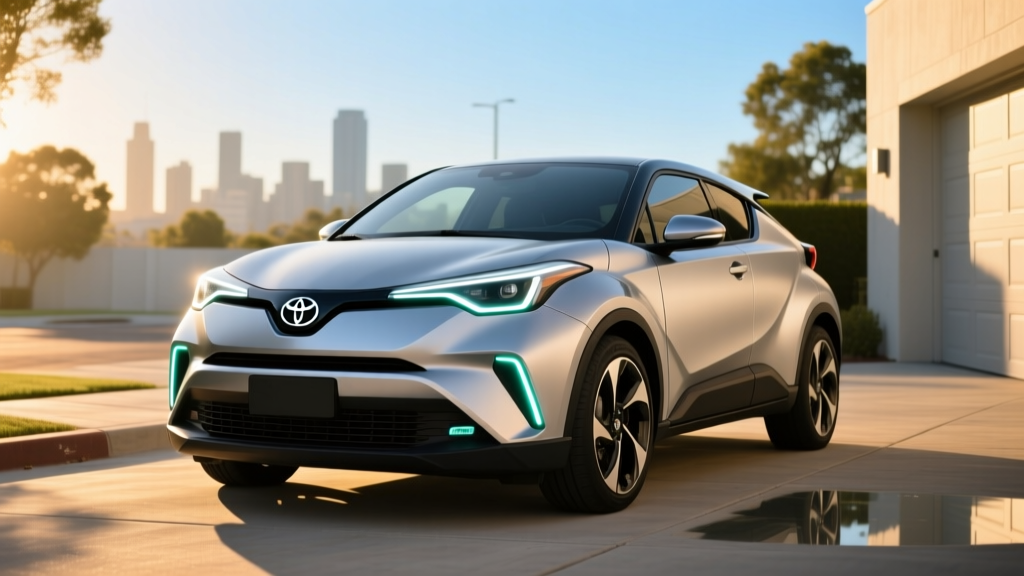
The Toyota C-HR Electric is a compact crossover BEV targeting urban and suburban buyers who want Toyota reliability in a battery-electric package. For the 2026 model year, Toyota positions the C-HR Electric as an entry-level EV with an estimated EPA range around 250–300 miles depending on trim and battery pack, DC fast charging up to approximately 150 kW, and a starting MSRP expected in the mid-$30,000s before incentives. It competes directly with the Hyundai Kona Electric, Kia Niro EV, and Nissan Ariana, and is aimed at buyers transitioning from the gas C-HR (discontinued in the US after 2022) or from hybrid crossovers like the Corolla Cross Hybrid.
What Is the Toyota C-HR Electric?
Toyota confirmed the C-HR Electric as part of its expanded EV lineup, built on the e-TNGA platform shared with the bZ4X. The C-HR Electric slots below the bZ4X in both size and price, giving Toyota a more affordable battery-electric entry point for the US market. The nameplate returns after the gas-powered C-HR was pulled from American dealerships, this time as a fully electric vehicle (BEV) — no gasoline engine, no plug-in hybrid variant at launch.
Toyota has been conservative in its EV rollout compared to Hyundai-Kia and Tesla, but the C-HR Electric represents a meaningful volume play. It targets the same compact crossover segment where the Kona Electric and Niro EV have found success, with the added draw of Toyota's brand loyalty and dealer network.
Range, Battery, and Charging Specs
Based on Toyota's e-TNGA architecture and preliminary specifications, here is what buyers can expect from the 2026 C-HR Electric:
| Specification | Estimated Figure |
|---|---|
| Battery Capacity (usable) | ~58–72 kWh (NMC chemistry, depending on trim) |
| EPA Range (est.) | 250–300 miles |
| Real-World Highway Range | ~210–260 miles |
| Real-World Cold-Weather Range | ~175–225 miles (at 20°F) |
| Peak DC Fast Charge Rate | ~150 kW |
| 10–80% DC Fast Charge Time | ~30–35 minutes |
| Level 2 AC Charging (240V) | ~7.2 kW (~22–25 mi/hr) |
| Drivetrain | FWD standard; AWD available on higher trims |
| Horsepower | ~201 hp (FWD); ~214 hp (AWD) |
| 0–60 mph | ~7.5 sec (FWD); ~6.8 sec (AWD) |
| MPGe (combined, est.) | ~110–120 MPGe |
Real-World Range Reality Check
The EPA sticker may say 280+ miles, but real-world results depend heavily on conditions. Highway driving at 75 mph typically reduces range by 10–15% versus the EPA combined figure. In cold weather (below 30°F), expect a 20–30% reduction due to battery heating demands and cabin climate load. If your commute is mostly city driving with regenerative braking opportunities, you may match or even slightly exceed the EPA number. For road trips, plan charging stops assuming ~220 miles of usable range in moderate conditions to keep a safety buffer.
The NMC (nickel manganese cobalt) battery chemistry offers higher energy density than LFP, which helps keep the pack compact in a small crossover footprint. However, Toyota recommends charging to 80% for daily use and 100% only for long trips — standard practice for NMC packs to maximize long-term battery health.
EV vs. Gas and Hybrid: How Does It Compare?
The C-HR Electric enters a segment where many buyers are also considering hybrid alternatives. Here is a data-driven comparison against the gas C-HR (last US model year) and Toyota's own Corolla Cross Hybrid:
| Metric | C-HR Electric (2026 est.) | C-HR Gas (2022) | Corolla Cross Hybrid (2026) |
|---|---|---|---|
| Powertrain | BEV | 2.0L I-4 Gas | 2.0L Hybrid (HEV) |
| EPA Range / Tank | ~280 mi | ~370 mi (13.2 gal) | ~450 mi (10.6 gal) |
| Combined Efficiency | ~115 MPGe | 29 MPG combined | 42 MPG combined |
| Fuel/Energy Cost (15k mi/yr) | ~$540/yr (electricity) | ~$1,725/yr (gasoline) | ~$1,190/yr (gasoline) |
| Annual Maintenance | ~$300 | ~$650 | ~$550 |
| Base MSRP | ~$35,000 | ~$23,000 (discontinued) | ~$30,000 |
| Federal Tax Credit (§30D) | Up to $7,500* | $0 | $0 |
| Effective Price After Credit | ~$27,500* | N/A | ~$30,000 |
*Federal tax credit eligibility depends on MSRP caps, buyer income limits, and battery sourcing requirements under IRS §30D. See IRS guidelines for current-year rules. The credit can be transferred to the dealer at point of sale.
The numbers tell a clear story on operating costs. At 15,000 miles per year, the C-HR Electric saves roughly $1,185 annually on fuel versus the old gas C-HR and about $650 versus the Corolla Cross Hybrid. Maintenance savings add another $250–$350 per year. Over five years, total operating savings versus a gas crossover can reach $7,000–$8,000, which significantly offsets the higher purchase price — especially if the full §30D credit applies.
Ownership Cost Breakdown: 5-Year Projection
Here is a realistic five-year total cost of ownership (TCO) comparison, assuming 15,000 miles/year, home charging at the national average electricity rate of $0.16/kWh, and gasoline at $3.50/gallon:
| Cost Category | C-HR Electric | Corolla Cross Hybrid |
|---|---|---|
| Purchase Price (base) | $35,000 | $30,000 |
| Federal Tax Credit | −$7,500 (if eligible) | $0 |
| Net Purchase Cost | $27,500 | $30,000 |
| Energy/Fuel (5 years) | $2,700 | $5,950 |
| Maintenance (5 years) | $1,500 | $2,750 |
| Insurance (5 years, est.) | $8,500 | $7,000 |
| Home Charger Install | $800–$1,500 | $0 |
| Total 5-Year Cost | ~$41,000–$41,700 | ~$45,700 |
Key takeaways from this breakdown:
- Insurance is typically 15–25% higher on EVs due to higher repair costs and battery replacement risk. Get quotes before purchasing.
- Home Level 2 charger installation ($800–$1,500 for most homes with an existing 200-amp panel) is a one-time cost that pays for itself within the first year of ownership versus public charging.
- If you cannot charge at home, public DC fast charging costs roughly 2–3× more per mile than home charging, eroding much of the fuel savings advantage.
- Depreciation remains a wildcard — EV resale values have been volatile. Toyota's strong brand reputation may help the C-HR Electric retain value better than some competitors, but historical EV depreciation has been steeper than comparable gas or hybrid vehicles.
Federal Tax Credit: What You Actually Qualify For
The §30D clean vehicle credit can reduce your effective purchase price by up to $7,500, but eligibility is not automatic. Under current IRS rules, the following conditions must be met:
- MSRP Cap: The vehicle's MSRP must not exceed $55,000 for SUVs/crossovers (the C-HR Electric is expected to clear this easily at ~$35,000 base).
- Buyer Income Limits: Modified adjusted gross income must not exceed $150,000 (single), $225,000 (head of household), or $300,000 (joint filers).
- Battery Sourcing: A percentage of critical minerals and battery components must be sourced from the US or free-trade-agreement countries. This requirement tightens annually and may affect eligibility for specific trims or model years.
- Point-of-Sale Transfer: As of 2024, buyers can transfer the credit to the dealer at purchase, reducing the out-of-pocket cost immediately rather than waiting for a tax refund.
- Final Assembly: The vehicle must undergo final assembly in North America. Confirm the C-HR Electric's assembly location on the DOE's qualified vehicle list before purchasing.
Always verify eligibility with a tax professional before relying on the credit in your budget. Rules can change, and battery-sourcing requirements have disqualified some previously eligible models mid-year.
Real-World Ownership: What First-Time EV Buyers Should Know
If you are coming from a gas vehicle, the C-HR Electric will change your fueling routine fundamentally. Here are the practical realities:
Home Charging Is the Foundation
Over 80% of EV charging happens at home. A Level 2 home charger (240V, 32–48 amps) adds roughly 22–25 miles of range per hour, meaning an overnight charge easily replenishes a full day's driving. If your home has a 200-amp electrical panel with spare capacity, installation typically costs $800–$1,500. Homes with older 100-amp panels may need a $2,000–$4,000 panel upgrade — get a quote from a licensed electrician before committing to the vehicle.
Public Charging: The Network Landscape
For road trips, the C-HR Electric will use either CCS1 or NACS (Tesla-style) connectors depending on Toyota's final specification for the US market. Toyota has announced NACS adoption for future models, which would grant access to Tesla's Supercharger network — the most reliable DC fast-charging network in the US with over 25,000 stalls. If equipped with CCS1, you will rely on Electrify America, EVgo, and ChargePoint networks, which have improved but still trail Supercharger in uptime and ease of use.
At a 150 kW DC fast charger, expect a 10–80% session to take roughly 30–35 minutes. Note that peak charge rate is not sustained — the battery charges fastest between 10–40% SoC and tapers significantly above 80%. For road trip planning, budget 30 minutes per stop and avoid charging past 80% unless necessary, as the taper makes 80–100% sessions disproportionately slow.
Cold Weather Impact
If you live in a climate with sustained sub-freezing winters, plan for 20–30% range loss. The C-HR Electric's heat pump (expected on most trims) helps mitigate cabin heating energy draw, but battery chemistry itself is less efficient in cold temperatures. Preconditioning the battery while plugged in — using the Toyota app to warm the pack before departure — preserves range and improves charging speed.
Common EV Misconceptions — Fact-Checked
| Myth | Fact |
|---|---|
| "EV batteries need replacement every few years" | Toyota's battery warranty covers 8 years/100,000 miles with a capacity retention threshold (typically 70%). Modern NMC packs are designed for 150,000–200,000+ miles before significant degradation. Average annual degradation is roughly 1.5–2.5%. |
| "EVs are worse for the environment because of electricity generation" | Even on coal-heavy grids, EVs produce fewer lifetime emissions than comparable gas cars. On the average US grid mix, an EV like the C-HR Electric emits roughly 60% less CO₂ over its lifetime per EPA analysis. |
| "I'll be stranded with no charging stations" | The US now has over 60,000 public charging ports. With 250+ miles of range and basic trip planning using apps like PlugShare or A Better Routeplanner, range anxiety is manageable for most driving patterns. |
| "EVs cost more to insure and always will" | EV insurance premiums are higher on average (15–25%), but the gap is narrowing as repair data matures and more insurers develop EV-specific policies. Shop multiple quotes. |
| "Level 1 charging (120V) is useless" | Level 1 adds ~3–5 miles of range per hour. For drivers covering under 30 miles/day with overnight parking, Level 1 alone can suffice — though Level 2 is strongly recommended for convenience and battery preconditioning. |
Decision Framework: Is the C-HR Electric Right for You?
Choose the Toyota C-HR Electric If:
- You have access to home charging (garage, driveway, or workplace Level 2)
- Your daily driving is under 80 miles round-trip, with occasional road trips under 250 miles between stops
- You qualify for the §30D federal tax credit (income and sourcing requirements met)
- You want a compact EV crossover with Toyota's dealer network and resale reputation
- You value low operating costs and are willing to accept a higher upfront price for long-term savings
Consider a Hybrid (Corolla Cross Hybrid) Instead If:
- You lack reliable access to home or workplace charging
- You regularly drive in extreme cold with long distances between charging options
- Your budget is firm at $30,000 or below and you cannot rely on the tax credit
- You frequently tow or take very long road trips through charging-desert regions
- You prefer to refuel in 5 minutes and not think about energy logistics
Look at Competitors (Kona Electric, Niro EV) If:
- The C-HR Electric's cargo space or rear-seat room doesn't meet your needs — check cubic feet before buying
- Hyundai/Kia's longer warranty coverage (10yr/100k mi battery) is a priority
- You find better local dealer pricing or incentive stacking with competitors
Frequently Asked Questions
What is the expected starting price of the Toyota C-HR Electric?
Toyota has indicated a base MSRP in the mid-$30,000 range for the entry trim, with higher trims (AWD, larger battery) pushing toward the low $40,000s. After the potential $7,500 federal tax credit, effective pricing could drop to the high $20,000s for qualified buyers — making it one of the most affordable new EV crossovers on the market.
Does the C-HR Electric qualify for the $7,500 federal tax credit?
Eligibility depends on the vehicle's battery sourcing compliance, final assembly location, MSRP (must be under $55,000 for crossovers), and the buyer's income. Toyota's North American assembly and supply chain adjustments suggest strong likelihood of at least partial credit eligibility, but always confirm on the IRS qualified vehicle list and with a tax professional before purchase.
How long does it take to charge the C-HR Electric at home?
On a Level 2 home charger (7.2 kW, 240V), a full charge from near-empty takes approximately 8–10 hours depending on battery size. Most owners charge overnight and wake up to a full battery every morning. On a standard 120V outlet (Level 1), a full charge takes 40–50+ hours — suitable for topping up but not practical as a primary charging method for most drivers.
Will the C-HR Electric use NACS or CCS for charging?
Toyota has committed to adopting NACS (the Tesla connector) for future US-market EVs. If the C-HR Electric launches with NACS, it will have direct access to Tesla Superchargers. If it launches with CCS1, Toyota is expected to provide a NACS adapter. Confirm the connector type at your dealer before purchase, as this affects your road-trip charging experience significantly.
How does the C-HR Electric perform in snow and ice?
AWD trims provide dual-motor traction that performs well in snow. The low center of gravity from the floor-mounted battery pack aids stability. However, expect 20–30% range reduction in sustained sub-freezing temperatures. Winter tires and preconditioning are recommended for cold-climate owners.
What is the battery warranty?
Toyota's standard EV battery warranty covers 8 years or 100,000 miles (whichever comes first) against defects and excessive capacity loss, typically defined as dropping below 70% of original capacity. The powertrain (motors, inverter) carries similar coverage. This aligns with industry norms, though Hyundai/Kia offer 10-year/100,000-mile battery warranties for comparison.