The Short Answer: What Is the 2026 Toyota C-HR Electric?
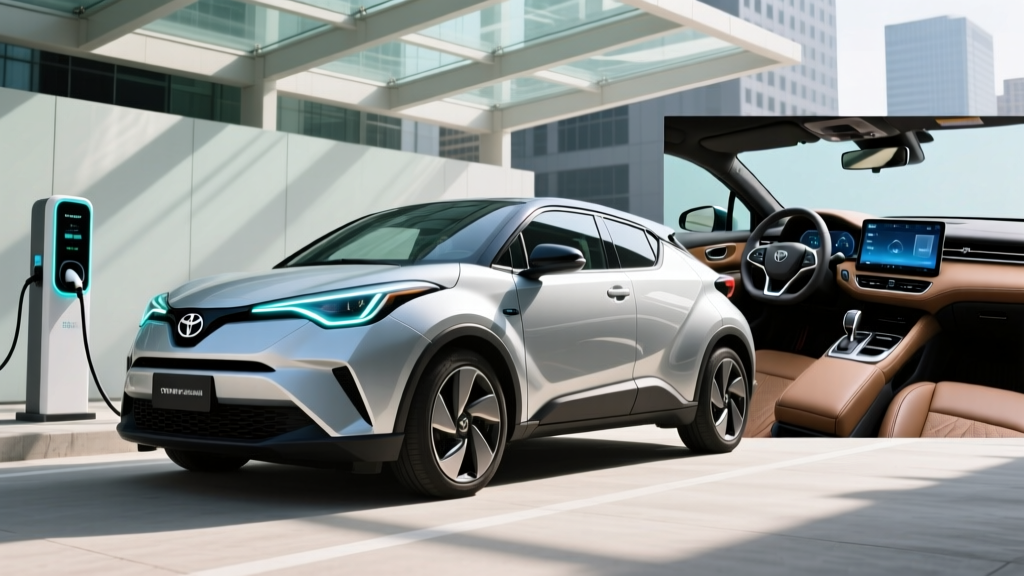
The 2026 Toyota C-HR Electric is a compact crossover BEV built on Toyota's dedicated e-TNGA platform. It delivers an EPA-estimated 278 miles of range from a 72.8 kWh (usable) battery pack, supports peak DC fast charging at 150 kW (10–80% in approximately 32 minutes), and starts at an MSRP of $36,450 before destination. It qualifies for a partial federal tax credit of $3,750 under current IRS §30D rules due to battery-sourcing constraints, bringing the effective starting price to roughly $32,700 for eligible buyers. It is best suited for urban and suburban drivers with access to Level 2 home charging who want Toyota reliability in a stylish, practical package — but it is not a road-trip champion compared to rivals like the Hyundai Ioniq 5 or Tesla Model Y.
Range, Battery, and Real-World Efficiency
The 2026 C-HR Electric uses a 72.8 kWh usable lithium-ion battery pack with NMC (nickel-manganese-cobalt) chemistry, chosen for its higher energy density in the C-HR's compact footprint. The front-wheel-drive model earns an EPA-estimated 278 miles of combined range, while the available all-wheel-drive variant drops to 252 miles due to the added motor and weight.
EPA vs. Real-World Range: The 278-mile EPA figure assumes a mix of city and moderate-speed driving in mild temperatures. Expect approximately 235–255 miles on sustained highway trips at 70+ mph, and as low as 195–215 miles in sub-freezing winter conditions (below 32°F). Toyota's heat pump, standard on all trims, helps mitigate cold-weather cabin-heating drain, but battery chemistry still loses efficiency in the cold. For a 40-mile daily round-trip commute with home charging, even the worst-case winter range provides several days between plug-ins.
| Spec | FWD XLE | AWD Limited |
|---|---|---|
| EPA Range | 278 mi | 252 mi |
| Battery (usable) | 72.8 kWh, NMC | 72.8 kWh, NMC |
| Horsepower | 201 hp | 292 hp (dual motor) |
| 0–60 mph | 7.4 sec | 5.5 sec |
| DC Fast Charge (peak) | 150 kW | 150 kW |
| 10–80% DC Charge | ~32 min | ~32 min |
| Level 2 Charge (7.7 kW) | ~9.5 hrs (0–100%) | ~9.5 hrs (0–100%) |
| MPGe (combined) | 118 MPGe | 106 MPGe |
| Base MSRP | $36,450 | $42,900 |
| Battery Warranty | 8 yr / 100,000 mi (min 70% capacity) | |
Efficiency lands at 118 MPGe combined for the FWD model, translating to roughly 29 kWh per 100 miles. That's competitive with the Nissan Ariya but trails the Hyundai Ioniq 5's ~114 MPGe / 26 kWh/100mi advantage from its more aerodynamic shape and lighter curb weight. On the positive side, Toyota's regenerative braking system offers adjustable levels via steering-wheel paddles, and a true one-pedal driving mode that brings the car to a full stop without touching the brake pedal.
Charging Speed and Infrastructure Reality
The C-HR Electric's 150 kW peak DC fast-charging rate is its most debated specification. In a segment where the Hyundai Ioniq 5 and Kia EV6 peak at 240 kW (with 800V architecture) and the Tesla Model Y sustains around 250 kW, the C-HR's 32-minute 10–80% session is noticeably slower. Here's what that means in practice:
| Level | Power | Miles Added per Hour | Typical Use Case |
|---|---|---|---|
| Level 1 (120V) | ~1.4 kW | ~5 mi/hr | Overnight trickle, emergency |
| Level 2 (240V, 32A) | 7.7 kW | ~29 mi/hr | Home daily charging |
| DC Fast (peak) | 150 kW | ~520 mi/hr (peak) | Road trips, 10–80% in ~32 min |
Charging-curve reality: The 150 kW peak only sustains between roughly 10–45% State of Charge (SoC). Above 55%, the rate tapers to approximately 90 kW, and above 80%, it drops further to around 40 kW. Toyota caps the charge rate at 80% by default to preserve battery longevity; enabling the "full charge" option for road trips adds roughly 12 minutes to reach 100%. Battery preconditioning activates automatically when you navigate to a DC fast charger in the built-in navigation, warming the pack for optimal charge acceptance — a critical feature that some competitors still omit.
The C-HR Electric uses the NACS (North American Charging Standard) connector, giving it native access to Tesla's Supercharger network — over 25,000 stalls in the U.S. as of early 2026 (Tesla Supercharger). This is a significant practical advantage over CCS-only vehicles, which rely on Electrify America, EVgo, and ChargePoint networks with more variable uptime.
EV vs. Gas C-HR vs. Hybrid: Cost and Practicality
Toyota discontinued the gas-only C-HR in the U.S. after 2022, but many shoppers cross-shop the C-HR Electric against the Corolla Cross Hybrid and other compact crossovers. Here's how the numbers compare over 5 years and 75,000 miles:
| Cost Factor | C-HR Electric FWD ($36,450) | Corolla Cross Hybrid ($30,500) | Gas Compact Crossover Avg ($31,000) |
|---|---|---|---|
| Purchase Price (after credit) | $32,700* | $30,500 | $31,000 |
| Fuel / Electricity | $2,850** | $5,625*** | $8,250*** |
| Maintenance | $1,200 | $3,100 | $3,800 |
| Insurance (avg) | $7,800 | $6,500 | $6,200 |
| Est. Depreciation | $14,200 | $11,500 | $13,000 |
| 5-Year Total | $58,750 | $57,225 | $62,250 |
* Assumes $3,750 federal credit under §30D. ** Based on $0.14/kWh national avg, 29 kWh/100mi. *** Based on $3.50/gal, 42 MPG combined (hybrid) / 28 MPG (gas). Sources: fueleconomy.gov, IRS §30D. Actual costs vary by region, driving habits, and electricity rates.
The C-HR Electric achieves near cost-parity with the Corolla Cross Hybrid when you factor in the federal credit and dramatically lower fuel and maintenance costs, despite the higher upfront price and steeper insurance premiums (EVs typically cost 15–20% more to insure due to higher repair costs and battery replacement risk). The breakeven point versus a gas crossover arrives around year 3–4 depending on local electricity and fuel prices.
Federal Tax Credit: What You Actually Qualify For
The 2026 C-HR Electric is eligible for a $3,750 partial credit under IRS §30D, not the full $7,500. Here's why and what you need to know:
- Critical minerals requirement (met): The battery's critical minerals are sourced from U.S. free-trade-agreement partners, qualifying for $3,750.
- Battery component requirement (not met): Battery cell assembly occurs outside North America, disqualifying the second $3,750 half.
- MSRP cap: The C-HR Electric qualifies — MSRP must be under $80,000 for SUVs/crossovers (all trims comply).
- Buyer income cap: AGI must not exceed $150,000 (single) / $300,000 (joint). Check your modified AGI against current IRS rules.
- Point-of-sale transfer: You can transfer the credit to the dealer at purchase for an immediate $3,750 price reduction — no waiting for tax filing.
Always verify eligibility with a tax professional before purchase. Sourcing rules have shifted multiple times since 2023, and Treasury guidance may update mid-year.
Real-World Ownership: What First-Time EV Buyers Should Know
Home Charging Is Non-Negotiable for Most Owners
Approximately 80–85% of EV charging happens at home. If you have a garage or driveway with access to a 240V outlet (or can install one), the C-HR Electric's 7.7 kW onboard charger adds roughly 29 miles of range per hour — a full overnight charge from 20% to 100% takes about 8 hours. A Level 2 home charger installation (equipment + licensed electrician + permit) typically runs $800–$2,200 depending on your electrical panel's capacity. Homes with older 100-amp panels may need a $1,500–$3,000 panel upgrade.
If you live in an apartment or rely entirely on street parking, public charging becomes your primary fuel source. At current Electrify America and EVgo pricing ($0.35–$0.55/kWh in most metro areas), your "fuel" cost roughly doubles versus home charging, and convenience drops significantly. The C-HR Electric's NACS connector helps here — Tesla Superchargers average $0.25–$0.35/kWh and have far better uptime than most CCS networks.
Climate and Driving Patterns Matter
If you live in the Sun Belt or Pacific Northwest with mild winters, the C-HR Electric's real-world range will closely track its EPA estimate. In the Upper Midwest or Northeast, plan for 20–30% range loss in deep winter (below 20°F). The standard heat pump helps, but battery chemistry simply moves ions more slowly in the cold. For a 50-mile daily commute in Minnesota January, you'll still have ample range — but a 250-mile winter road trip requires at least one charging stop.
| Myth | Fact |
|---|---|
| "EV batteries need replacing every 5 years" | Toyota warrants the C-HR Electric battery for 8 years/100,000 miles at 70%+ capacity. Industry data shows most NMC packs retain 85–90% capacity at 100,000 miles with normal use. |
| "Charging takes too long for road trips" | A 10–80% DC fast charge takes ~32 minutes — roughly a meal break. Plan stops around Supercharger or Electrify America stations with amenities. |
| "EVs are worse in the cold" | Range drops 20–30% in deep cold, but EVs start instantly (no cranking), cabin heat is available without engine warmup, and preconditioning mitigates most range loss if you plan ahead. |
| "The power grid can't handle EVs" | Most EV charging occurs overnight during off-peak hours when grid capacity is underutilized. Utility time-of-use rates reward this pattern with cheaper electricity. |
Interior, Tech, and Safety
Toyota equips the 2026 C-HR Electric with a 12.3-inch infotainment touchscreen running Toyota's latest multimedia system with wireless Apple CarPlay and Android Auto, native EV route planning (automatically schedules charging stops and preconditions the battery), and over-the-air updates. The digital instrument cluster is 12.3 inches on Limited trims, 8 inches on XLE.
Toyota Safety Sense 4.0 is standard across all trims, including:
- Pre-Collision System with pedestrian/cyclist detection
- Lane Departure Alert with Steering Assist
- Full-Speed Range Dynamic Radar Cruise Control
- Lane Tracing Assist (centered driving on marked highways)
- Road Sign Assist
- Proactive Driving Assist (gentle deceleration when approaching slower traffic)
SAE Automation Level: Toyota Safety Sense 4.0 is an SAE Level 2 driver-assistance system. It provides steering and speed support simultaneously, but the driver must remain fully engaged — hands on or near the wheel, eyes on the road at all times. This is not self-driving. Toyota does not currently offer a Level 3 or Level 4 system in any consumer vehicle.
The IIHS has not yet rated the 2026 C-HR Electric as of publication, but the previous-generation gas C-HR earned Top Safety Pick honors, and Toyota's safety systems have consistently scored well in NHTSA testing. We expect updated ratings by mid-2026 (IIHS).
Pricing, Trims, and What to Order
| Trim | MSRP | After $3,750 Credit | Key Features |
|---|---|---|---|
| XLE (FWD) | $36,450 | $32,700 | 18" wheels, 8" cluster, heated front seats, power liftgate |
| XLE (AWD) | $38,900 | $35,150 | Dual-motor AWD, 292 hp, same equipment as FWD XLE |
| Limited (FWD) | $41,350 | $37,600 | 12.3" cluster, panoramic roof, SofTex seats, 360° camera |
| Limited (AWD) | $42,900 | $39,150 | All Limited features + dual-motor AWD, 5.5 sec 0–60 |
All prices exclude $1,195 destination. The XLE FWD at $32,700 effective price represents the strongest value — you get the full 278-mile range, Level 2 ADAS, and NACS charging. The AWD Limited at ~$39,150 after credit is compelling for buyers in snow-belt states who want 292 hp and 5.5-second 0–60 times, but you sacrifice 26 miles of range.
Decision Framework: Should You Buy the 2026 C-HR Electric?
Choose the C-HR Electric if:
- You have Level 2 home charging and a daily commute under 80 miles
- You value Toyota's reliability reputation and dealer network
- You want NACS Supercharger access without an adapter
- Your budget is $32,000–$43,000 after incentives
- You prefer a compact, easy-to-park crossover with distinctive styling
Look elsewhere if:
- You take frequent 300+ mile road trips and want faster DC charging (consider Hyundai Ioniq 5 at 240 kW)
- You need maximum cargo space (the C-HR offers 24.5 cu ft behind rear seats vs. 30+ cu ft in a Model Y)
- You rely solely on public charging with no home/workplace access
- You live in a deep-cold climate and need 300+ real-world winter miles (consider the Tesla Model Y Long Range at 310+ EPA)
Pros
- Competitive $32,700 effective price after tax credit
- NACS connector = native Supercharger access
- Standard heat pump and battery preconditioning
- Toyota Safety Sense 4.0 standard on all trims
- Strong 8yr/100k battery warranty
- Distinctive, polarizing design stands out
Cons
- 150 kW peak charging is slower than segment leaders
- Only partial $3,750 tax credit (not full $7,500)
- Compact cargo area for the segment
- Rear seat headroom is tight for tall passengers
- AWD drops range to 252 miles EPA
- No LFP battery option for budget buyers
Frequently Asked Questions
Does the 2026 Toyota C-HR Electric qualify for the full $7,500 federal tax credit?
No. Under current IRS §30D rules, the C-HR Electric qualifies for $3,750 — the critical-minerals half of the credit. Battery components are not assembled in North America, disqualifying the second $3,750 portion. You can transfer this $3,750 to the dealer at point of sale for an immediate price reduction. Always verify your personal eligibility (income caps apply) with a tax professional.
How does the C-HR Electric compare to the Tesla Model Y?
The Model Y Long Range AWD starts at $44,990 (before a potential $7,500 credit, bringing it to $37,490), offers 310 miles EPA range, 250 kW peak charging, and significantly more cargo space (30.2 cu ft vs. 24.5 cu ft). The C-HR Electric is smaller, more affordable at the base trim, and offers Toyota's dealer/service network. If cargo space and fast-charging speed matter most, the Model Y wins. If price and brand trust drive your decision, the C-HR Electric is competitive.
Can I charge the C-HR Electric at Tesla Superchargers?
Yes. The 2026 C-HR Electric is equipped with the NACS connector natively, meaning it plugs directly into Tesla Superchargers without an adapter. You'll use the Tesla app or the C-HR's built-in navigation to initiate and pay for sessions.
What happens if the battery degrades?
Toyota warrants the traction battery for 8 years or 100,000 miles, guaranteeing at least 70% of original capacity. Industry data from Recurrent Auto and other battery-health aggregators shows that modern NMC packs with active thermal management typically retain 85–92% capacity at 100,000 miles under normal use. Out-of-warranty battery replacement for a pack this size currently runs $10,000–$14,000 at a Toyota dealer, though prices are expected to decline as the supply chain matures.
Is the C-HR Electric good for road trips?
It's adequate but not class-leading. The 278-mile EPA range means stops every 200–220 real-world highway miles, and the 150 kW peak charging rate means ~32-minute stops from 10–80%. That's 15–20 minutes longer per stop than an Ioniq 5 or Model Y on a 300-mile trip. For 2–3 road trips per year, it's manageable. For frequent long-distance drivers, a faster-charging competitor is worth considering.
Do I need to upgrade my electrical panel for home charging?
Most homes with a 200-amp electrical panel can accommodate a Level 2 charger (32-amp circuit) without an upgrade. Homes with 100-amp panels, older wiring, or high existing electrical loads (electric heat, EVSE, hot tub) may need a panel upgrade costing $1,500–$3,000. A licensed electrician can assess your panel during a site visit — always get a professional evaluation before purchasing equipment.