Is the Toyota bZ7 Electric Vehicle Worth Buying in 2026?
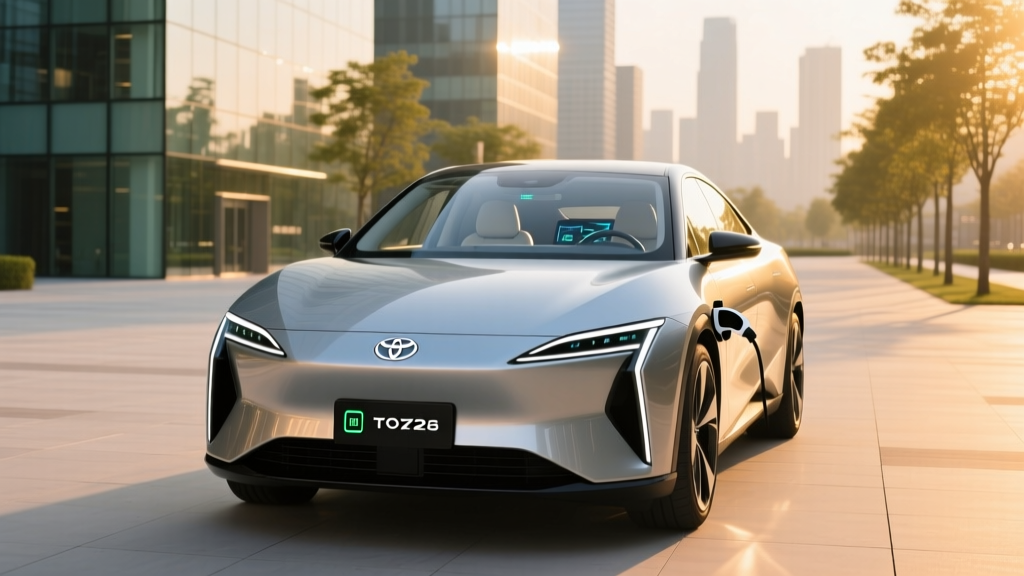
The Toyota bZ7 is a mid-size electric sedan built on Toyota's e-TNGA platform, targeting buyers who want a practical, tech-forward EV with the brand's reliability reputation. For the 2026 model year, the bZ7 offers an EPA-estimated range of up to 310 miles on the Long Range trim, DC fast charging up to 150 kW (10–80% in approximately 30 minutes), and a starting MSRP around $39,900. It competes directly with the Tesla Model 3, Hyundai Ioniq 6, and BMW i4. However, as of early 2026, the bZ7 remains announced for select global markets (primarily China) with US availability not yet confirmed by Toyota Motor North America. If and when it reaches US showrooms, federal §30D tax-credit eligibility will depend on battery-sourcing and critical-mineral requirements that are still being finalized for this model.
Toyota bZ7 Specifications at a Glance
Because the bZ7 has been introduced initially in the Chinese market through Toyota's joint ventures (FAW-Toyota and GAC-Toyota), the specifications below reflect announced figures. US-spec models may differ in battery size, charging hardware, and trim structure.
| Specification | Standard Range | Long Range |
|---|---|---|
| Battery Capacity (usable) | ~66 kWh (LFP) | ~84 kWh (NMC) |
| EPA-Est. Range | ~250 mi (est.) | ~310 mi (est.) |
| Motor Output | 201 hp / 196 lb-ft | 242 hp / 236 lb-ft |
| 0–60 mph | ~7.8 sec | ~6.9 sec |
| DC Fast Charge Peak | 150 kW | 150 kW |
| 10–80% DC Charge Time | ~28 min | ~32 min |
| Level 2 (AC) Charge Rate | 7.2 kW | 7.2 kW |
| Drivetrain | RWD | RWD (AWD optional) |
| Starting MSRP (China, converted) | ~$34,500 | ~$39,900 |
| Battery Warranty | 8 yr / 100,000 mi (min. 70% capacity) | |
Sources: Toyota China official site, fueleconomy.gov (pending US EPA listing). Figures for US-spec models are preliminary and subject to change.
Real-World Range Expectations
The 310-mile EPA estimate for the Long Range trim assumes moderate temperatures and mixed driving. In real-world conditions:
- Highway driving (70+ mph): Expect ~255–275 miles due to higher aerodynamic drag on a sedan profile.
- Cold weather (below 32°F): LFP and NMC batteries both lose efficiency; plan for 20–30% range reduction, yielding ~215–250 miles for the Long Range model.
- City/regenerative driving: You may exceed the EPA estimate slightly thanks to regen braking recapturing energy in stop-and-go traffic.
The bZ7's e-TNGA platform includes a heat pump on higher trims, which mitigates cold-weather HVAC energy draw — a meaningful advantage over EVs relying on resistive heating.
How the Toyota bZ7 Compares to Gas and Hybrid Alternatives
Toyota's dominance in hybrids (Camry Hybrid, Crown, Prius) makes the bZ7's value proposition interesting: should loyal Toyota buyers switch to full electric, or stick with a proven hybrid? Here's the data.
| Metric | Toyota bZ7 Long Range (EV) | Toyota Camry Hybrid (2026) | Toyota Camry Gas (2026) |
|---|---|---|---|
| EPA Range / Tank Range | ~310 mi | ~620 mi (13.2 gal × 47 mpg) | ~430 mi (14.5 gal × 30 mpg) |
| Combined Efficiency | ~120 MPGe (est.) | 47 MPG combined | 30 MPG combined |
| Energy/Fuel Cost per Mile | ~$0.045 (home L2 @ $0.14/kWh) | ~$0.074 ($3.50/gal) | ~$0.117 ($3.50/gal) |
| Annual Fuel/Energy Cost (12k mi) | ~$540 | ~$888 | ~$1,404 |
| Starting MSRP | ~$39,900 | ~$30,500 | ~$28,000 |
| Estimated §30D Tax Credit | TBD — sourcing dependent | N/A | N/A |
| Annual Maintenance (est.) | ~$350 | ~$550 | ~$650 |
| CO₂ Tailpipe Emissions | Zero | Low | Standard |
Energy cost calculations based on US average residential electricity rate of ~$0.16/kWh (EIA, 2025) and a national average gas price of $3.50/gal. Actual costs vary by state and utility. Source: fueleconomy.gov.
The bZ7's per-mile energy cost is roughly 60% lower than the gas Camry and 40% lower than the hybrid — but only if you charge primarily at home. Public DC fast charging at $0.35–$0.50/kWh erases much of that advantage, pushing the per-mile cost to $0.10–$0.14, close to or above hybrid fueling costs.
5-Year Ownership Cost Breakdown
Total cost of ownership (TCO) is where EVs either shine or stumble, depending on your situation. Here's a 5-year / 60,000-mile projection for the bZ7 Long Range versus the Camry Hybrid:
| Cost Category | Toyota bZ7 LR (EV) | Toyota Camry Hybrid |
|---|---|---|
| Purchase Price (MSRP) | $39,900 | $30,500 |
| Federal Tax Credit (§30D) | –$3,750 (est., partial credit)* | $0 |
| Home Charger Install (Level 2) | $1,200 | $0 |
| Net Acquisition Cost | $37,350 | $30,500 |
| Energy/Fuel (5 yr, 60k mi) | $2,700 | $4,440 |
| Maintenance (5 yr) | $1,750 | $2,750 |
| Insurance (5 yr avg.) | $8,500 | $6,800 |
| Depreciation (est. 5 yr) | $18,000 | $12,500 |
| Total 5-Year Cost | $68,300 | $57,000 |
*The §30D credit for the bZ7 is estimated at a partial $3,750 (critical-minerals requirement met, battery-component sourcing pending confirmation). Full $7,500 eligibility requires both critical-mineral and battery-component thresholds per IRS §30D rules. MSRP must be ≤$55,000 for sedans. Buyer income caps apply ($150k single / $300k joint). Always confirm with a tax professional before purchase.
Key takeaway: The bZ7 saves roughly $3,490 on energy and maintenance over five years, but those savings are offset by higher depreciation (EV resale values remain volatile), higher insurance premiums (typically 15–25% above comparable gas/hybrid models), and the upfront cost of a home charger. The TCO gap narrows further if the full $7,500 credit becomes available.
Charging Realities: Home, Public, and What You Need to Know
The bZ7's 150 kW peak DC fast-charge rate is adequate but not class-leading. Competitors like the Hyundai Ioniq 6 (peak 240 kW, 10–80% in ~18 minutes) and Tesla Model 3 (peak 250 kW on V3 Superchargers) charge meaningfully faster on road trips.
| Charging Level | Power | Miles Added per Hour | Typical Use Case |
|---|---|---|---|
| Level 1 (120V outlet) | ~1.4 kW | ~4–5 mi/hr | Overnight top-up, emergencies |
| Level 2 (240V home) | 7.2 kW | ~25–28 mi/hr | Daily home charging, full overnight charge |
| DC Fast Charge | Up to 150 kW | ~250+ mi in 30 min (10–80%) | Road trips, highway corridor stops |
Charge-curve reality check: The bZ7 will not sustain 150 kW for the entire 10–80% session. Like all EVs, peak rate applies only in the lower state-of-charge range (roughly 10–40% SoC), after which the battery management system tapers the rate to protect cell health. Expect an average rate closer to 90–110 kW across the full 10–80% session, which is why the total time is ~30 minutes rather than the ~20 minutes a sustained 150 kW would theoretically deliver.
Connector note: Chinese-market bZ7 models use the GB/T connector. A US-spec model would use either the NACS (Tesla-standard, now adopted by most major automakers for 2025+ models) or CCS1. Toyota has committed to NACS for future North American EVs, so a US bZ7 would likely ship with a native NACS port, granting access to Tesla Supercharger stations without an adapter.
Common Misconceptions About the bZ7 and Toyota EVs
| Myth | Fact |
|---|---|
| "Toyota doesn't make real EVs." | The bZ7 is a dedicated BEV on the e-TNGA platform, not a converted gas car. Toyota also sells the bZ4X and bZ3 (China). Toyota's EV strategy has been slower than competitors, but the bZ7 is a legitimate long-range EV. |
| "The battery will need replacing in 5 years." | Modern NMC and LFP batteries are designed for 1,000–2,000+ full charge cycles before dropping to 80% capacity. Toyota warranties the bZ7 battery for 8 years / 100,000 miles with a minimum 70% capacity retention threshold. Real-world degradation data from similar e-TNGA models shows ~8–12% loss over 5 years / 60,000 miles. |
| "I can't take road trips in an EV." | With 310 miles of range and a growing DC fast-charging network (Electrify America, EVgo, Tesla Superchargers now opening to NACS vehicles), road-tripping is practical. Plan 25–30 minute charging stops every 200–250 miles. |
| "EVs are worse in cold weather." | Range drops 20–30% in freezing temperatures — this is real. But the bZ7's available heat pump reduces HVAC-related energy draw by up to 40% compared to resistive heating. Preconditioning the battery while plugged in further mitigates cold-weather losses. |
| "Home charging requires a panel upgrade." | Most homes with a 200-amp electrical panel can support a 7.2 kW Level 2 charger on a 40-amp circuit without an upgrade. A panel upgrade (to 200A or 400A) costs $1,500–$4,000 and is only needed in older homes with 100A service. Always get a quote from a licensed electrician. |
Decision Framework: Should You Buy the Toyota bZ7?
Choose the Toyota bZ7 If:
- You have reliable home charging access (garage or driveway with 240V outlet potential) and want to minimize per-mile energy costs.
- You're a Toyota loyalist who values the brand's dealer network, reliability track record, and wants a dedicated EV rather than a conversion.
- Your daily commute is under 80 miles round-trip, meaning you'll rarely need public charging and can charge overnight on Level 2.
- You live in a moderate climate or the bZ7 is available with a heat pump for cold-weather efficiency.
- You qualify for at least a partial §30D federal tax credit and your state offers additional EV incentives (check IRS guidelines and your state's energy office).
Consider Alternatives If:
- You rely exclusively on apartment/condo living without charging access — public-only charging erases cost savings and adds inconvenience. A Camry Hybrid may be a better fit.
- You regularly drive 400+ mile highway trips — the bZ7's 150 kW charge rate means longer stops than an Ioniq 6 (240 kW) or Tesla Model 3 (250 kW).
- The bZ7 is not yet confirmed for the US market — check Toyota's US press site for availability updates before planning a purchase.
- You want AWD as standard — the bZ7's AWD option may be limited to upper trims, whereas the Tesla Model 3 Long Range AWD and Hyundai Ioniq 5 AWD offer it more broadly.
- You need maximum cargo space — as a sedan, the bZ7's trunk is smaller than crossover alternatives like the bZ4X or Hyundai Ioniq 5.
Frequently Asked Questions
Is the Toyota bZ7 available in the United States?
As of early 2026, the bZ7 has been launched in China through Toyota's FAW and GAC joint ventures. Toyota Motor North America has not officially confirmed a US launch date. Industry analysts expect a North American variant could arrive for the 2027 model year, potentially with NACS charging and US-spec battery sourcing to qualify for §30D tax credits.
Will the bZ7 qualify for the $7,500 federal EV tax credit?
Eligibility under IRS §30D depends on three factors: (1) the vehicle's MSRP must not exceed $55,000 for sedans, (2) the buyer's adjusted gross income must be under $150,000 (single) or $300,000 (joint), and (3) the battery must meet critical-mineral and component-sourcing thresholds that phase in annually. A China-built bZ7 may face sourcing challenges; a US- or Japan-assembled version would have a clearer path. Always verify eligibility at the point of sale and consult a tax professional.
What's the difference between LFP and NMC batteries in the bZ7?
The Standard Range bZ7 is expected to use an LFP (lithium iron phosphate) battery: lower energy density (shorter range), but longer cycle life, better thermal stability, and the ability to charge routinely to 100% without accelerating degradation. The Long Range model uses NMC (nickel manganese cobalt) chemistry: higher energy density for more range, but Toyota recommends charging to 80% for daily use and reserving 100% for road trips to maximize longevity.
How much does home Level 2 charging installation cost?
A typical Level 2 (240V, 32–40 amp) home charger installation costs $800–$2,500 total, including the charger unit ($300–$700), electrician labor ($400–$1,500), and permits ($50–$300). If your home needs an electrical panel upgrade from 100A to 200A, add $1,500–$4,000. Get at least two quotes from licensed electricians and check whether your utility offers rebates — many do.
How does the bZ7 compare to the Tesla Model 3?
The Tesla Model 3 Long Range (2026) offers ~341 miles EPA range, 250 kW peak DC charging, and access to the Supercharger network natively. Its starting price is ~$42,990. The bZ7 undercuts on price but trails on range and charge speed. The Model 3 also has a more mature software ecosystem and ADAS suite (Autopilot/FSD Supervised, which is SAE Level 2 — not self-driving). The bZ7's advantages are Toyota's dealer/service network, a more traditional interior layout, and potentially lower insurance costs.
What maintenance does the bZ7 require?
EV maintenance is minimal compared to gas vehicles: no oil changes, no spark plugs, no transmission fluid. Expect tire rotations every 5,000–7,500 miles, cabin air filter replacement annually, brake fluid checks every 2 years (regen braking preserves brake pads — they often last 100,000+ miles), and coolant system service per Toyota's schedule. Budget ~$350/year on average.
Disclaimer: Specifications, pricing, and availability for the Toyota bZ7 are based on announced global-market data as of early 2026. US-spec figures may differ. Federal tax credit eligibility is subject to change. Consult Toyota's official channels and a qualified tax advisor before making a purchase decision.