Quick Verdict: The Sensible EV From a Cautious Giant
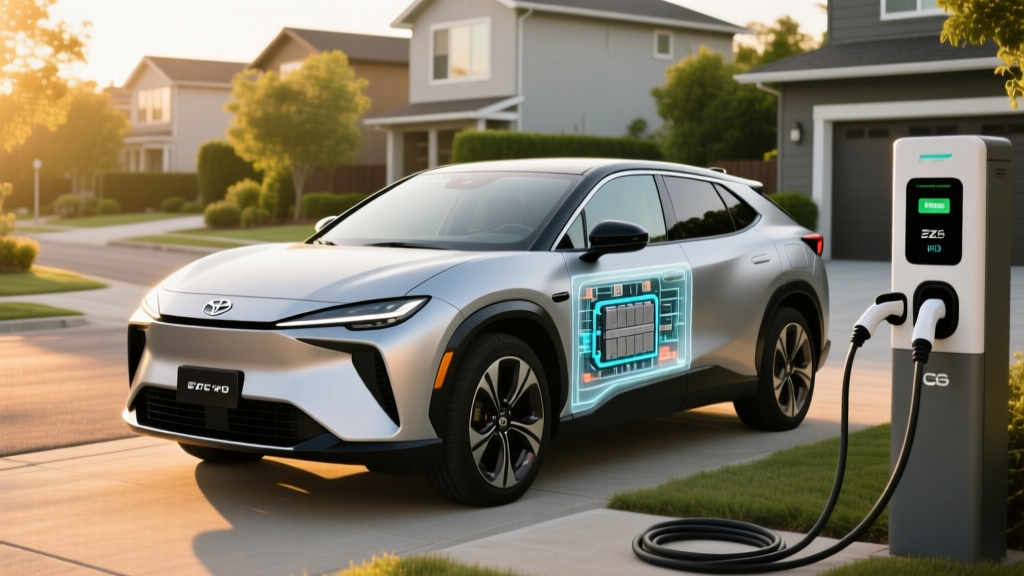
The Toyota bZ4X XLE FWD occupies a specific niche in the electric-vehicle market: it's the EV for buyers who want Toyota's reputation for reliability and long-term durability without the complexity of Tesla's ecosystem or the premium pricing of a Hyundai Ioniq 5. For 2026, the front-wheel-drive XLE remains the volume trim — a practical commuter crossover with 252 miles of EPA-estimated range, respectable DC fast-charging capability, and a starting price that undercuts many rivals before incentives.
But the bZ4X is not without compromises. Its charging speed trails class leaders, its real-world highway range falls noticeably below the EPA sticker, and its infotainment system still lags behind competitors in responsiveness. If you're a daily commuter who charges at home and rarely road-trips more than 150 miles one-way, the bZ4X XLE FWD makes a compelling case. If you need rapid DC charging for cross-country travel or cutting-edge tech, you'll want to cross-shop carefully.
Range, Efficiency & Real-World Expectations
The 2026 Toyota bZ4X XLE FWD carries an EPA-estimated range of 252 miles on a full charge, with a combined efficiency rating of 114 MPGe (approximately 29 kWh per 100 miles). That EPA figure applies specifically to the FWD XLE trim — stepping up to the Limited FWD drops range to 236 miles due to larger wheels, while AWD trims range from 228 to 252 miles depending on configuration.
The EPA's 252-mile estimate assumes a mix of city and highway driving at moderate temperatures. In real-world conditions:
- City/suburban commuting (spring/fall): Expect 240–260 miles — regenerative braking in stop-and-go traffic helps recover energy.
- Sustained highway driving at 70–75 mph: Expect 210–230 miles. The bZ4X's aerodynamic profile is decent but not class-leading, and higher speeds hit efficiency hard.
- Cold weather (below 32°F): Expect 170–200 miles. The bZ4X uses a resistive PTC heater rather than a heat pump on FWD trims, which draws significant energy from the battery in winter conditions. This is one of the bZ4X's most notable ownership realities for cold-climate buyers.
The usable battery capacity is 71.4 kWh (gross capacity approximately 74.4 kWh), using NMC (nickel manganese cobalt) lithium-ion chemistry supplied by Panasonic. Toyota has taken a conservative approach to battery management — the buffer above and below the usable window is relatively generous, which should aid long-term degradation but limits the range you'd get from a physically larger pack. The bZ4X does not offer an LFP (lithium iron phosphate) battery option; Toyota has reserved LFP for future, lower-cost models.
| EPA Range | 252 miles |
| Battery (Usable / Gross) | 71.4 kWh / ~74.4 kWh (NMC) |
| Efficiency | 114 MPGe combined (29 kWh/100 mi) |
| Drivetrain | FWD, single front motor |
| Horsepower / Torque | 201 hp / 196 lb-ft |
| 0–60 mph | ~7.1 seconds |
| Max DC Fast Charge | 150 kW (CCS1) |
| 10–80% DC Charge Time | ~30 minutes |
| Level 2 Charging | 7.2 kW onboard charger (~25 mi/hr) |
| Cargo Volume | 27.7 cu ft (rear seats up) / 56.9 cu ft (folded) |
| Base MSRP (XLE FWD) | ~$38,465 (incl. destination) |
Charging Speed: DC Fast, Level 2 & Home Setup
Charging is where the bZ4X generates the most debate among EV buyers. Here are the exact numbers you need:
| Charging Level | Power | Speed | Notes |
|---|---|---|---|
| Level 1 (120V) | ~1.4 kW | ~4 mi/hr | Emergency/trickle only; full charge ~50+ hours |
| Level 2 (240V, 32A) | 7.2 kW | ~25 mi/hr | Full charge in ~10 hours; ideal for overnight |
| DC Fast Charge | 150 kW peak | 10–80% in ~30 min | CCS1 connector; tapers significantly above 80% |
The charging-curve reality: The bZ4X peaks at approximately 150 kW on a DC fast charger, but like all EVs, it doesn't sustain that rate. The peak occurs between roughly 10–40% state of charge. By 60% SoC, the rate drops to around 100 kW, and above 80% it falls sharply to protect battery health. A 10–80% session takes approximately 30 minutes at a 150 kW or higher station. If you arrive at a 350 kW Electrify America or Tesla Supercharger (with adapter), the bZ4X will only pull what it can handle — 150 kW max.
How does this compare? The Hyundai Ioniq 5 and Kia EV6 (both on the E-GMP platform with 800V architecture) can peak at 240 kW and complete a 10–80% charge in approximately 18 minutes. The Tesla Model Y peaks around 250 kW. The bZ4X's 30-minute 10–80% time is adequate for highway rest stops but noticeably slower than the class benchmark. For buyers who road-trip frequently, this 12-minute gap per stop adds up.
Home charging: The onboard charger is limited to 7.2 kW, meaning even if you install a 48-amp (11.5 kW) Level 2 home charger, the bZ4X will only accept 7.2 kW (approximately 32 amps). A full charge from empty takes roughly 10 hours on Level 2. For most owners who plug in overnight and start each morning near 100%, this is perfectly fine — but it means investing in a higher-amperage home charger yields no benefit for this vehicle.
The bZ4X uses the CCS1 connector for DC fast charging and the J1772 connector for Level 2 AC charging. Toyota has confirmed NACS (Tesla-style) adapter compatibility for Supercharger network access, expanding the bZ4X's public charging options significantly in 2026.
Performance & Driving Dynamics
The XLE FWD pairs a single front-mounted electric motor producing 201 horsepower and 196 lb-ft of torque. The 0–60 mph time clocks in at approximately 7.1 seconds — adequate for merging and passing but not thrilling by EV standards. The instant torque delivery makes it feel quicker around town than the number suggests, and the single-speed reduction gear means seamless, interruption-free acceleration.
Ride quality is a genuine strength. The bZ4X rides on Toyota's e-TNGA platform, and the suspension tuning prioritizes comfort over sportiness. Road noise is well-managed at highway speeds, and the steering is light and predictable — exactly what the target commuter buyer wants. The turning radius is tight at 18.4 feet, making parking-lot maneuvering easy.
Regenerative braking offers multiple levels selectable via paddle shifters behind the steering wheel, but the bZ4X does not offer true one-pedal driving that brings the car to a complete stop. You'll still need the friction brake pedal for final stops — a choice that frustrates some EV veterans but feels natural to first-time EV buyers transitioning from gas cars.
Interior, Tech & Cargo Space
Inside, the bZ4X XLE FWD seats five with 42.1 inches of front legroom and 35.4 inches of rear legroom. The rear seat is comfortable for two adults on longer trips but snug for three across. The flat floor (no transmission tunnel) helps middle-seat usability.
Cargo volume measures 27.7 cubic feet behind the rear seats and 56.9 cubic feet with the 60/40 split rear seats folded. Notably, the bZ4X does not have a front trunk (frunk) — the space under the hood is occupied by power electronics. This is a missed opportunity for bonus storage that competitors like the Ford Mustang Mach-E and Hyundai Ioniq 5 provide.
Infotainment: The XLE trim comes with a 12.3-inch touchscreen running Toyota's latest Audio Multimedia system with wireless Apple CarPlay and Android Auto, built-in navigation, and a Wi-Fi hotspot. The system is a significant improvement over earlier Toyota interfaces, but response times still trail the snappiness of Tesla's or Hyundai's systems. Physical knobs for volume and tuning are a welcome ergonomic choice.
Driver assistance: Every bZ4X includes Toyota Safety Sense 3.0, which bundles:
- Pre-Collision System with pedestrian detection
- Full-Speed Range Dynamic Radar Cruise Control
- Lane Departure Alert with Steering Assist
- Lane Tracing Assist
- Road Sign Assist
- Proactive Driving Assist (gentle braking/deceleration in certain scenarios)
Toyota Safety Sense 3.0 is a Level 2 driver-assistance system per SAE classification. This means it can simultaneously control steering and speed under certain conditions, but the driver must remain fully engaged — hands on or near the wheel, eyes on the road. It is not a self-driving system. The bZ4X does not offer hands-free driving like GM's Super Cruise or Ford's BlueCruise.
Standout features on the XLE: Heated front seats, heated steering wheel, power liftgate, panoramic fixed glass roof (with shade), six USB-C ports across both rows, and a 6-speaker audio system. The digital gauge cluster is positioned high on the dash (similar to Peugeot's i-Cockpit concept), which some drivers find requires an adjustment period depending on seating position.
Pricing, Trims & Federal Tax Credit Eligibility
The 2026 Toyota bZ4X XLE FWD starts at approximately $38,465 including destination charges. The lineup breaks down as follows:
| Trim | Drivetrain | MSRP (incl. dest.) | Est. After $7,500 Credit* |
|---|---|---|---|
| XLE | FWD | ~$38,465 | ~$30,965 |
| XLE | AWD | ~$40,465 | ~$32,965 |
| Limited | FWD | ~$43,465 | ~$35,965 |
| Limited | AWD | ~$45,465 | ~$37,965 |
*Tax credit figures assume full eligibility under IRS §30D. Actual credit amount varies based on battery component and critical-mineral sourcing requirements, buyer income, and MSRP caps. See eligibility checklist below.
The bZ4X qualifies under the SUV MSRP cap of $80,000 (all trims are well below). To claim the credit, you must also meet:
- Income caps: Modified AGI must not exceed $150,000 (single), $225,000 (head of household), or $300,000 (married filing jointly).
- Battery sourcing: The credit is split into two halves — $3,750 for critical-minerals sourcing and $3,750 for battery-component manufacturing. The bZ4X's Panasonic-supplied battery has historically qualified for at least partial credit. Sourcing requirements tighten annually; verify current-year eligibility at IRS.gov's clean vehicle list.
- Point-of-sale transfer: As of 2024, you can transfer the credit to the dealer at purchase, reducing your out-of-pocket cost immediately rather than waiting for a tax refund.
- Final assembly: The bZ4X is assembled in Japan, which under current §30D rules does not disqualify it for the credit (the North American assembly requirement was removed for the commercial vehicle credit pathway, and consumer credit rules continue to evolve). Confirm with your dealer and a tax professional before purchase.
Tax credit rules change frequently. Always verify with irs.gov and consult a tax professional before making a purchase decision based on incentive eligibility.
Warranty & Long-Term Ownership
Toyota backs the bZ4X with one of the strongest warranty packages in the mainstream EV segment:
- Basic vehicle warranty: 3 years / 36,000 miles
- Powertrain warranty: 5 years / 60,000 miles
- Hybrid/EV battery warranty: 8 years / 100,000 miles (covers defects and capacity loss below 70% of original capacity)
- Rust perforation: 5 years / unlimited miles
- Complimentary maintenance: 2 years / 25,000 miles (Toyota Care)
The battery warranty's 70% capacity-retention threshold is industry-standard (matching most competitors). Toyota's track record with hybrid battery longevity — dating back to the original Prius in 1997 — provides real-world confidence that the company's battery management strategies are conservative and durable. Early bZ4X degradation data from high-mileage owners suggests the NMC pack holds up well under Toyota's thermal management, though long-term data (150,000+ miles) is still accumulating for this specific platform.
Insurance costs: EV insurance premiums typically run 10–20% higher than comparable gas vehicles due to repair complexity and parts cost. Expect annual premiums in the $1,600–$2,200 range depending on your location, driving record, and coverage level. Get quotes before purchasing.
Pros, Cons & Who Should Buy the bZ4X XLE FWD
- Comfortable, quiet ride quality ideal for commuting
- Competitive EPA range (252 mi) for the price point
- Strong Toyota Safety Sense 3.0 suite standard on all trims
- Generous 8-year/100,000-mile battery warranty
- Well under the $80,000 MSRP cap for federal tax credit
- Physical climate and volume controls (not all buried in touchscreen)
- Good front-seat legroom (42.1 in)
- NACS adapter compatibility opens Supercharger network
- DC charging speed (150 kW peak, ~30 min 10–80%) trails class leaders
- No heat pump on FWD trims — cold-weather range loss is significant
- No front trunk (frunk) for additional storage
- Infotainment responsiveness lags behind Hyundai/Kia and Tesla
- 7.2 kW onboard charger limits benefit of higher-amp home chargers
- No true one-pedal driving (doesn't come to full stop with regen alone)
- Rear cargo space (27.7 cu ft) is below segment average
- High-mounted instrument cluster isn't ideal for all seating positions
Choose the bZ4X XLE FWD if:
- You primarily commute 30–80 miles round-trip and charge at home overnight
- You value Toyota's reliability reputation and plan to own the vehicle 8+ years
- You live in a mild climate (limited cold-weather range loss)
- You want a straightforward EV without a steep learning curve
- Your road trips are typically under 200 miles one-way (one DC stop)
Look elsewhere if:
- You road-trip frequently and need the fastest possible DC charging (consider Ioniq 5 or EV6)
- You live in a cold climate and need maximum winter range (the lack of a heat pump hurts)
- You want a frunk, maximum cargo space, or hands-free highway driving
- You want the most cutting-edge infotainment or over-the-air update ecosystem
How It Stacks Up Against Key Competitors
| Spec | Toyota bZ4X XLE FWD | Hyundai Ioniq 5 SE Std Range | Tesla Model Y RWD |
|---|---|---|---|
| EPA Range | 252 mi | 220 mi | ~280 mi |
| Battery | 71.4 kWh (NMC) | 58 kWh (NMC) | ~60 kWh (LFP) |
| DC Fast Charge (Peak) | 150 kW | ~185 kW | ~250 kW |
| 10–80% Time | ~30 min | ~25 min | ~22 min |
| 0–60 mph | 7.1 sec | ~7.5 sec | ~6.5 sec |
| Cargo (rear seats up) | 27.7 cu ft | 27.2 cu ft | 30.2 cu ft |
| Starting MSRP | ~$38,465 | ~$42,000 | ~$44,990 |
The bZ4X XLE FWD undercuts the Ioniq 5 and Model Y on base price while offering competitive range. Where it loses ground is charging speed — the Ioniq 5's 800V architecture and the Model Y's higher peak kW both deliver meaningfully shorter charging stops. If your budget is firm around $38K–$40K and you prioritize low purchase price and Toyota's warranty, the bZ4X is compelling. If you can stretch to $42K–$45K and road-trip often, the Ioniq 5 or Model Y offer more capable charging platforms.
Frequently Asked Questions
What is the real-world range of the Toyota bZ4X XLE FWD?
The EPA rates the bZ4X XLE FWD at 252 miles combined. In real-world driving, expect approximately 240–260 miles in mild city/suburban conditions, 210–230 miles on sustained highway trips at 70+ mph, and 170–200 miles in freezing temperatures. The lack of a heat pump on FWD trims makes cold-weather range loss more pronounced than in EVs equipped with heat pump systems.
How fast does the bZ4X charge at home and on the road?
At home on a 240V Level 2 charger, the bZ4X accepts up to 7.2 kW, adding approximately 25 miles of range per hour and achieving a full charge from empty in about 10 hours. On a DC fast charger, it peaks at 150 kW and charges from 10–80% in approximately 30 minutes. The onboard charger's 7.2 kW ceiling means there's no benefit to installing a 48-amp or higher home charger for this vehicle.
How much does the bZ4X XLE FWD cost after tax credits?
The 2026 bZ4X XLE FWD starts at approximately $38,465 including destination. If you qualify for the full $7,500 federal tax credit under IRS §30D (subject to income caps, battery sourcing requirements, and MSRP limits), the effective price drops to roughly $30,965. The credit can be transferred to the dealer at point of sale, reducing your upfront cost immediately. State and local incentives may further reduce the price — check your state's energy office for current programs.
Does the Toyota bZ4X qualify for the federal EV tax credit?
The bZ4X is listed on the IRS clean vehicle eligibility list and falls well under the $80,000 MSRP cap for SUVs. However, the actual credit amount ($3,750, $7,500, or $0) depends on current-year battery critical-mineral and component sourcing requirements, which tighten annually. Your personal eligibility also depends on income caps ($150K single / $300K married filing jointly). Always verify on the IRS clean vehicle page before purchasing.
Is the Toyota bZ4X worth buying vs. competitors?
The bZ4X XLE FWD is worth serious consideration if you prioritize a low purchase price, Toyota's long-term reliability record, a strong battery warranty, and a comfortable commuting experience. It falls short of the Hyundai Ioniq 5 and Kia EV6 in DC charging speed and tech polish, and the Tesla Model Y offers more range, a frunk, and faster charging at a higher price. For the buyer who wants a dependable, no-drama EV for daily use with minimal charging complexity, the bZ4X delivers. For road warriors or tech enthusiasts, competitors offer more.
Does the bZ4X have a heat pump?
The FWD trims (XLE and Limited FWD) do not include a heat pump — they use a conventional PTC resistive heater for cabin warmth, which draws significantly more energy from the battery in cold weather. Some AWD trims have offered a heat pump in certain markets and model years. If cold-weather efficiency is a priority, confirm the specific equipment on the trim you're considering.
Can I use Tesla Superchargers with the bZ4X?
Yes. Toyota offers a NACS adapter that allows the bZ4X (equipped with a CCS1 port) to access Tesla's Supercharger network. This significantly expands your public fast-charging options, especially in areas where Electrify America or other CCS networks have limited coverage.
Sources: EPA Fuel Economy — Toyota bZ4X, Toyota bZ4X Official Specifications, IRS Clean Vehicle Credit Eligibility. Pricing and incentive data reflect 2026 model year information available at time of publication; verify with your dealer.