The Toyota bZ4X and the Federal EV Tax Credit: What You Need to Know for 2026
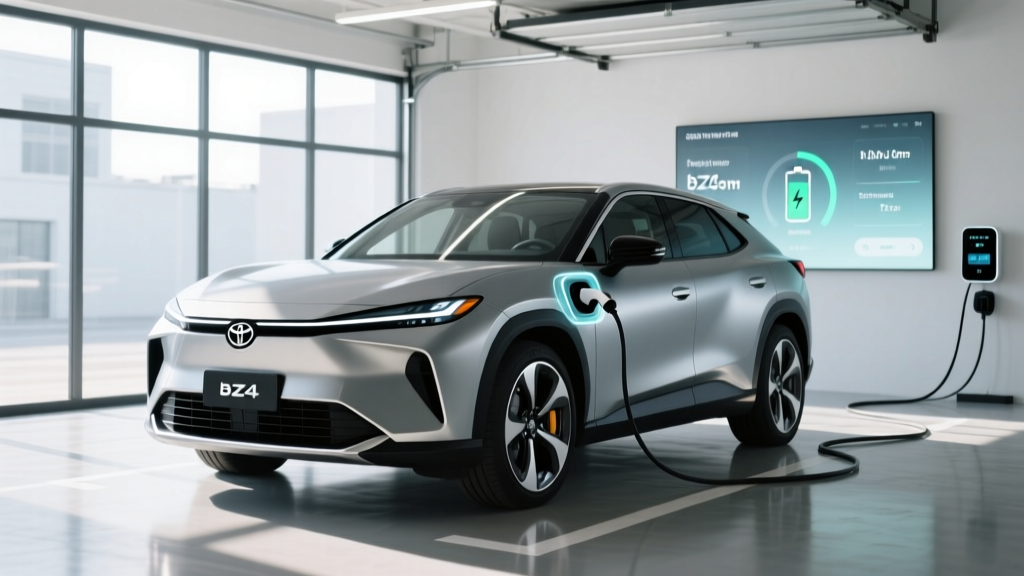
If you're researching the Toyota electric vehicle tax credit, you're likely weighing whether the 2026 Toyota bZ4X — Toyota's sole all-electric model currently on sale in the U.S. — qualifies for the up-to-$7,500 federal incentive under IRS §30D. The short answer is nuanced: eligibility depends on your income, the vehicle's MSRP, and where its battery materials are sourced. And unlike the early days of the credit, you can now transfer the credit to the dealer at the point of sale, effectively reducing your purchase price on the spot.
But the tax credit is only one piece of the ownership equation. This guide walks through the full 5-year cost picture — purchase price, charging, insurance, maintenance, and depreciation — so you can decide whether a bZ4X makes financial sense for your situation.
Does the Toyota bZ4X Qualify for the §30D Federal Tax Credit?
The 2026 Toyota bZ4X is assembled in Japan, which creates complications under the current battery-sourcing and critical-mineral requirements of §30D. The credit is split into two halves — $3,750 for meeting critical-mineral sourcing thresholds and $3,750 for battery-component manufacturing requirements. Vehicles assembled outside North America face additional hurdles under the foreign entity of concern (FEOC) rules that have tightened since 2024.
As of the 2026 model year, the bZ4X's eligibility for the full or partial credit depends on Toyota's evolving supply chain for battery minerals and components. Buyers should verify current eligibility using the VIN-lookup tool on fueleconomy.gov before relying on the credit in their purchase math.
§30D Federal Tax Credit Eligibility Checklist (2026 Rules)
- Buyer income cap: Modified AGI must not exceed $150,000 (single), $225,000 (head of household), or $300,000 (joint filers)
- MSRP cap: The vehicle's manufacturer's suggested retail price must be $55,000 or less for SUVs (the bZ4X qualifies as an SUV)
- Battery sourcing: Critical minerals and battery components must meet phased-in percentage thresholds; FEOC-sourced materials are disqualified
- Vehicle assembly: Final assembly must occur in North America — this is a key disqualifier for the Japan-built bZ4X under current rules
- Point-of-sale transfer: If eligible, you can transfer the credit to the dealer at purchase to reduce your out-of-pocket cost, rather than waiting to claim it on your tax return
- One vehicle per taxpayer per year; credit is non-refundable (you must have tax liability to claim it if not transferred at sale)
Source: IRS §30D Clean Vehicle Credit. Rules are subject to legislative change — always verify before purchasing.
State, Local, and Utility Incentives Vary Widely
Federal credit is only part of the picture. Many states and utilities offer additional rebates — for example, California's CVRP (up to $7,000 for income-eligible buyers), Colorado's $5,000 state credit, or utility rebates of $500–$1,500 for home charger installation. These programs have their own income caps, residency requirements, and funding limits. Check your state energy office and local utility for current availability. We cannot list exact amounts here because they change frequently and vary by jurisdiction.
2026 Toyota bZ4X: Key Specs at a Glance
| Specification | bZ4X XLE (FWD) | bZ4X XLE (AWD) |
|---|---|---|
| Base MSRP | $38,465 | $40,865 |
| Battery (usable) | 71.4 kWh (NMC) | 72.8 kWh (NMC) |
| EPA Range | 252 miles | 228 miles |
| Combined MPGe | 119 MPGe | 102 MPGe |
| Peak DC Fast Charge | 150 kW | 150 kW |
| 10–80% DC Charge Time | ~30 minutes | ~30 minutes |
| Level 2 Charge Rate | 6.6 kW | 6.6 kW |
| Horsepower | 201 hp | 214 hp |
| 0–60 mph | 7.1 sec | 6.5 sec |
| Battery/Powertrain Warranty | 8 years / 100,000 miles | |
Real-World Range vs. EPA Sticker
The FWD bZ4X carries an EPA estimate of 252 miles. In real-world highway driving at 70–75 mph, expect approximately 210–230 miles. In cold weather (below 30°F), range can drop 15–25%, putting realistic winter range around 180–200 miles for the FWD model. The bZ4X's 150 kW peak DC charge rate is moderate by 2026 standards — many competitors now peak at 200–350 kW — and the charge curve tapers significantly above 80% SoC, so plan fast-charging stops around the 10–80% window.
5-Year Total Cost of Ownership: bZ4X vs. Comparable Gas SUV
To put the Toyota electric vehicle tax credit in context, let's model 5-year ownership costs for the bZ4X FWD against a similarly priced gas crossover — the 2026 Toyota RAV4 LE AWD (MSRP ~$31,000, combined 30 MPG). We assume 15,000 miles/year, $0.14/kWh for home charging (national average), $3.40/gallon for regular unleaded, and that the bZ4X buyer qualifies for a partial $3,750 credit applied at point of sale.
| Cost Category (5 Years) | bZ4X FWD (EV) | RAV4 LE AWD (Gas) |
|---|---|---|
| Purchase Price (after credit) | $34,715* | $31,000 |
| Fuel / Electricity | $5,250 | $8,500 |
| Maintenance | $1,800 | $4,200 |
| Insurance (est.) | $11,500 | $8,750 |
| Depreciation (est. 5-yr) | $19,000 | $14,500 |
| Total 5-Year Cost | $72,265 | $66,950 |
*Assumes $3,750 partial credit applied at POS. Full credit eligibility, state incentives, or dealer discounts would shift this number. Depreciation estimates based on current EV resale trends. Insurance based on national averages — your rate will vary by profile and zip code.
The EV saves roughly $3,250 in fuel and $2,400 in maintenance over five years, but gives back some of that advantage through higher insurance premiums and steeper depreciation. If you qualify for the full $7,500 credit plus a state rebate, the math shifts meaningfully in the bZ4X's favor.
Charging vs. Gas: The Per-Mile Math
| Metric | bZ4X FWD | RAV4 LE AWD (Gas) |
|---|---|---|
| Energy Source | Electricity ($0.14/kWh avg) | Regular Unleaded ($3.40/gal) |
| Efficiency | 3.4 miles/kWh (119 MPGe) | 30 MPG combined |
| Cost Per Mile | $0.041 | $0.113 |
| Annual Fuel Cost (15k mi) | $615 | $1,700 |
| 5-Year Fuel Cost | $3,075 (home charging) | $8,500 |
Home charging at $0.14/kWh delivers a per-mile cost roughly one-third that of gasoline. However, if you rely heavily on DC fast charging — where rates typically run $0.35–$0.55/kWh at networks like Electrify America or EVgo — your per-mile cost climbs to $0.10–$0.16, approaching or exceeding gasoline. The savings case for EVs depends heavily on reliable home or workplace Level 2 charging access.
Maintenance Savings: Where EVs Shine
| Service Item | bZ4X (EV) | RAV4 (Gas) |
|---|---|---|
| Oil Changes | None | Every 10,000 mi (~$50–80 each) |
| Transmission Fluid | None (single-speed reducer) | Periodic replacement |
| Brake Pad Replacement | Rarely (regen braking reduces wear) | Every 30,000–50,000 mi |
| Spark Plugs / Ignition | None | Every 60,000–100,000 mi |
| Engine Air Filter | None (cabin filter only) | Every 15,000–30,000 mi |
| Coolant Flush | Yes (battery thermal system) | Yes |
| Tire Rotation | Every 5,000–7,500 mi (EVs can wear tires faster due to torque/weight) | Every 5,000–7,500 mi |
| Est. 5-Year Maintenance Total | ~$1,800 | ~$4,200 |
The bZ4X eliminates the entire internal-combustion maintenance schedule — no oil, no plugs, no timing belt. Regenerative braking significantly extends brake pad life; many EV owners report original pads lasting past 80,000 miles. The one area where EVs don't save money: tires. The bZ4X's instant torque and ~4,300-lb curb weight accelerate tire wear compared to a lighter gas crossover.
Insurance Costs: The Uncomfortable Reality
EVs typically cost 15–25% more to insure than comparable gas vehicles. The bZ4X is no exception. Several factors drive this:
- Higher repair costs: Battery pack damage in a collision can total a vehicle that would otherwise be repairable. Specialized high-voltage training is required for body shops.
- Parts availability: EV-specific components (power electronics, battery modules) are costlier and sometimes slower to source.
- Vehicle MSRP: The bZ4X's higher purchase price means higher comprehensive/collision coverage costs.
- Total-loss frequency: Insurers are still calibrating battery-damage thresholds, leading to more total-loss declarations after moderate accidents.
National averages put EV insurance at roughly $2,300/year versus $1,750/year for a gas equivalent — a difference of ~$550 annually or $2,750 over five years. However, rates vary enormously by zip code, driving record, and insurer. Some carriers now offer EV-specific policies with battery coverage riders. Always get a firm quote before purchasing.
Depreciation and Resale Value Trends
EV depreciation has been one of the more volatile ownership variables. In 2023–2024, used EV prices dropped sharply as Tesla cut new-vehicle prices, inventory piled up, and early-adopter demand softened. The bZ4X was affected — 1-year-old examples were selling 30–40% below MSRP in some markets.
By 2026, the depreciation picture has stabilized somewhat as the market adjusts, but EVs still tend to depreciate faster than Toyota's gas models, which hold value exceptionally well. Expect the bZ4X to retain roughly 45–50% of its purchase price after 5 years, versus 55–60% for a RAV4. That translates to roughly $4,500 more in depreciation cost for the EV over five years.
Factors that help bZ4X resale: Toyota's brand reputation, the 8-year/100,000-mile battery warranty, and growing mainstream EV acceptance. Factors that hurt it: competitive pressure from newer EVs with faster charging and longer range, and buyer wariness about battery health on used examples.
Who Should Buy the bZ4X — and Who Should Look Elsewhere
Choose the Toyota bZ4X If:
- You want Toyota's reliability reputation and dealer network in an EV
- You have reliable home Level 2 charging and drive under 220 miles daily
- You qualify for the federal credit (or your state offers strong incentives) to offset the price premium
- You value the 8-year/100,000-mile battery warranty and Toyota Safety Sense 3.0 ADAS suite
Look at Alternatives If:
- You need over 300 miles of EPA range (consider the Hyundai Ioniq 5 at 311 mi or Tesla Model Y at 320+ mi)
- You rely on public DC fast charging and want 200+ kW peak speeds
- You want guaranteed full $7,500 federal credit eligibility — several U.S.-assembled competitors qualify
- You tow regularly (the bZ4X is not rated for towing in the U.S. market)
Frequently Asked Questions
How much does it really cost to own a Toyota bZ4X over 5 years?
Our model estimates approximately $72,265 over five years for the FWD XLE, assuming partial federal credit, 15,000 miles/year, and national average electricity and insurance rates. This is roughly $5,300 more than a gas RAV4 LE over the same period — but the gap narrows or reverses with full credit eligibility, state rebates, lower local electricity rates, or higher gas prices.
Do I qualify for the Toyota electric vehicle tax credit?
Eligibility for the bZ4X under §30D depends on three factors: (1) your modified AGI must fall below the income caps ($150K single / $300K joint), (2) the vehicle MSRP must be under $55,000 (the bZ4X qualifies as an SUV), and (3) the battery must meet critical-mineral and component sourcing thresholds. Because the bZ4X is assembled in Japan, the North American final assembly requirement may disqualify it under current rules. Always check fueleconomy.gov and consult a tax professional before relying on the credit.
How much do I save on fuel and maintenance with the bZ4X?
With home charging at $0.14/kWh, you'll spend roughly $615/year on electricity versus $1,700/year on gasoline for a comparable RAV4 — saving about $5,425 over five years. Maintenance savings add another ~$2,400 over five years thanks to eliminated oil changes, fewer brake replacements, and no ignition system. Combined, fuel and maintenance savings total roughly $7,800+ over five years.
Are EVs more expensive to insure than gas cars?
Yes — typically 15–25% more. For the bZ4X, expect roughly $2,300/year versus $1,750/year for a RAV4, a difference of about $550 annually. This is driven by higher repair costs, battery-damage total-loss risk, and the vehicle's higher MSRP. Get a specific quote from your insurer before buying.
How well does the Toyota bZ4X hold its value?
The bZ4X depreciates faster than Toyota's gas models but in line with the broader EV market. Expect roughly 50–55% depreciation over 5 years (retaining 45–50% of purchase price), compared to 40–45% depreciation for a RAV4. Toyota's brand strength and battery warranty provide some floor, but competitive pressure from newer EVs with faster charging weighs on resale.
Can I transfer the tax credit to the dealer at point of sale?
Yes — if the vehicle qualifies and you meet income requirements, §30D allows you to transfer the credit to the dealer at purchase, reducing your out-of-pocket cost immediately rather than waiting to claim it on your tax return. The dealer must be registered with the IRS Energy Credits Online portal. This effectively functions as a down-payment reduction.
Is the bZ4X's battery warranty adequate?
Toyota covers the bZ4X battery for 8 years or 100,000 miles against defects and excessive capacity loss (typically defined as falling below 70% state of health). This is standard for the industry and provides reasonable protection. Independent data on bZ4X battery degradation is still limited given the model's 2023 launch, but NMC chemistry in Toyota's thermal management system should provide gradual, predictable degradation.
Always verify current tax credit eligibility at irs.gov and check fueleconomy.gov for the latest EPA range and efficiency data. State and utility incentives vary by location and change frequently — consult your state energy office for current programs.