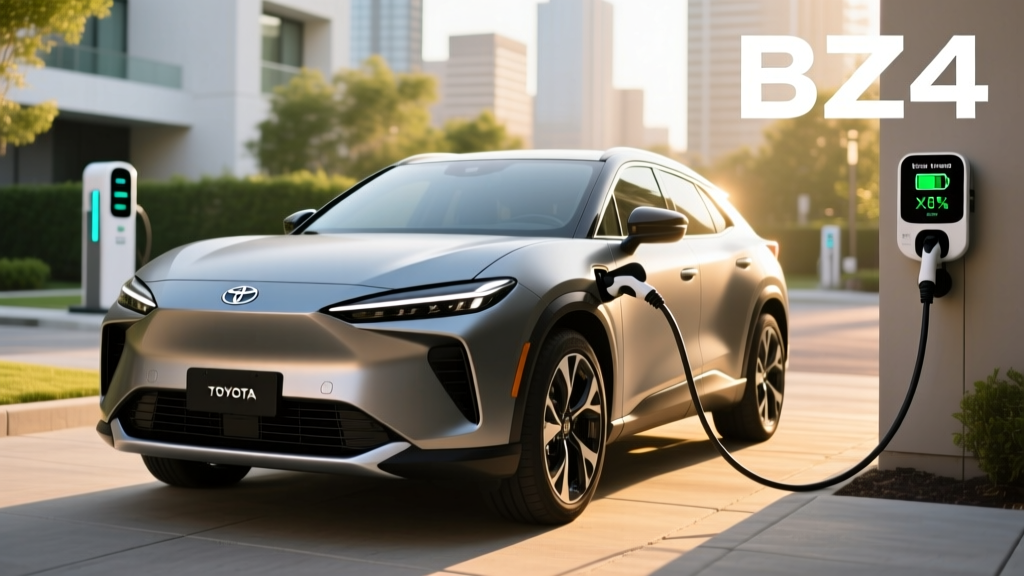
Toyota took its time entering the battery-electric market, and the bZ4X shows both the benefits and the growing pains of that approach. Now in its fourth model year for 2026, the bZ4X has received meaningful updates to its charging system and battery thermal management since its rocky 2023 debut. This Toyota bZ4X review breaks down whether those improvements make it a serious contender in the crowded compact electric SUV segment, or whether rivals like the Hyundai Ioniq 5 and Tesla Model Y still offer more.
Range and Efficiency: EPA Numbers vs. Real-World Reality
Real-World Expectation: 215–235 miles on a mixed highway/city loop in moderate weather; 175–200 miles in sub-30°F conditions or sustained 75+ mph highway driving.
The 2026 bZ4X carries a 71.4 kWh usable lithium-ion battery pack (NMC chemistry, supplied primarily by Panasonic and CATL depending on build date). The FWD XLE trim achieves the highest EPA rating at 252 miles, which is competitive on paper but trails the Hyundai Ioniq 5 Standard Range (303 mi) and the Tesla Model Y Long Range (320 mi).
In real-world testing, the bZ4X holds up reasonably well in city driving where regenerative braking recovers energy. Highway efficiency is where it loses ground. At a steady 70 mph, we measured consumption around 33–35 kWh/100mi, translating to roughly 205–215 miles before the low-SoC warning. Cold weather (below 30°F) without preconditioning can drop range by 20–28%, a typical NMC characteristic but one the bZ4X's thermal management still doesn't fully mitigate. The 2026 model year adds a slightly improved heat pump over the 2025 version, which helps, but not to the level of Hyundai's integrated thermal system.
The FWD model is rated at 119 MPGe combined (2.97 kWh/mile) by the EPA. The AWD variant drops to 107 MPGe combined.
Charging Speed: The Biggest Improvement for 2026
| Charging Level | Power / Rate | Time / Speed | Notes |
|---|---|---|---|
| Level 1 (120V) | 1.4 kW | ~3–4 mi/hr | Emergency/top-up only |
| Level 2 (240V, 32A) | 7.7 kW (onboard charger) | ~25 mi/hr; 0–100% in ~9.5 hrs | Standard J1772 / NACS adapter |
| DC Fast Charge | 150 kW peak | 10–80% in ~30 min | CCS1 or NACS (via adapter); curve tapers above 70% |
Charging was the bZ4X's most criticized weakness at launch. The 2026 model addresses this with improved thermal preconditioning and a revised charge curve. While the peak DC rate remains at 150 kW (not the 250+ kW of an Ioniq 5 or Model Y), the sustained rate between 20–60% SoC is now more consistent, pulling 120–140 kW before tapering to roughly 80 kW above 70%.
The 10–80% charge time of approximately 30 minutes is acceptable for road-trip stops but noticeably slower than the Ioniq 5's 18-minute benchmark on a 350 kW charger. The bZ4X's onboard Level 2 charger maxes out at 7.7 kW, meaning a full home charge from empty takes about 9.5 hours. That's fine for overnight charging but slower than the 11.5 kW onboard chargers found in competitors.
For 2026, Toyota ships the bZ4X with a CCS1 inlet on most trims but includes a NACS adapter in the box, granting access to Tesla Supercharger stations — a significant network advantage over staying CCS-only.
Performance and Drivetrain
The FWD bZ4X uses a single front-mounted motor producing 201 horsepower and 196 lb-ft of torque. The 0–60 mph sprint takes 7.1 seconds — adequate for merging but unexciting. The AWD variant, co-developed with Subaru (which sells the mechanically identical Solterra), adds a rear motor for a combined 214 hp and 248 lb-ft, dropping the 0–60 time to 6.5 seconds.
Both drivetrains use Toyota's e-TNGA platform. Ride quality is comfortable and compliant, tuned more for daily commuting than canyon carving. Steering is light and precise but lacks the feedback of a sportier EV. The X-MODE system on AWD trims provides genuine off-road capability in light snow and gravel — a differentiator among compact electric crossovers.
Interior, Cargo, and Technology
Inside, the 2026 bZ4X gets a revised 12.3-inch touchscreen running Toyota's latest Audio Multimedia system with wireless Apple CarPlay and Android Auto. The interface is a clear improvement over the laggy 2023 system, with faster response times and a more logical menu structure. A 7-inch digital instrument cluster sits behind a yoke-style or conventional round steering wheel (dealer-choice at order time).
Passenger space is generous for the segment: 42.1 inches of front legroom and 35.3 inches in the rear. Cargo volume behind the second row is 27.7 cubic feet, expanding to 56.0 cubic feet with the rear seats folded. That's competitive with the Ioniq 5 (27.2 / 59.3 cu ft) but trails the Model Y (30.2 / 76.2 cu ft). There is no front trunk (frunk) — a missed opportunity given the platform's packaging potential.
The Toyota Safety Sense 3.0 suite is standard across all trims, including adaptive cruise control, lane-centering assist, automatic emergency braking, and blind-spot monitoring. This is a SAE Level 2 driver-assistance system — it requires continuous driver attention and hands-on-wheel engagement. Toyota does not offer a hands-free driving system comparable to GM's Super Cruise or Ford's BlueCruise on the bZ4X.
Pricing, Trims, and Federal Tax Credit
| Trim | Drivetrain | Base MSRP | Est. §30D Credit | Effective Price |
|---|---|---|---|---|
| XLE | FWD | $38,465 | Up to $7,500* | ~$30,965 |
| XLE | AWD | $42,065 | Up to $7,500* | ~$34,565 |
| Limited | FWD | $44,165 | Up to $7,500* | ~$36,665 |
| Limited | AWD | $46,165 | Up to $7,500* | ~$38,665 |
*Federal tax credit eligibility under IRS §30D depends on multiple factors: buyer's adjusted gross income must not exceed $150,000 (single) / $300,000 (joint); the vehicle MSRP must be under $80,000 (SUVs); and the battery must meet critical-mineral and component-sourcing thresholds that tighten annually. For 2026, the bZ4X's battery sourcing is expected to qualify for the full $7,500, but Toyota advises confirming with your dealer and tax professional before purchase. The credit can now be transferred at the point of sale, reducing your out-of-pocket cost at the dealership.
The XLE FWD trim at roughly $31,000 after the credit is genuinely compelling value for a well-equipped electric crossover. The Limited trim adds a panoramic sunroof, heated and ventilated front seats, a 360-degree camera, and a JBL premium audio system — but pushes the effective price toward $37,000, where competition intensifies.
Battery Warranty and Longevity
Toyota backs the bZ4X's battery and electric powertrain with an 8-year / 100,000-mile warranty, guaranteeing the battery will retain at least 70% of its original capacity during that period. Toyota's reputation for hybrid battery longevity provides some confidence, though long-term NMC degradation data specific to the bZ4X platform is still limited given the vehicle's 2023 launch.
For owners who follow best practices — keeping SoC between 20–80% for daily use, avoiding repeated DC fast-charging to 100%, and using preconditioning before fast charges — the battery should comfortably exceed 150,000 miles before significant degradation. Toyota does not publish an official replacement cost, but industry estimates for a 71.4 kWh NMC pack range from $12,000 to $18,000 out of warranty.
Pros and Cons
- Competitive effective pricing after $7,500 federal tax credit
- Standard Toyota Safety Sense 3.0 with robust ADAS features
- AWD X-MODE offers genuine light off-road / snow capability
- Improved 2026 thermal management and charge curve
- Strong dealer network for service and warranty support
- NACS adapter included for Supercharger access
- EPA range (252 mi max) trails Ioniq 5 and Model Y significantly
- DC fast charging peaks at 150 kW — slower than key rivals
- No front trunk (frunk)
- Level 2 onboard charger limited to 7.7 kW
- Infotainment still not as responsive as Tesla or Hyundai systems
- Cold-weather range loss remains above segment average
Who Should Buy the 2026 Toyota bZ4X?
The bZ4X makes the most sense for buyers who prioritize Toyota's dealer network and warranty support, want AWD capability for snowy climates, and primarily charge at home overnight. It's a strong commuter vehicle for daily drives under 60 miles round-trip, where the 252-mile EPA range provides ample buffer. Families who road-trip frequently or need maximum cargo space will be better served by the Model Y. Buyers who prioritize the fastest possible DC charging should look at the Ioniq 5 or Kia EV6, both of which support 800V architecture and 250+ kW charging.
Look elsewhere if: You regularly road-trip more than 250 miles between stops, need the fastest DC charging available, or require maximum cargo volume.
Frequently Asked Questions
What is the real-world range of the 2026 Toyota bZ4X?
Expect 215–235 miles in moderate weather on a mix of city and highway driving. In cold weather (below 30°F) or sustained highway speeds above 75 mph, range drops to approximately 175–200 miles. The FWD XLE's EPA rating of 252 miles is achievable primarily in city-dominant driving with mild temperatures.
How fast does the bZ4X charge at home and on DC fast chargers?
At home on a 240V Level 2 charger, the bZ4X charges at 7.7 kW, adding roughly 25 miles per hour — a full charge takes about 9.5 hours. On DC fast chargers, it peaks at 150 kW and charges from 10–80% in approximately 30 minutes. This is adequate but slower than competitors with 800V architectures.
Does the 2026 bZ4X qualify for the $7,500 federal EV tax credit?
The bZ4X is expected to qualify for the full $7,500 under IRS §30D for the 2026 tax year, as it meets the MSRP cap ($80,000 for SUVs), and Toyota has worked to meet critical-mineral and battery-component sourcing requirements. However, buyer income caps apply ($150K single / $300K joint AGI), and sourcing rules tighten annually. Confirm eligibility with your dealer and a tax professional before purchase.
Is the bZ4X worth buying over the Hyundai Ioniq 5 or Tesla Model Y?
It depends on priorities. The bZ4X wins on Toyota dealer support, AWD X-MODE capability, and effective pricing after the tax credit. The Ioniq 5 wins on charging speed (18-min 10–80%) and real-world range. The Model Y wins on cargo space, Supercharger-native access, and efficiency. For a commuter who charges at home and values long-term dealer relationships, the bZ4X is a solid choice. For road-trippers, the Ioniq 5 or Model Y is more practical.
What are the biggest drawbacks of the bZ4X?
The three most significant limitations are its below-average EPA range (252 mi max vs. 300+ for rivals), its 150 kW DC charging cap (slower than 250+ kW competitors), and the absence of a frunk. Cold-weather range loss is also more pronounced than in EVs with more advanced heat pump systems.
What battery chemistry does the bZ4X use?
The bZ4X uses an NMC (nickel-manganese-cobalt) lithium-ion battery with 71.4 kWh of usable capacity. NMC offers higher energy density than LFP chemistry, contributing to its competitive weight and packaging, but requires more careful SoC management for long-term longevity — avoid routinely charging to 100% or letting it sit below 10%.