Quick Verdict: The Toyota bZ4X Limited at a Glance
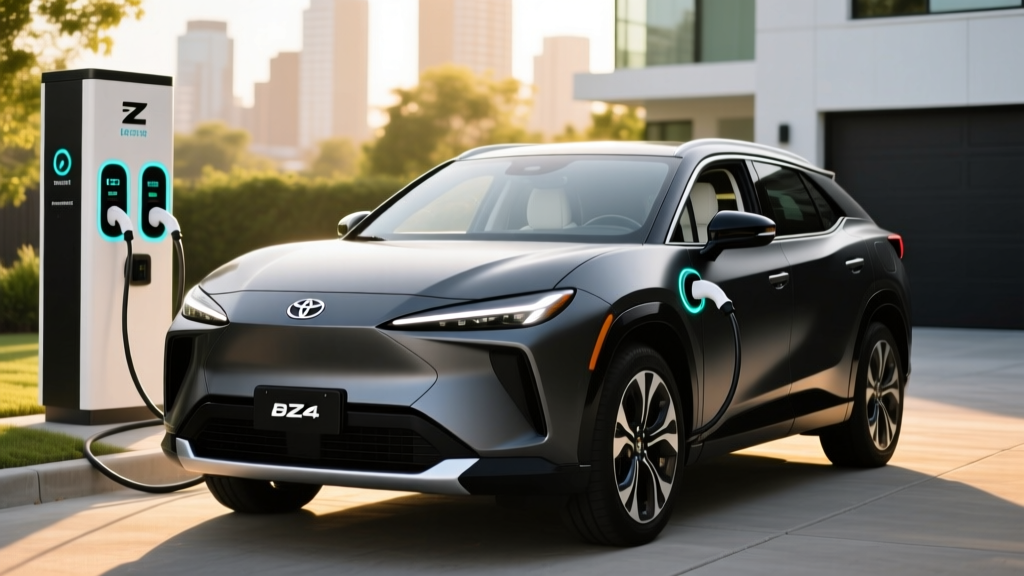
The Toyota bZ4X Limited occupies a curious space in the 2026 EV market. It's a mainstream, midsize electric crossover from one of the world's most trusted automakers — yet it trails key rivals in range, charging speed, and interior space. The Limited trim adds premium touches like a panoramic roof, heated and ventilated front seats, a 360-degree camera, and Toyota's latest Safety Sense 3.0 suite. But with an EPA-estimated 252 miles of range (AWD) and peak DC charging at 150 kW, the bZ4X Limited asks buyers to prioritize brand loyalty and build quality over spec-sheet dominance.
If you're a Toyota loyalist transitioning from a RAV4 Hybrid and your daily driving stays under 200 miles, the bZ4X Limited delivers a comfortable, well-built EV experience. If you regularly road-trip 400+ miles or need maximum cargo space, competitors like the Hyundai Ioniq 5 or Tesla Model Y make a stronger case.
| Spec | FWD | AWD |
|---|---|---|
| EPA Range | 252 mi | 228 mi |
| Battery (usable) | 71.4 kWh (NMC lithium-ion) | |
| Peak DC Fast Charge | 150 kW | |
| 10–80% DC Time | ~30 min | |
| Level 2 Charge Rate | 7.2 kW (~25 mi/hr) | |
| Motor Output | 201 hp / 196 lb-ft | 214 hp / 248 lb-ft |
| 0–60 mph | ~7.1 sec | ~5.8 sec |
| MPGe (combined) | 131 MPGe | 114 MPGe |
| kWh/100 mi | 26 | 30 |
| Cargo (rear seats up) | 27.7 cu ft | |
| Cargo (rear seats folded) | 56.9 cu ft | |
| Rear Legroom | 35.7 in | |
| Battery Warranty | 8 yr / 100,000 mi | |
| Base MSRP (Limited) | $46,700 | $48,700 |
Real-World Range: What the EPA Number Doesn't Tell You
Real-World Expectation: ~210–230 miles highway (FWD); ~185–210 miles highway (AWD). In freezing temperatures (below 32°F), expect a 20–30% reduction, dropping effective range to roughly 160–190 miles (FWD).
The bZ4X uses a 71.4 kWh usable battery pack with NMC (nickel-manganese-cobalt) chemistry. Unlike some rivals that have shifted to LFP (lithium iron phosphate) for lower-cost trims, Toyota has stuck with NMC for its higher energy density — a necessary choice given the bZ4X's relatively modest pack size.
In mixed suburban and city driving with regenerative braking set to maximum, achieving 240+ miles in the FWD model during mild weather (55–75°F) is realistic. Highway driving at 70–75 mph is where the bZ4X loses ground: its boxy crossover shape and 4,500-lb curb weight push consumption to roughly 30–33 kWh/100 mi, cutting range to around 210–220 miles for FWD and 190–200 for AWD.
Cold weather is the bZ4X's Achilles heel. Toyota includes a battery preconditioning feature for DC fast charging, but the pack lacks the active thermal management sophistication found in Hyundai's E-GMP platform or Tesla's heat pump system. In sustained sub-freezing conditions, range loss of 25–30% is typical based on owner reports and independent testing. If you live in the northern tier of the US and commute more than 150 miles daily, this is a meaningful limitation.
For context, the EPA's fueleconomy.gov listing shows the bZ4X FWD at 131 MPGe combined, which translates to 26 kWh per 100 miles — competitive with the Volkswagen ID.4 but trailing the Ioniq 5 (114 MPGe / 30 kWh/100mi for AWD is comparable, but the Hyundai offers a larger battery option).
Charging Speed: 150 kW Peak, But the Curve Tells the Story
| Charging Level | Power | Speed (approx.) | Notes |
|---|---|---|---|
| Level 1 (120V) | 1.2 kW | ~4 mi/hr | Emergency/top-up only |
| Level 2 (240V, 32A) | 7.2 kW | ~25 mi/hr | Full charge in ~10.5 hr |
| DC Fast Charge | 150 kW peak | 10–80% in ~30 min | Tapers significantly above 60% |
The bZ4X charges via CCS1 connector (Combo). Toyota has not adopted the NACS (Tesla) connector for the 2026 model year, though adapters are available for Supercharger access on older bZ4X models through Toyota's agreement with Tesla's network.
Here's what the spec sheet won't tell you: the 150 kW peak charge rate is just that — a peak. The bZ4X sustains roughly 130–150 kW between 10% and 35% State of Charge (SoC), then tapers to ~90 kW by 50%, and drops further to ~50 kW by 70%. This taper curve is noticeably more aggressive than the Hyundai Ioniq 5 (which holds near 230 kW much longer on its 800V architecture) or the Tesla Model Y (which sustains ~170–200 kW on V3 Superchargers).
The practical result: a 10–80% session takes about 30 minutes at a properly rated 150+ kW charger. That's 10–12 minutes slower than an Ioniq 5 on a 350 kW station. For road trips with multiple charging stops, those minutes accumulate.
For home charging, the onboard 7.2 kW charger means a full 0–100% session on a Level 2 home station takes roughly 10.5 hours. That's fine for overnight charging, but if you arrive home at 20% and need a full battery by morning, you'll want to ensure your Level 2 setup delivers the full 32 amps. A 48-amp home charger won't speed things up — the bottleneck is the car's onboard charger, not the wall unit.
Battery preconditioning activates when you navigate to a DC fast charger in the infotainment system. This warms the pack for faster charging, but it consumes energy from the battery — plan for ~3–5 miles of range loss during the preconditioning cycle in cold weather.
Performance and Driving Dynamics
The AWD bZ4X Limited pairs two electric motors — one on each axle — for a combined 214 horsepower and 248 lb-ft of torque. The 0–60 mph sprint takes approximately 5.8 seconds, which is adequate for merging and passing but noticeably behind the Tesla Model Y Long Range (4.8 sec) and the Ioniq 5 AWD (5.0 sec with the larger battery).
The FWD model uses a single front motor producing 201 hp and 196 lb-ft, with a 0–60 time around 7.1 seconds. It's perfectly fine for city and suburban driving but feels leisurely on highway on-ramps when fully loaded.
Ride quality is where the bZ4X earns its Toyota badge. The suspension tuning prioritizes comfort, absorbing road imperfections with a compliance that feels more refined than the firmer, sportier setups in the Ioniq 5 or Ford Mustang Mach-E. Steering is light and low-effort — ideal for parking lots, less engaging on canyon roads.
Regenerative braking offers multiple levels selectable via paddle shifters behind the steering wheel. The strongest setting provides significant deceleration but falls short of true one-pedal driving — the bZ4X creeps at very low speeds rather than coming to a complete stop. Drivers accustomed to Tesla or Nissan Leaf one-pedal behavior will need a brief adjustment period.
Interior, Cargo, and Technology
The Limited trim steps up with SofTex-trimmed seats, a panoramic fixed glass roof, a 12.3-inch touchscreen with wireless Apple CarPlay and Android Auto, a 7-inch digital instrument cluster, heated and ventilated front seats, heated rear seats, a heated steering wheel, and a 360-degree surround-view camera.
The infotainment system runs Toyota's latest Audio Multimedia platform. It's responsive and logically organized, with physical knobs for volume and tuning — a welcome choice. However, the bZ4X still uses Toyota's somewhat awkward "yoke-adjacent" instrument cluster placement, where the gauge screen sits far forward behind the steering wheel rim. Some drivers find their line of sight partially obstructed depending on seating position.
Cargo space is a weak point. At 27.7 cubic feet behind the rear seats and 56.9 cubic feet with the 60/40 split folded, the bZ4X trails the Model Y (30.2 / 72.1 cu ft), the Ioniq 5 (27.2 / 59.3 cu ft — comparable), and the VW ID.4 (30.3 / 64.2 cu ft). There is no front trunk (frunk) — the space under the hood houses electronics. For a family that regularly hauls strollers, groceries, or camping gear, this is a genuine limitation.
Rear-seat legroom measures 35.7 inches, which is adequate for adults but tighter than the Ioniq 5's generous 39.4 inches. Headroom under the panoramic roof is acceptable for passengers under 6'2".
Driver assistance comes via Toyota Safety Sense 3.0, which includes:
- Pre-Collision System with pedestrian and cyclist detection
- Lane Departure Alert with Steering Assist
- Lane Tracing Assist (centering)
- Dynamic Radar Cruise Control (full speed range)
- Road Sign Assist
- Proactive Driving Assist (gentle deceleration approaching slower vehicles)
This is an SAE Level 2 driver-assistance system. The driver must remain fully engaged, hands on the wheel, eyes on the road. It is not autonomous or "self-driving" — it provides steering centering and adaptive cruise support on well-marked highways. It works competently but lacks the hands-free capability of GM's Super Cruise or Ford's BlueCruise on approved roads.
Pricing, Tax Credit Eligibility, and Ownership Costs
| Item | FWD | AWD |
|---|---|---|
| Base MSRP | $46,700 | $48,700 |
| Destination Charge | $1,395 | $1,395 |
| As-Tested (typical options) | ~$48,500 | ~$50,500 |
| Federal Tax Credit (§30D) | Up to $7,500 (eligibility varies — see below) | |
| Effective Price After Max Credit | ~$40,595 | ~$42,595 |
The bZ4X is built in Japan, which has historically complicated its federal tax credit eligibility under IRS §30D rules. The credit requires that a percentage of critical minerals and battery components be sourced from the US or free-trade-agreement partners. As of the 2026 tax year, the bZ4X may qualify for a partial or full $7,500 credit depending on the latest battery sourcing disclosures — Toyota has worked to shift supply chains, but buyers must verify current-year eligibility.
Key §30D requirements to check before purchasing:
- MSRP cap: SUVs/crossovers must be under $80,000 — the bZ4X qualifies easily.
- Buyer income cap: Modified AGI must not exceed $150,000 (single), $225,000 (head of household), or $300,000 (joint).
- Battery sourcing: Critical minerals and battery component percentages must meet escalating annual thresholds. Check the latest IRS guidance on fueleconomy.gov for the bZ4X's current status.
- Point-of-sale transfer: As of 2024+, buyers can transfer the credit to the dealer for an immediate price reduction at purchase — no need to wait for tax filing.
Always confirm eligibility with your tax professional and the dealer before finalizing a purchase. Rules change, and sourcing compliance is updated periodically by the IRS and DOE.
Ownership economics: At the US average electricity rate of ~$0.17/kWh, charging the bZ4X from 10–80% at home costs roughly $8.50 for ~155 miles of range — about $0.055/mile. A comparable gasoline RAV4 at 28 MPG combined and $3.40/gallon costs ~$0.12/mile. Over 15,000 miles/year, that's roughly $975 in electricity vs. $1,800 in gasoline — an $825 annual fuel savings. Insurance premiums for the bZ4X run 10–15% higher than a gas RAV4, partially offsetting the fuel savings.
How the bZ4X Limited Stacks Up Against Competitors
The bZ4X Limited competes in a crowded segment. Here's how it compares to three key rivals at similar price points:
| Spec | Toyota bZ4X Limited AWD | Hyundai Ioniq 5 SEL AWD | Tesla Model Y Long Range AWD | VW ID.4 Pro S AWD |
|---|---|---|---|---|
| EPA Range | 228 mi | 290 mi | 310 mi | 263 mi |
| Battery | 71.4 kWh NMC | 77.4 kWh NMC | ~78 kWh NMC | 82 kWh NMC |
| DC Peak Charge | 150 kW | 238 kW | 250 kW | 175 kW |
| 10–80% Time | ~30 min | ~18 min | ~22 min | ~28 min |
| 0–60 mph | 5.8 sec | 5.0 sec | 4.8 sec | 5.4 sec |
| Cargo (rear up) | 27.7 cu ft | 27.2 cu ft | 30.2 cu ft | 30.3 cu ft |
| Base MSRP (comparable) | $48,700 | $52,200 | $48,990 | $49,995 |
The bZ4X trails in range and charging speed across the board. The Ioniq 5's 800V architecture gives it a decisive fast-charging advantage. The Model Y offers the most range, the best Supercharger network access, and the most cargo space. The ID.4 is the closest competitor in overall capability, with slightly more range and more cargo room.
Where the bZ4X wins: Toyota's reputation for long-term reliability, competitive pricing on the Limited trim, and a ride quality that prioritizes comfort over sportiness. If you value build consistency and dealer network breadth over spec-sheet dominance, the bZ4X makes its case.
Pros and Cons
Pros
- Comfortable, compliant ride quality — among the best in class for daily commuting
- Toyota Safety Sense 3.0 is standard and well-calibrated
- Competitive pricing for a fully loaded Limited trim
- Physical knobs and buttons complement the touchscreen
- Strong Toyota dealer network for service and warranty work
- Heated/ventilated seats and panoramic roof standard on Limited
Cons
- EPA range (228 mi AWD) trails most competitors by 30–80 miles
- DC charging tapers aggressively — 30 min 10–80% is slow for the class
- No frunk; cargo space (27.7 cu ft) is below segment average
- Rear legroom is tight compared to the Ioniq 5 and Model Y
- Cold-weather range loss is significant without best-in-class thermal management
- No hands-free driving mode (unlike BlueCruise or Super Cruise competitors)
- Instrument cluster placement is awkward for some drivers
Who Should Buy the Toyota bZ4X Limited?
Choose the bZ4X Limited if:
- You're a current Toyota owner (RAV4, Camry, Highlander) who wants to stay in the brand family
- Your daily commute is under 150 miles round-trip and you can charge at home overnight
- You prioritize ride comfort and quiet over sporty handling
- You live in a moderate climate where extreme cold-weather range loss is less of a concern
- You value Toyota's dealer network and long-term reliability track record
Look elsewhere if:
- You road-trip frequently and need 300+ miles of range with fast DC charging
- You regularly carry four adults and need generous rear-seat legroom
- You need maximum cargo capacity for family gear
- You live in a cold climate and commute more than 150 miles daily
- You want hands-free highway driving capability
Frequently Asked Questions
What is the real-world range of the Toyota bZ4X Limited?
The EPA rates the FWD bZ4X at 252 miles and the AWD at 228 miles. In real-world highway driving at 70 mph in mild weather, expect roughly 210–230 miles (FWD) and 190–210 miles (AWD). In freezing temperatures, range can drop 20–30%, yielding as little as 160–180 miles for the AWD model.
How fast does the bZ4X charge at home and on DC fast chargers?
On a Level 2 home charger (240V, 32A), the bZ4X charges at 7.2 kW, adding about 25 miles of range per hour — a full charge takes roughly 10.5 hours. On a DC fast charger, it peaks at 150 kW but tapers significantly above 50% SoC, resulting in a 10–80% time of approximately 30 minutes.
Does the Toyota bZ4X qualify for the $7,500 federal EV tax credit?
Eligibility depends on current-year IRS §30D rules, including battery critical-mineral and component sourcing requirements, buyer income caps ($150K single / $300K joint), and the $80,000 MSRP cap for SUVs. The bZ4X's MSRP qualifies, but battery sourcing compliance varies by model year and production batch. Verify current status on fueleconomy.gov and with a tax professional before purchase.
Is the bZ4X Limited worth buying over the Hyundai Ioniq 5 or Tesla Model Y?
For spec-driven buyers, the Ioniq 5 and Model Y offer more range, faster charging, and more cargo space at similar prices. The bZ4X Limited makes sense if you prioritize Toyota's brand reliability, prefer a comfort-tuned ride, and your daily driving fits within its range envelope. It's a competent EV, not a class leader.
What is the battery warranty on the bZ4X?
Toyota covers the bZ4X's high-voltage battery for 8 years or 100,000 miles, whichever comes first. The warranty guarantees the battery will retain at least 70% of its original capacity during that period. Toyota's basic limited warranty is 3 years/36,000 miles, and the powertrain warranty is 5 years/60,000 miles.
Does the bZ4X have a frunk (front trunk)?
No. The bZ4X does not have a front trunk. The space under the hood is occupied by power electronics and the HVAC system. All cargo must go in the rear cargo area (27.7 cu ft behind the second row, 56.9 cu ft with seats folded).
Can the bZ4X use Tesla Superchargers?
The 2026 bZ4X uses a CCS1 charge port. Toyota has provided access to Tesla's Supercharger network through adapters for existing bZ4X owners, and newer models may ship with NACS compatibility depending on production timing. Confirm with your dealer whether the specific vehicle includes a NACS adapter or native port.