Is a Toyota EV Right for You? The Short Answer
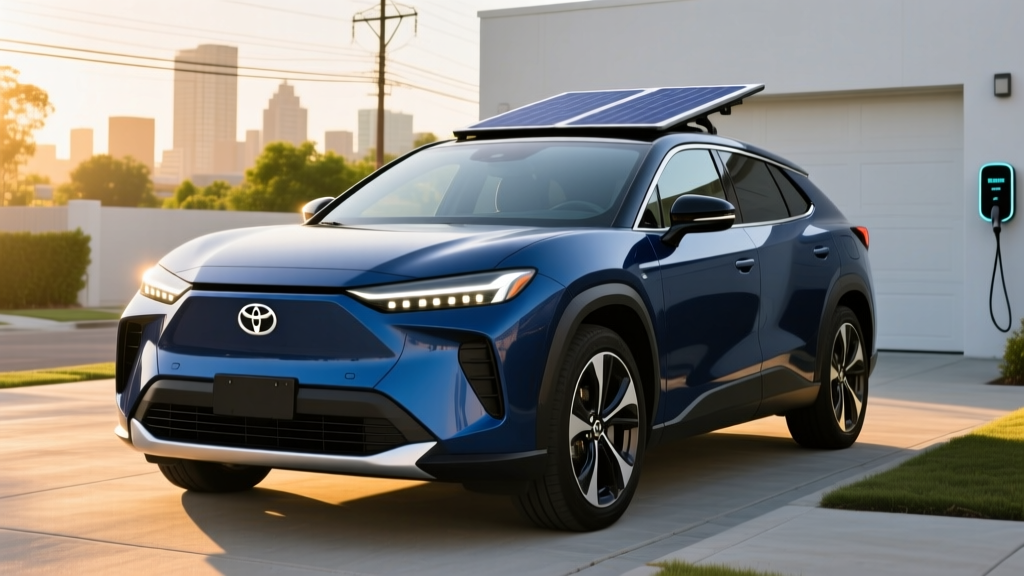
Toyota's primary electric vehicle for 2026 is the bZ4X, a compact electric SUV starting at $37,070 with an EPA-estimated range of 236 to 252 miles depending on trim and drivetrain. It's best suited for buyers who want Toyota's reliability reputation in an EV package, have access to home Level 2 charging, and primarily drive under 200 miles per day. If you regularly drive long highway stretches in cold climates or lack home charging, a Toyota hybrid (like the RAV4 Hybrid at 39 MPG combined) or plug-in hybrid (RAV4 Prime with 42 miles of electric range) may serve you better. The bZ4X qualifies for partial federal tax credit eligibility under IRS §30D rules — check current critical-mineral and battery-sourcing requirements before assuming the full $7,500.
Toyota's EV Lineup: What's Actually Available in 2026
Toyota has been more cautious about full electrification than competitors like Hyundai, Tesla, and Ford. While the company has announced a broad EV roadmap, the bZ4X remains the core battery-electric vehicle (BEV) available to US buyers. Toyota's strategy has leaned heavily on hybrids (HEVs) and plug-in hybrids (PHEVs) as bridge technologies, and that's reflected in their showroom: over a dozen hybrid models versus one dedicated EV platform.
Here's the reality of what you can actually buy:
| Model | Type | EPA Range / MPG | Battery | Starting MSRP |
|---|---|---|---|---|
| bZ4X XLE (FWD) | BEV | 252 mi | 71.4 kWh (NMC) | $37,070 |
| bZ4X XLE (AWD) | BEV | 228 mi | 71.4 kWh (NMC) | $39,120 |
| bZ4X Limited (FWD) | BEV | 236 mi | 71.4 kWh (NMC) | $43,170 |
| RAV4 Prime (PHEV) | PHEV | 42 mi electric + 38 MPG | 18.1 kWh | $43,690 |
| RAV4 Hybrid | HEV | 39 MPG combined | 1.6 kWh (self-charging) | $33,425 |
Toyota has also announced upcoming three-row EV SUVs and next-generation models on a revised platform, but these remain unreleased as of early 2026. If you need a Toyota EV today, the bZ4X is your option.
bZ4X Real-World Range: What the EPA Number Doesn't Tell You
The EPA-estimated 252 miles (FWD XLE) sounds competitive on paper, but real-world testing consistently shows the bZ4X falls short of its sticker range more than rival EVs like the Hyundai Ioniq 5 or Tesla Model Y.
Range Reality Check
EPA Estimate: 252 miles (XLE FWD) / 228 miles (XLE AWD)
Real-World Highway (65-75 mph, moderate temps): ~200-220 miles
Cold Weather (below 32°F, highway): ~165-190 miles
Why the gap? The bZ4X uses a conventional resistance heater in some trims rather than a heat pump (standard on the Ioniq 5 and Model Y). Cabin heating in cold weather draws significant energy from the 71.4 kWh battery. Highway driving at 70+ mph also increases aerodynamic drag, reducing efficiency to roughly 3.0-3.4 kWh/mile versus the EPA test cycle's mix of city and highway.
For daily commuting under 80 miles round-trip with home charging, this range is more than adequate. For road trips exceeding 200 miles, plan one charging stop and precondition the battery via the Toyota app before arriving at a DC fast charger.
Charging the bZ4X: Speeds, Connectors, and Home Setup
Charging Speed Breakdown
| Level | Power | Speed (miles/hour) | Notes |
|---|---|---|---|
| Level 1 (120V outlet) | ~1.4 kW | ~4-5 mi/hr | Emergency/trickle only; ~50 hours for full charge |
| Level 2 (240V home) | ~7.2 kW (onboard limit) | ~24-28 mi/hr | Full charge in ~9.5 hours; requires 30-40A circuit |
| DC Fast Charge | Peak ~150 kW | ~10-80% in ~30 min | Curve tapers significantly above 70%; not class-leading |
The bZ4X's DC fast-charging performance is where it trails competitors most noticeably. While Hyundai's Ioniq 5 peaks at 240 kW (10-80% in ~18 minutes on a 350 kW charger), the bZ4X tops out around 150 kW and sustains peak rate only briefly before tapering. On a 300-mile road trip, expect 30-35 minutes per stop rather than 18-20. The vehicle uses the CCS1 connector natively; a NACS (Tesla Supercharger) adapter is available for purchase, expanding your public charging network significantly.
Home charging cost: Installing a Level 2 home charger (240V, 40A circuit) typically costs $800-$2,500 including equipment and electrician labor, depending on whether your electrical panel needs an upgrade. At the US average electricity rate of ~$0.16/kWh, fully charging the 71.4 kWh battery costs roughly $11.42, translating to about $0.045 per mile — compared to ~$0.12-0.15/mile for a 30 MPG gas vehicle at $3.50/gallon.
Toyota bZ4X vs. Gas and Hybrid: The Ownership Cost Math
The purchase decision isn't just about the sticker price — it's about five-year total cost of ownership (TCO). Here's how the bZ4X stacks up against the RAV4 Hybrid and a conventional RAV4 gas model for a driver covering 15,000 miles per year.
| Cost Category (5 years) | bZ4X XLE FWD | RAV4 Hybrid XLE | RAV4 Gas LE (AWD) |
|---|---|---|---|
| Purchase Price (MSRP) | $37,070 | $35,425 | $32,025 |
| Est. Federal Tax Credit (§30D) | $3,750-$7,500* | $0 | $0 |
| Fuel / Electricity (5 yr) | $3,570 | $6,500 | $8,750 |
| Maintenance (5 yr) | ~$1,800 | ~$3,200 | ~$3,800 |
| Insurance (5 yr est.) | ~$9,500 | ~$7,800 | ~$7,500 |
| Net 5-Year Cost (before depreciation) | ~$44,440 - $48,190 | ~$52,925 | ~$52,075 |
*Tax credit eligibility under IRS §30D depends on battery critical-mineral sourcing, buyer income caps ($150K single / $300K joint), and MSRP caps ($55K for SUVs). Verify current eligibility at the point of sale — rules are subject to change. Credit may be applied as a point-of-sale discount through a registered dealer.
The bZ4X's lower fuel and maintenance costs (no oil changes, fewer brake replacements due to regenerative braking) offset its higher purchase price and insurance premiums. Insurance tends to run 15-25% higher on EVs due to battery replacement costs in collision claims. According to fueleconomy.gov, the bZ4X FWD achieves 114 MPGe combined, dramatically outperforming the gas RAV4's 28 MPG combined.
Common Toyota EV Misconceptions — Addressed with Data
| Myth | Fact |
|---|---|
| "Toyota doesn't make EVs." | The bZ4X has been on sale since 2023 and is available nationwide. Toyota also offers over 10 hybrid models and the RAV4 Prime PHEV with 42 miles of electric range. |
| "EV batteries need replacing every few years." | Toyota covers the bZ4X battery with an 8-year/100,000-mile warranty against defects and capacity loss below 70%. Real-world degradation data from NMC batteries shows most EVs retain 85-90% capacity after 100,000 miles. A full battery replacement, if needed out of warranty, runs $10,000-$15,000. |
| "The bZ4X can't handle road trips." | It can, but plan more carefully than with an Ioniq 5 or Model Y. A 400-mile trip requires two 30-minute DC fast-charge stops. Use PlugShare or the Toyota app to map CCS/NACS chargers along your route. |
| "I need a special electrical panel for an EV." | Most homes with a 200A panel and available breaker slots can support a 40A Level 2 charger circuit. Homes with older 100A panels may need a $1,500-$3,000 panel upgrade. Have a licensed electrician assess your setup. |
| "EVs are worse in the cold." | Range drops 20-30% in sub-freezing temps — this is real but manageable. Preconditioning the cabin and battery while plugged in recovers significant range. The bZ4X AWD provides competent winter traction. |
Who Should (and Shouldn't) Buy the Toyota bZ4X
The Decision Framework
Choose the bZ4X if:
- You have home Level 2 charging access (garage or driveway with 240V circuit)
- Your daily driving is under 150 miles and you road-trip 3-4 times per year or fewer
- You value Toyota's dealer network, reliability reputation, and resale brand strength
- You want an EV but prefer a conventional SUV design over futuristic styling
- You qualify for at least a partial federal tax credit, bringing the effective price below $33,000
Choose the RAV4 Prime (PHEV) instead if:
Choose the RAV4 Hybrid instead if:
- Your budget is under $35,000 and you don't qualify for EV tax credits
- You live in an apartment without charging access
- You drive in extreme cold regularly and want maximum range consistency
Look at competitors (Ioniq 5, Model Y, EV6) if:
- DC fast-charging speed is a priority (bZ4X's 30-min stops vs. 18 min for Ioniq 5)
- You need over 300 miles of EPA range
- You want access to Tesla's Supercharger network without an adapter (Model Y)
- You want a heat pump for better cold-weather efficiency (standard on Ioniq 5, Model Y)
What First-Time Toyota EV Buyers Need to Know
1. Schedule a test drive with a full charge. Ask the dealer to start with 90%+ battery so you can experience one-pedal driving and regenerative braking on a route that includes highway and city driving. The bZ4X's regen is milder than Tesla's — expect a more gradual deceleration feel.
2. Get a home electrical assessment before buying. Don't assume your home is charger-ready. A licensed electrician can evaluate your panel capacity, run a load calculation, and quote a Level 2 installation. Budget $1,200-$2,500 for a straightforward install; more if a panel upgrade is needed.
3. Understand the tax credit rules before counting on them. The IRS §30D credit has three hurdles: your income must be under the cap, the vehicle MSRP must be under $55,000 (SUVs), and the battery must meet critical-mineral and component sourcing thresholds that change yearly. The bZ4X's eligibility has fluctuated — confirm with the dealer at point of sale and cross-reference the fueleconomy.gov tax credit tracker.
4. Factor in insurance costs. Get quotes before signing. EV insurance premiums average 15-25% higher than equivalent gas vehicles. Toyota's safety suite (Safety Sense 3.0 with pre-collision, lane-tracing, and dynamic radar cruise) may help, but battery repair costs drive premiums up.
5. Download the Toyota app and set up charge scheduling. You can precondition the cabin, set charge limits (80% daily is ideal for NMC battery longevity), and locate chargers — all from your phone. Preconditioning while plugged in at home is the single best habit for preserving range in cold weather.
Frequently Asked Questions
Does the Toyota bZ4X qualify for the $7,500 federal tax credit?
Eligibility depends on current-year battery sourcing and critical-mineral rules under IRS §30D. The bZ4X has qualified for partial credits ($3,750) in recent years and may qualify for the full $7,500 depending on manufacturing sourcing updates. Buyer income must not exceed $150,000 (single) or $300,000 (joint). Always verify at the dealership — the credit can be transferred as a point-of-sale discount through a registered dealer.
How long does the bZ4X battery last?
Toyota warranties the battery for 8 years or 100,000 miles against defects and capacity loss below 70%. Based on NMC chemistry degradation curves, most owners can expect 85-90% capacity retention at 100,000 miles with normal use. Avoid routinely charging to 100% or letting the battery sit below 10% for extended periods to maximize longevity.
Can I use Tesla Superchargers with the bZ4X?
Yes, with a NACS adapter (sold separately, ~$200-$250). The bZ4X uses the CCS1 connector natively. With the adapter, you can access Tesla's Supercharger network, which is generally the most reliable public DC fast-charging infrastructure in the US. Charging speeds will still be limited by the bZ4X's ~150 kW peak acceptance rate.
Is the bZ4X good in snow and cold weather?
The AWD variant provides solid winter traction with dual motors and Toyota's traction control. However, expect 20-30% range loss in sustained sub-freezing temperatures due to cabin heating demands and reduced battery efficiency. Preconditioning while plugged in mitigates this significantly. If cold-weather range is a top priority, the RAV4 Prime PHEV or RAV4 Hybrid offers more consistent range regardless of temperature.
How does the bZ4X compare to the Hyundai Ioniq 5?
The Ioniq 5 offers faster DC charging (240 kW peak vs. ~150 kW), a heat pump for better cold-weather efficiency, and slightly more EPA range (up to 303 miles). The bZ4X counters with Toyota's dealer network, a more traditional SUV driving position, and potentially lower maintenance costs. If charging speed and range are your priorities, the Ioniq 5 is the stronger EV. If brand trust and dealer proximity matter more, the bZ4X holds its own.