Quick Answer: Is a Toyota Electric Vehicle Right for You?
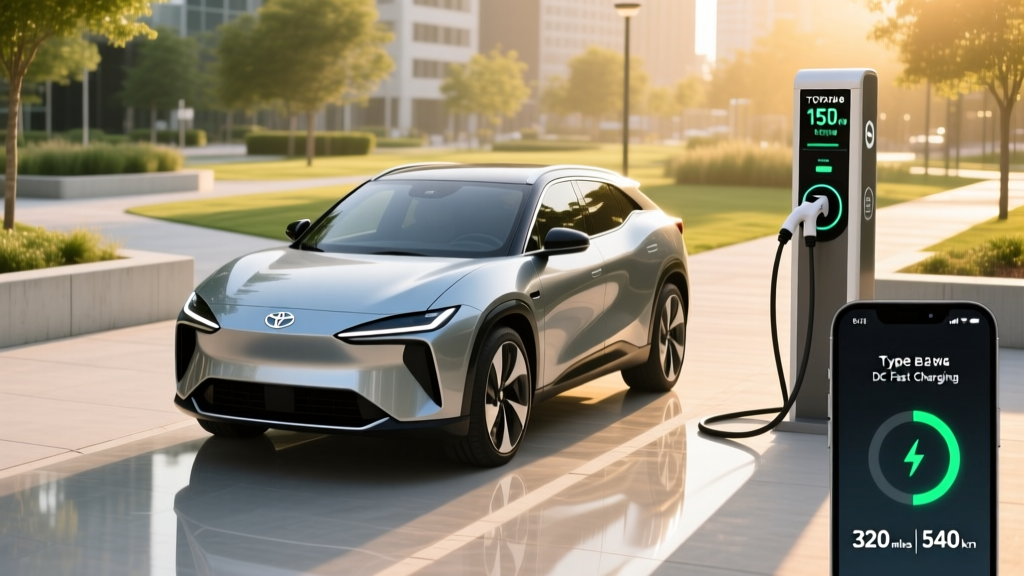
Toyota's primary battery-electric offering for 2026 is the bZ4X, a compact crossover SUV with an EPA-estimated range of 236 to 252 miles (depending on trim and drivetrain), DC fast charging up to 150 kW, and a starting MSRP around $37,070. It's best suited for buyers who want Toyota's reliability reputation, standard all-wheel drive availability, and a comfortable daily commuter — but it is not the longest-range or fastest-charging EV in its class. If you're cross-shopping a Toyota EV, you'll also want to weigh whether a Toyota hybrid (like the RAV4 Hybrid or RAV4 Prime PHEV) better fits your driving pattern, especially if you lack reliable home charging or frequently drive long highway routes in cold climates.
Toyota's 2026 EV Landscape: The bZ4X and Beyond
Toyota was famously cautious about full battery-electric vehicles, investing heavily in hybrids and hydrogen instead. That strategy has evolved. The Toyota bZ4X — developed in partnership with Subaru (which sells the mechanically similar Solterra) — remains Toyota's flagship BEV for the US market as of the 2026 model year. Toyota has also announced additional bZ-series electric models in various global markets, but the bZ4X is the core electric vehicle Toyota offers to American buyers right now.
The bZ4X rides on Toyota's e-TNGA platform and is available in two trims: XLE and Limited. Front-wheel drive is standard on the XLE, while a dual-motor all-wheel-drive system (co-developed with Subaru) is optional on XLE and standard on Limited. Here's how the numbers stack up:
| Spec | XLE FWD | XLE AWD | Limited AWD |
|---|---|---|---|
| EPA Range | 252 mi | 228 mi | 236 mi |
| Battery (usable) | 71.4 kWh (NMC lithium-ion) | ||
| Horsepower | 201 hp | 214 hp | |
| 0-60 mph | ~7.1 sec | ~5.8 sec | |
| Peak DC Fast Charge | 150 kW | ||
| 10-80% DC Charge Time | ~30 min (peak conditions) | ||
| Level 2 Charge Rate | 6.6 kW (onboard charger) | ||
| MPGe (combined) | 131 MPGe | 114 MPGe | 119 MPGe |
| Base MSRP | ~$37,070 | ~$39,140 | ~$43,880 |
| Battery/Powertrain Warranty | 8 yr / 100,000 mi (hybrid battery); 10 yr / 150,000 mi (emission-related) | ||
Real-world range caveat: The EPA figures assume mixed driving. On sustained highway trips at 70+ mph, expect roughly 10-15% less range — so about 210-225 miles for the FWD XLE. In freezing temperatures (below 32°F), range can drop 20-30% depending on cabin heating demands. The bZ4X uses a heat pump on AWD trims, which mitigates cold-weather loss somewhat, but FWD models may see sharper drops.
EPA vs. Reality: The 252-mile EPA sticker on the XLE FWD is achievable in mild weather with city-heavy driving. Plan for ~215 miles of usable highway range in summer and ~180-200 miles in winter. If your commute or road-trip pattern regularly exceeds 200 miles one-way, you'll want to map DC fast chargers along your route.
Toyota EV vs. Toyota Hybrid: The Numbers Compared
Many buyers searching for an electric vehicle from Toyota are also considering Toyota's dominant hybrid lineup. This is a rational comparison, because Toyota's hybrids are among the most efficient vehicles on the road — and they don't require any charging infrastructure. Here's how the bZ4X stacks up against two popular Toyota alternatives:
| Metric | bZ4X (XLE FWD) | RAV4 Hybrid (AWD) | RAV4 Prime (PHEV) |
|---|---|---|---|
| Powertrain | Battery Electric | Hybrid (HEV) | Plug-in Hybrid |
| EPA Range / Economy | 252 mi / 131 MPGe | 39 MPG combined | 42 mi electric + 38 MPG gas |
| Base MSRP | ~$37,070 | ~$33,575 | ~$44,590 |
| Fuel/Energy Cost per Year* | ~$600 | ~$1,550 | ~$900 (mixed) |
| Home Charging Needed? | Yes (strongly recommended) | No | Recommended for EV range |
| Federal Tax Credit (§30D) | Up to $7,500 (see rules) | None | Up to $7,500 (see rules) |
| Maintenance Cost (5-yr est.) | ~$1,500 | ~$3,000 | ~$2,800 |
*Annual energy/fuel costs based on 15,000 miles/year and national average electricity ($0.16/kWh) and gas ($3.40/gal) prices as of early 2026. Your actual costs depend on local rates and driving patterns. Source: fueleconomy.gov.
The bZ4X wins on running costs — electricity is roughly one-third the per-mile cost of gasoline in most US markets. But the RAV4 Hybrid costs less upfront, requires no charging infrastructure, and still delivers excellent efficiency. The RAV4 Prime PHEV splits the difference: 42 miles of electric-only range covers most commutes, with a gas engine for longer trips.
Real Costs of Owning the Toyota bZ4X
Buying an EV isn't just about MSRP. Here's a realistic 5-year cost breakdown for a bZ4X XLE FWD compared to a RAV4 Hybrid, assuming 15,000 miles per year:
| Cost Category | bZ4X XLE FWD | RAV4 Hybrid XLE AWD |
|---|---|---|
| Purchase Price (MSRP) | $37,070 | $33,575 |
| Federal Tax Credit (§30D) | Up to -$7,500* | $0 |
| Effective Purchase Price | ~$29,570* | $33,575 |
| Home Charger Install (Level 2) | $800-$2,500 | $0 |
| Energy/Fuel (5 years) | ~$3,000 | ~$7,750 |
| Maintenance (5 years) | ~$1,500 | ~$3,000 |
| Insurance (5 years, avg.) | ~$9,000 | ~$7,500 |
| Estimated 5-Year Total | ~$41,370-$43,070* | ~$51,825 |
*Tax credit eligibility depends on your adjusted gross income (≤$150K single / ≤$300K joint), vehicle MSRP caps ($80K for SUVs), battery critical-mineral and component sourcing requirements, and whether you elect the point-of-sale transfer. Check current rules at IRS.gov §30D and consult a tax professional.
Key takeaways from the cost math:
- The tax credit is the swing factor. If you qualify for the full $7,500, the bZ4X's effective price drops below the RAV4 Hybrid's. If you don't qualify (income above caps, or battery sourcing requirements not met), the price gap widens.
- EV insurance costs more. Expect 15-25% higher premiums for the bZ4X vs. the RAV4 Hybrid, driven by higher repair costs and battery replacement risk.
- Home charging is almost essential. Without Level 2 home charging, you'll rely on public DC fast chargers (typically $0.30-$0.50/kWh), which erases much of the fuel-cost advantage. If you cannot install a home charger — say you live in an apartment without EV infrastructure — a hybrid is the more practical Toyota.
- Maintenance savings are real. No oil changes, no spark plugs, fewer brake replacements (regenerative braking reduces pad wear). Budget roughly half the maintenance spend of a gas/hybrid vehicle.
Charging the bZ4X: What You Need to Know
The bZ4X's charging capability is adequate but not class-leading. Here's the practical breakdown:
| Level | Power | Miles Added per Hour | Use Case |
|---|---|---|---|
| Level 1 (120V outlet) | ~1.4 kW | ~3-4 mi/hr | Emergency/trickle only |
| Level 2 (240V home/public) | 6.6 kW | ~18-22 mi/hr | Daily home charging; full charge in ~11 hrs |
| DC Fast Charge | Up to 150 kW | N/A (10-80% in ~30 min) | Road trips; plan 30-min stops |
Charging curve reality: The 150 kW peak rate applies only at low state-of-charge (roughly 10-30%). Like most EVs, the bZ4X tapers charge speed significantly above 60% SoC, and especially above 80%. A 10-80% session takes roughly 30 minutes under ideal conditions (battery preconditioned, moderate ambient temperature). In cold weather without preconditioning, expect 40-50 minutes.
Connector note: The bZ4X currently uses the CCS1 connector for DC fast charging. Toyota has announced a transition to the NACS (Tesla) connector for future models, but as of the 2026 model year, the bZ4X still ships with CCS1. You can use Tesla Superchargers with a CCS-to-NACS adapter (available from Tesla and third-party suppliers), which significantly expands the fast-charging network available to bZ4X owners.
Common Misconceptions About Toyota Electric Vehicles
| Myth | Fact |
|---|---|
| "Toyota doesn't make electric cars." | Toyota sells the bZ4X BEV in the US, plus the RAV4 Prime PHEV with 42 miles of electric range. More bZ-series EVs are in development globally. |
| "The battery will need replacing in a few years." | Modern NMC batteries are designed for 15-20 years of service. Toyota warrants the battery for 8 years/100,000 miles against capacity loss below 70%. Real-world degradation data from similar platforms shows ~10-15% capacity loss over 200,000 miles. |
| "EVs are more expensive to own than gas cars." | Higher purchase price is often offset by lower fuel and maintenance costs. Over 5 years, the bZ4X can save $5,000-$8,000 vs. a comparable gas SUV — especially if you qualify for the federal tax credit. |
| "I can charge on any regular outlet." | Level 1 (120V) adds only ~3-4 miles of range per hour — adequate only for very low daily mileage. A 240V Level 2 home charger ($800-$2,500 installed) is strongly recommended for practical daily use. |
| "The bZ4X qualifies for the full $7,500 tax credit automatically." | Credit eligibility depends on your income, the vehicle's battery sourcing compliance, and MSRP caps. Rules change — always verify on IRS.gov before purchasing. |
Decision Framework: Should You Buy a Toyota EV, Hybrid, or Gas Vehicle?
Choose the Toyota bZ4X (EV) if:
- You have access to Level 2 home charging (garage or driveway with 240V circuit).
- Your daily driving is under 150 miles round-trip.
- You qualify for the §30D federal tax credit (check income and sourcing rules).
- You want the lowest per-mile operating cost and minimal maintenance.
- You value Toyota's safety tech (Toyota Safety Sense 3.0 is standard) and build quality in an EV package.
Choose the RAV4 Prime (PHEV) if:
- You want electric-only commuting (42 mi range) but also take long road trips without planning charger stops.
- You have home charging but also live in an area with sparse public DC fast-charging infrastructure.
- You want to reduce emissions and fuel costs without full EV commitment.
Choose the RAV4 Hybrid (HEV) if:
- You cannot install a home charger (apartment, street parking, no electrical access).
- You frequently drive 300+ miles in a single day in regions with limited charging.
- You want the lowest upfront purchase price with excellent fuel economy (39 MPG combined).
- You live in an extreme cold climate where EV range loss would significantly impact usability.
First-Time EV Buyer Checklist for the Toyota bZ4X
If the bZ4X is your first electric vehicle, here's what you need to prepare before delivery day:
- Audit your electrical panel. A Level 2 charger requires a dedicated 240V circuit (typically 40-50 amps). If your panel is near capacity, a panel upgrade ($1,500-$3,000) may be needed. Get a quote from a licensed electrician before committing to the car.
- Install a Level 2 charger at home. Budget $800-$2,500 for equipment and professional installation. Popular options include the ChargePoint Home Flex, Emporia Vue, and Tesla Wall Connector (with CCS adapter compatibility).
- Download charging apps. PlugShare, ChargePoint, EVgo, and Electrify America apps let you locate public chargers, check real-time availability, and initiate sessions. If you plan to use Tesla Superchargers via adapter, the Tesla app is also essential.
- Understand the charge curve. Don't plan road trips around the "150 kW" peak number. Plan for an average of ~70-90 kW across a 10-80% session, which means roughly 30-minute stops at 150 kW-capable stations.
- Check your insurance rate before buying. EV insurance is typically 15-25% higher. Get a quote with the bZ4X VIN before signing paperwork so there are no surprises.
- Verify tax credit eligibility. Use the IRS's clean vehicle credit tool at IRS.gov and consult a tax professional. The credit can be transferred to the dealer at point of sale as an instant discount if you qualify.
Frequently Asked Questions
What is the real-world range of the Toyota bZ4X?
The EPA rates the XLE FWD at 252 miles, the XLE AWD at 228 miles, and the Limited AWD at 236 miles. In real-world highway driving at 70 mph in moderate temperatures, expect roughly 215-225 miles from the FWD model. In winter (below freezing), plan for 180-200 miles. These are conservative estimates — gentle city driving in mild weather can meet or exceed the EPA number.
Does the Toyota bZ4X qualify for the $7,500 federal tax credit?
Potentially, but eligibility is not automatic. Under current IRS §30D rules, you must meet income caps ($150K single, $225K head of household, $300K joint AGI), the vehicle MSRP must not exceed $80,000 (SUVs), and the battery must meet critical-mineral and component-sourcing thresholds that change annually. Always verify on fueleconomy.gov and the IRS site before purchasing, and consider consulting a tax professional.
How long does it take to charge the bZ4X at home?
On a 240V Level 2 charger at 6.6 kW, a full charge from empty takes approximately 11 hours. In practice, most owners plug in nightly and top up from 30-80% in about 5-6 hours, which is more than enough to replenish a day's driving.
Is the bZ4X better than the Subaru Solterra?
They're mechanically identical (same e-TNGA platform, same battery, similar range). Differences are mainly cosmetic — exterior styling details, infotainment branding, and dealer experience. Compare pricing and incentives at both dealers; whichever is cheaper with better local service is the rational pick.
How does Toyota's EV warranty compare?
Toyota covers the bZ4X battery and hybrid-system components for 8 years/100,000 miles, with a capacity-retention threshold typically set at 70% of original capacity. The basic vehicle warranty is 3 years/36,000 miles, and the powertrain warranty is 5 years/60,000 miles. This is in line with industry norms, though some competitors (Hyundai/Kia) offer longer 10-year/100,000-mile battery warranties.
Can I tow with the Toyota bZ4X?
The bZ4X has a maximum towing capacity of approximately 2,000 pounds (AWD models). This is suitable for a small utility trailer or a couple of dirt bikes, but not for boat trailers or campers. Towing also significantly reduces range — expect a 30-50% reduction depending on trailer weight and aerodynamics.