Quick Answer: Toyota's Electric Lineup in 2026
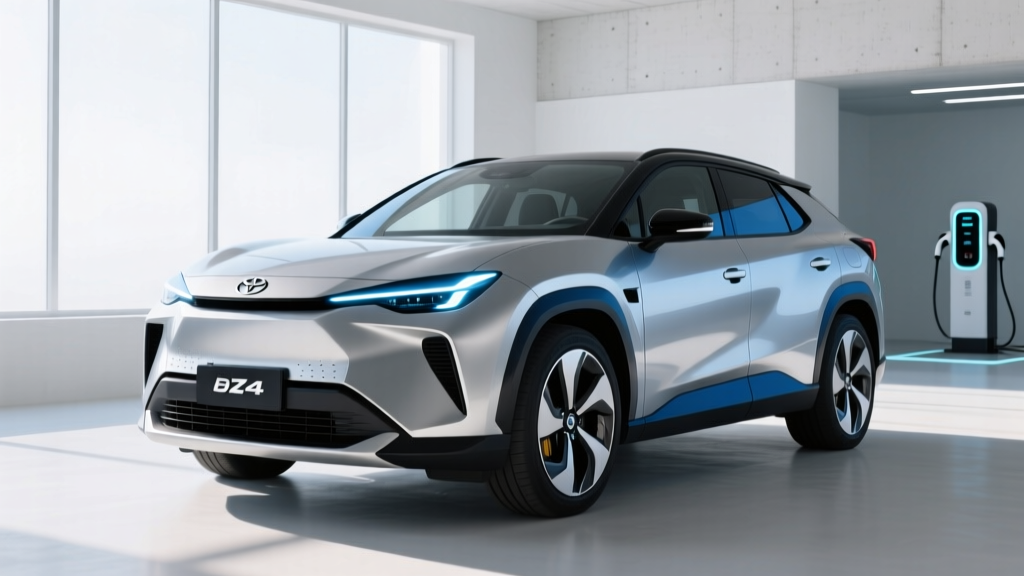
As of the 2026 model year, Toyota's only fully electric vehicle available for purchase in the U.S. is the bZ4X compact SUV, starting at approximately $38,465 (including destination). It offers an EPA-estimated range of up to 252 miles on FWD trims and 228 miles on AWD trims, with DC fast charging peaking at around 150 kW. Toyota's broader electric strategy leans heavily on hybrids and plug-in hybrids, so if you're searching for Toyota electric cars for sale, the bZ4X is currently your sole battery-electric option — with the three-row bZ5X expected to arrive as a 2027 model.
The 2026 Toyota bZ4X: Specs That Matter
The bZ4X (pronounced "bee-zee-four-ex") is Toyota's first mass-market battery electric vehicle, built on the e-TNGA platform it shares with the Subaru Solterra. After a rocky 2023 launch that included a wheel-detachment recall, Toyota has refined the bZ4X for 2026 with incremental updates to software, charging management, and standard equipment.
| Spec | FWD (XLE) | AWD (XLE/Limited) |
|---|---|---|
| EPA Range | 252 miles | 228 miles |
| Battery (usable) | 71.4 kWh, NMC lithium-ion | 71.4 kWh, NMC lithium-ion |
| Horsepower | 201 hp | 214 hp |
| 0–60 mph | 7.1 sec | 5.8 sec |
| Peak DC Fast Charge | ~150 kW | ~150 kW |
| 10–80% DC Charge Time | ~30 min (est.) | ~30 min (est.) |
| Level 2 (240V) Rate | ~7.2 kW | ~7.2 kW |
| MPGe (city/hwy/combined) | 131/107/119 | 114/94/104 |
| Cargo Volume | 27.7 cu ft (rear seats up) | 27.7 cu ft (rear seats up) |
| Base MSRP (incl. dest.) | ~$38,465 | ~$42,165 |
| Battery/Powertrain Warranty | 8 yr / 100,000 mi (10 yr in CARB states) | |
Real-World Range Expectations
EPA sticker: 252 miles (FWD) / 228 miles (AWD)
Real-world highway (70 mph, 75°F): Expect ~210–230 miles (FWD), ~190–210 miles (AWD)
Cold weather (32°F or below, highway): Expect ~160–185 miles (FWD) — a 25–30% reduction is typical for NMC batteries without a heat pump running continuously
Why the gap? The bZ4X's aerodynamic profile and NMC chemistry are competent but not class-leading. Highway driving at sustained speeds, elevation changes, and cabin heating all draw from the 71.4 kWh battery faster than the EPA test cycle assumes. If your commute is mostly stop-and-go city driving with regen braking, you'll skew closer to — or even exceed — the EPA number.
How the bZ4X Compares: Toyota EV vs. Hybrid vs. Gas
Toyota built its reputation on hybrids, and many buyers cross-shopping Toyota electric cars for sale are also considering the RAV4 Hybrid, RAV4 Prime PHEV, or even a conventional gas RAV4. Here's how the numbers actually stack up across a 15,000-mile year:
| Vehicle | Powertrain | Efficiency | Est. Annual Energy Cost* |
|---|---|---|---|
| bZ4X FWD | BEV | 119 MPGe (28 kWh/100 mi) | $588 (home charging at $0.14/kWh) |
| bZ4X FWD | BEV | 119 MPGe (28 kWh/100 mi) | $1,344 (public DCFC at $0.32/kWh) |
| RAV4 Hybrid AWD | HEV | 41 MPG combined | $1,280 (gas at $3.50/gal) |
| RAV4 Gas AWD | ICE | 30 MPG combined | $1,750 (gas at $3.50/gal) |
| RAV4 Prime PHEV | PHEV | 42 mi EV + 38 MPG gas | $650–$950 (mixed, varies by EV driving %) |
*Based on fueleconomy.gov estimates and national average electricity/gas prices as of early 2026. Your local utility rate or gas price will shift these figures significantly.
The takeaway: if you charge primarily at home on a residential rate, the bZ4X cuts your annual fueling cost by roughly $700–$1,160 versus a gas RAV4 and about $690 versus the hybrid. But if you rely on public DC fast charging, the cost advantage nearly evaporates — public charging at $0.32/kWh puts you in the same ballpark as the RAV4 Hybrid.
Charging the bZ4X: What You Actually Need to Know
Charging speed is the bZ4X's most debated spec. Its ~150 kW peak DC fast-charge rate trails competitors like the Hyundai Ioniq 5 (which peaks above 235 kW on 800V architecture) and the Tesla Model Y (~250 kW on V3 Superchargers). Here's what that means practically:
| Charging Level | Power | Miles Added Per Hour | Typical Use Case |
|---|---|---|---|
| Level 1 (120V household) | ~1.4 kW | ~4–5 mi/hr | Overnight trickle; emergency top-up |
| Level 2 (240V home/public) | ~7.2 kW | ~25–28 mi/hr | Daily home charging; full charge in ~10 hr |
| DC Fast Charge (CCS2) | Peak ~150 kW | Up to ~500+ mi/hr at peak | Road trips; 10–80% in ~30 min |
Charge curve reality: The bZ4X hits its ~150 kW peak only in a narrow state-of-charge window (roughly 10–30% SoC at optimal battery temperature). Above 50% SoC, power tapers to ~80–90 kW, and above 80% it drops further to ~40 kW. Toyota's battery management system is conservative — prioritizing long-term battery health over fast-charge bragging rights. On a road trip, plan for ~30-minute stops to go from 10–80%, and avoid charging past 80% unless you need the extra miles to reach your destination.
Connector note: The 2026 bZ4X uses the CCS2 (J1772 combo) connector for DC fast charging. Toyota has announced a transition to the NACS (Tesla-style) connector for future models, but the current bZ4X ships with CCS2. Adapters are available for Tesla Supercharger access where Toyota has enabled compatibility — check the latest Toyota app updates for network support.
Real Costs of Ownership: Purchase, Charging, Maintenance & Insurance
Buying an EV involves different cost categories than a gas car. Here's a five-year ownership projection for the bZ4X FWD XLE versus a comparably equipped RAV4 Hybrid XLE:
| Cost Category | bZ4X FWD XLE | RAV4 Hybrid XLE AWD |
|---|---|---|
| Base MSRP (incl. dest.) | $38,465 | $33,425 |
| Est. Federal Tax Credit (§30D) | $0–$7,500 (see below) | $0 (HEVs ineligible) |
| Energy/Fuel (5 yrs, home charging) | $2,940 | $6,400 |
| Maintenance (5 yrs) | $1,200 (no oil, fewer fluid changes) | $2,800 (oil, filters, brakes) |
| Insurance (5 yrs, national avg.) | $8,500 (EVs typically 15–20% higher) | $7,200 |
| Est. Depreciation (5 yrs) | $18,000 (EV depreciation remains elevated) | $14,000 |
| 5-Year Total (before credit) | $69,105 | $63,825 |
| 5-Year Total (with max $7,500 credit) | $61,605 | $63,825 |
Key insight: The bZ4X's higher purchase price and steeper depreciation are partially offset by dramatically lower fueling and maintenance costs. If you qualify for the full federal credit, the five-year cost actually comes in slightly below the RAV4 Hybrid. Without the credit, you'll pay roughly $5,000 more over five years for the privilege of driving electric — which may still be worth it depending on your environmental priorities and driving experience preferences.
Federal Tax Credit Eligibility (§30D) for the bZ4X
The bZ4X's eligibility for the $7,500 federal tax credit under IRS §30D depends on several moving targets. As of 2026, confirm all of the following before purchasing:
- MSRP cap: SUVs must be under $80,000 — the bZ4X clears this easily.
- Buyer income cap: Modified AGI must not exceed $150,000 (single), $225,000 (head of household), or $300,000 (joint).
- Battery sourcing: Critical minerals and battery components must meet phased-in percentage thresholds from U.S. or FTA-partner countries. Toyota's supply chain has been evolving — verify current-year compliance on IRS.gov or with your dealer.
- Point-of-sale transfer: As of 2024+, you can transfer the credit to the dealer for an upfront price reduction rather than waiting for tax filing. This effectively lowers your out-of-pocket cost at purchase.
- Final assembly: Must occur in North America. The bZ4X is assembled in Japan, which has been a point of contention — verify current assembly-location eligibility with your dealer, as Toyota has made supply-chain adjustments.
Consult a tax professional before relying on credit eligibility. Rules change, and the IRS maintains the definitive list at fueleconomy.gov.
Common Misconceptions About the bZ4X
| Myth | Fact |
|---|---|
| "The bZ4X can't road-trip — the range is too low." | At 252 miles EPA (FWD), the bZ4X handles road trips with 30-minute DC fast-charge stops every 2–2.5 hours. It's not class-leading, but it's workable. Plan routes with PlugShare or A Better Routeplanner. |
| "Toyota EVs have unreliable batteries." | Toyota's NMC battery in the bZ4X is backed by an 8-year/100,000-mile warranty (10 years in CARB states) guaranteeing 70% capacity retention. Toyota's conservative battery management — including thermal limits and charge-curve tapering — is specifically designed to maximize longevity. |
| "I'll save money immediately switching to the bZ4X." | Not necessarily. Higher purchase price, potentially higher insurance, and uncertain tax-credit eligibility mean the break-even point is typically 3–5 years for home chargers. Public-charging-only owners may never break even versus a RAV4 Hybrid. |
| "The bZ4X charges as fast as any other EV." | At ~150 kW peak, the bZ4X charges noticeably slower than 800V competitors like the Ioniq 5 or Kia EV6 (~235+ kW). On road trips, expect 5–10 extra minutes per stop versus those platforms. |
| "I can use Tesla Superchargers with my bZ4X." | Access depends on adapter availability and Toyota's software integration with the NACS network. Some Supercharger stations now support non-Tesla CCS vehicles via built-in cables or adapters, but coverage is not universal. Check Toyota's official guidance before relying on Supercharger access. |
Who Should Buy the bZ4X — and Who Should Look Elsewhere
Decision Framework
Choose the bZ4X if:
- You want to stay in the Toyota ecosystem and value the brand's dealer network and reliability reputation.
- You have home Level 2 charging access and drive under 200 miles round-trip on most days.
- You live in a mild or moderate climate where cold-weather range loss is manageable.
- You qualify for the federal tax credit, which meaningfully narrows the price gap with hybrid alternatives.
- You prefer Toyota Safety Sense 3.0 (standard adaptive cruise, lane tracing, pre-collision) over more aggressive — and more expensive — driver-assist subscriptions.
Look elsewhere if:
- Road-trip charging speed is a top priority — the Ioniq 5, EV6, or Tesla Model Y charge significantly faster.
- You need three rows of seating — the bZ4X is strictly a two-row, five-passenger compact SUV. (The upcoming bZ5X, expected for 2027, will address this.)
- You rely entirely on public charging and have no home/workplace Level 2 access — your fueling costs may exceed a RAV4 Hybrid's.
- You live in a region with extreme cold (sustained sub-20°F winters) and need maximum range — the 25–30% cold-weather loss will leave you with under 180 miles of practical range.
- You need over 252 miles of EPA range — the Tesla Model Y Long Range (~320 mi), Hyundai Ioniq 5 Long Range (~310 mi), and Chevrolet Equinox EV (~315 mi) all offer more.
What First-Time EV Buyers Must Know Before Signing
If the bZ4X is your first electric vehicle, here are the non-obvious realities that no brochure will tell you:
Home Charging Is Non-Negotiable for Most Owners
Over 80% of EV charging happens at home. Before buying, confirm you can install a Level 2 (240V) charger. A typical installation on an existing 200-amp panel runs $800–$2,000 (equipment + electrician + permit). If your home has a 100-amp panel, a service upgrade to 200 amps can add $2,000–$5,000. Get a quote from a licensed electrician before committing to the car. Level 1 (standard 120V outlet) charging adds only ~4–5 miles per hour — adequate only if you drive under 40 miles daily and can plug in for 10+ hours overnight.
Insurance Costs More
EV insurance premiums run 15–20% higher on average, driven by higher repair costs (specialized high-voltage training, expensive battery replacement in collision claims). Get a quote from your insurer before purchasing. Some companies offer EV-specific discounts that partially close the gap.
Regenerative Braking Changes How You Drive
The bZ4X offers adjustable regen levels (selected via paddle shifters), but it does not offer true one-pedal driving that brings the car to a complete stop without touching the brake pedal — unlike a Nissan LEAF or Tesla. You'll still use the friction brake regularly. Expect brake pad life to extend significantly (often 80,000+ miles) due to regen handling most deceleration.
Tire Wear Increases
The bZ4X's instant torque and ~4,300-pound curb weight accelerate tire wear compared to a gas RAV4. Budget for tire replacement every 30,000–40,000 miles rather than the 50,000+ miles typical of lighter ICE vehicles. EV-specific tires (like the Michelin e.Primacy or Hankook iON) offer lower rolling resistance and noise but carry a premium.
Frequently Asked Questions
Are there other Toyota electric cars for sale besides the bZ4X?
Not in the U.S. market as of 2026. The bZ4X is Toyota's sole battery-electric vehicle available to American buyers. Toyota has announced the bZ5X (a three-row SUV) and additional bZ models globally, but these remain unreleased in the U.S. Toyota's electrified lineup also includes numerous hybrids (HEVs) and the RAV4 Prime plug-in hybrid (PHEV), which offer partial electrification without full EV range.
Does the bZ4X qualify for the $7,500 federal tax credit?
Eligibility is not guaranteed and depends on current-year battery sourcing rules, your income, and final assembly location. The bZ4X's Japan assembly has historically complicated §30D eligibility. Toyota has made supply-chain adjustments, but you must verify current status on IRS.gov or with your dealer at the time of purchase. The credit can be transferred to the dealer as a point-of-sale discount if eligible.
How long will the bZ4X battery last before needing replacement?
Toyota warrants the battery for 8 years/100,000 miles (10 years/150,000 miles in CARB states) against dropping below 70% capacity. Real-world data from early 2023–2024 models suggests moderate degradation of roughly 5–8% over the first two years, consistent with NMC chemistry managed conservatively. Full battery replacement (if ever needed out of warranty) is estimated at $12,000–$18,000 based on current parts pricing — though most owners will never need this within the vehicle's practical lifespan.
Is the bZ4X a good choice for apartment dwellers without home charging?
Generally, no. Without reliable Level 2 access at home or work, you'll depend on public DC fast charging, which is more expensive (~$0.28–$0.48/kWh), less convenient, and slower than home charging. The bZ4X's ~150 kW peak charge rate also means longer public-charging stops than competitors. If you can't charge at home, a RAV4 Hybrid or RAV4 Prime PHEV is a far more practical Toyota option.
How does the bZ4X compare to the Subaru Solterra?
The bZ4X and Solterra share the same e-TNGA platform, battery, and powertrain. Differences are largely cosmetic and tuning-related — Subaru adds standard AWD, X-MODE for light off-road use, and slightly different suspension tuning. Range and charging specs are nearly identical. Choose based on brand preference, dealer proximity, and pricing at your local showroom.