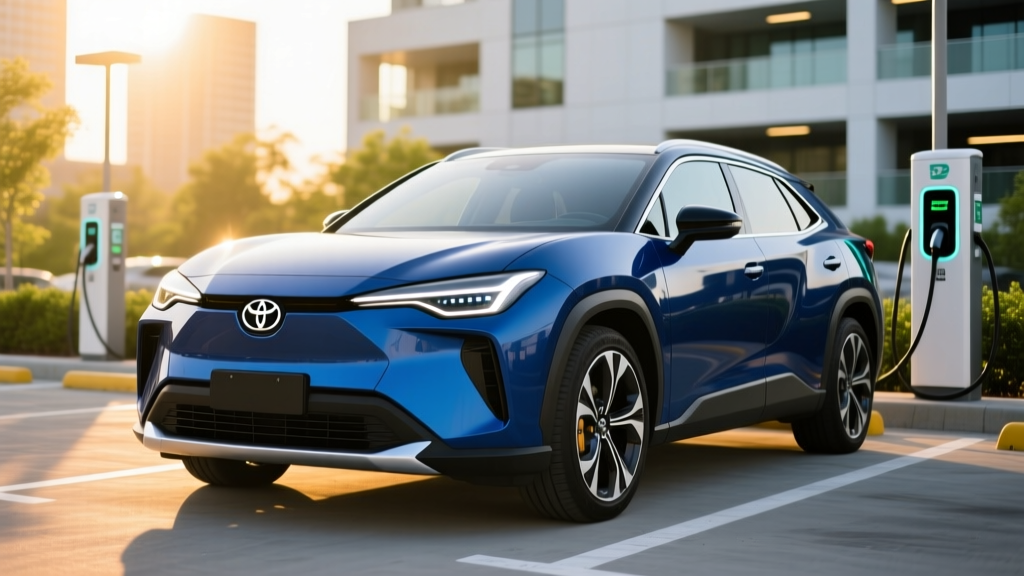
Quick Verdict: Is the Toyota bZ4X 0% APR Offer Worth It?
Toyota's promotional 0% APR financing on the 2026 bZ4X is one of the most aggressive factory-backed deals in the compact electric SUV segment. For buyers with top-tier credit who can commit to a shorter loan term, it effectively eliminates thousands of dollars in interest — narrowing the gap between the bZ4X and pricier rivals like the Hyundai Ioniq 5 or Tesla Model Y. But financing incentives only matter if the underlying vehicle delivers. We spent time with the 2026 bZ4X to evaluate its 252-mile EPA range, 150 kW DC fast-charging capability, real-world efficiency, and everyday usability so you can decide whether this deal actually moves the needle.
| Spec | XLE FWD | XLE AWD | Limited AWD |
|---|---|---|---|
| EPA Range | 252 mi | 228 mi | 222 mi |
| Battery (usable) | 71.4 kWh, NMC lithium-ion | ||
| Horsepower | 201 hp | 214 hp | |
| 0-60 mph | 7.1 sec | 6.5 sec | |
| Max DC Fast Charge | 150 kW (peak) | ||
| 10-80% DC Time | ~30 min | ||
| Level 2 Rate | 6.6 kW (~25 mi/hr) | ||
| MPGe (combined) | 119 MPGe | 104 MPGe | 102 MPGe |
| Base MSRP | $38,465 | $40,465 | $44,565 |
Real-World Range vs. EPA Estimates
The EPA rates the front-wheel-drive bZ4X XLE at 252 miles, while the dual-motor AWD variants drop to 228 miles (XLE) and 222 miles (Limited, due to larger 20-inch wheels and added weight). Those numbers place the bZ4X in the middle of the compact EV SUV pack — behind the Hyundai Ioniq 5's 303-mile Long Range variant but ahead of the Subaru Solterra's 222-mile rating.
EPA sticker: 252 mi (FWD) / 228 mi (AWD)
Mixed driving (55-70 mph): Expect 220-240 mi (FWD), 195-215 mi (AWD)
Sustained highway (75 mph): ~195-210 mi (FWD), ~175-190 mi (AWD)
Cold weather (below 32°F): Plan for 20-30% range reduction — roughly 155-180 mi AWD
The bZ4X's heat pump (standard on Limited, optional on XLE) helps mitigate cold-weather losses, but the 71.4 kWh battery is modestly sized for this segment. On a 200-mile winter highway trip, you'll want a DC fast-charging stop planned.
Efficiency-wise, the FWD model returns 119 MPGe combined (roughly 28 kWh/100 mi), which is respectable but not class-leading. The AWD model's 104 MPGe (~32 kWh/100 mi) reflects the added drivetrain mass and rolling resistance of all-season tires.
Charging Speed: DC Fast, Level 2, and the Curve Reality
Charging is where the bZ4X has drawn criticism since its launch, and the 2026 model carries over the same hardware. The peak DC fast-charging rate is 150 kW on a CCS-equipped vehicle (or NACS, depending on your adapter situation), but as with all EVs, peak rate is not sustained rate.
| Charging Level | Power (kW) | Speed | Notes |
|---|---|---|---|
| Level 1 (120V) | 1.2 kW | ~4 mi/hr | Emergency/trickle only |
| Level 2 (240V, 32A) | 6.6 kW | ~25 mi/hr | Full charge in ~10.5 hr |
| DC Fast (peak) | 150 kW | 10-80% in ~30 min | Tapers significantly above 80% |
| DC Fast (sustained avg) | ~90-100 kW | 10-80% real-world avg | Curve drops to ~50 kW by 70% SoC |
Here's the critical nuance: the bZ4X's charge curve is conservative. It hits 150 kW briefly between roughly 15-30% State of Charge (SoC), then tapers to ~100 kW through 55%, and drops further to ~50 kW by the time you reach 70%. A 10-80% session takes approximately 30 minutes at a 150+ kW station, which is adequate for road-trip stops but trails the Hyundai Ioniq 5's 18-minute 10-80% capability on its 800V architecture.
Preconditioning tip: The bZ4X does offer battery preconditioning when you navigate to a DC fast charger via the built-in navigation. Always use this feature — skipping it in cold weather can add 10-15 minutes to your charging session as the battery warms to optimal temperature.
Performance, Ride Quality, and Drivetrain
The bZ4X is not a performance EV, and it doesn't pretend to be. The FWD model's single front-mounted motor produces 201 hp and 196 lb-ft of torque, delivering a 7.1-second 0-60 mph time. The AWD variant uses dual motors (one front, one rear) for 214 hp and 248 lb-ft, cutting the sprint to 6.5 seconds. Neither figure will embarrass you in traffic, but both trail the Tesla Model Y Long Range's 4.8-second run.
Where the bZ4X earns its keep is ride comfort. The suspension tuning is softly damped, absorbing potholes and expansion joints with a maturity that the sportier Ioniq 5 can't match. Steering is light and progressive — ideal for city commuting and long highway stints. The AWD model's X-MODE (borrowed from Subaru's partnership on this platform) provides genuine traction confidence on light snow and gravel, though this is not an off-roader.
Regenerative braking offers multiple levels via paddle shifters, but the bZ4X does not offer true one-pedal driving that brings the vehicle to a complete stop. You'll still need the brake pedal at intersections — a choice some drivers prefer for a more natural feel.
Pricing, 0% APR Financing, and Federal Tax Credit Eligibility
The 2026 bZ4X starts at $38,465 for the XLE FWD (including $1,095 destination), $40,465 for the XLE AWD, and $44,565 for the Limited AWD. Toyota's 0% APR financing — typically offered for 36 to 48 months to well-qualified buyers — can save roughly $3,000-$5,000 in interest compared to prevailing auto loan rates of 6-7% on a 60-month term. That's a meaningful offset to the bZ4X's MSRP premium over some competitors.
| Trim | MSRP | Federal Credit (§30D) | Est. Net Price* |
|---|---|---|---|
| XLE FWD | $38,465 | Up to $7,500 | ~$30,965 |
| XLE AWD | $40,465 | Up to $7,500 | ~$32,965 |
| Limited AWD | $44,565 | Up to $7,500 | ~$37,065 |
*Net price assumes full §30D credit eligibility. State/local incentives not included. Verify eligibility with a tax professional. Point-of-sale transfer available at participating dealers.
Does the bZ4X Qualify for the §30D Federal Tax Credit?
As of 2026, the Toyota bZ4X is eligible for up to $7,500 under IRS §30D clean vehicle rules, but qualification is not automatic. You must meet all of the following:
- Income caps: Modified AGI ≤ $150,000 (single), $225,000 (head of household), or $300,000 (joint)
- MSRP cap: Vehicle MSRP must not exceed $80,000 for SUVs (all bZ4X trims clear this easily)
- Battery sourcing: Critical minerals and battery components must meet phased-in domestic/free-trade-agreement sourcing thresholds — Toyota has worked to qualify, but verify the specific VIN with your dealer and cross-reference the fueleconomy.gov credit lookup
- Point-of-sale transfer: You can elect to transfer the credit to the dealer at purchase, reducing your out-of-pocket cost immediately rather than waiting for tax filing
Always confirm credit eligibility for your specific vehicle and tax situation before signing. Rules can shift, and battery-sourcing compliance varies by production batch.
Interior, Cargo Space, and Daily Usability
The bZ4X's cabin is a mixed bag. Materials quality is solid — soft-touch surfaces on the dash and door uppers, cloth or SofTex synthetic leather on seats — but the design language feels conservative compared to the minimalist flair of a Tesla or the retro-futurism of a Hyundai. The 12.3-inch infotainment screen (standard on all trims) runs Toyota's latest Audio Multimedia system, which supports wireless Apple CarPlay and Android Auto, over-the-air updates, and natural-language voice commands.
Passenger space is generous for the segment:
- Front legroom: 42.1 inches
- Rear legroom: 35.7 inches
- Front headroom: 39.2 inches
- Rear headroom: 38.0 inches
Cargo volume behind the rear seats is 27.7 cubic feet — competitive with the Ioniq 5 (27.2 cu ft) but notably less than the Tesla Model Y (30.2 cu ft). Folding the 60/40 rear bench opens up 56.9 cubic feet. There is no front trunk (frunk), which is a missed opportunity for stowing charging cables or a small bag.
The center console design is unusual — a floating bridge-style shelf with a large cubby underneath — but the physical volume knob for audio and hard buttons for climate are welcome ergonomic wins over touch-only interfaces.
Safety, Driver Assistance, and Tech Features
Every 2026 bZ4X comes standard with Toyota Safety Sense 3.0, a comprehensive Level 2 (per SAE J3016) driver-assist suite that includes:
- Pre-Collision System with pedestrian detection
- Lane Departure Alert with Steering Assist
- Lane Tracing Assist (centering on highways)
- Dynamic Radar Cruise Control (full stop-and-go)
- Road Sign Assist
- Proactive Driving Assist (gentle braking when approaching slower traffic or curves)
Toyota Safety Sense 3.0 is a Level 2 driver-assist system. You must keep your hands on the wheel and eyes on the road at all times. It does not autonomously navigate intersections, construction zones, or complex urban environments. The bZ4X does not offer hands-free driving on par with GM's Super Cruise or Ford's BlueCruise.
The bZ4X earned a TOP SAFETY PICK+ rating from IIHS with Good ratings across all crash tests, and a 5-star overall rating from NHTSA. Standard features also include a panoramic fixed glass roof (with shade), heated front seats, and a heated steering wheel on the Limited trim.
One notable tech gap: the bZ4X lacks a 360-degree camera on lower trims, and its wireless phone charger pad is known to be finicky with thicker cases. The digital key feature (phone-as-key) is available but requires the Toyota app, which has mixed user reviews for reliability.
Pros, Cons, and Who Should Buy the bZ4X
Pros
- 0% APR financing saves $3,000-$5,000 vs. market-rate loans
- Comfortable, compliant ride quality — best-in-class for daily commuting
- Toyota Safety Sense 3.0 is comprehensive and well-tuned
- Strong 10-year/100,000-mile battery warranty
- Physical controls for climate and audio
- Competitive pricing after §30D tax credit
Cons
- Range trails key competitors (252 mi vs. Ioniq 5's 303 mi)
- DC fast charging is slow for the segment (~30 min 10-80%)
- No front trunk (frunk)
- AWD range penalty is steep (228 mi)
- Infotainment UI is functional but not class-leading
- No true one-pedal driving mode
Who Is the bZ4X Best For?
Commuters and suburban families who prioritize ride comfort, safety tech, and Toyota's reliability reputation over maximum range and charging speed. If your daily round trip is under 80 miles and you have home Level 2 charging, the bZ4X's range is more than sufficient, and the 0% APR deal makes it financially compelling.
Road-trip enthusiasts and high-mileage drivers should look at the Hyundai Ioniq 5 or Tesla Model Y instead — both offer significantly more range and faster charging, which translates to fewer and shorter stops on long drives.
Cold-climate buyers should strongly consider the AWD model with the heat pump option, but budget for a 20-30% winter range loss and plan charging accordingly.
Ownership Costs and Warranty Coverage
Toyota backs the bZ4X with one of the strongest battery warranties in the industry: 10 years or 100,000 miles (whichever comes first) for the high-voltage battery pack, with a capacity-retention threshold of 70%. The basic vehicle warranty is 3 years/36,000 miles, and the powertrain warranty is 5 years/60,000 miles.
Estimated 5-year total cost of ownership (TCO) benefits from low electricity costs (~$0.13/kWh national average = ~$3.65 per 100 miles, versus ~$12-15 for a comparable gas SUV at $3.50/gallon). Insurance premiums for the bZ4X run slightly above segment average — expect $1,800-$2,400/year depending on your profile — so get quotes before purchasing.
Maintenance costs are minimal: no oil changes, no transmission fluid, and regenerative braking extends pad life significantly. Toyota includes 2 years/25,000 miles of complimentary scheduled maintenance and roadside assistance.
Frequently Asked Questions
What is the real-world range of the Toyota bZ4X?
The EPA rates the FWD bZ4X at 252 miles and the AWD at 228 miles. In mixed real-world driving at moderate temperatures, expect 220-240 miles (FWD) or 195-215 miles (AWD). Sustained highway driving at 75 mph and cold weather will reduce these figures by 15-30%.
How fast does the bZ4X charge at home and on DC fast chargers?
At home on a Level 2 (240V/32A) charger, the bZ4X charges at 6.6 kW, adding roughly 25 miles of range per hour — a full charge takes about 10.5 hours. On a DC fast charger, it peaks at 150 kW and takes approximately 30 minutes to go from 10-80%, though the charge curve tapers significantly above 70% SoC.
How much does the bZ4X cost after the federal tax credit?
With the full $7,500 §30D credit applied, the bZ4X XLE FWD drops to approximately $30,965, the XLE AWD to $32,965, and the Limited AWD to $37,065. The 0% APR financing offer further reduces total cost by eliminating interest charges. Verify your personal eligibility based on income, battery sourcing, and MSRP rules.
Is the Toyota bZ4X worth buying vs. the Hyundai Ioniq 5 or Tesla Model Y?
If range and fast-charging speed are your top priorities, the Ioniq 5 (303 mi, 18-min 10-80%) or Model Y (330 mi, ~25-min 10-80%) are stronger choices. If ride comfort, Toyota's reliability track record, safety ratings, and the 0% APR financing deal matter more, the bZ4X is a compelling and comfortable daily driver at a competitive net price.
Does the bZ4X have a frunk (front trunk)?
No. The bZ4X does not include a front trunk. All cargo space (27.7 cu ft behind rear seats, 56.9 cu ft with seats folded) is in the rear cargo area.
What battery chemistry does the bZ4X use?
The bZ4X uses an NMC (nickel manganese cobalt) lithium-ion battery pack with 71.4 kWh of usable capacity. NMC offers higher energy density than LFP chemistry, enabling the bZ4X's range in a relatively compact pack, though it requires more careful state-of-charge management for long-term longevity.
Can I use Tesla Superchargers with the bZ4X?
Toyota has been transitioning to NACS (North American Charging Standard) compatibility. Check with your dealer on whether your specific 2026 bZ4X ships with a NACS port or a CCS port with an included adapter. Toyota has committed to Supercharger network access for bZ4X owners, but adapter availability and station compatibility should be confirmed at purchase.
Sources: EPA fueleconomy.gov, IRS §30D Clean Vehicle Credits, Toyota bZ4X Official Specifications, IIHS Safety Ratings