Quick Verdict: A Practical EV Sedan With LFP Durability
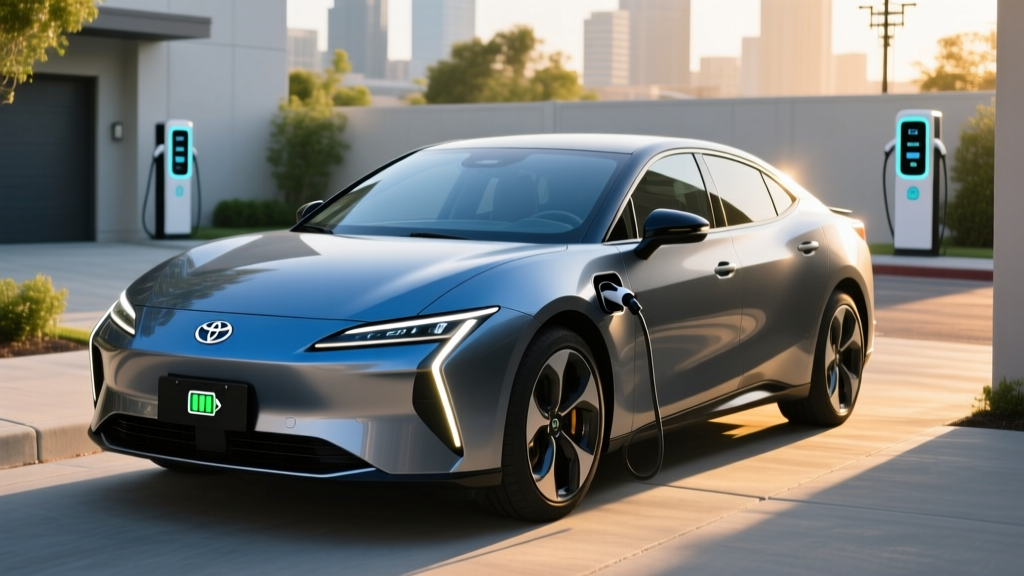
The 2026 Toyota bZ3 is a China-market battery-electric sedan co-developed with BYD that Toyota has positioned as an affordable, high-efficiency commuter EV. Built on a modified e-TNGA platform and powered by a BYD Blade lithium iron phosphate (LFP) battery pack, the bZ3 targets buyers who prioritize long-term battery longevity and low running costs over raw acceleration. With an EPA-estimated range up to 330 miles, a starting MSRP near $31,990, and DC fast charging that peaks at 150 kW, it occupies a specific niche: the budget-conscious daily driver who wants Toyota reliability in an electric package.
But the bZ3 is not without compromises. Its front-wheel-drive layout and modest 241 horsepower output mean it's no performance EV. And its availability remains limited in the U.S. market, where Toyota has focused its EV rollout on the bZ4X crossover and the upcoming bZ SUV lineup. If you can access one — or if Toyota expands U.S. availability for the 2027 model year — here's everything you need to know about specs, real-world range, charging behavior, and whether it qualifies for the federal tax credit.
Range, Efficiency, and Real-World Expectations
The 2026 Toyota bZ3 comes with a 73.9 kWh usable battery pack (BYD Blade LFP chemistry) in its Long Range trim. The EPA rates this configuration at 330 miles combined, with a combined efficiency of approximately 129 MPGe (or roughly 26 kWh/100 mi). A lower-output Standard Range variant with a 49.9 kWh pack achieves around 215 miles EPA — but most buyers considering import or future U.S. availability will target the Long Range model.
Real-World Expectation: ~275–295 miles on mixed highway driving (70–80 mph); ~240–260 miles in sustained sub-30°F cold weather with cabin heating. City/regen-heavy driving can match or slightly exceed the EPA sticker at ~335–345 miles. LFP chemistry holds voltage more linearly than NMC, so range estimation stays accurate down to low SoC — but expect a noticeable cliff below 5%.
Highway Efficiency: ~3.6–3.8 mi/kWh at 75 mph
The bZ3's aerodynamic sedan profile gives it an efficiency advantage over similarly sized crossovers like the bZ4X or Hyundai Ioniq 5. LFP chemistry also means you can safely charge to 100% daily without accelerating degradation — a practical advantage for commuters who need every available mile. Toyota recommends periodic 100% charges for LFP packs to allow the battery management system (BMS) to recalibrate cell balancing.
Battery Chemistry: Why LFP Matters Here
The bZ3 uses BYD's Blade battery architecture, which arranges LFP cells in long, thin prismatic modules that serve a dual structural and energy-storage role. The trade-offs versus nickel-manganese-cobalt (NMC) chemistry are important to understand:
| Factor | LFP (bZ3) | NMC (typical competitor) |
|---|---|---|
| Energy Density | Lower (~160 Wh/kg cell-level) | Higher (~220–260 Wh/kg) |
| Cycle Life | 3,000–5,000+ full cycles | 1,500–2,500 full cycles |
| Thermal Stability | Excellent — less prone to thermal runaway | Good, but requires more active cooling |
| Cold-Weather Performance | Weaker — more range loss below freezing | Better low-temp conductivity |
| Daily Charging to 100% | Recommended for BMS calibration | Generally advised to limit to 80–90% |
| Cost per kWh | Lower | Higher |
For a commuter sedan that will see daily charging, LFP's cycle-life advantage is significant. At 3,000+ cycles on a 330-mile range pack, the battery could theoretically endure nearly 1 million miles before reaching 80% state of health — far beyond the vehicle's mechanical lifespan. The cold-weather penalty is real, however: expect 15–25% range loss in sustained winter conditions versus the 10–15% typical of NMC packs.
Charging Speed and Infrastructure Compatibility
The bZ3 supports DC fast charging at a peak rate of 150 kW via its CCS1 connector (China-market units use GB/T, but U.S.-spec models would adopt CCS1 or NACS depending on Toyota's adapter strategy). On a capable 350 kW charger, the bZ3 sustains approximately 120–140 kW from 10–50% SoC before tapering to ~80 kW through 80%, and dropping sharply above 85%.
| Charging Level | Power / Rate | Time or Miles Added |
|---|---|---|
| Level 1 (120V household) | ~1.4 kW | ~4–5 miles per hour |
| Level 2 (240V, 32A home charger) | 7.7 kW | ~28 miles per hour; full charge in ~10 hours |
| Level 2 (240V, 48A) | 11.5 kW | ~42 miles per hour; full charge in ~7 hours |
| DC Fast Charge (peak) | 150 kW | 10–80% in approximately 27 minutes |
| DC Fast Charge (10–80% avg) | ~95 kW sustained average | ~235 miles added in 27 min |
The 27-minute 10–80% time is competitive but not class-leading. The Hyundai Ioniq 6, with its 800V architecture, achieves 10–80% in roughly 18 minutes at up to 350 kW. For road-trippers who frequently DC fast charge, the bZ3's 400V system and moderate taper curve mean slightly longer stops. For daily Level 2 home charging, however, the bZ3 is entirely practical — a 32A home charger replenishes a full day's commute in under two hours.
Performance and Driving Dynamics
The Long Range bZ3 produces 241 horsepower (180 kW) from a single front-mounted permanent magnet synchronous motor, driving the front wheels. Toyota quotes a 0–60 mph time of approximately 7.5 seconds. A dual-motor AWD variant with 308 hp and a ~6.2-second 0–60 has been available in select markets but is not confirmed for U.S. sale.
| Specification | bZ3 Long Range (2026) |
|---|---|
| Drivetrain | FWD, single motor |
| Horsepower | 241 hp (180 kW) |
| Torque | 221 lb-ft |
| 0–60 mph | ~7.5 seconds |
| Top Speed | 99 mph (electronically limited) |
| Battery (usable) | 73.9 kWh, LFP (BYD Blade) |
| EPA Range | 330 miles |
| Efficiency | 129 MPGe / 26 kWh/100mi |
| Max DC Charge Rate | 150 kW |
| 10–80% DC Charge | ~27 minutes |
| Level 2 Onboard Charger | 11.5 kW (48A max) |
| Base MSRP | $31,990 (LE trim, est.) |
| Battery Warranty | 8 years / 100,000 miles (70% capacity retention) |
| Vehicle Warranty | 3 years / 36,000 mi basic; 5 yr / 60,000 mi powertrain |
On the road, the bZ3 drives like a well-sorted Camry: compliant ride, predictable steering, and strong low-speed regenerative braking that enables near one-pedal driving in city traffic. Highway passing power is adequate but not thrilling. The FWD layout and instant electric torque can produce torque steer under hard acceleration from a stop — something AWD competitors like the Tesla Model 3 Long Range avoid entirely.
Interior, Cargo, and Technology
The bZ3 rides on a 110.2-inch wheelbase and measures roughly 188 inches long, placing it in the midsize sedan segment alongside the Tesla Model 3 and Hyundai Ioniq 6. Interior space is generous for the class:
- Front legroom: 42.1 inches
- Rear legroom: 37.8 inches
- Trunk volume: 15.4 cubic feet
- No front trunk (frunk) — the motor and power electronics occupy the space
The infotainment system runs on a 12.8-inch touchscreen with wireless Apple CarPlay and Android Auto, native navigation with EV route planning (including charger preconditioning), and over-the-air update capability. Toyota's Safety Sense 3.0 suite includes adaptive cruise control with stop-and-go, lane centering, automatic emergency braking, blind-spot monitoring, and rear cross-traffic alert.
Notable interior drawbacks include a lack of physical climate control buttons (everything routes through the touchscreen), a relatively small digital instrument cluster compared to competitors, and the absence of a frunk for additional storage.
Pricing, Trims, and Federal Tax Credit Eligibility
Estimated U.S. pricing for the 2026 bZ3 (should Toyota bring it to market) breaks down as follows:
| Trim | Base MSRP | As-Tested (est.) | §30D Credit Eligible? | Effective Price After Credit |
|---|---|---|---|---|
| LE (Standard Range) | $27,990 | $29,500 | Potentially* | $20,490 – $29,500 |
| XLE (Long Range) | $31,990 | $34,200 | Potentially* | $24,490 – $34,200 |
| Limited (Long Range, AWD) | $37,500 | $40,800 | Potentially* | $30,000 – $40,800 |
* Federal tax credit eligibility under IRS §30D depends on multiple requirements that change annually:
- MSRP cap: Sedans must be priced at or below $55,000 (all bZ3 trims qualify on sticker price)
- Buyer income cap: Modified AGI must not exceed $150,000 (single), $225,000 (head of household), or $300,000 (joint filing)
- Battery component sourcing: A percentage of battery components must be manufactured or assembled in North America — this is the primary obstacle for the bZ3, as its BYD Blade battery is manufactured in China
- Critical minerals sourcing: A percentage of critical minerals must be sourced from the U.S. or a free-trade-agreement partner
- Foreign Entity of Concern (FEOC) exclusion: Vehicles with battery components from a FEOC (which includes BYD as a Chinese entity) are disqualified from the full credit under current rules
- Point-of-sale transfer: If eligible, the credit can be applied at purchase to reduce the transaction price directly
Given that the bZ3's BYD battery pack is produced in China and BYD is classified as a FEOC, the bZ3 is unlikely to qualify for the full $7,500 federal tax credit under current §30D rules. Buyers should consult a tax professional and check the latest fueleconomy.gov listings before purchasing. Some states may offer additional incentives that are not subject to federal sourcing requirements — check your state energy office for details.
How the bZ3 Compares to Key Competitors
The bZ3 enters a crowded midsize electric sedan segment. Here's how it stacks up against the benchmarks:
| Spec | Toyota bZ3 LR | Tesla Model 3 LR | Hyundai Ioniq 6 SEL |
|---|---|---|---|
| EPA Range | 330 mi | 363 mi | 361 mi |
| Battery (kWh) | 73.9 (LFP) | 79 (NMC) | 77.4 (NMC) |
| 0–60 mph | 7.5 sec | 4.2 sec | 5.1 sec |
| Max DC Charge | 150 kW | 250 kW | 350 kW |
| 10–80% Time | ~27 min | ~25 min | ~18 min |
| Base MSRP | $31,990 | $42,490 | $39,500 |
| Drivetrain | FWD | AWD | RWD |
| Federal Credit | Unlikely (FEOC) | $7,500 eligible | Partial / varies |
The bZ3's primary advantage is price: at $31,990, it undercuts both the Model 3 and Ioniq 6 by roughly $8,000–$10,000 before incentives. Its LFP battery offers superior cycle life and daily-charge flexibility. But the Model 3 delivers dramatically better performance, a vastly larger Supercharger network, and confirmed tax credit eligibility. The Ioniq 6 charges significantly faster thanks to its 800V architecture. The bZ3 wins on affordability and battery longevity; it loses on charging speed, performance, and incentive access.
Pros and Cons
- Low starting price — one of the most affordable 300+ mile EVs
- LFP battery: 3,000+ cycle life, safe to charge to 100% daily
- Strong efficiency at 129 MPGe combined
- Comfortable ride quality and spacious rear seat
- Toyota Safety Sense 3.0 standard on all trims
- Low estimated maintenance costs (no oil, minimal brake wear with regen)
- FWD only on Long Range — no AWD option for most trims
- DC charging limited to 150 kW; slower than 800V competitors
- Unlikely to qualify for $7,500 federal credit due to BYD/FEOC sourcing
- No frunk — reduces practical storage vs Model 3 and Ioniq 6
- Limited U.S. availability as of 2026
- Modest 241 hp; not a performance-oriented sedan
Who Should Buy the Toyota bZ3?
The bZ3 is best suited for:
- Daily commuters who drive 40–80 miles round trip and can charge at home overnight on Level 2
- Budget-focused EV buyers who want a new EV under $35,000 with 300+ miles of range
- Long-term owners who plan to keep the vehicle 8–10+ years and benefit from LFP's superior cycle life
- Rideshare drivers who need low per-mile operating costs and don't require fast DC charging
It is not ideal for frequent road-trippers who need rapid DC charging, performance-oriented drivers, or buyers in cold climates where LFP's winter range penalty compounds. If you need AWD, fast highway charging, or confirmed tax credit eligibility, the Tesla Model 3 or Hyundai Ioniq 6 remain stronger choices.
Frequently Asked Questions
What is the real-world range of the Toyota bZ3?
The EPA rates the Long Range bZ3 at 330 miles combined. In real-world highway driving at 70–80 mph, expect approximately 275–295 miles. In sustained freezing temperatures with cabin heating, range drops to roughly 240–260 miles. City driving with heavy regenerative braking can match or exceed the EPA number.
How fast does the bZ3 charge at home and on DC fast chargers?
On a 48A Level 2 home charger, the bZ3 adds about 42 miles of range per hour and fully charges in roughly 7 hours. On a DC fast charger, it peaks at 150 kW and charges from 10–80% in approximately 27 minutes. This is slower than 800V competitors like the Ioniq 6 (18 min) but adequate for occasional road trips.
Does the Toyota bZ3 qualify for the $7,500 federal EV tax credit?
Under current IRS §30D rules, the bZ3 is unlikely to qualify because its BYD Blade battery is manufactured in China and BYD is classified as a Foreign Entity of Concern (FEOC). This disqualifies the vehicle from the battery-component portion of the credit. Always verify eligibility at fueleconomy.gov and consult a tax professional before purchasing.
Is the bZ3 worth buying over a Tesla Model 3 or Hyundai Ioniq 6?
If your priority is the lowest purchase price and long-term battery durability, the bZ3 offers compelling value at $31,990 with an LFP pack rated for 3,000+ cycles. If you need fast DC charging, AWD, confirmed tax credit eligibility, or higher performance, the Model 3 or Ioniq 6 are stronger overall packages — but cost $8,000–$10,000 more before incentives.
What is the battery warranty on the bZ3?
Toyota covers the bZ3's high-voltage battery for 8 years or 100,000 miles, whichever comes first, against defects and capacity loss below 70% state of health. Given LFP chemistry's inherent longevity, hitting 70% SoH within the warranty period would require exceptionally heavy use.
Is the bZ3 available in the United States?
As of early 2026, the bZ3 has been sold primarily in China and select Asian markets. Toyota has not officially confirmed U.S. availability. If it arrives, expect it as a 2027 model with possible NACS connector adoption and revised battery sourcing to improve tax credit eligibility.