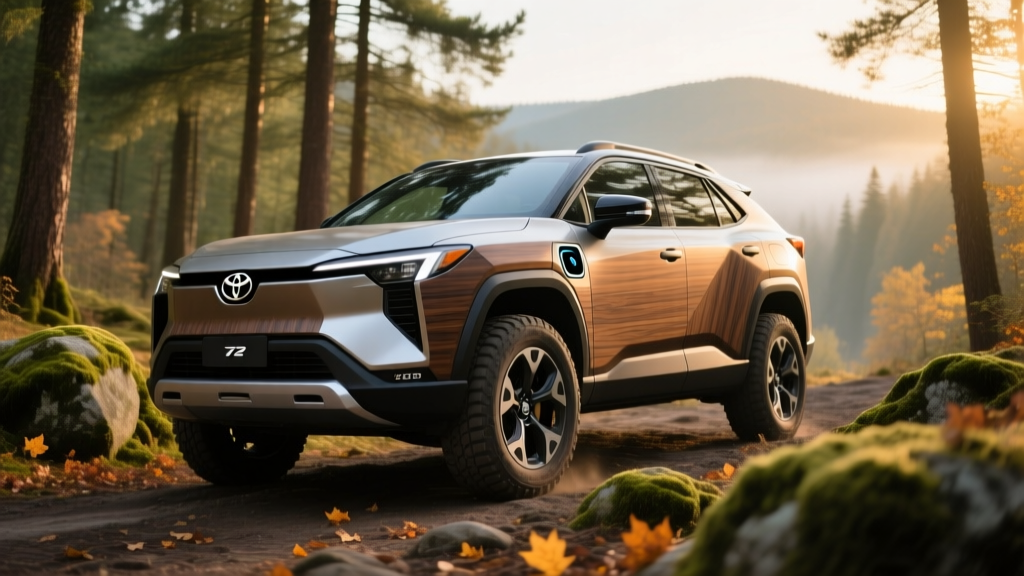
The 2026 Toyota bZ Woodland arrives as the rugged, outdoors-oriented sibling in Toyota's expanding bZ electric lineup. Built on the e-TNGA platform shared with the Subaru Solterra and the bZ4X crossover, the Woodland variant adds standard dual-motor all-wheel drive, increased ground clearance, and body cladding designed for buyers who want electric propulsion without abandoning weekend trail duty. But does the off-road hardware compromise the on-road efficiency that matters for daily driving? We break down every spec that matters.
2026 Toyota bZ Woodland Specifications at a Glance
| Spec | Value |
|---|---|
| EPA Range (est.) | 285 miles |
| Battery (usable) | 71.4 kWh of 74.7 kWh gross, NMC lithium-ion |
| Drivetrain | Dual-motor AWD (e-TNGA platform) |
| Horsepower / Torque | 338 hp / 375 lb-ft combined |
| 0–60 mph | ~5.0 seconds |
| Max DC Fast Charge | 150 kW (CCS1/NACS via adapter) |
| 10–80% DC Charge Time | ~30 minutes |
| Level 2 Home Charging | ~7.2 kW (approx. 25 mi/hr) |
| Efficiency | 104 MPGe combined / 32 kWh/100 mi |
| Ground Clearance | 8.3 inches |
| Cargo Volume (rear seats up / folded) | 27.7 / 56.9 cu ft |
| Base MSRP | ~$42,990 (before destination) |
| Battery/Powertrain Warranty | 8 years / 100,000 miles |
Real-World Range vs. the EPA Sticker
Toyota targets an EPA-estimated 285 miles for the bZ Woodland with its dual-motor AWD powertrain. That figure lands mid-pack among compact electric SUVs, trailing the Hyundai Ioniq 5 AWD (290 mi) and Tesla Model Y Long Range AWD (310+ mi) but ahead of the Subaru Solterra (222–227 mi, depending on trim). The Woodland's more aggressive all-terrain tires and boxier aero profile partially explain why it doesn't match the sleekest competitors.
- City / mixed driving (mild weather): 270–290 miles — regenerative braking in stop-and-go traffic helps recover energy.
- Highway cruising (70–75 mph): 230–255 miles — EVs lose efficiency at sustained high speeds, and the Woodland's taller profile increases drag.
- Cold weather (below 32°F): 195–230 miles — expect a 20–30% reduction depending on cabin heat usage and battery preconditioning. The Woodland includes a battery warming system, but it's less aggressive than Tesla's or Hyundai's thermal management.
- Trail / off-road use: Highly variable — low-speed crawling draws less energy, but climbing grades and soft surfaces can slash range by 35–50%.
The 71.4 kWh usable battery capacity (NMC chemistry) provides a reasonable buffer, but Toyota reserves a larger top and bottom buffer than some competitors to protect long-term cell health. That's good for longevity, less good for maximizing every electron.
Charging Speed: DC Fast and Home Level 2
Charging remains one of the bZ platform's most debated characteristics. The Woodland peaks at 150 kW on DC fast charging, a rate that's competitive with the Subaru Solterra but notably behind the Hyundai Ioniq 5 and Kia EV6, which sustain 235+ kW thanks to their 800-volt architectures.
| Charging Level | Power / Rate | Speed (Miles Added) | Notes |
|---|---|---|---|
| Level 1 (120V household) | ~1.4 kW | ~4 mi/hr | Emergency / trickle only |
| Level 2 (240V home, 32A) | ~7.2 kW | ~25 mi/hr | Full charge in ~10 hours |
| DC Fast Charge (peak) | 150 kW | ~10–80% in 30 min | Curve tapers significantly above 80% |
At home on a Level 2 charger, overnight replenishment is straightforward — plug in at 10 PM and you'll wake up to a full battery. The onboard charger handles up to 7.2 kW, which is typical for this class but lower than the 11.5 kW available on some rivals.
Charging curve reality check: The 150 kW peak only holds roughly between 10–50% state of charge. After 60%, the rate drops to ~80 kW, and above 80% it tapers sharply to protect the NMC cells. If you're road-tripping and need to charge past 80%, budget an extra 15–20 minutes for that final stretch — or better yet, charge to 80% and drive on.
For connector compatibility, the 2026 Woodland ships with a CCS1 inlet. Toyota now includes a NACS adapter for Tesla Supercharger access, expanding the usable public network considerably. According to the U.S. Department of Energy, adapter-based Supercharger charging works at the vehicle's max accepted rate, not the stall's full output.
Performance, Drivetrain, and Off-Road Capability
The dual-motor setup produces a combined 338 horsepower and 375 lb-ft of torque, with the rear motor contributing more output than the front for a slight rear-drive bias. The 0–60 mph sprint takes approximately 5.0 seconds — quick enough for confident highway merging and passing, though not in the sub-4-second territory of a Model Y Performance or Ioniq 5 N.
Where the Woodland distinguishes itself is off-pavement. Toyota equips it with:
- X-MODE AWD management (carried over from Subaru's partnership) with selectable Snow/Dirt and Deep Snow/Mud modes
- 8.3 inches of ground clearance — roughly 1.2 inches more than the standard bZ4X
- All-terrain tires on 18-inch wheels (17-inch available with more sidewall for serious trails)
- Grip Control low-speed crawl function for technical terrain
This is a genuine light-off-road EV, comparable in trail ability to a Subaru Outback Wilderness in concept, though the Outback's greater range and refueling speed still make it the pragmatic choice for remote backcountry expeditions. The Woodland's instant torque delivery is an asset on steep climbs, and the low center of gravity from the floor-mounted battery pack keeps it planted on side slopes.
Interior, Cargo, and Technology
Inside, the Woodland uses Toyota's latest 12.3-inch infotainment display running the Toyota Audio Multimedia system with wireless Apple CarPlay and Android Auto, native navigation with real-time charging station routing, and over-the-air update capability. The digital gauge cluster sits high on the dash — an arrangement Toyota calls a "cockpit" layout — which some drivers find intuitive and others find obstructive depending on seating position.
Passenger and cargo dimensions:
- Front headroom: 39.4 in / legroom: 42.1 in
- Rear headroom: 38.1 in / legroom: 35.7 in
- Cargo behind rear seats: 27.7 cu ft
- Cargo with rear seats folded: 56.9 cu ft
- No front trunk (frunk) — the e-TNGA platform uses that space for HVAC and power electronics
Rear legroom is tighter than the Ioniq 5 or VW ID.4, which matters for families with rear-facing child seats. Cargo volume is competitive for the segment, and the 60/40 split-folding rear seats create a nearly flat load floor.
Driver assistance: Toyota Safety Sense 3.0 is standard, including adaptive cruise control with stop-and-go, lane-centering assist, automatic emergency braking with pedestrian detection, and blind-spot monitoring. This is SAE Level 2 driver assistance — you must keep your hands on the wheel and eyes on the road at all times. It is not a self-driving system.
Pricing, Trims, and Federal Tax Credit Eligibility
The 2026 bZ Woodland is offered in two trims:
| Trim | Base MSRP | Est. After §30D Credit* | Key Additions |
|---|---|---|---|
| Woodland | $42,990 | ~$35,490 | Dual-motor AWD, 12.3" display, heated seats, X-MODE, 18" AT wheels |
| Woodland Premium | $46,990 | ~$39,490 | Panoramic roof, JBL 9-speaker audio, 360° camera, heated rear seats, power liftgate |
*Federal tax credit estimates assume full eligibility. See below for requirements.
Destination charges add approximately $1,390. Fully loaded with accessories, a Woodland Premium can approach $50,000 out the door.
Does It Qualify for the Federal EV Tax Credit?
The bZ Woodland may qualify for up to $7,500 under IRS §30D, but eligibility depends on several conditions that change periodically. As of the current tax year, the IRS requirements include:
- MSRP cap: SUVs must have a base MSRP at or below $80,000 — the Woodland clears this easily.
- Buyer income limits: Modified AGI must not exceed $150,000 (single), $225,000 (head of household), or $300,000 (joint).
- Battery component sourcing: A percentage of battery components must be manufactured or assembled in North America, increasing annually. $3,750 of the credit depends on this requirement.
- Critical minerals sourcing: A percentage of critical minerals must be sourced from the U.S. or a free-trade-agreement country. The other $3,750 depends on this.
- Point-of-sale transfer: Eligible buyers can transfer the credit to the dealer at purchase, reducing the upfront cost rather than waiting for a tax refund.
Because battery sourcing rules tighten each year, the Woodland may qualify for the full $7,500, a partial $3,750, or nothing depending on your purchase date and Toyota's supply chain status at that time. Always verify current eligibility on fueleconomy.gov and consult a tax professional before relying on the credit in your budget.
Efficiency and Operating Costs
The bZ Woodland's EPA-rated efficiency of 104 MPGe combined (32 kWh per 100 miles) reflects the penalty of its all-terrain tires, higher ride height, and dual-motor AWD weight. For comparison, the Ioniq 5 AWD achieves 110 MPGe and the Model Y Long Range AWD posts 120+ MPGe.
At the U.S. average residential electricity rate of roughly $0.17/kWh, charging the Woodland at home costs approximately $5.44 per 100 miles. The equivalent gasoline SUV averaging 25 MPG at $3.40/gallon costs about $13.60 per 100 miles. That's roughly $800–$1,000 in annual fuel savings for a driver covering 12,000 miles per year — meaningful, though not as dramatic as with a more efficient EV.
DC fast charging on the road costs more — typically $0.35–$0.55/kWh at Electrify America or Tesla Superchargers, bringing road-trip fuel costs closer to gasoline parity. Plan to charge at home whenever possible for maximum savings.
Pros, Cons, and the Competition
Pros
- Genuine off-road capability rare among compact EV SUVs
- Standard dual-motor AWD with X-MODE and Grip Control
- Strong Toyota reliability reputation and 8-yr/100,000-mi battery warranty
- Comfortable, quiet ride quality on pavement
- Comprehensive Toyota Safety Sense 3.0 standard on all trims
- NACS adapter included for Supercharger network access
Cons
- 150 kW DC charging peak lags behind 800V rivals (Ioniq 5, EV6)
- Real-world highway range drops noticeably below EPA estimate
- Rear legroom is tighter than key competitors
- No frunk for additional cargo storage
- Off-road tires increase road noise and reduce efficiency
- Base price is higher than many AWD EV crossovers before incentives
How It Compares to Key Rivals
vs. Hyundai Ioniq 5 AWD: The Ioniq 5 charges faster (235 kW peak, 10–80% in 18 min), offers more rear legroom, and is more efficient. But it has no off-road pretensions and lower ground clearance. If your weekends stay on pavement, the Ioniq 5 is the stronger EV. If you need trail capability, the Woodland wins.
vs. Subaru Solterra: The Solterra shares the e-TNGA platform and X-MODE system but offers notably less range (222–227 mi EPA) and less power. The Woodland's larger usable battery and more powerful motors give it a clear edge, though the Solterra's lower starting price may appeal to budget-conscious buyers.
vs. Tesla Model Y Long Range AWD: The Model Y dominates on range (310+ mi), charging speed (250 kW at V3 Superchargers), and interior space. But it lacks any meaningful off-road hardware, and its minimalist interior and panel-gap quality remain divisive. The Woodland is the choice if you prioritize ruggedness over maximum range.
Who Should Buy the Toyota bZ Woodland?
Choose the bZ Woodland if:
- You want an EV that can handle forest service roads, ski-resort parking lots, and light trails without modification
- You value Toyota's long-term reliability reputation and dealer network
- Your daily commute is under 100 miles round-trip, and you can charge at home
- You don't frequently road-trip more than 200 miles between charging stops
Look elsewhere if:
- Maximum range and fastest charging are your top priorities (consider Ioniq 5 or Model Y)
- You need maximum rear-seat room for tall passengers or rear-facing car seats
- You regularly drive in extreme cold where range loss compounds the Woodland's already-moderate EPA figure
- You want a frunk for gear storage
Frequently Asked Questions
What is the real-world range of the Toyota bZ Woodland?
The EPA estimates 285 miles, but real-world results vary. Expect 270–290 miles in city driving, 230–255 miles on the highway at 70+ mph, and 195–230 miles in freezing temperatures. Off-road use reduces range further depending on terrain and grade.
How fast does the bZ Woodland charge?
On DC fast charging, it peaks at 150 kW and charges from 10–80% in approximately 30 minutes, though the rate tapers significantly above 60% SoC. At home on Level 2 (240V), it charges at ~7.2 kW, adding about 25 miles per hour — a full charge takes roughly 10 hours.
Does the bZ Woodland qualify for the $7,500 federal tax credit?
It may qualify for up to $7,500 under IRS §30D, depending on battery component and critical-mineral sourcing requirements that change annually, your income level, and the vehicle's MSRP (which is well under the $80,000 SUV cap). Verify current eligibility on fueleconomy.gov and consult a tax professional. The credit can be transferred to the dealer at point of sale if eligible.
Is the bZ Woodland worth buying over the Ioniq 5 or Model Y?
It depends on your use case. If off-road capability and ruggedness are priorities, the Woodland offers something neither rival can match. If maximum range, charging speed, and interior space matter more, the Ioniq 5 and Model Y are stronger EVs. The Woodland is a niche vehicle that excels in its niche.
What is the battery warranty on the bZ Woodland?
Toyota covers the battery and electric powertrain for 8 years or 100,000 miles, whichever comes first. The warranty guarantees the battery will retain at least 70% of its original capacity during that period. Toyota's NMC battery management system uses conservative charge buffers to minimize long-term degradation.
Can the bZ Woodland tow?
Toyota rates the bZ Woodland for up to 3,500 pounds of towing capacity with the available tow hitch accessory. That's sufficient for a small utility trailer, a pair of dirt bikes, or a light pop-up camper, but not for larger boat or travel-trailer duty. Towing will significantly reduce range — expect a 30–50% reduction depending on trailer weight and aerodynamics.