Quick Answer: What Toyota All Electric Vehicles Can You Buy in 2026?
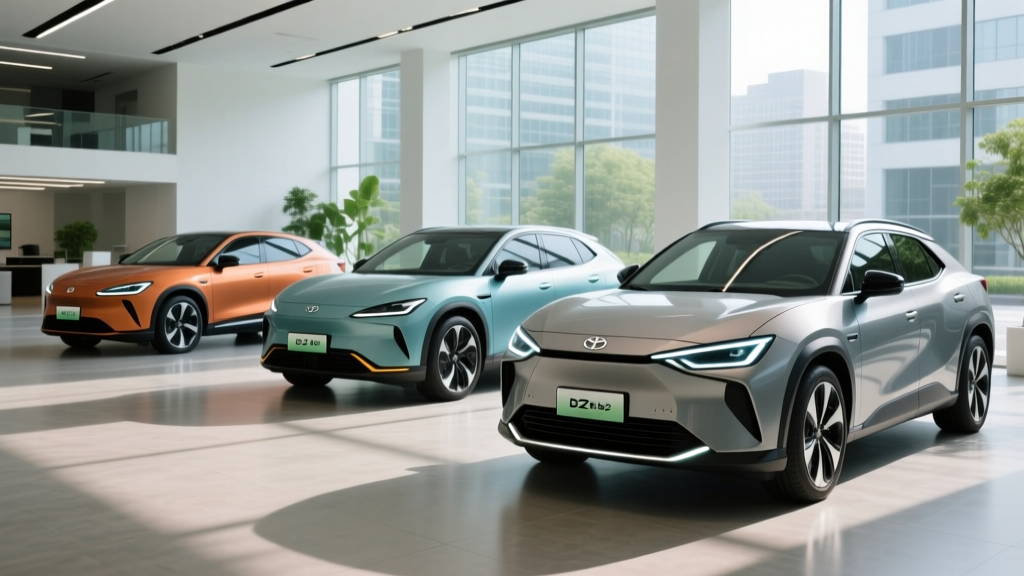
As of 2026, Toyota sells two fully electric vehicles in the U.S.: the bZ4X compact SUV (EPA range up to 252 miles, starting at $37,070) and the newly introduced bZ large SUV (EPA range up to 320 miles, starting at $43,900). Both use a 71.4 kWh or 72.8 kWh NMC lithium-ion battery and support DC fast charging up to 150 kW. Toyota's broader lineup remains heavily hybrid-focused — if you can't charge at home or regularly drive over 350 miles between stops, a Toyota PHEV like the RAV4 Prime may serve you better than a BEV.
The Current Toyota BEV Lineup: Specs That Matter
Toyota has been cautious in its all-electric rollout compared to competitors like Hyundai, Tesla, and Ford. The bZ4X launched for the 2023 model year and has seen incremental updates, while the larger bZ SUV arrived for the 2026 model year. Here's what each delivers in hard numbers.
| Specification | 2026 bZ4X (FWD) | 2026 bZ4X (AWD) | 2026 bZ Large SUV (AWD) |
|---|---|---|---|
| EPA Range | 252 mi | 228 mi | 320 mi |
| Battery (usable) | 71.4 kWh, NMC | 71.4 kWh, NMC | 72.8 kWh, NMC |
| Horsepower | 201 hp | 214 hp | 338 hp |
| 0–60 mph | 7.1 sec | 6.5 sec | 5.4 sec |
| Peak DC Charge Rate | 150 kW | 150 kW | 150 kW |
| 10–80% DC Fast Charge | ~30 min | ~30 min | ~32 min |
| Level 2 (240V) Charge | ~9.5 hours | ~9.5 hours | ~10 hours |
| MPGe (combined) | 119 MPGe | 104 MPGe | 112 MPGe |
| Base MSRP | $37,070 | $39,100 | $43,900 |
| Battery Warranty | 8 yr / 100,000 mi | 8 yr / 100,000 mi | 8 yr / 100,000 mi |
Real-World Range vs. EPA Sticker
bZ4X FWD (EPA 252 mi): Expect roughly 220–235 miles in mixed highway driving at 70 mph. In cold weather (below 32°F), plan for 175–200 miles — a 20–30% reduction typical of NMC batteries without a heat pump on lower trims. The bZ4X includes a battery preconditioning feature for DC fast charging, but it activates automatically only when using the built-in navigation to route to a charger.
bZ Large SUV AWD (EPA 320 mi): Highway driving yields approximately 275–290 miles. Cold-weather range drops to roughly 230–260 miles. The larger pack helps buffer the AWD system's higher energy draw.
Charging Speed Reality: 150 kW Peak, but Watch the Curve
Toyota rates both vehicles at a peak 150 kW DC fast-charge rate — adequate but not class-leading. Competitors like the Hyundai Ioniq 5 (up to 240 kW on 800V architecture) and Tesla Model Y (up to 250 kW) charge noticeably faster at compatible stations.
Here's what the charging curve actually looks like in practice:
- 10–40% SoC: The bZ4X sustains close to its 150 kW peak, adding roughly 100 miles of range in 12 minutes.
- 40–80% SoC: The rate tapers to approximately 80–110 kW. The full 10–80% session takes around 30 minutes.
- Above 80% SoC: Charging drops below 40 kW to protect battery health. Avoid DC fast charging past 80% on road trips unless necessary — the time penalty is severe.
At home on a Level 2 (240V, 48A) charger, expect a full 0–100% charge in roughly 9.5 hours. This is practical for overnight charging but means you need reliable home or workplace Level 2 access to own a Toyota BEV without friction.
| Charging Level | Power | Miles Added per Hour | Use Case |
|---|---|---|---|
| Level 1 (120V) | ~1.4 kW | ~4–5 mi/hr | Emergency/trickle only |
| Level 2 (240V, 48A) | ~11.5 kW | ~35–40 mi/hr | Daily home/work charging |
| DC Fast Charge | Up to 150 kW | ~500+ mi/hr (peak) | Road trips, quick top-ups |
Cost Breakdown: Toyota BEV vs. Toyota Hybrid vs. Gas
The financial case for going electric depends on your driving habits, electricity cost, and whether you qualify for federal tax credits. Below is a 5-year cost comparison assuming 15,000 miles/year, $3.50/gallon gas, and $0.14/kWh electricity (national average).
| Cost Category | 2026 bZ4X FWD | 2026 RAV4 Hybrid AWD | 2026 RAV4 LE (Gas) |
|---|---|---|---|
| Base MSRP | $37,070 | $33,425 | $30,425 |
| Federal Tax Credit (§30D) | Up to $7,500* | $0 | $0 |
| Effective Purchase Price | ~$29,570 | $33,425 | $30,425 |
| 5-Year Fuel/Energy Cost | ~$3,940 | ~$7,880 | ~$10,500 |
| 5-Year Maintenance (est.) | ~$1,800 | ~$3,200 | ~$3,800 |
| 5-Year Total Cost (purchase + fuel + maint.) | ~$35,310 | ~$44,505 | ~$44,725 |
*Tax credit caveat: The §30D federal EV tax credit (up to $7,500) has specific eligibility requirements including buyer income caps ($150K single / $300K joint), MSRP caps ($80K for SUVs), and battery component/critical mineral sourcing rules. As of 2026, the bZ4X qualifies for the full credit when purchased new, but always verify current sourcing compliance on the IRS qualified vehicles list before purchasing. The credit is now transferable at point of sale, reducing your out-of-pocket cost directly.
The takeaway: Over five years, the bZ4X saves roughly $9,000–$9,400 compared to a gas RAV4 and $9,200 compared to the RAV4 Hybrid — but only if you qualify for the full $7,500 credit and have access to affordable home charging. Without the tax credit, the bZ4X's higher MSRP narrows the gap considerably, though energy and maintenance savings still favor the BEV by roughly $2,000–$2,500 over five years.
Toyota BEV vs. Toyota Hybrid: Which Actually Fits Your Life?
Toyota's hybrid dominance is not accidental. The RAV4 Hybrid delivers 39 MPG combined with zero lifestyle changes — no charging setup, no range planning. The RAV4 Prime PHEV splits the difference with 42 miles of electric-only range plus a gas engine for longer trips. Here's how to decide:
| Factor | Toyota BEV (bZ4X/bZ) | Toyota Hybrid/PHEV |
|---|---|---|
| Best for | Home chargers, predictable commutes, second cars | Apartment dwellers, long-distance drivers, one-car households |
| Home Charging Required? | Effectively yes | No |
| Cold-Weather Impact | 20–30% range loss | Minimal MPG reduction |
| Road Trip Convenience | 30-min charge stops every 200–250 mi | 5-min gas stops every 400+ mi |
| Maintenance Burden | Low (no oil, fewer brake jobs) | Moderate (standard ICE service) |
| Tax Incentives | Up to $7,500 federal credit | None (HEV); up to $7,500 (PHEV, if eligible) |
Common Misconceptions About Toyota's Electric Vehicles
| Myth | Fact |
|---|---|
| "Toyota doesn't make electric cars." | Toyota sells two BEVs (bZ4X and bZ SUV) and plans additional models through 2028. Their strategy pairs BEVs with a massive hybrid/PHEV lineup. |
| "The bZ4X charges slowly compared to all competitors." | At 150 kW peak, it's slower than 800V vehicles (Hyundai Ioniq 5, Kia EV6) but comparable to the VW ID.4 (170 kW) and Subaru Solterra (150 kW). For overnight home charging, the rate is irrelevant. |
| "Toyota BEV batteries degrade quickly." | Toyota warranties the battery for 8 years/100,000 miles against capacity loss below 70%. Independent data on NMC packs with Toyota's thermal management suggests 10–15% degradation over 150,000 miles — meaning a 252-mile bZ4X would still deliver ~215–225 miles after a decade of typical use. |
| "You can't take a Toyota EV on a road trip." | You can, but plan around a 200–230 mile real-world range on highways and 30-minute charge stops. The bZ4X uses CCS1 for DC fast charging and has access to Electrify America, EVgo, and (with an adapter) the Tesla Supercharger network. |
| "The tax credit makes it practically free." | The §30D credit has income caps, MSRP caps, and battery sourcing requirements. Always check the IRS qualified vehicle list and consult a tax professional. |
Real-World Ownership Considerations Before You Buy
Home Charging Access Is Non-Negotiable
If you cannot install a Level 2 charger at home (240V, ideally 48A), owning a Toyota BEV becomes significantly less convenient. Public DC fast charging at $0.35–$0.50/kWh erases much of the fuel cost advantage, and relying solely on Level 1 (120V) adds only 4–5 miles of range per hour — inadequate for daily driving beyond short commutes. Budget $800–$2,000 for a professional Level 2 installation, or more if your electrical panel needs a 200A upgrade ($1,500–$3,500 additional).
Climate Matters More Than You Think
In northern states with harsh winters, the bZ4X's real-world range drops to 175–200 miles on cold days. Toyota offers a battery preconditioning system, but unlike Tesla's aggressive thermal management, Toyota's system is more conservative. If you live in Minnesota, Maine, or Colorado and regularly drive 100+ miles in winter, a PHEV may be a safer bet.
Connector Compatibility and Charging Network Access
The 2026 bZ4X ships with a CCS1 connector. Toyota has announced that future models will adopt NACS (the Tesla connector), and existing bZ4X owners can access Tesla Superchargers using a Toyota-approved NACS adapter (typically $200–$250). For non-Tesla networks like Electrify America and EVgo, the CCS1 port works natively. Check your local charging infrastructure on the AFDC state-by-state map before committing to a BEV.
Decision Framework: Should You Buy a Toyota BEV, Hybrid, or PHEV?
Choose a Toyota BEV (bZ4X / bZ SUV) if:
- You have reliable Level 2 home charging (garage or driveway with 240V access)
- Your daily driving is under 80 miles round-trip
- You qualify for the full $7,500 §30D tax credit
- You want minimal maintenance and zero tailpipe emissions
- You have a second vehicle or are comfortable planning road-trip charge stops
Choose a Toyota Hybrid (RAV4 Hybrid, Camry Hybrid) if:
- You rent or live in an apartment without charging access
- You regularly drive 300+ miles without stopping
- You want the lowest upfront cost with no charging infrastructure investment
- You live in an extreme-cold climate where BEV range loss is a daily problem
Choose a Toyota PHEV (RAV4 Prime) if:
- You can charge at home and your commute is under 42 miles (the RAV4 Prime's electric-only range)
- You want electric daily driving plus gas-engine freedom for road trips
- You're a one-car household that needs maximum flexibility
Frequently Asked Questions
Does Toyota have any all-electric vehicles available now?
Yes. As of 2026, Toyota sells two BEVs in the U.S.: the bZ4X compact SUV (252 mi EPA, from $37,070) and the bZ large SUV (320 mi EPA, from $43,900). Both use NMC lithium-ion batteries and support 150 kW DC fast charging.
Is the Toyota bZ4X eligible for the $7,500 federal tax credit?
The bZ4X can qualify for the full §30D credit, but eligibility depends on your income (under $150K single / $300K joint), the vehicle's MSRP (under the $80K SUV cap), and current battery sourcing compliance. The credit is transferable at point of sale as of 2024, so you can apply it as a purchase-price reduction. Always verify on the IRS qualified clean vehicles page before buying.
How does the bZ4X compare to the Hyundai Ioniq 5 or Tesla Model Y?
The bZ4X trails both on range (252 mi vs. 303–325 mi), DC fast-charge speed (150 kW vs. 240–250 kW), and cargo space. However, it is priced lower after the tax credit and may appeal to Toyota loyalists who value the dealer network and warranty support. The Ioniq 5 and Model Y are objectively stronger EVs for the money, but the bZ4X is a competent entry point for cautious first-time EV buyers.
What is the real-world range of the Toyota bZ4X?
In mixed driving, expect 220–235 miles from the FWD model (EPA 252 mi). Highway driving at 70+ mph reduces this to approximately 200–215 miles. In freezing temperatures, plan for 175–200 miles. The AWD model's real-world range is roughly 15–20 miles lower across all conditions.
Will Toyota release more electric vehicles soon?
Toyota has announced plans for a broader BEV lineup through 2028, including a compact SUV and a next-generation sedan on a new dedicated EV platform with improved battery energy density. As of early 2026, only the bZ4X and bZ large SUV are confirmed and available. Treat any additional model announcements as preliminary until EPA certification and pricing are published.
How much does it cost to charge a Toyota bZ4X at home?
At the U.S. average of $0.14/kWh, a full 71.4 kWh charge (0–100%) costs approximately $10.00 and delivers roughly 252 EPA miles. That works out to about $0.04 per mile — compared to $0.12–$0.14 per mile for a 28 MPG gas vehicle at $3.50/gallon. Over 15,000 miles per year, home charging saves roughly $1,200–$1,500 versus gasoline.