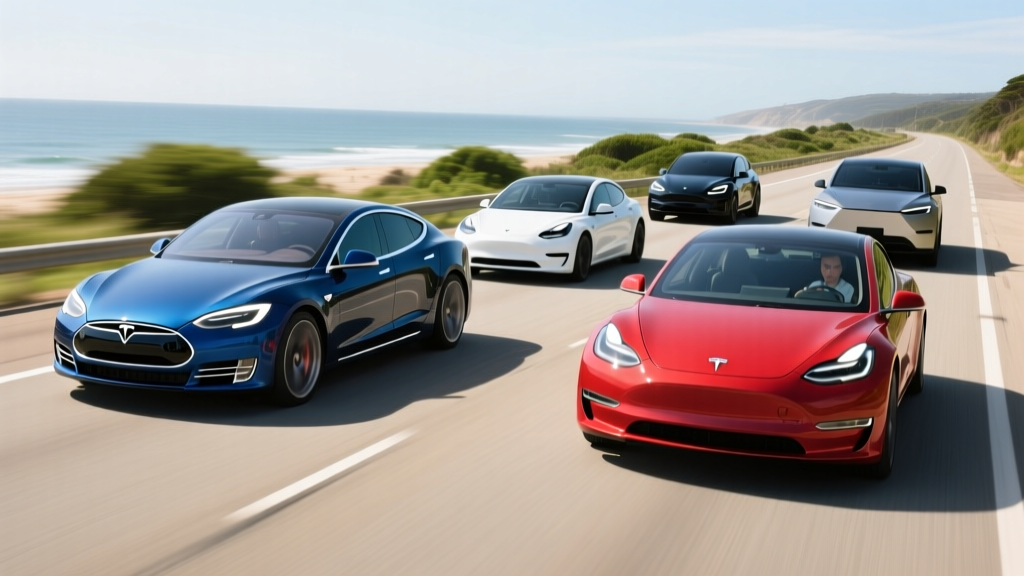
If you've ever searched for the top speed for Tesla vehicles, you've likely encountered a wall of conflicting numbers. Tesla frequently updates its lineup mid-year, adjusts software-limited top speeds via over-the-air updates, and offers performance variants that dramatically alter the figures. This guide cuts through the noise with verified 2026 model-year data for every Tesla currently on sale: Model 3, Model Y, Model S, Model X, and Cybertruck.
We'll cover more than just top speed. For each model, you'll find EPA range, real-world range expectations, battery chemistry, DC fast-charge speeds, pricing, federal tax credit eligibility, and who each vehicle actually suits. Because top speed alone doesn't tell you whether a Tesla is the right EV for your driveway.
2026 Tesla Model Lineup: Top Speed & Performance Specs at a Glance
| Model / Trim | Top Speed (mph) | 0–60 mph (sec) | Horsepower | Drivetrain | EPA Range (mi) |
|---|---|---|---|---|---|
| Model 3 RWD | 125 | 5.8 | 283 | RWD | 272 |
| Model 3 Long Range AWD | 125 | 4.2 | 346 | Dual-Motor AWD | 363 |
| Model 3 Performance | 163 | 2.9 | 510 | Dual-Motor AWD | 315 |
| Model Y Long Range AWD | 125 | 4.8 | 384 | Dual-Motor AWD | 320 |
| Model Y Performance | 155 | 3.5 | 456 | Dual-Motor AWD | 285 |
| Model S Long Range | 149 | 3.1 | 670 | Dual-Motor AWD | 402 |
| Model S Plaid | 200 | 1.99 | 1,020 | Tri-Motor AWD | 396 |
| Model X Long Range | 149 | 3.8 | 670 | Dual-Motor AWD | 335 |
| Model X Plaid | 163 | 2.5 | 1,020 | Tri-Motor AWD | 326 |
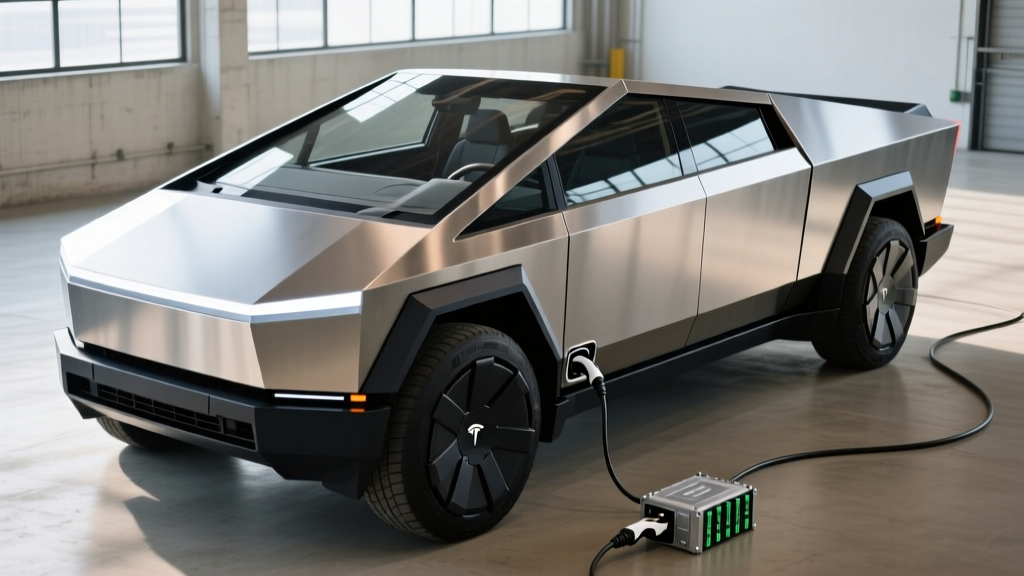
| Cybertruck AWD | 112 | 4.1 | 600 | Dual-Motor AWD | 340 |
| Cybertruck Cyberbeast | 130 | 2.6 | 845 | Tri-Motor AWD | 320 |
A few things jump out immediately. The Model S Plaid holds the crown at 200 mph — though that requires the optional Track Package with specific wheels and tires. Without it, the Plaid is electronically limited to 163 mph. Meanwhile, the most affordable Tesla, the Model 3 RWD, is governed to 125 mph, which is still well above any US highway speed limit.
Top speed in an EV is largely a function of motor RPM limits, gear ratios (Teslas use single-speed reductions), and software governance. The tri-motor Plaid and Cyberbeast powertrains can sustain higher RPMs, which is why they achieve both higher top speeds and blistering acceleration figures.
Range, Battery, and Real-World Efficiency
EPA estimates assume a mix of city and highway driving at moderate temperatures. In practice:
- Highway driving at 75+ mph: Expect 10–15% less than EPA. A Model 3 Long Range rated at 363 mi may deliver ~310–325 mi on a flat interstate.
- Cold weather (below 32°F): Range drops 20–30% depending on cabin heating demand and whether you precondition. An LFP-equipped Model 3 RWD rated at 272 mi could see ~190–210 mi in a 20°F winter commute.
- Cold + highway combined: The worst-case scenario. Plan for up to 35% reduction on winter road trips.
| Model / Trim | Battery (kWh usable) | Chemistry | MPGe (combined) | kWh/100 mi |
|---|---|---|---|---|
| Model 3 RWD | 57.5 | LFP | 132 | 25 |
| Model 3 Long Range AWD | 78.1 | NMC | 134 | 25 |
| Model 3 Performance | 78.1 | NMC | 121 | 28 |
| Model Y Long Range AWD | 78.1 | NMC | 123 | 27 |
| Model Y Performance | 78.1 | NMC | 117 | 29 |
| Model S Long Range | 95 | NMC | 124 | 27 |
| Model S Plaid | 95 | NMC | 120 | 28 |
| Model X Long Range | 95 | NMC | 109 | 31 |
| Model X Plaid | 95 | NMC | 105 | 32 |
| Cybertruck AWD | 123 | NMC | 102 | 33 |
| Cybertruck Cyberbeast | 123 | NMC | 99 | 34 |
Tesla uses two distinct battery chemistries across its 2026 lineup. The Model 3 RWD uses LFP (lithium iron phosphate) cells, which sacrifice some energy density for longer cycle life, lower cost, and the ability to charge routinely to 100% without accelerating degradation. Every other Tesla trim uses NMC (nickel manganese cobalt) chemistry, which packs more energy per kilogram but benefits from daily charge limits around 80% for longevity.
According to fueleconomy.gov, the Model 3 Long Range remains one of the most efficient EVs on the market at 134 MPGe combined — a critical advantage if you commute long distances and want to minimize charging stops.
Charging Speed: DC Fast Charging & Home Level 2
Top speed gets headlines, but charge speed determines how livable an EV is day to day. Here's the full charging picture for the 2026 Tesla fleet:
| Model | Max DC kW | 10–80% Time | Level 2 Rate (kW) | Level 2 mi/hr |
|---|---|---|---|---|
| Model 3 (all trims) | 250 | ~25 min | 11.5 | ~44 |
| Model Y (all trims) | 250 | ~27 min | 11.5 | ~37 |
| Model S / X Long Range | 250 | ~30 min | 11.5 | ~34 |
| Model S / X Plaid | 250 | ~30 min | 11.5 | ~34 |
| Cybertruck (all trims) | 350 (est.) | ~20 min | 17 (est.) | ~48 |
All current Teslas use the NACS (North American Charging Standard) connector natively. This is now the dominant standard in North America, with Ford, GM, Rivian, and most major automakers adopting it. If you drive a non-Tesla EV with CCS, you'll need an adapter at Superchargers; Tesla owners face no such friction.
Charging curve reality: The "250 kW" peak figure applies only at low states of charge (roughly 10–30% SoC) and when the battery is properly preconditioned — which Tesla handles automatically when you navigate to a Supercharger. Above 60% SoC, the rate tapers significantly. A 10–80% session is realistic; an 80–100% top-off can take as long as the entire 10–80% fill. Plan road-trip stops accordingly: charge to 80% and move on.
The Cybertruck's 800-volt architecture (a Tesla first) enables faster DC charge rates, potentially peaking near 350 kW at V4 Supercharger stalls equipped with the CCS2/NACS high-power cabinet. However, not all Supercharger locations support this rate yet, so real-world sessions may land closer to 250–280 kW at many stalls.
For home Level 2 charging, a Tesla Wall Connector on a 60-amp circuit delivers up to 11.5 kW (48 amps) to Model 3/Y/S/X. The Cybertruck's larger onboard charger can accept up to 17 kW on a properly sized 100-amp circuit. Most owners find that overnight Level 2 charging fully replenishes daily driving consumption regardless of the model.
Pricing, Trims, and Federal Tax Credit Eligibility
| Model / Trim | Base MSRP | Federal Credit (§30D) | Effective Price* |
|---|---|---|---|
| Model 3 RWD | $38,990 | Up to $7,500 | ~$31,490 |
| Model 3 Long Range AWD | $42,490 | Up to $7,500 | ~$34,990 |
| Model 3 Performance | $52,990 | Up to $7,500 | ~$45,490 |
| Model Y Long Range AWD | $44,990 | Up to $7,500 | ~$37,490 |
| Model Y Performance | $51,490 | Up to $7,500 | ~$43,990 |
| Model S Long Range | $79,990 | $0 (MSRP cap) | $79,990 |
| Model S Plaid | $94,990 | $0 (MSRP cap) | $94,990 |
| Model X Long Range | $84,990 | $0 (MSRP cap) | $84,990 |
| Model X Plaid | $99,990 | $0 (MSRP cap) | $99,990 |
| Cybertruck AWD | $79,990 | $0 (MSRP cap) | $79,990 |
| Cybertruck Cyberbeast | $99,990 | $0 (MSRP cap) | $99,990 |
*Effective price assumes full credit eligibility. Actual credit depends on your tax situation, vehicle battery sourcing compliance, and income limits.
- MSRP caps: Sedans must be ≤$55,000; SUVs, vans, and trucks ≤$80,000. This is why Model S, Model X, and Cybertruck do not qualify.
- Buyer income limits: AGI ≤$150,000 (single), ≤$225,000 (head of household), ≤$300,000 (joint).
- Battery sourcing: Increasing percentages of critical minerals and battery components must be sourced from the US or FTA partners. The Model 3 RWD (LFP cells from CATL) has faced sourcing challenges — verify current-year eligibility on IRS.gov before purchasing.
- Point-of-sale transfer: You can transfer the credit to the dealer at purchase for an upfront price reduction, rather than waiting to claim it on your tax return.
- Assembled in North America: All US-market Teslas are assembled in Fremont, CA, or Austin, TX — this requirement is satisfied.
The Model 3 and Model Y are the Tesla vehicles most likely to qualify for the full or partial $7,500 credit. However, battery-sourcing rules tighten annually, and eligibility can shift mid-year. Always check the IRS qualified-vehicles list immediately before purchase. Consult a tax professional to confirm your personal eligibility.
Interior, Cargo, and Technology
Passenger & Cargo Space
| Model | Front Legroom (in) | Rear Legroom (in) | Cargo (rear seats up) | Cargo (seats folded) | Frunk |
|---|---|---|---|---|---|
| Model 3 | 42.7 | 35.2 | 23 cu ft | — | 3.1 cu ft |
| Model Y | 41.8 | 40.5 | 30 cu ft | 72 cu ft | 4.1 cu ft |
| Model S | 42.4 | 35.4 | 28 cu ft | — | 5.3 cu ft |
| Model X | 41.2 | 38.4 | 42 cu ft (5-seat) | 85 cu ft | 6.6 cu ft |
| Cybertruck | 41.0 (est.) | 38.0 (est.) | Bed: 67 cu ft | — | 7.0 (est.) |
The Model Y remains the most practical Tesla for families, offering crossover-level cargo capacity and genuinely usable rear-seat legroom. The Model X provides the most interior volume but commands a premium price that pushes it well beyond the federal tax credit's MSRP cap.
The Cybertruck prioritizes its 6-foot bed (with a motorized tonneau cover) over traditional SUV cargo. It offers 11,000 lbs of towing capacity — the highest of any Tesla — making it the only model suited for heavy trailer work.
Tech & Driver Assistance
Every Tesla shares the same core technology stack:
- Infotainment: Central touchscreen (15.4" in Model 3/Y, 17" in Model S/X, 18.5" in Cybertruck) running Tesla's proprietary OS. No Apple CarPlay or Android Auto — Tesla's native navigation, media, and phone integration handle everything.
- Over-the-air updates: Tesla pushes frequent software updates that can add features, adjust performance, and improve efficiency without a service-center visit.
- Autopilot (standard): Includes adaptive cruise control, lane centering, and automatic emergency braking. This is an SAE Level 2 driver-assistance system — the driver must remain fully engaged with hands on or near the wheel and eyes on the road at all times.
- Full Self-Driving (Supervised): An optional $8,000 add-on (or $99/mo subscription) that adds automatic lane changes, intersection handling, and parking assist. Despite the name, FSD Supervised is still SAE Level 2 — it is not autonomous driving, and the driver bears full responsibility.
All Tesla driver-assistance features, including FSD (Supervised), are classified as SAE Level 2 systems. The driver must continuously monitor the road and be prepared to take immediate control. True autonomous driving (SAE Level 4) is currently offered only by robotaxi services like Waymo in limited geofenced areas. Tesla's FSD branding has drawn scrutiny from NHTSA — always understand the limitations before relying on these features.
Warranty Coverage
| Coverage | Model 3 / Y | Model S / X | Cybertruck |
|---|---|---|---|
| Basic Vehicle | 4 yr / 50,000 mi | 4 yr / 50,000 mi | 4 yr / 50,000 mi |
| Battery & Drive Unit | 8 yr / 120,000 mi (RWD: 100k) | 8 yr / 150,000 mi | 8 yr / 120,000 mi |
| Battery Retention Threshold | 70% capacity | 70% capacity | 70% capacity |
Tesla's battery warranty guarantees that the pack will retain at least 70% of its original capacity during the warranty period. If degradation exceeds 30%, Tesla will repair or replace the battery at no cost. In practice, Tesla battery degradation has proven modest — most owners report 5–10% capacity loss over the first 100,000 miles based on fleet data, well within the warranty threshold.
The LFP battery in the Model 3 RWD carries a slightly shorter mileage warranty (100,000 vs. 120,000 miles) but LFP chemistry typically exhibits slower degradation over time, so real-world longevity should be comparable or better.
Who Should Buy Which Tesla?
- Budget commuter, city driving: Model 3 RWD. At ~$31,490 after the federal credit, it's the cheapest entry point. LFP battery loves daily 100% charges. Top speed of 125 mph is irrelevant in traffic.
- Long-distance commuter, efficiency priority: Model 3 Long Range AWD. 363 mi EPA range means fewer charging stops. Dual-motor AWD adds security in snow and rain.
- Family hauling, cargo flexibility: Model Y Long Range AWD. 72 cu ft with seats folded, available third row (small children), and the most cargo volume per dollar in the lineup.
- Performance enthusiast: Model 3 Performance (2.9 sec 0–60, $52,990) or Model S Plaid (1.99 sec, 200 mph top speed) depending on budget and whether you need back seats that adults will tolerate.
- Towing and off-road utility: Cybertruck AWD. 11,000-lb tow rating, stainless-steel exoskeleton, 340-mi range. Just don't expect it to fit in a standard garage easily (it's over 18 feet long and wide).
- Luxury flagship, 6–7 passengers: Model X Long Range. Falcon-wing doors, available 6- or 7-seat configs, air suspension. But at $84,990 with no federal credit, it's a premium play.
How Teslas Compare to Key Competitors
The Model 3 Long Range (363 mi, $42,490) edges out the Ioniq 6 SEL (361 mi, ~$46,000) on price and Supercharger network access. The Ioniq 6 charges faster on non-Tesla DC networks (up to 350 kW via 800V) and offers Apple CarPlay. Winner: Model 3 for network, Ioniq 6 for charging speed and phone integration.
The Model Y Long Range (320 mi, $44,990) beats the Mach-E Extended Range (312 mi, ~$48,000) on efficiency and cargo space. The Mach-E offers a more traditional interior layout and CarPlay. Winner: Model Y for practicality, Mach-E for those who prefer conventional controls.
The Lucid Air Sapphire (1,234 hp, 1.89 sec 0–60, 427 mi range, ~$249,000) outperforms the Plaid on paper in every metric except price. The Plaid at $94,990 is a relative bargain — if "relative" applies to six-figure sedans. Winner: Lucid for ultimate performance; Model S Plaid for value.
The F-150 Lightning Extended Range (320 mi, ~$70,000) offers a more conventional truck experience, Pro Power Onboard V2L, and qualifies under the $80k truck MSRP cap for the tax credit. The Cybertruck offers more range (340 mi), higher tow rating (11,000 vs. 10,000 lbs), and a stainless-steel body. Winner: F-150 Lightning for traditional truck buyers; Cybertruck for those who want maximum range and towing.
Pros and Cons Across the Tesla Lineup
- Supercharger network — the most reliable, largest fast-charging network in North America, with seamless plug-and-charge billing
- Industry-leading efficiency — Tesla's heat pumps, motor designs, and aero yield more real-world miles per kWh than most competitors
- Over-the-air updates — features improve post-purchase without dealer visits
- Strong resale value relative to legacy EVs (though depreciation has increased since 2023 price cuts)
- Performance per dollar — Model 3 Performance at 2.9 sec 0–60 for $52,990 has no gas-car equivalent
- LFP option on Model 3 RWD — routine 100% charging with lower degradation risk
- No Apple CarPlay or Android Auto — a dealbreaker for some buyers
- Minimalist interior isn't for everyone — no physical stalks on refreshed Model 3 (turn signals are on the steering wheel), no instrument cluster
- Service center availability — Tesla's service network is still thinner than legacy automakers, and body repair can be slow
- FSD (Supervised) costs $8,000 and remains Level 2 — the value proposition is debated
- Insurance costs — Teslas tend to carry higher premiums due to repair costs and claims data
- Model S/X/Cybertruck do not qualify for the federal tax credit due to MSRP caps
Frequently Asked Questions
What is the highest top speed of any Tesla?
The Model S Plaid with the optional Track Package achieves a top speed of 200 mph, making it the fastest Tesla ever sold. Without the Track Package, the Plaid is limited to 163 mph. Achieving 200 mph requires specific Michelin Pilot Sport 4S tires, carbon-ceramic brakes, and a software unlock — the Track Package costs an additional $15,000 on top of the Plaid's $94,990 base price.
What is the real-world range of a Tesla?
Real-world range depends on speed, temperature, and terrain. At 75 mph on a flat highway in 70°F weather, expect roughly 85–90% of the EPA rating. In freezing temperatures with cabin heat, expect 70–80%. The Model 3 Long Range AWD, rated at 363 mi EPA, typically delivers 310–325 mi on highway road trips and 260–290 mi in cold weather.
How fast does a Tesla charge at home?
On a Tesla Wall Connector with a 60-amp circuit, Model 3/Y/S/X charge at up to 11.5 kW, adding roughly 34–44 miles of range per hour. An overnight 8-hour session adds 270–350 miles — more than enough to fully replenish most daily driving. The Cybertruck accepts up to ~17 kW on a larger circuit.
Does Tesla qualify for the $7,500 federal tax credit?
The Model 3 (all trims under $55,000) and Model Y (all trims under $80,000) can qualify for up to $7,500 under IRS §30D, subject to buyer income limits and battery-sourcing compliance. The Model S, Model X, and Cybertruck exceed the MSRP caps and do not qualify. Always verify eligibility at IRS.gov before purchasing.
Is Tesla's Autopilot or FSD actually self-driving?
No. Both Autopilot and Full Self-Driving (Supervised) are SAE Level 2 driver-assistance systems. They can steer, accelerate, and brake within their lane, but the driver must remain fully attentive and ready to take over at any moment. Tesla's camera-based vision system is capable but not infallible — it can struggle with construction zones, faded lane markings, and unusual obstacles. The driver is legally and practically responsible at all times.
Which Tesla has the best range?
The Model S Long Range leads the lineup at 402 miles EPA, thanks to its 95 kWh NMC battery, efficient dual-motor powertrain, and low drag coefficient (0.208 Cd). It's also the only Tesla that cracks 400 miles — a meaningful threshold for road-trippers who want to minimize charging stops on long hauls.
Is a Tesla worth buying vs. competitors in 2026?
It depends on your priorities. If Supercharger access, over-the-air updates, and performance-per-dollar matter most, Tesla remains the strongest ecosystem play. If you prefer Apple CarPlay, more conventional controls, faster peak DC charging on third-party networks, or a wider dealer/service network, competitors like Hyundai, Ford, and BMW offer compelling alternatives. For budget buyers, the Model 3 RWD at ~$31,490 after the tax credit is one of the cheapest new EVs available with over 270 miles of range.