Why Tom Zhu's Tesla Stock Sale Matters to EV Shoppers
When Tesla's Chief Operating Officer Tom Zhu — the executive widely credited with scaling the Shanghai Gigafactory and streamlining global production — files a stock sale, the EV community pays attention. The tom zhu tesla stock sale filings that surface through SEC Form 4 disclosures often trigger speculation about Tesla's internal outlook, production confidence, and model pricing trajectory. But for buyers considering a Model Y in 2026, executive stock transactions matter less than the vehicle's actual capabilities, pricing shifts, and federal tax credit standing.
This review cuts through the market noise and evaluates the 2026 Tesla Model Y on the metrics that determine whether it belongs in your driveway: real-world range, charging infrastructure, ownership economics, and how it stacks up against the Hyundai Ioniq 5, Ford Mustang Mach-E, and Chevrolet Equinox EV.
2026 Tesla Model Y: Range, Battery, and Real-World Efficiency
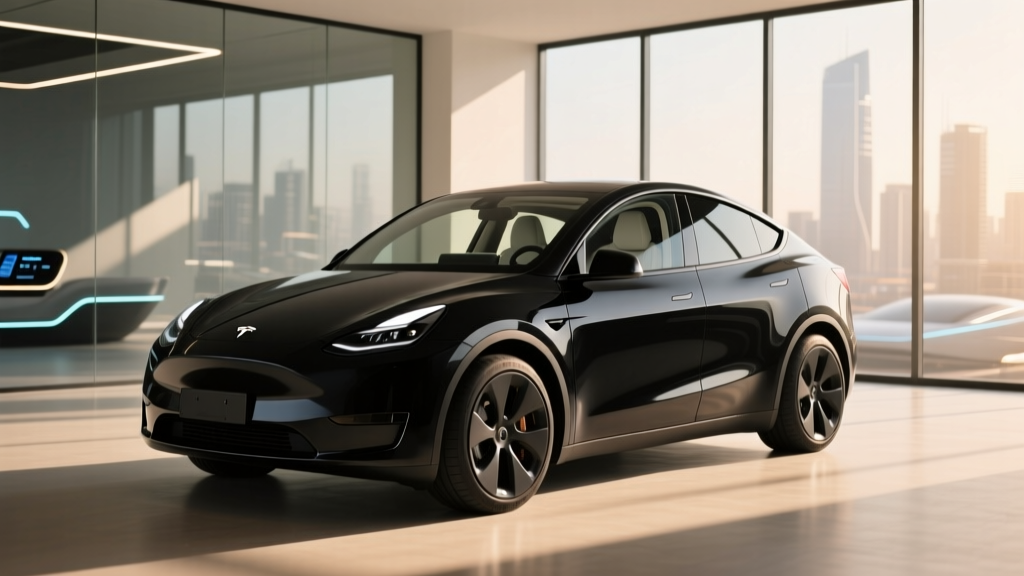
The 2026 Model Y continues to offer two primary battery and drivetrain configurations for the US market, built on Tesla's 4680-cell structural battery pack architecture. The Long Range AWD variant remains the volume seller, while the Standard Range RWD serves as the entry point.
| Specification | Standard Range RWD | Long Range AWD |
|---|---|---|
| EPA Estimated Range | 279 miles | 320 miles |
| Battery Capacity (Usable) | ~60 kWh (LFP) | ~75 kWh (NMC) |
| Drivetrain | Rear-Wheel Drive | Dual-Motor AWD |
| Horsepower | 295 hp | 384 hp |
| 0–60 mph | 6.6 seconds | 4.8 seconds |
| MPGe (Combined) | 123 MPGe | 117 MPGe |
| Efficiency (kWh/100 mi) | 27 kWh/100 mi | 29 kWh/100 mi |
| Cargo Volume (rear seats up / folded) | 30.2 / 72.1 cu ft | 30.2 / 72.1 cu ft |
| Rear Legroom | 38.8 in | 38.8 in |
Real-World Range Reality Check
EPA Sticker: 320 miles (Long Range AWD)
Expect in real-world highway driving (70–75 mph): ~265–285 miles
Cold-weather impact (below 32°F): Plan for 20–30% range reduction, yielding roughly 220–250 miles depending on cabin heat usage and whether you precondition.
City/regenerative driving: Can approach or slightly exceed EPA figures thanks to aggressive regen braking recapture.
The LFP battery in the Standard Range model exhibits slightly less cold-weather sensitivity (~15–20% loss) but offers a lower total range ceiling. LFP chemistry also tolerates regular 100% charging without degradation concerns — Tesla recommends daily 100% charges for LFP packs.
Charging Speed: DC Fast Charge, Home Level 2, and the NACS Advantage
Charging infrastructure remains Tesla's strongest competitive moat. The Supercharger network — now exceeding 6,500 US stations — delivers reliable DC fast charging with minimal plug-and-charge friction. The Model Y's NACS (North American Charging Standard) connector is now the industry benchmark, with Ford, GM, Rivian, and others adopting it.
| Charging Level | Max Power (kW) | Speed (mi/hr added) | Notes |
|---|---|---|---|
| Level 1 (120V household) | ~1.4 kW | ~3–5 mi/hr | Emergency/trickle only |
| Level 2 (240V home, 48A) | 11.5 kW | ~37–44 mi/hr | Full charge in ~7–8 hrs (LR) |
| DC Fast Charge (V3 Supercharger) | 250 kW peak | ~162 mi in 15 min | 10–80% in ~22 min (LR) |
| DC Fast Charge (V4 Supercharger) | Up to 350 kW capable | Vehicle-limited to ~250 kW | Faster taper curve on newer stalls |
Charging curve reality: The Model Y Long Range peaks near 250 kW only between roughly 10–30% State of Charge. From 50–80%, speeds taper to 60–90 kW. The 10–80% time of ~22 minutes assumes a V3 or V4 Supercharger at optimal battery temperature. Always precondition by navigating to a Supercharger in the car's nav system — this warms the battery for faster charge acceptance.
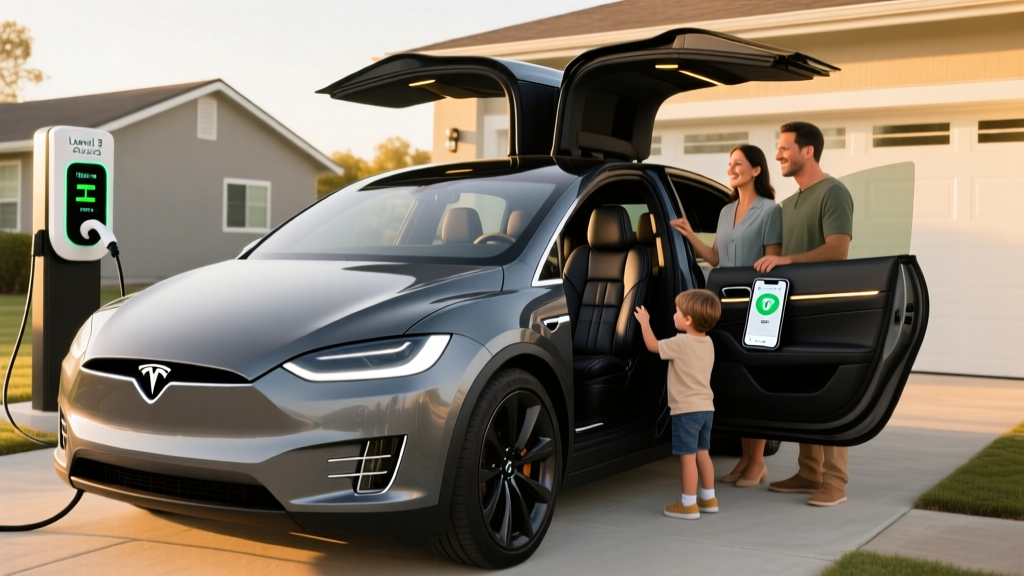
For home Level 2 charging, Tesla's Wall Connector ($475) on a 60-amp circuit delivers the full 11.5 kW / 48 amps the Model Y's onboard charger accepts. A standard 14-50 outlet install typically runs $800–$1,800 depending on panel proximity, per HomeAdvisor electrician cost data. Homes with older 100-amp panels may need a $2,000–$4,000 service upgrade.
Pricing, Trim Levels, and Federal Tax Credit Eligibility
Executive stock sales by leaders like Tom Zhu rarely alter near-term vehicle pricing, but Tesla's dynamic pricing model means MSRP can shift quarterly. As of early 2026, Model Y pricing sits at the following levels before incentives:
| Trim | Base MSRP | As-Tested (typical config) | Est. §30D Credit | Effective Price |
|---|---|---|---|---|
| Standard Range RWD | $44,990 | $46,490 (w/ paint + wheels) | Up to $7,500* | ~$37,490–$38,990 |
| Long Range AWD | $48,990 | $52,490 (w/ FSD + interior) | Up to $7,500* | ~$41,490–$44,990 |
*Federal §30D credit eligibility depends on buyer income, battery component sourcing, and MSRP caps. See IRS rules below.
Does the 2026 Model Y Qualify for the $7,500 Federal EV Tax Credit?
The Tesla Model Y qualifies for up to the full $7,500 federal tax credit under IRS §30D for eligible buyers, but qualification is not universal. Key requirements as of 2026:
- MSRP cap: SUVs must be priced at or below $80,000 (Model Y clears this easily).
- Buyer income limits: Modified AGI cannot exceed $150,000 (single), $225,000 (head of household), or $300,000 (joint filers).
- Battery sourcing: The $7,500 credit splits into two halves — $3,750 for critical minerals and $3,750 for battery components. Vehicles with battery components from a "foreign entity of concern" (FEOC) may lose one or both halves.
- Point-of-sale transfer: Since 2024, buyers can transfer the credit to the dealer at purchase, receiving the discount immediately rather than waiting for a tax return.
Tesla sources battery cells from its own US production (4680 cells at Giga Texas and Giga Nevada) and from CATL for LFP variants. The CATL-sourced LFP packs in the Standard Range model may face partial credit reduction due to FEOC rules. Buyers should verify current eligibility on IRS.gov's clean vehicle credit page before purchase.
Performance, Tech, and Daily Ownership Experience
The Model Y Long Range AWD's 4.8-second 0–60 mph time is brisk for a family crossover, and the dual-motor setup provides confident all-weather traction. The RWD Standard Range model at 6.6 seconds is adequate for commuting but lacks the passing punch of the AWD variant at highway speeds.
Standout tech features:
- 15.4-inch center touchscreen with Tesla's latest UI — responsive, integrates navigation, media, and vehicle controls without physical buttons.
- Autopilot (standard): SAE Level 2 driver assistance with adaptive cruise control and lane centering. Competent for highway use but requires active driver supervision.
- Full Self-Driving (Supervised): $8,000 option or $99/month subscription. Still SAE Level 2 — the driver must remain fully engaged. Handles complex intersections and city streets with increasing capability, but is not autonomous.
- Over-the-air updates: Continuous feature improvements without dealer visits.
- Sentry Mode and Dog Mode: Camera-based security and climate maintenance for parked vehicles.
- Heat pump (standard): Significantly improves cold-weather efficiency versus resistive cabin heaters.
Notable drawbacks:
- Minimalist interior means no physical buttons for climate, glovebox, or mirrors — everything routes through the screen.
- Rear visibility is limited by the sloping roofline; reliance on cameras is heavy.
- Ride quality on 20-inch wheels is firm over broken pavement; 19-inch wheels improve comfort.
- No Apple CarPlay or Android Auto — Tesla's ecosystem is closed.
- Insurance premiums run 15–25% higher than comparable non-Tesla EVs, per NerdWallet insurance analysis.
Pros
- Supercharger network reliability (best in class)
- Class-leading cargo volume (72.1 cu ft)
- Strong efficiency (27–29 kWh/100 mi)
- OTA updates keep vehicle current
- Heat pump standard across trims
- Strong resale value relative to EV segment
Cons
- Screen-dependent controls frustrate some drivers
- Firm ride on larger wheels
- Higher insurance costs
- LFP Standard Range may face partial tax credit loss
- No Apple CarPlay / Android Auto
- FSD still requires full driver attention (Level 2 only)
How the Model Y Compares to Key Competitors
The midsize electric SUV segment has matured considerably. Here's how the Model Y Long Range stacks up against its primary rivals:
| Attribute | Tesla Model Y LR | Hyundai Ioniq 5 LR AWD | Ford Mustang Mach-E ER AWD |
|---|---|---|---|
| EPA Range | 320 mi | 290 mi | 312 mi |
| Battery (kWh) | ~75 (NMC) | 77.4 (NMC) | 91 (NMC) |
| Peak DC Charge (kW) | 250 | 238 | 150 |
| 10–80% DCFC Time | ~22 min | ~18 min | ~45 min |
| 0–60 mph | 4.8 sec | 5.1 sec | 5.1 sec |
| Cargo (cu ft) | 72.1 | 59.3 | 59.6 |
| Base MSRP | $48,990 | $49,950 | $48,495 |
The Ioniq 5's 800V architecture delivers a slightly faster 10–80% charge time, but its smaller cargo area and lower range put it behind for family road-trip use. The Mach-E trails significantly in DC fast-charge speed — a 45-minute 10–80% session is a meaningful disadvantage on long trips. The Model Y's cargo advantage (72.1 cu ft vs. ~59 cu ft) is decisive for families with strollers, gear, or frequent Costco runs.
Battery Warranty, Degradation, and Long-Term Ownership
Tesla provides an 8-year / 120,000-mile battery and drive unit warranty for the Model Y Long Range, guaranteeing at least 70% capacity retention over that period. The Standard Range (LFP) variant carries an 8-year / 100,000-mile warranty at the same 70% threshold.
Real-world degradation data from Tesla's fleet suggests NMC packs lose roughly 10–12% capacity over the first 100,000 miles, with the curve flattening significantly afterward. LFP packs degrade more slowly but start from a lower total capacity. Battery replacement outside warranty currently runs $12,000–$16,000 for a Model Y pack — a cost that continues to decline as cell manufacturing scales.
Per fueleconomy.gov, the Model Y Long Range achieves an estimated annual fuel cost of roughly $600 (at $0.13/kWh national average), compared to $1,800–$2,200 for a comparable gas crossover at 25 MPG combined — a savings of $1,200–$1,600 per year before maintenance differentials.
Who Should Buy the 2026 Tesla Model Y?
Choose the Model Y if:
- You road-trip frequently and need Supercharger network reliability
- Cargo space is a priority (72.1 cu ft leads the segment)
- You want OTA updates and a mature software ecosystem
- You have home Level 2 charging access for daily convenience
- You value strong resale retention in the EV segment
Look elsewhere if:
- You prefer physical buttons and traditional infotainment (consider Ioniq 5 or Mach-E)
- Insurance costs in your state are prohibitive for Tesla vehicles
- You need a third row (Kia EV9 or Rivian R1S are better fits)
- You want the absolute fastest DC charging in the segment (Ioniq 5's 800V architecture edges ahead on 10–80% times)
Tom Zhu's Stock Sales: Signal or Noise for Buyers?
Executive stock sales, including those by COO Tom Zhu, are typically pre-scheduled under SEC Rule 10b5-1 trading plans. They rarely reflect insider concern about product viability or near-term pricing. For Model Y shoppers, the more relevant signals are Tesla's quarterly delivery numbers, Supercharger expansion pace, and any changes to §30D eligibility — not insider trading disclosures.
If Zhu's sales coincide with broader Tesla price cuts or production expansions (as they have historically), buyers may actually benefit from improved pricing or promotional offers. Monitor Tesla's inventory page for real-time pricing and availability in your region.
What is the real-world range of the 2026 Tesla Model Y?
The Long Range AWD carries an EPA estimate of 320 miles. In real-world highway driving at 70–75 mph, expect 265–285 miles. In cold weather below freezing, plan for 220–250 miles unless you precondition the battery and cabin while plugged in.
How fast does the Model Y charge at home and on the road?
On a 240V Level 2 home charger at 48 amps, the Model Y gains roughly 37–44 miles per hour, fully charging overnight in 7–8 hours. On a V3 Supercharger at 250 kW peak, it charges from 10–80% in approximately 22 minutes, though the curve tapers significantly above 60% State of Charge.
How much does the Model Y cost after the federal tax credit?
The Long Range AWD starts at $48,990 MSRP. With the full $7,500 §30D credit (if eligible based on income, sourcing, and MSRP rules), the effective price drops to approximately $41,490. The Standard Range RWD at $44,990 may receive a reduced credit due to LFP battery sourcing rules.
Is the Tesla Model Y worth buying over the Hyundai Ioniq 5 or Ford Mach-E?
The Model Y wins on cargo space (72.1 vs. ~59 cu ft), Supercharger network access, and overall range. The Ioniq 5 charges slightly faster (10–80% in ~18 min) and offers a more traditional interior. The Mach-E is competitive on price but significantly slower to DC fast charge. For road-trip-heavy families, the Model Y remains the strongest all-around choice.
Does the 2026 Model Y qualify for the federal EV tax credit?
Yes, the Model Y qualifies for up to $7,500 under IRS §30D, subject to buyer income caps ($150K single / $300K joint), the $80K SUV MSRP cap (easily met), and battery component/critical mineral sourcing requirements. The LFP Standard Range variant may face partial credit reduction due to FEOC sourcing rules. Verify current eligibility at IRS.gov before purchasing.
What are the biggest pros and cons of the Model Y?
Pros: Best-in-class Supercharger network, leading cargo volume, strong efficiency, continuous OTA updates, heat pump standard, solid resale value.
Cons: Screen-dependent controls, firm ride on large wheels, higher insurance premiums, no CarPlay/Android Auto, FSD remains Level 2 requiring driver attention, LFP variant may lose partial tax credit.