Quick Answer: What to Evaluate When You Test Drive an Electric Car
A meaningful EV test drive goes beyond 0-60 pulls. You need to assess regenerative braking feel (one-pedal driving vs. coasting), real-world efficiency (watch the kWh/100mi readout, not just the range bar), charging port location and connector type (NACS vs. CCS), and ADAS behavior (how aggressively the system brakes and steers). Plan a route that includes stop-and-go traffic, highway merging, and at least one DC fast-charging stop if the dealer has a charger on-site. Budget 45-60 minutes minimum.
Why an EV Test Drive Requires a Different Approach
If you've spent decades evaluating gas cars by listening for engine smoothness, feeling shift quality, and checking for turbo lag, an EV test drive will feel disorienting at first. There's no engine note to judge, no transmission to critique, and the power delivery is instant. What replaces those traditional evaluation points is a set of EV-specific factors that most first-time buyers don't know to look for — until it's too late and they're six months into ownership.
The biggest mistake shoppers make on an EV test drive is treating it like a conventional car demo. They accelerate hard once, poke at the infotainment screen, and sign the paperwork. But the variables that determine whether you'll love or resent your EV over five years — charging logistics, efficiency in your climate, regen tuning, software quirks — require deliberate evaluation during that drive.
This guide gives you a structured framework to extract maximum information from your test drive, backed by the exact numbers you should be checking against.
Before You Arrive: The Pre-Drive Homework
Walk into the dealership already knowing these numbers for the model you're evaluating. If you don't, you won't be able to tell whether the car is performing as designed or whether something is off.
| Metric | Why It Matters | Where to Verify |
|---|---|---|
| EPA range (miles) | Baseline for real-world comparison | fueleconomy.gov |
| Usable battery capacity (kWh) | Determines how far you can go; distinct from total capacity | Manufacturer spec sheet |
| Peak DC fast-charge rate (kW) | Maximum speed at a public charger — note that peak ≠ sustained | Manufacturer spec sheet |
| 10-80% charge time (minutes) | The practical road-trip metric | Manufacturer / independent testing |
| Level 2 charge rate (kW) | Overnight home charging speed — typically 7.2 to 11.5 kW | Manufacturer spec sheet |
| MPGe combined | Efficiency comparison across EVs | fueleconomy.gov |
| Battery chemistry (LFP vs. NMC) | Affects charging habits, cold-weather performance, and longevity | Manufacturer / EPA docs |
A note on kW vs. kWh — the single most common confusion point: kW (kilowatts) measures power, like the flow rate of a hose. It tells you how fast the car can charge or how much power the motors produce. kWh (kilowatt-hours) measures energy, like the size of a gas tank. A 77 kWh battery holds a certain amount of energy; a 250 kW charger delivers energy at a certain rate. Never use them interchangeably.
The Test Drive Route: What to Include and What to Watch
A 10-minute loop around the block tells you almost nothing useful. Negotiate a 45-60 minute drive with the dealer that covers the following segments:
Segment 1: Low-Speed and Stop-and-Go (10-15 minutes)
This is where you evaluate regenerative braking. Most EVs let you adjust regen intensity — from mild (feels like engine braking in a gas car) to strong (true one-pedal driving where lifting the throttle slows the car to a stop without touching the brake pedal).
What to do: Cycle through the regen settings. In strong regen mode, lift off the accelerator approaching a stop sign and note how smoothly and predictably the car decelerates. Does it come to a complete stop and hold, or does it creep? Some systems (like Nissan's e-Pedal or Tesla's Hold mode) bring the car to a full stop; others require you to touch the brake at the last 2-3 mph.
What to watch for: Jerkiness at low speeds, especially in traffic. Some EVs have a "dead zone" in the accelerator pedal's first 10-15% of travel, making smooth creep difficult. This matters enormously in daily commuting.
Segment 2: Highway Merging and Cruising (15-20 minutes)
EVs are deceptively quick — instant torque means a 5,000-pound SUV can hit 60 mph in under 5 seconds. But highway efficiency is where range gets made or broken.
What to do: Merge aggressively at least once (you're evaluating passing confidence, not racing). Then settle at 70-75 mph for at least 10 minutes. Watch the instant efficiency readout — typically displayed as kWh/100mi or Wh/mi. At 75 mph, expect most EVs to consume 300-400 Wh/mi (equivalent to roughly 2.5-3.3 miles per kWh). If the car is rated at 300 miles EPA but you're burning through energy at 350 Wh/mi on a 75°F day, your real highway range is closer to 220-250 miles from a full charge.
Cold-weather caveat: If you're test-driving in winter, note that battery efficiency drops 15-30% in freezing temperatures due to increased internal resistance and cabin heating load. An EPA 300-mile EV may deliver 210-250 miles in 20°F weather. Cars with a heat pump (standard on most 2026 Hyundai/Kia/Genesis EVs, optional on some Teslas) lose less range than those relying on resistive heating.
Segment 3: ADAS and Driver Assistance (10-15 minutes)
Every 2026 EV sold in the US includes some form of adaptive cruise control and lane-keeping assist. Higher trims may include systems branded as Autopilot (Tesla), BlueCruise (Ford), Super Cruise (GM), or Highway Driving Assist (Hyundai/Kia).
SAE Automation Level: What You're Actually Testing
Every consumer-available driver-assist system — including Tesla FSD (Supervised), Ford BlueCruise, and GM Super Cruise — is SAE Level 2. That means the system can control steering and speed simultaneously, but you must remain fully engaged and ready to take over at any moment. No production car sold to consumers is self-driving. Only Waymo and Zoox robotaxis (Level 4) operate without a human driver, and only in geofenced service areas.
What to do: Activate the system on a marked highway. Evaluate: How smoothly does it steer through curves? How aggressively does it brake when a car cuts in? Does it handle lane changes (if equipped)? How often does it nag you for attention, and is the monitoring system (camera or steering-wheel torque sensor) reasonable or annoying?
Red flag: If the system brakes hard for shadows, overcorrects on lane markings, or disengages without clear warning, note it. These behaviors don't typically improve with software updates as much as marketing implies.
Segment 4: The Charging Test (If Available)
If the dealer has a DC fast charger on-site — increasingly common at Ford, Hyundai, and Tesla locations — ask to plug in for 10-15 minutes. This is the single most valuable thing you can do on a test drive.
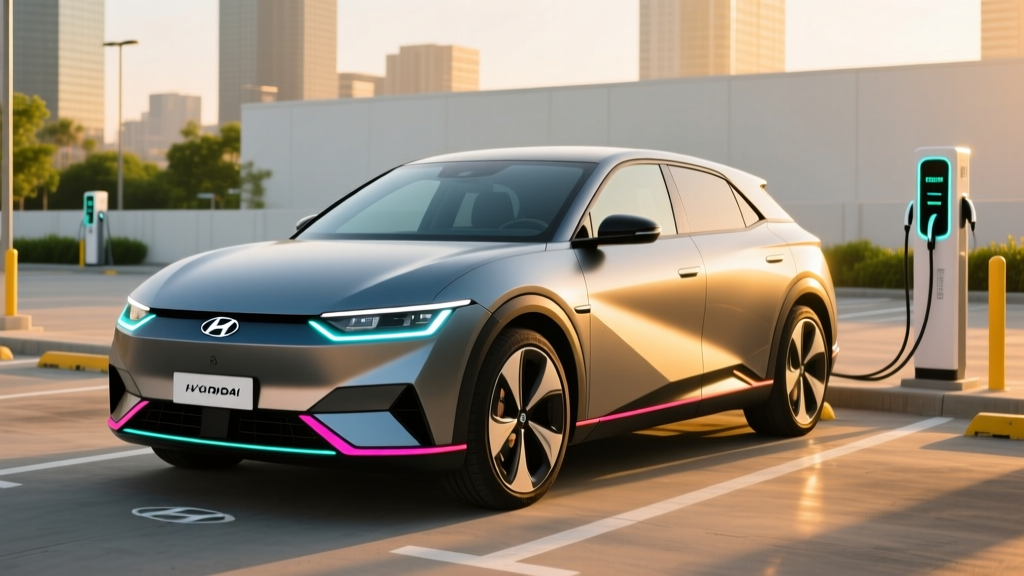
What to watch: The charge rate displayed on the car's screen or the charger. A car rated for 250 kW peak charging may only sustain that rate for 2-3 minutes before tapering. The charge curve — how quickly the rate drops as the battery fills — matters far more than the peak number. Ask the dealer: what's the 10-80% time? For a 2026 Hyundai Ioniq 5 (84 kWh battery, 350 kW peak on 800V architecture), expect 10-80% in roughly 18 minutes. For a base Tesla Model Y (75 kWh, ~250 kW peak), expect roughly 25-28 minutes.
Also check: Does the car precondition its battery when you navigate to a charger? Preconditioning warms the battery to optimal temperature for fast charging and can shave 5-10 minutes off a cold-weather charge session. Tesla, Rivian, and most 800V vehicles do this automatically; some older or budget platforms do not.
EV vs. Gas: The Real Cost Comparison
The purchase price of an EV is typically higher than a comparable gas car, but total cost of ownership can flip the equation within 3-5 years depending on your driving patterns and electricity rates. Here's a realistic 5-year breakdown for a mid-size crossover EV versus a mid-size gas crossover, assuming 15,000 miles/year.
| Category | EV (e.g., Hyundai Ioniq 5 SEL, ~$46,000 MSRP) | Gas (e.g., Hyundai Tucson SEL, ~$33,000 MSRP) |
|---|---|---|
| Purchase price (after §30D credit) | $38,500 (assuming full $7,500 point-of-sale credit) | $33,000 |
| Fuel/energy (75,000 miles total) | $3,375 (at $0.15/kWh home charging, 3.5 mi/kWh) | $9,375 (at $3.50/gal, 28 MPG combined) |
| Maintenance | $1,200 (cabin filter, wipers, brake fluid, tire rotation — no oil changes) | $3,500 (oil changes, filters, spark plugs, transmission fluid) |
| Insurance (5-year avg) | $9,500 (EVs typically cost 15-25% more to insure) | $7,500 |
| Tires (faster wear due to weight + torque) | $2,400 (two sets) | $1,600 (two sets) |
| Depreciation (est. 5-year) | $19,000 (49% of purchase price) | $14,000 (42% of purchase price) |
| 5-Year Total | $73,975 | $68,975 |
Sources: fueleconomy.gov for efficiency data; IRS §30D for tax credit rules. Actual costs vary by state, driving habits, electricity rates, and insurance provider. Tax credit eligibility depends on MSRP caps, buyer income limits, and battery sourcing requirements.
The gap narrows or reverses in the EV's favor if you drive more than 15,000 miles/year, have access to cheap home electricity (under $0.12/kWh), or live in a state with additional rebates. It widens if you rely primarily on public DC fast charging, which can cost $0.35-$0.55/kWh — making fueling costs comparable to or even exceeding gas.
Common EV Misconceptions: What the Test Drive Will (and Won't) Prove
| Myth | Fact (With Numbers) |
|---|---|
| "EV batteries need replacing every 5 years" | Federal law mandates battery warranties of at least 8 years/100,000 miles (10 years/150,000 miles in CARB states). Real-world degradation data shows most NMC batteries retain 85-90% capacity after 100,000 miles. LFP batteries degrade even slower. A replacement, if ever needed, costs $5,000-$15,000 depending on the model. |
| "The EPA range is what I'll actually get" | EPA range is tested on a dynamometer with mild conditions. Real-world highway driving at 75 mph typically yields 75-85% of EPA range. Cold weather (below 30°F) reduces range an additional 15-30%. Plan trips around 65-70% of the EPA number for safety. |
| "Any EV can charge at any public charger" | Connector compatibility matters. As of 2026, most new EVs use the NACS (Tesla-style) connector or include a NACS adapter. CCS1 is still common on 2023-2025 models. CHAdeMO is effectively dead for new vehicles. Check the car's port before buying. |
| "Charging takes too long for road trips" | On an 800V platform (Ioniq 5/6, EV6, EV9, Lucid Air), a 10-80% charge takes 15-20 minutes — roughly a bathroom break and a coffee. On a 400V platform at a 150 kW charger, expect 30-40 minutes. Plan accordingly. |
| "I need a 240V home charger to own an EV" | Level 2 (240V) charging adds 25-44 miles per hour and is ideal, but if you drive under 40 miles/day, Level 1 (120V standard outlet) adds 3-5 miles per hour and may suffice overnight. That said, Level 2 is strongly recommended for battery health and convenience. |
Home Charging: The Question That Determines Whether an EV Works for You
Before you fall in love with a car on the test drive, answer this honestly: Can you charge at home?
For roughly 70% of US drivers with a garage or dedicated parking spot, the answer is yes. A Level 2 home charger installation typically costs:
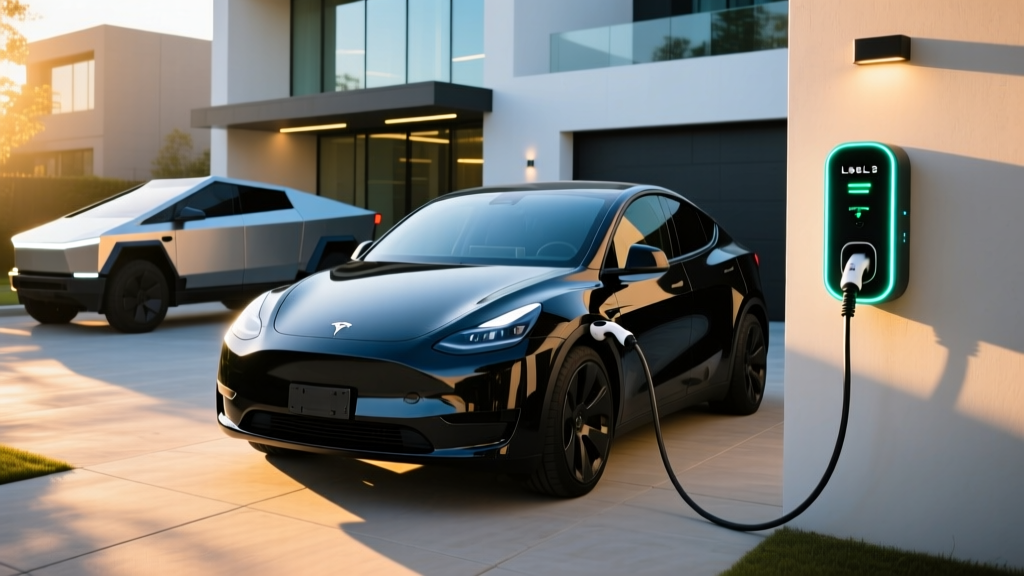
- Charger hardware: $300-$700 (e.g., ChargePoint Home Flex, Emporia Level 2, Tesla Wall Connector)
- Electrician (240V/50A circuit): $800-$2,500 depending on panel proximity and conduit run
- Panel upgrade (if needed): $1,500-$3,500 if your home has a 100A service that needs upgrading to 200A
- Permit: $50-$200 depending on jurisdiction
- Total typical install: $1,200-$3,000 without a panel upgrade; $3,000-$6,000 with one
If you live in an apartment or condo without charging access, your EV ownership experience will depend entirely on public charging infrastructure. Before committing, map your weekly routine: workplace chargers, grocery-store chargers, and DC fast chargers within 10 minutes of your home. Apps like PlugShare and the DOE's Alternative Fuels Data Center can help. If your area has fewer than 3 reliable DC fast chargers within a 10-mile radius, a PHEV or hybrid may be a more practical choice.
Your Decision Framework: Should You Buy the EV You Just Test-Drove?
Post-Test-Drive Decision Matrix
Answer these questions honestly based on your test drive and homework:
| If Your Situation Is... | Then... |
|---|---|
| You have home charging (garage/driveway with 240V access) AND drive under 250 miles/day | Strong EV candidate. You'll wake up "full" every morning and rarely visit a public charger. |
| You have home charging but regularly drive 300+ miles in a single day (road trips, sales territory) | EV works, but prioritize 10-80% charge time under 20 minutes and EPA range over 300 miles. Look at 800V platforms (Hyundai/Kia/Genesis) or the Tesla Supercharger network. |
| No home charging, but reliable workplace or public charging within 5 minutes | Proceed with caution. Calculate your weekly charging time budget. If it exceeds 2-3 hours/week of dedicated charging stops, consider a PHEV instead. |
| No home charging AND limited public infrastructure nearby | A PHEV or hybrid is likely the better choice. You'll get electric commuting range without the charging dependency. |
| You live in a cold climate (consistently below 30°F in winter) | EV works, but budget 25-30% range loss in winter. Prioritize models with a heat pump and battery preconditioning. An EPA 300-mile EV becomes a 210-230 mile EV in January. |
| You need to tow more than 3,500 lbs regularly | EV towing cuts range roughly in half. The Rivian R1T and Ford F-150 Lightning can tow 7,700-11,000 lbs but expect 130-180 miles of range while doing it. Plan routes around charger density. |
Federal Tax Credit: What Actually Applies in 2026
The §30D federal tax credit offers up to $7,500 for qualifying new EVs, but eligibility is far from universal. As of 2026, the rules include:
- MSRP caps: Vans, SUVs, and trucks must be under $80,000; sedans and other vehicles under $55,000.
- Buyer income caps: Modified AGI must not exceed $300,000 (joint), $225,000 (head of household), or $150,000 (single).
- Battery sourcing requirements: A percentage of critical minerals and battery components must be sourced from the US or free-trade-agreement countries. This requirement tightens annually and has disqualified several popular models.
- Point-of-sale transfer: You can transfer the credit to the dealer at purchase, reducing your out-of-pocket cost immediately rather than waiting for tax filing.
- Foreign entity of concern (FEOC) restriction: Vehicles with battery components or critical minerals from certain foreign entities are disqualified.
The list of qualifying vehicles changes frequently. Always verify current eligibility on the IRS Clean Vehicle Credits page before making a purchase decision. Consult a tax professional for your specific situation.
Frequently Asked Questions
How long should an EV test drive last?
At minimum 45 minutes, ideally 60. You need time to evaluate regen braking in traffic, highway efficiency at sustained speed, ADAS behavior, and ideally a DC fast-charging session. A 15-minute loop is insufficient for any meaningful evaluation.
Should I test drive an EV with a full or low battery?
A partially depleted battery (30-50% SoC) is ideal if the dealer can arrange it, because it lets you test DC fast charging and observe the charge curve. A full battery means you can't evaluate charging speed during the drive. Ask the dealer in advance.
What's the single most important thing to check during the test drive?
Real-world efficiency. Watch the kWh/100mi or Wh/mi readout during highway driving and compare it to the EPA rating. If the car is rated at 30 kWh/100mi (3.33 mi/kWh) on the EPA sticker and you're seeing 38 kWh/100mi on your highway loop, your real-world range will be roughly 22% less than the EPA number. This is the most honest data point you'll get.
Do I need to worry about the battery degrading during a test drive?
No. Battery degradation is measured over years and tens of thousands of miles. A single test drive has zero measurable impact. What you should ask about is the battery warranty: all 2026 EVs sold in the US carry at minimum an 8-year/100,000-mile battery warranty that guarantees a minimum capacity retention (typically 70% of original capacity).
Can I negotiate EV pricing the same way as a gas car?
Yes, but with caveats. EV demand fluctuates, and some models carry significant dealer markups while others have incentives. Check current manufacturer incentives, the federal §30D credit eligibility for the specific VIN, and any state rebates before negotiating. The point-of-sale credit transfer means the $7,500 (if eligible) comes off at purchase, not at tax time.
What if I don't like one-pedal driving?
Every EV lets you reduce or disable strong regenerative braking. Most offer at least two or three regen levels, and some (like Hyundai/Kia models with paddle shifters) let you adjust regen on the fly. If one-pedal driving feels unnatural on the test drive, switch to the lowest regen setting — it will feel nearly identical to coasting in a gas car. Give yourself two weeks to adapt before making a final judgment.