Why Tesla Yoke Replacement Is Trending Among Owners
The Tesla yoke steering wheel — that flat-topped, racecar-inspired control interface — has been one of the most polarizing features in the EV market since its introduction. By 2026, a growing number of Model S and Model X owners are exploring Tesla yoke replacement options, either upgrading from the traditional round wheel to the yoke or, more commonly, swapping the yoke back to a conventional steering wheel. The reasons are practical: daily driving ergonomics, low-speed maneuvering, and long-term comfort all factor into the decision.
But before you pull the trigger on a yoke swap — or buy a Model S specifically because it has (or doesn't have) the yoke — you need to understand the full vehicle you're committing to. The 2026 Tesla Model S remains one of the most capable electric sedans on the market, with segment-leading efficiency, a vast Supercharger network, and performance that embarrasses cars costing three times as much. This review covers the complete ownership picture alongside the yoke replacement question.
2026 Tesla Model S: Core Specifications at a Glance
| Spec | Long Range | Plaid |
|---|---|---|
| EPA Estimated Range | 402 miles | 359 miles |
| Battery Capacity (usable) | ~95 kWh (NMC) | ~95 kWh (NMC) |
| Drivetrain | Dual-Motor AWD | Tri-Motor AWD |
| Horsepower | 670 hp | 1,020 hp |
| 0-60 mph | 3.1 seconds | 1.99 seconds |
| Top Speed | 155 mph | 200 mph |
| Max DC Fast-Charge Rate | 250 kW | 250 kW |
| 10-80% DC Fast Charge | ~27 minutes | ~27 minutes |
| Level 2 Home Charge Rate | 11.5 kW (~41 mi/hr) | 11.5 kW (~41 mi/hr) |
| Efficiency (MPGe combined) | 120 MPGe | 105 MPGe |
| Base MSRP | $79,990 | $94,990 |
| Battery/Powertrain Warranty | 8 yr / 150,000 mi | 8 yr / 150,000 mi |
Sources: EPA fueleconomy.gov, Tesla official specifications.
Real-World Range: What the EPA Number Doesn't Tell You
The Model S Long Range carries an EPA estimated 402 miles of range — one of the highest of any production EV sold in the US. However, real-world results depend heavily on conditions:
- Highway driving at 75 mph: Expect approximately 320-340 miles. The Model S's aerodynamic drag at sustained speeds cuts into the sticker number significantly.
- City/mixed driving: 370-395 miles is achievable thanks to regenerative braking recovery.
- Cold weather (below 32°F): Range drops 20-30%, meaning a winter highway trip might yield 240-280 miles. The Model S includes a heat pump to mitigate cabin energy draw, but battery chemistry still suffers in extreme cold.
- Plaid variant: The tri-motor setup and stickier tires reduce EPA range to 359 miles, with real-world highway figures closer to 280-310 miles.
The 95 kWh (usable) NMC (nickel manganese cobalt) battery pack is a proven architecture. NMC chemistry offers higher energy density than LFP (lithium iron phosphate), which is why Tesla reserves it for long-range and performance models. The trade-off is that NMC degrades slightly faster than LFP over thousands of cycles and prefers not to sit at 100% state of charge for extended periods. For daily driving, Tesla recommends charging to 80-90% and only using 100% for trips — a habit that preserves long-term battery health.
Charging Speed: DC Fast Charging and Home Setup
| Charging Level | Power | Miles Added Per Hour | Notes |
|---|---|---|---|
| Level 1 (120V outlet) | ~1.4 kW | ~5 mi/hr | Emergency/trickle only |
| Level 2 (240V, 48A) | 11.5 kW | ~41 mi/hr | Full overnight charge in ~9 hrs |
| DC Fast Charge (V3 Supercharger) | Peak 250 kW | ~200 mi in 15 min | Tapers above 60% SoC |
| DC Fast Charge (400V CCS adapter) | Up to 250 kW | Varies by station | Requires Tesla CCS adapter |
The Model S charges on Tesla's proprietary connector (which became the NACS standard adopted industry-wide by 2025). At a V3 Supercharger, the Model S peaks at 250 kW, but — and this is critical for trip planning — that peak is sustained only between roughly 10-30% state of charge. Above 60%, the charge curve tapers substantially. The 10-80% time of approximately 27 minutes is respectable but no longer class-leading; vehicles on 800V architectures (Hyundai Ioniq 5, Kia EV6, Porsche Taycan) can complete the same 10-80% session in 18 minutes or less.
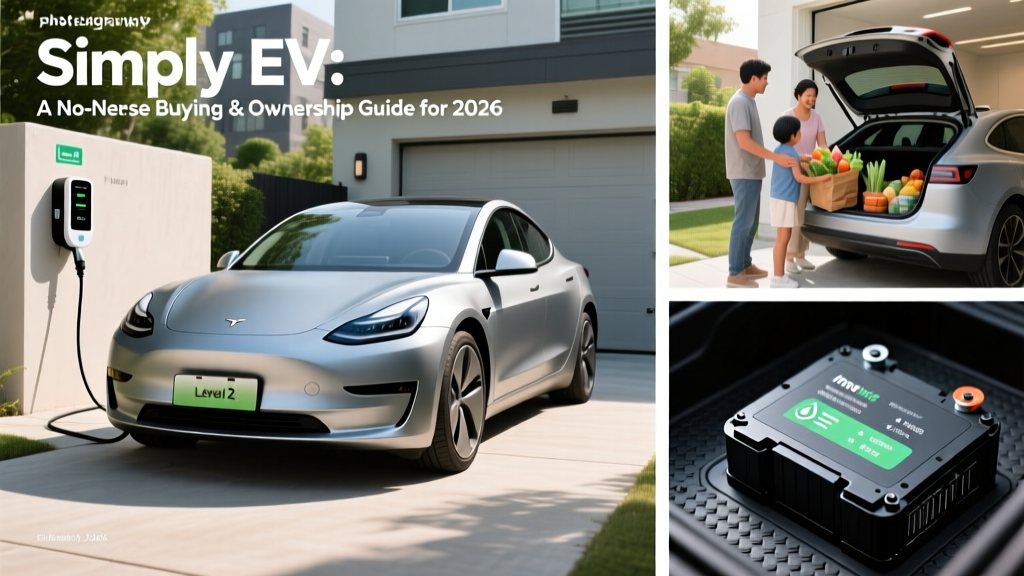
For home charging, the Model S accepts 11.5 kW on a 240V/48A Level 2 circuit. This requires a 60-amp dedicated breaker. A full home installation — including a Tesla Wall Connector ($400-$450 for the unit), electrical panel work, conduit, and permits — typically runs $1,200-$2,500 depending on your panel's proximity to the garage and whether a panel upgrade (to 200A service) is needed. Always consult a licensed electrician for final specifications.
The Yoke Replacement Question: Swap or Keep?
As of 2026, Tesla offers both the yoke and a conventional round steering wheel as options on the Model S and Model X at no additional cost. But many owners who purchased vehicles with the yoke pre-installed are seeking Tesla yoke replacement to a round wheel, and vice versa. Here's what you need to know:
Swapping Yoke to Round Wheel
The physical swap is mechanically straightforward — the yoke bolts onto the same steering column as the round wheel. Tesla service centers will perform the swap, though policies on cost vary (some owners report complimentary swaps, others are quoted $100-$300 in labor). The aftermarket also offers round replacement wheels from $200-$600. However, if your vehicle was built with the yoke, the steering ratio is tuned for the yoke's hand positions. Tesla removed the variable-ratio steering system that early yoke models had, so the swap does not affect steering mechanics on current builds.
Swapping Round Wheel to Yoke
Going from round to yoke is equally feasible through Tesla service or aftermarket suppliers. The yoke excels on highways and straight-line driving, offering an unobstructed view of the instrument cluster. It falters in low-speed scenarios — three-point turns, tight parking lots, and roundabouts — where you'd normally shuffle a round wheel hand-over-hand. The yoke requires a "grab-and-release" technique that most drivers adapt to within 2-4 weeks, but some never fully acclimate.
Pricing, Tax Credits, and Ownership Costs
| Trim | Base MSRP | Federal §30D Credit Eligible? | Effective Price (if eligible) |
|---|---|---|---|
| Long Range | $79,990 | No — exceeds $55,000 sedan MSRP cap | $79,990 |
| Plaid | $94,990 | No — exceeds $55,000 sedan MSRP cap | $94,990 |
The IRS §30D federal EV tax credit imposes a $55,000 MSRP cap for sedans (the cap is $80,000 for SUVs, vans, and trucks). Because the Model S is classified as a sedan, neither trim qualifies for the up-to-$7,500 federal credit. This is a non-negotiable rule — regardless of buyer income, battery sourcing, or point-of-sale transfer availability, the MSRP cap disqualifies the Model S entirely.
Buyer income limits also apply to §30D ($150,000 single / $300,000 joint AGI), and critical-mineral/battery-component sourcing requirements must be met for partial or full credit amounts — but the MSRP cap is the immediate disqualifier here. Some states offer additional incentives (California's CVRP, for example, has its own income and price caps), so check your state's energy office for local programs.
Total cost of ownership remains competitive despite the lack of federal credit. Electricity costs for the Model S average $0.04-$0.05 per mile at residential rates (vs. $0.12-$0.16/mile for a comparable BMW 5 Series on premium fuel). Maintenance is minimal — no oil changes, fewer brake replacements due to regenerative braking — and Tesla's 8-year/150,000-mile battery and drive unit warranty provides long-term peace of mind. The warranty guarantees the battery will retain at least 70% of its original capacity over that period.
Interior, Cargo, and Daily Livability
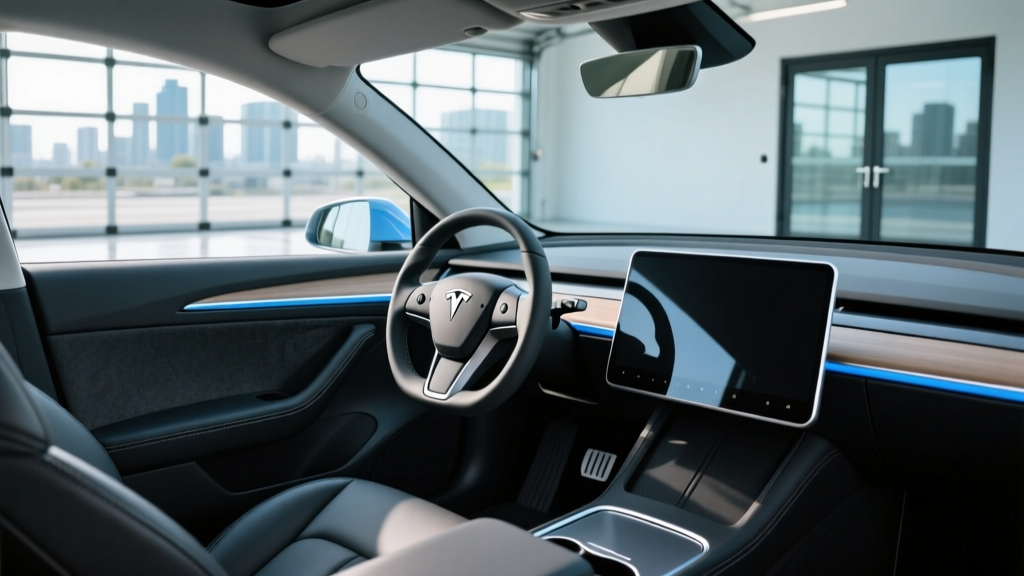
The Model S cabin is minimalist by design. A 17-inch center touchscreen controls virtually every vehicle function, including climate, mirrors, and glovebox release. The instrument cluster is a small secondary display behind the yoke/wheel. Build quality on 2025-2026 Model S vehicles has improved noticeably over earlier years, with tighter panel gaps and higher-quality materials, though it still doesn't match the fit and finish of a Mercedes EQS or Porsche Taycan interior.
Practical dimensions:
- Cargo (rear trunk): 26.3 cu ft (with rear seats up); 64.9 cu ft (seats folded)
- Front trunk (frunk): 3.1 cu ft
- Rear legroom: 35.4 inches
- Front legroom: 42.7 inches
- Seating: 5 passengers (standard)
The hatchback design gives the Model S a significant cargo advantage over traditional sedans. The frunk adds space for charging cables or a small bag. However, rear-seat comfort on long trips is a known limitation — the floor is high due to the battery pack underneath, creating a "knees-up" seating position that adults find fatiguing beyond two hours. The IIHS has tested the Model S with generally good crashworthiness results, though headlight ratings have varied by model year.
Performance and Technology
The Model S Plaid's 1.99-second 0-60 mph time makes it one of the quickest production cars ever built, regardless of powertrain. The Long Range's 3.1-second sprint is still supercar territory. Both variants deliver instant torque with no gear-shift interruption, and the tri-motor Plaid can vector torque across the rear axle for exceptional cornering grip.
On the technology front, the Model S includes:
- Autopilot (standard): SAE Level 2 adaptive cruise control and lane centering. Requires active driver supervision — this is not autonomous driving.
- Full Self-Driving (Supervised) ($8,000 option or $99/month): Enhanced Level 2 system with automatic lane changes, traffic light/stop sign recognition, and parking assist. Despite the name, the driver must remain fully engaged. Tesla's FSD is not Level 4 or Level 5 autonomy.
- Over-the-air updates: Tesla continues to push software improvements to range estimation, UI features, and entertainment (Netflix, YouTube, gaming while parked).
- Sentry Mode / Dashcam: Integrated camera recording with cloud-accessible alerts.
Pros and Cons
- Class-leading 402-mile EPA range (Long Range)
- Access to Tesla Supercharger network (17,000+ US stalls)
- Exceptional performance across both trims
- Hatchback cargo versatility
- Continuous OTA software improvements
- Strong battery warranty (8yr/150k mi)
- No federal tax credit (sedan MSRP cap)
- Rear-seat comfort limited on long trips
- DC fast charging slower than 800V competitors
- Yoke steering divisive; replacement adds hassle
- Minimalist interior not for everyone
- Insurance premiums run 20-40% above segment average
Who Should Buy the Model S — and Who Shouldn't
Choose the Model S Long Range if: You prioritize maximum range above all else, regularly drive 250+ miles between charges, value Supercharger network access for road trips, and want a performance sedan that can serve as a daily driver. It's ideal for high-mileage commuters in moderate climates.
Choose the Model S Plaid if: Track-capable performance matters and you accept the range trade-off. Best for enthusiasts who want supercar acceleration with four doors and daily usability.
Look elsewhere if: You need federal tax credit eligibility (consider the Model 3, BMW i5, or Hyundai Ioniq 6), prioritize rear-seat comfort for family road trips (Lucid Air or BMW i7 are better), or want the fastest possible DC charging (800V platforms like the Ioniq 5 or Taycan).
Frequently Asked Questions
Can I replace the Tesla yoke with a round steering wheel myself?
Technically, yes — the yoke and round wheel share the same bolt pattern on the steering column. However, the airbag system is integrated into the steering wheel assembly, and improper handling can trigger fault codes or compromise safety systems. Tesla service centers or qualified automotive technicians are strongly recommended. Aftermarket round wheels designed for Tesla's column are available from $200-$600.
Does the yoke affect Autopilot or FSD functionality?
No. Autopilot and FSD (Supervised) use torque sensors in the steering column, not the wheel shape. Both the yoke and round wheel provide identical Level 2 driver-assist functionality. The difference is purely ergonomic — the yoke offers fewer comfortable hand resting positions during extended Level 2 highway driving.
How much range do I actually lose in winter?
Testing in sub-freezing conditions shows a 20-30% range reduction for the Model S Long Range, dropping from 402 EPA miles to roughly 280-320 real-world miles. Preconditioning the battery (automatic when a Supercharger is set as your navigation destination) helps restore charging speed but does not recover lost range. Cold-weather efficiency is an inherent lithium-ion limitation, not a Tesla-specific flaw.
Is the Model S worth buying in 2026 vs. competitors?
Against the Lucid Air Pure (419 miles EPA, starts at ~$69,900), the Model S trades a slight range deficit for the Supercharger network and more mature software. Against the BMW i5 eDrive40 (295 miles EPA, ~$57,000, eligible for partial tax credit), the Model S offers far more range and performance at a significant price premium. The Model S is worth it if Supercharger access and proven long-range capability outweigh the lack of federal incentive and higher entry price. For budget-conscious buyers, the Model 3 Long Range (363 miles, ~$47,990, potentially credit-eligible) delivers 90% of the experience at 60% of the cost.
What is the battery replacement cost out of warranty?
Out-of-warranty Model S battery replacements have been quoted between $13,000 and $20,000 depending on the pack and labor. However, Tesla's 8-year/150,000-mile warranty with a 70% capacity retention guarantee covers the vast majority of ownership periods. Real-world data from high-mileage Model S owners shows typical degradation of 10-15% over 100,000 miles, well within the warranty threshold.