The Short Answer on the Ford Fusion Electric
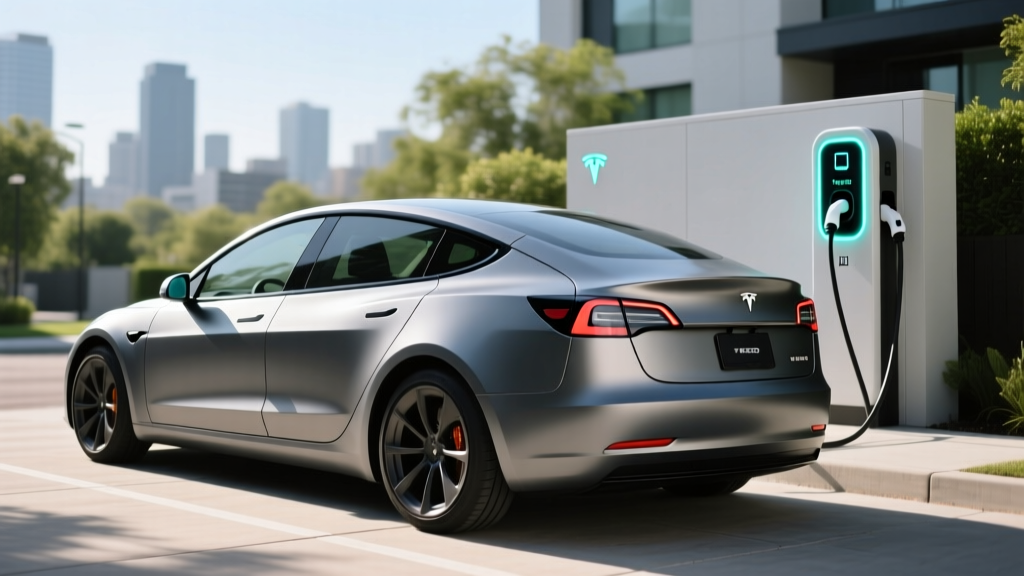
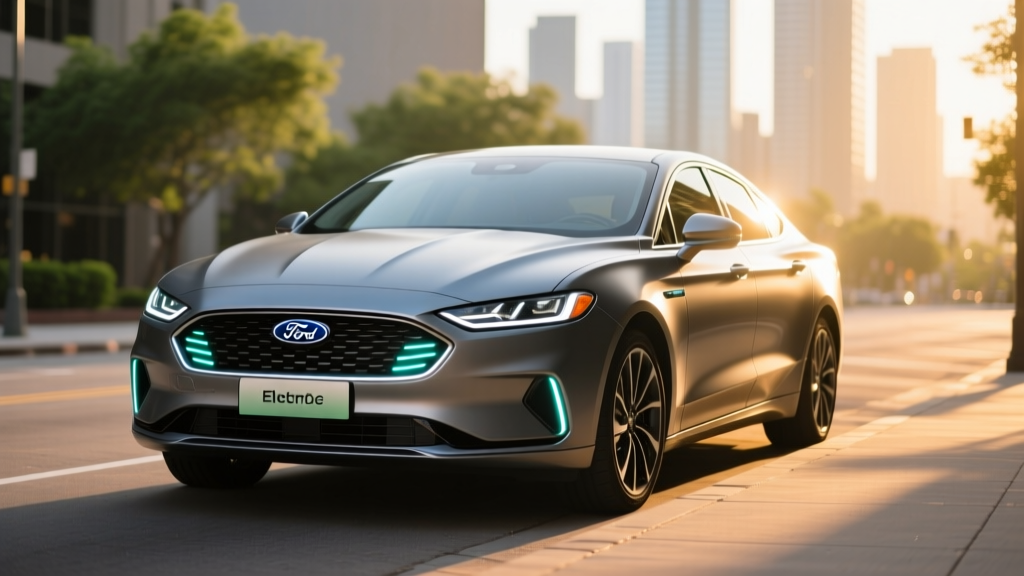
As of early 2026, there is no Ford Fusion Electric on sale. Ford discontinued the Fusion nameplate after the 2020 model year, and no battery-electric successor has entered production or received an official launch date. If you're searching for a "Ford Fusion Electric" because you want a midsize, efficient, five-passenger electrified sedan from Ford, your real options right now are the Ford Escape Plug-In Hybrid (37 miles electric-only, ~$33,000 MSRP) or cross-shopping competitors like the Hyundai Ioniq 6 (EPA 361 miles, ~$37,500) and the Tesla Model 3 (EPA 341 miles Long Range, ~$42,490). Ford's electric sedan future remains unannounced.
Why People Are Still Searching for a Ford Fusion Electric
The Ford Fusion was one of America's best-selling midsize sedans for nearly two decades, and its hybrid and Energi (plug-in hybrid) variants were popular with buyers who wanted efficiency without sacrificing interior space. When Ford killed the Fusion after 2020 to focus on SUVs and trucks, it left a loyal buyer base without a clear migration path.
That gap explains the persistent search volume. Buyers who loved the Fusion's combination of room, comfort, and efficiency naturally assume Ford would eventually offer a battery-electric version. The reality is more complicated:
- Ford's EV investment has concentrated on high-volume segments: the Mustang Mach-E (crossover SUV), F-150 Lightning (truck), and the upcoming next-generation midsize electric pickup and three-row SUV on the TE1 platform.
- Sedan demand in the U.S. has collapsed. Ford, like most domestic automakers, sees sedans as low-margin segments where Toyota and Hyundai dominate.
- No official announcement of a Ford electric sedan has been made as of Q1 2026. Ford's "Model e" division roadmap focuses on crossovers and trucks through at least 2027.
If a Ford electric sedan does arrive, it would likely ride on the same next-generation flexible EV architecture Ford has previewed for future products, targeting a 2028 or later launch.
What to Buy Instead: EVs That Fill the Fusion Gap
If you want the spirit of a Fusion Electric — a practical, five-seat, efficient sedan or crossover with strong range — here are the vehicles that actually exist and can be purchased today, with exact specs.
| Vehicle | Type | EPA Range / Elec. Miles | Battery (kWh) | Peak DC Charge (kW) | 10–80% Time | 0–60 mph | Base MSRP |
|---|---|---|---|---|---|---|---|
| Hyundai Ioniq 6 SEL | BEV | 361 mi | 77.4 (NMC) | 240 kW | ~18 min | 5.1 s | $37,500 |
| Tesla Model 3 LR AWD | BEV | 341 mi | ~75 (NMC) | 250 kW | ~20 min | 4.2 s | $42,490 |
| Honda Prologue EX | BEV | 296 mi | 85 (NMC) | 150 kW | ~28 min | 6.5 s | $47,400 |
| Ford Escape PHEV | PHEV | 37 mi electric | 14.4 (NMC) | N/A (L2 only) | ~3.5 hr L2 | 7.5 s | $33,000 |
| Toyota Camry Hybrid | HEV | 52 MPG combined | 1.6 (NiMH) | N/A | N/A | 7.2 s | $28,700 |
Sources: fueleconomy.gov, manufacturer press sites. Range figures are EPA estimates; real-world highway and cold-weather results will be lower (see below).
EV vs. Hybrid vs. Gas: The Real Cost Comparison
The decision between a full EV, a plug-in hybrid, and a conventional hybrid isn't just about the sticker price. Total cost of ownership over five years tells a different story depending on your driving habits, electricity rate, and whether you can charge at home.
| Cost Factor | Hyundai Ioniq 6 (BEV) | Ford Escape PHEV | Toyota Camry Hybrid (HEV) | Toyota Camry Gas (ICE baseline) |
|---|---|---|---|---|
| Purchase Price (base MSRP) | $37,500 | $33,000 | $28,700 | $26,500 |
| Fed. Tax Credit (§30D)* | –$3,750 to –$7,500 | –$3,750 | $0 | $0 |
| Fuel / Electricity (5 yr) | ~$3,600 | ~$5,100 | ~$5,800 | ~$9,400 |
| Maintenance (5 yr) | ~$1,800 | ~$3,200 | ~$3,000 | ~$3,800 |
| Insurance (5 yr avg.) | ~$9,200 | ~$7,800 | ~$7,200 | ~$7,200 |
| Estimated 5-Yr Total | ~$48,300–$44,600 | ~$45,350 | ~$44,700 | ~$46,900 |
*Federal EV tax credit under IRS §30D depends on battery critical-mineral sourcing, buyer income caps ($150K single / $300K joint for new vehicles), and MSRP caps ($55K sedans). Point-of-sale transfer is available at participating dealers. Credit amounts vary by model year and sourcing compliance — verify with a tax professional before purchase.
Key takeaway: A BEV like the Ioniq 6 can match or beat a hybrid on total cost over five years — but only if you qualify for the federal credit and have access to affordable home charging (under $0.16/kWh). If you rent, lack a garage, or live in a charging desert, the PHEV or HEV route avoids range anxiety entirely.
Real-World Ownership: What First-Time EV Buyers Overlook
If you've never owned an EV, the spec sheet doesn't tell the whole story. Here are the ownership realities that catch new buyers off guard:
Range Is Not What the Sticker Says
The EPA range estimate assumes a mix of city and highway driving at moderate temperatures. In practice:
- Highway driving at 75+ mph reduces range by 15–25% compared to EPA. A 361-mile Ioniq 6 will deliver roughly 270–300 miles on a sustained interstate trip.
- Cold weather (below 30°F) causes 20–35% range loss due to battery chemistry limitations and cabin heating demand. That same 361-mile car may drop to 235–290 miles in a Midwest winter.
- Heat pumps (standard on the Ioniq 6 and Model 3) mitigate cold-weather loss by 5–10 percentage points compared to resistive heaters.
Charging Speed Tapers Above 80%
A vehicle advertised at "240 kW peak DC fast charging" does not sustain that rate for the full session. Lithium-ion batteries accept charge fastest between 10–50% State of Charge (SoC), then the Battery Management System (BMS) progressively reduces current to protect cell health. Expect a 240 kW-capable vehicle to average roughly 120–150 kW across a 10–80% session. That 18-minute 10–80% claim is realistic; an 80–100% top-off can add another 25–40 minutes.
Home Charging Is the Make-or-Break Factor
Over 80% of EV charging happens at home. If you can install a Level 2 (240V) charger in your garage or driveway — typically a $500–$2,000 investment including electrician labor and a potential panel upgrade — daily EV ownership is effortless. You wake up with a full battery every morning.
If you cannot charge at home (apartment living, street parking, HOA restrictions), EV ownership becomes significantly harder. Public DC fast charging costs $0.30–$0.50/kWh (versus $0.12–$0.16/kWh at home), and relying on it exclusively adds time, expense, and frustration. In this situation, a PHEV like the Escape or a conventional hybrid is a far more practical choice.
Insurance Costs Are Higher for EVs
EVs typically cost 15–25% more to insure than equivalent gas cars, driven by higher repair costs (specialized body shops, battery replacement risk, and parts pricing). Budget an extra $30–$60/month over what you'd pay for a gas sedan. Shop quotes from GEICO, Progressive, and State Farm before committing — rates vary widely by model and zip code.
Common Misconceptions About Buying an EV in 2026
| Myth | Fact |
|---|---|
| "EV batteries need replacing every 5 years." | Modern NMC and LFP batteries are warrantied for 8 years/100,000 miles with a minimum 70% capacity retention threshold. Real-world degradation data from Recurrent shows most EVs retain 90%+ capacity at 100K miles. |
| "The $7,500 tax credit applies to every EV." | Under §30D, eligibility depends on battery sourcing (critical minerals and component assembly in FTA countries), buyer income, and MSRP caps. Many 2026 models qualify for partial credits ($3,750) or none at all. Always check the fueleconomy.gov tax credit lookup before purchasing. |
| "EVs are worse in cold weather." | EVs lose range in cold, but they start instantly (no cold cranking), can precondition the cabin while plugged in (saving energy), and AWD EVs have excellent traction thanks to low center of gravity and instant torque. The range loss is real; the "they can't handle winter" narrative is overstated. |
| "I'll save money on fuel immediately." | At a national average of $0.14/kWh and 3.5 miles/kWh, home EV charging costs roughly $0.04/mile. Gas at $3.30/gallon and 30 MPG costs $0.11/mile. The per-mile savings are real (~$0.07/mile), but it takes 30,000–50,000 miles of driving to recoup the EV purchase premium. Savings compound over time — they aren't instant. |
| "Any electrician can install a home charger." | Level 2 charger installation requires a 240V/40–50A dedicated circuit. Older homes may need a panel upgrade ($1,500–$3,500) if the existing panel is 100A or near capacity. Always get a licensed electrician to assess your panel before buying equipment. |
Decision Framework: Which Electrified Vehicle Fits Your Life?
Use this if-then guide to narrow your choice:
- If you have home charging access AND drive under 250 miles/day AND qualify for the §30D credit: A BEV like the Hyundai Ioniq 6 or Tesla Model 3 delivers the lowest 5-year cost, the smoothest driving experience, and zero tailpipe emissions. This is the ideal EV ownership scenario.
- If you have home charging BUT frequently drive 300+ mile trips OR live in extreme cold: A BEV still works if you plan charging stops, but a PHEV like the Ford Escape Plug-In Hybrid eliminates range anxiety entirely. You get 37 electric miles for commuting and a gas engine for road trips.
- If you CANNOT charge at home (apartment, street parking): Skip the BEV for now. A PHEV or conventional hybrid (Toyota Camry Hybrid at 52 MPG combined) gives you meaningful fuel savings without public-charging dependency.
- If you want a Ford specifically and need an EV: The Mustang Mach-E (EPA 250–320 miles, ~$42,995) is Ford's closest equivalent to a practical electric sedan, though it's a crossover. The F-150 Lightning serves truck buyers. Neither replaces the Fusion's sedan footprint.
- If you're waiting for a future Ford electric sedan: You may be waiting until 2028 or later with no guarantee. Ford has not committed to a Fusion EV successor, and the midsize sedan market continues to shrink in the U.S.
Frequently Asked Questions
Will Ford ever make a Fusion Electric?
There is no confirmed plan. Ford's public EV roadmap through 2027 focuses on crossovers, trucks, and commercial vehicles. A midsize electric sedan is possible on Ford's next-gen TE1 platform, but no timeline, pricing, or specs have been announced. If it arrives, expect it no earlier than 2028.
What's the closest Ford vehicle to a Fusion Electric today?
The Ford Escape Plug-In Hybrid is the closest in spirit: a five-passenger Ford with electric-only commuting capability (37 EPA miles) and a gas engine for longer trips, starting at ~$33,000. For a full BEV from Ford, the Mustang Mach-E is the only current option, though it's a crossover rather than a sedan.
Do I qualify for the federal EV tax credit?
Under IRS §30D, eligibility for the full $7,500 credit requires: (1) modified adjusted gross income under $150K single / $225K head of household / $300K joint; (2) vehicle MSRP under $55,000 for sedans ($80,000 for SUVs/trucks); (3) battery components manufactured or assembled in North America and critical minerals sourced from the U.S. or FTA partners. These thresholds change — verify on fueleconomy.gov for the specific model and model year you're considering.
How much does it cost to charge an EV at home vs. public stations?
Home Level 2 charging at the national average electricity rate of $0.14/kWh costs roughly $4.20 for 30 kWh (about 100 miles of range). Public DC fast charging averages $0.35–$0.50/kWh, or $10.50–$15.00 for the same 30 kWh. Over a year of 15,000 miles, home charging saves approximately $600–$900 compared to exclusive public charging.
Is a PHEV a better choice than a full EV for a first-time buyer?
For many buyers, yes — especially those without guaranteed home charging or those who regularly take long road trips. A PHEV gives you electric commuting (30–40 miles) with gas-engine backup, zero range anxiety, and no dependency on public charging infrastructure. The trade-off is higher maintenance (you still have an engine, oil changes, and a transmission) and a smaller federal credit ($3,750 vs. up to $7,500 for qualifying BEVs).