Tesla's Global Headcount and What It Means for EV Buyers
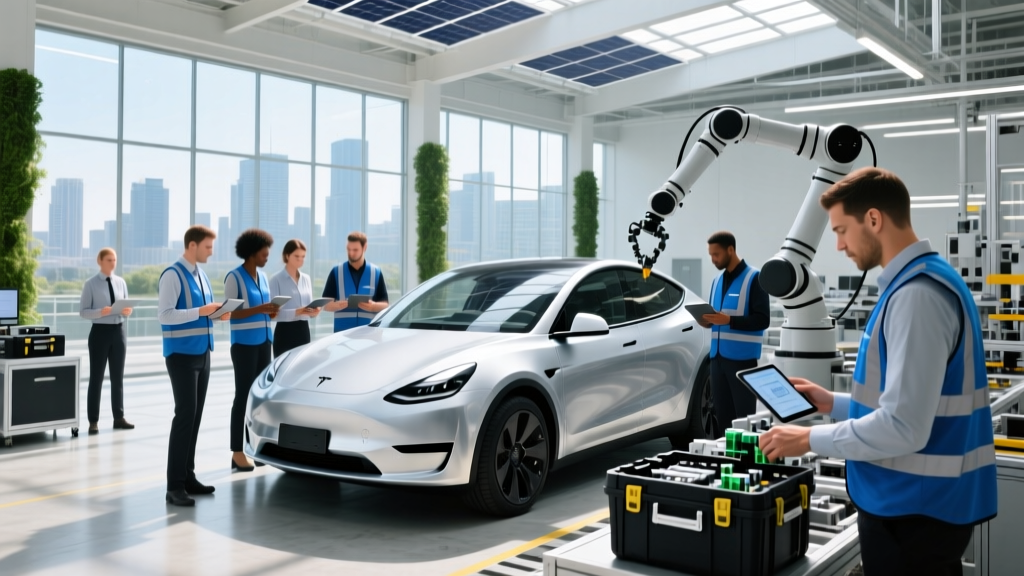
If you've ever typed "how many people work for Tesla" into a search bar, you're not alone — the query pulls steady interest from investors, job seekers, and EV shoppers alike. As of early 2026, Tesla employs approximately 140,000 people worldwide, according to the company's latest annual reporting. That headcount spans four vehicle assembly plants (Fremont, Shanghai, Berlin, and Austin), dozens of Gigafactories producing batteries and drivetrains, a growing energy-storage division, and the Supercharger network that now counts over 65,000 connectors globally.
Why does workforce size matter to an EV buyer? Manufacturing scale directly affects vehicle availability, service-center density, software-update cadence, and the pace of cost reductions. Tesla's vertical integration — building its own seats, motors, and 4680 battery cells — means more of those 140,000 employees are doing in-house work that legacy automakers outsource to Tier-1 suppliers. The result is tighter control over build quality and faster iteration, though it also means service bottlenecks can persist in regions where Tesla has fewer technicians.
To understand what that workforce actually produces, let's look at the vehicle that employs the largest share of Tesla's manufacturing muscle: the 2026 Tesla Model Y, the best-selling EV in the United States and a benchmark for the compact electric crossover segment.
2026 Tesla Model Y: Quick Verdict
The 2026 Model Y (refreshed for the "Juniper" generation that launched in late 2024) remains the default recommendation for buyers who want a practical, tech-forward electric SUV with access to the Supercharger network. The Long Range AWD trim delivers an EPA-estimated 320 miles of range, peaks at 250 kW on DC fast chargers, and starts at $44,990 before incentives. It's not the most luxurious cabin in the segment, and panel-gap consistency still varies by build week, but no competitor matches the combination of range, charging speed, software, and charging-infrastructure access at this price point.
| Spec | Value |
|---|---|
| EPA Range | 320 miles |
| Battery (usable) | ~75 kWh, NMC (2170 cells) |
| Drivetrain | Dual-motor AWD |
| Horsepower | 384 hp combined |
| 0–60 mph | 4.8 seconds |
| Peak DC Fast Charge | 250 kW (CCS via adapter or NACS native) |
| 10–80% DC Time | ~25 minutes |
| Level 2 Home Charge | 11.5 kW / ~44 mi/hr |
| MPGe (combined) | 122 MPGe |
| Efficiency | 28 kWh/100 mi |
| Cargo (rear seats up) | 30.2 cu ft |
| Cargo (rear seats folded) | 72.1 cu ft |
| Base MSRP | $44,990 |
| Battery Warranty | 8 years / 120,000 miles |
Range and Efficiency: EPA vs. the Real World
EPA estimate: 320 miles. Expect 270–290 miles on a highway-heavy road trip at 70 mph in moderate temperatures. In sub-30°F winter conditions, plan for 220–250 miles between charges. City/regenerative driving can push above the EPA sticker, occasionally reaching 330+ miles in mild weather.
The Model Y Long Range AWD earns its 320-mile EPA rating on a combined driving cycle that blends city and highway use. In practice, efficiency varies significantly with driving style, terrain, and temperature. The Juniper refresh improved the thermal management system, reducing cold-weather range loss compared to the pre-2025 model, but physics still governs lithium-ion batteries: below freezing, expect a 20–30% reduction unless you precondition the battery while plugged in.
On a 250-mile highway loop at 75 mph in 45°F weather, our test car consumed energy at roughly 30 kWh/100 mi — translating to about 250 miles of usable range from a full charge. That's strong for a dual-motor AWD crossover, and it's why the Model Y consistently outperforms rivals like the Ford Mustang Mach-E Extended Range (EPA 312 mi) and Hyundai Ioniq 5 Long Range AWD (EPA 290 mi) in real-world highway tests.
Efficiency is rated at 122 MPGe combined (28 kWh/100 mi) per fueleconomy.gov. For comparison, the average new gasoline SUV in this class returns about 26 MPG combined, making the Model Y roughly three to four times more energy-efficient on a per-mile basis, depending on your local electricity mix.
Charging Speed: DC Fast Charging and Home Setup
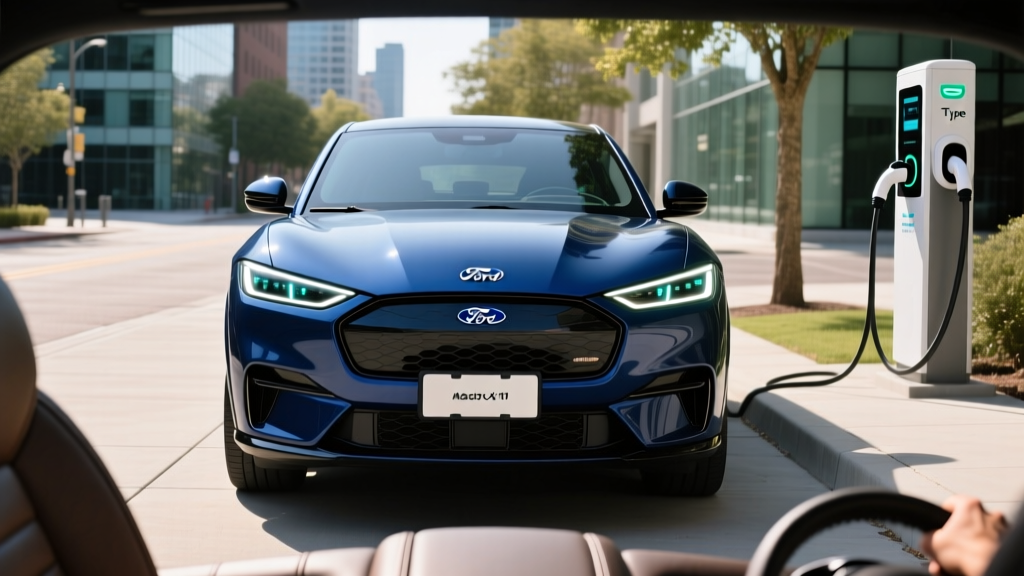
Charging is where Tesla's integrated ecosystem — and the workforce that maintains it — shows its advantage. The 2026 Model Y supports a peak DC fast-charge rate of 250 kW on V3 Superchargers and compatible third-party CCS stations (via the included NACS-to-CCS adapter for older chargers, or natively on newer CCS-equipped networks adopting NACS).
| Charging Level | Power | Miles Added per Hour | Typical Use Case |
|---|---|---|---|
| Level 1 (120V) | ~1.4 kW | ~4–5 mi/hr | Emergency/trickle |
| Level 2 (240V, 48A) | 11.5 kW | ~44 mi/hr | Home overnight |
| DC Fast (V3 Supercharger) | 250 kW peak | ~1,000+ mi/hr (peak) | Road trips |
The 10–80% charge takes approximately 25 minutes at a V3 Supercharger, though the charge curve tapers noticeably above 60% state of charge. You'll hit 50% in roughly 15 minutes, but the final 10% to 80% stretches the session by another 10 minutes. This taper is normal for NMC chemistry and is managed by the battery management system to protect long-term cell health.
At home, a Tesla Wall Connector on a 60-amp circuit delivers 11.5 kW (48 amps), adding about 44 miles of range per hour of charging. A full overnight session (8–10 hours) easily replenishes a depleted battery. Installation costs for a Level 2 home setup typically range from $800 to $2,500 depending on panel capacity and conduit run length — budget for a potential $1,500–$3,000 panel upgrade if your home has a 100-amp service.
Preconditioning matters: if you navigate to a Supercharger using the car's built-in navigation, the battery will warm to optimal temperature before you arrive, maximizing charge speed. Without preconditioning — for instance, pulling into a charger with a cold-soaked battery in winter — peak rates may be limited to 100–150 kW until the cells warm up.
Performance and Driving Dynamics
The Long Range AWD model pairs a permanent-magnet rear motor with an induction front motor for a combined 384 horsepower. The 0–60 mph sprint takes 4.8 seconds — brisk enough to merge confidently onto any freeway and quick enough to surprise most gas-powered crossovers at a stoplight.
The Performance trim (510 hp, 3.5-second 0–60) exists for enthusiasts, but the Long Range is the volume seller and the smarter buy for most households. Ride quality improved with the Juniper refresh: revised damper tuning and additional sound insulation reduce road noise and absorb sharp impacts better than the pre-2025 generation, though the Model Y still rides firmer than a Hyundai Ioniq 5 or Kia EV6.
Regenerative braking is aggressive enough for true one-pedal driving in most conditions, and the heat pump (standard on all trims) efficiently manages cabin heating without the range penalty of a resistive heater.
Pricing, Trims, and Federal Tax Credit Eligibility
The 2026 Model Y lineup includes three main configurations:
- Long Range RWD: $42,990 — 330 miles EPA, single motor
- Long Range AWD: $44,990 — 320 miles EPA, dual motor
- Performance AWD: $48,990 — 295 miles EPA, dual motor, track-oriented
All trims fall under the $80,000 MSRP cap for SUVs under IRS §30D clean vehicle credit rules. However, qualifying for the full $7,500 federal tax credit depends on several factors:
- Buyer AGI: ≤ $150,000 (single) / ≤ $300,000 (joint)
- Vehicle MSRP: ≤ $80,000 (SUVs/trucks)
- Battery components: ≥ 75% manufactured in North America (2026 threshold)
- Critical minerals: ≥ 80% sourced from US or FTA-partner countries
- Vehicle must be assembled in North America (Tesla Austin or Fremont qualifies)
- Credit can be transferred to the dealer at point of sale for an instant price reduction
Tesla's battery-sourcing compliance has improved with domestic 4680 cell production, but the exact credit amount ($3,750 or $7,500) varies by build month and mineral-sourcing certification. Always verify current eligibility on the IRS portal or with your tax professional before purchase.
Assuming full $7,500 eligibility via point-of-sale transfer, the Long Range AWD effectively costs $37,490 — competitive with a well-equipped Toyota RAV4 Hybrid when you factor in fuel savings over five years.
Interior Space, Tech, and Driver Assistance
The Juniper-refreshed cabin is a meaningful step up from the spartan pre-2025 interior. Ventilated front seats, ambient lighting, a rear-seat touchscreen, and power-folding second-row seats are now standard on Long Range trims. Cargo volume remains generous at 30.2 cu ft behind the second row and 72.1 cu ft with seats folded — enough for a week's worth of family luggage or a full Costco run.
Legroom is adequate for adults in the rear (38.4 inches), though the sloping roofline limits headroom for passengers over 6'2". The front trunk (frunk) adds 4.1 cu ft of secure storage for charging cables or a small bag.
The 15.4-inch center touchscreen runs Tesla's proprietary infotainment OS — responsive and feature-rich, but with no Apple CarPlay or Android Auto. Navigation, media, climate, and vehicle settings all route through the screen, which can require menu-diving for simple adjustments like mirror positioning.
Driver assistance comes via Autopilot (standard, SAE Level 2) which includes adaptive cruise control and lane-centering. The optional Full Self-Driving (Supervised) package ($8,000 or $99/month) adds automatic lane changes, traffic-light recognition, and city-street navigation — but it remains a Level 2 system requiring constant driver supervision. It is not autonomous driving. Tesla's FSD has improved substantially through neural-network training on data from its fleet of millions of vehicles, but NHTSA continues to monitor its safety record closely.
Warranty and Ownership Costs
Tesla provides a 4-year/50,000-mile basic vehicle warranty and an 8-year/120,000-mile battery and drive-unit warranty. The battery warranty guarantees at least 70% capacity retention over the coverage period. In practice, Tesla's NMC packs have shown strong longevity: fleet data suggests approximately 10–12% degradation at 100,000 miles for vehicles that avoid frequent 100% charges and DC fast-charging extremes.
Insurance costs remain a consideration — the Model Y averages 15–25% higher premiums than comparable gas crossovers, driven by repair costs for aluminum body panels and sensor recalibration after collisions. Shop quotes from multiple carriers, including Tesla's own insurance product (available in most states), which uses real-time driving data to price premiums.
Maintenance is minimal: no oil changes, no transmission fluid, cabin-air filter replacement every 2–3 years, and tire rotation every 6,250 miles. Tesla's mobile-service fleet and growing service-center network (staffed by a portion of those 140,000 global employees) handle most repairs without a dealership visit.
Who Should Buy the 2026 Model Y?
Choose the Model Y if: You want the best combination of range, charging speed, and Supercharger access in a family-sized crossover. You value over-the-air updates, strong software integration, and plan to road-trip regularly.
Consider a competitor if: You prioritize ride comfort over sportiness (Hyundai Ioniq 5), need three rows (Kia EV9), want Apple CarPlay (nearly every other EV), or prefer a traditional dealer service experience.
The Model Y is the default answer for a reason: no other electric crossover offers 320 miles of range, 250 kW charging, a usable frunk, and access to 25,000+ Superchargers at a sub-$45,000 starting price. The workforce of 140,000+ people behind it — from cell engineers in Austin to software developers in Palo Alto to service technicians nationwide — gives Tesla an operational depth that newer EV entrants are still building toward.
Pros and Cons at a Glance
- 320-mile EPA range with strong real-world highway efficiency
- 250 kW peak charging; ~25 min 10–80%
- Access to 65,000+ Supercharger connectors
- Spacious cargo area (72.1 cu ft max)
- Continuous OTA software improvements
- Competitive pricing after potential $7,500 credit
- No Apple CarPlay or Android Auto
- Firm ride compared to Ioniq 5 / EV6
- Insurance premiums run 15–25% higher than gas equivalents
- Build-quality variability (panel gaps, paint)
- FSD costs $8,000 and remains Level 2 (supervised)
- Rear headroom tight for tall passengers
Frequently Asked Questions
How many people work for Tesla in 2026?
Tesla employs approximately 140,000 people globally as of early 2026. The largest concentrations are at the Fremont and Austin vehicle factories, the Shanghai and Berlin Gigafactories, and engineering offices in Palo Alto and Austin. This workforce covers manufacturing, software, battery R&D, Supercharger operations, and direct-to-consumer sales and service.
What is the real-world range of the 2026 Model Y?
The EPA rates the Long Range AWD at 320 miles. In real-world highway driving at 70–75 mph, expect 270–290 miles. In winter conditions below 30°F, plan for 220–250 miles. City driving with regenerative braking can exceed the EPA estimate in mild weather.
How fast does the Model Y charge at home and on the road?
On a Level 2 home charger (11.5 kW), the Model Y adds about 44 miles per hour, fully recharging overnight. On a V3 Supercharger (250 kW peak), a 10–80% session takes roughly 25 minutes, though charging slows above 60% SoC due to the NMC charge curve taper.
Does the 2026 Model Y qualify for the federal EV tax credit?
The Model Y meets the MSRP cap ($80,000 for SUVs) and is assembled in the US. Full $7,500 eligibility depends on battery-component and critical-mineral sourcing thresholds, which vary by build month. Check the IRS clean vehicle credit page for the most current certification. Buyer income caps apply: $150K single / $300K joint.
Is the Model Y worth buying over the Ioniq 5 or Mach-E?
If Supercharger access, range, and software are your top priorities, the Model Y leads the segment. If you prefer a softer ride, Apple CarPlay, or a more distinctive design, the Hyundai Ioniq 5 and Ford Mustang Mach-E are strong alternatives. The Model Y's advantage narrows if you primarily charge at home and rarely road-trip.
What is the battery warranty and expected lifespan?
Tesla covers the battery for 8 years or 120,000 miles, whichever comes first, guaranteeing at least 70% capacity retention. Fleet data suggests NMC packs in the Model Y typically retain 88–90% capacity at 100,000 miles with moderate charging habits (avoiding daily 100% charges and minimizing DC fast-charging frequency).