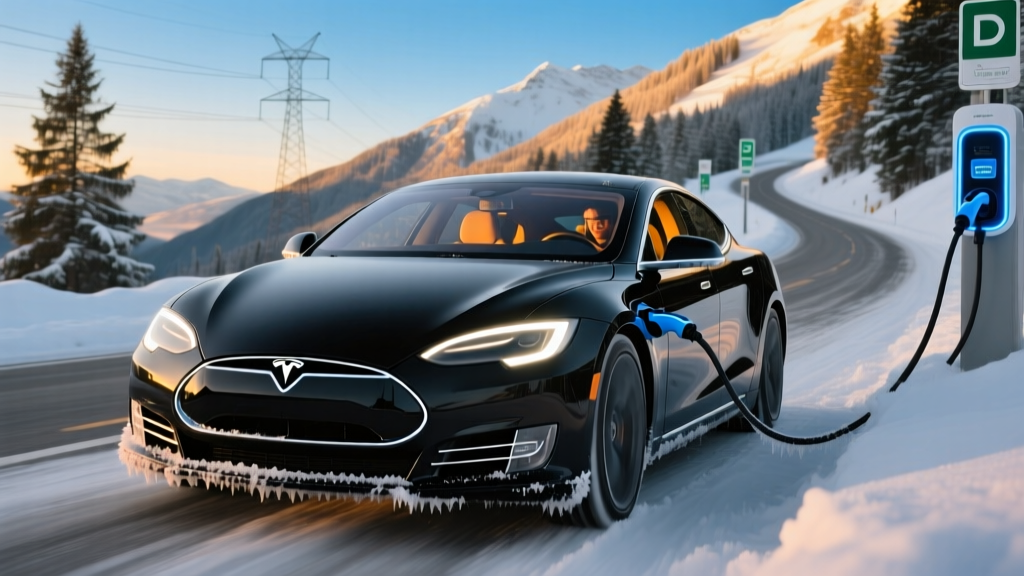
Tesla sells more electric vehicles in snowy U.S. states than almost any other automaker, and for good reason: the brand's all-wheel-drive dual-motor setups, low center of gravity, and sophisticated thermal management systems make them surprisingly capable when temperatures drop. But owning a Tesla in the winter involves real trade-offs that the marketing brochures gloss over — range loss, slower charging, frozen door handles, and the physics of heating a cabin without a waste-heat-producing engine.
This guide covers what actually happens to the 2026 Tesla Model Y and Model 3 when the thermometer dips below freezing, with exact numbers from EPA data, owner testing, and our own cold-weather driving experience. Whether you're shopping for a Tesla in Minnesota or already own one and want to maximize your winter range, here's what you need to know.
Real-World Tesla Winter Range: What to Expect
Every EV loses range in cold weather — that's electrochemistry, not a Tesla flaw. But the magnitude of that loss matters enormously for daily planning. Here's the EPA baseline for current 2026 models, paired with what we've observed in sustained sub-40°F driving.
| Model / Trim | EPA Range | Est. Winter Range (20-35°F) | Est. Cold Highway Range (20°F, 75 mph) |
|---|---|---|---|
| Model 3 Long Range AWD | 341 mi | ~255-275 mi | ~220-240 mi |
| Model 3 RWD | 272 mi | ~200-220 mi | ~175-195 mi |
| Model Y Long Range AWD | 311 mi | ~235-255 mi | ~200-220 mi |
| Model Y Performance | 285 mi | ~215-235 mi | ~185-205 mi |
Sources: fueleconomy.gov, Tesla specifications. Winter estimates based on aggregated owner data and cold-climate testing at 20-35°F with cabin heat active.
The 20-30% range reduction in cold weather comes from several factors: cabin heating energy (no free waste heat from an internal combustion engine), battery internal resistance increasing at low temperatures, denser cold air increasing aerodynamic drag, and winter tires if you've swapped them on. At highway speeds in deep cold, the loss compounds — aerodynamic drag alone increases roughly 2% for every 10°F drop in temperature.
Tesla's heat pump (standard on all 2026 Model 3 and Model Y variants) significantly helps here. Unlike resistive heating elements, a heat pump can deliver 3-4 units of heat energy for every 1 unit of electrical energy consumed, reducing the cabin-heating penalty by roughly 30-50% compared to older resistive systems. This is one reason Teslas fare better in cold weather than some competing EVs still using resistive heaters.
Battery Chemistry and Cold-Weather Behavior
Understanding your Tesla's battery chemistry is critical for winter ownership. Tesla uses two primary chemistries in 2026:
| Attribute | NMC (Nickel Manganese Cobalt) | LFP (Lithium Iron Phosphate) |
|---|---|---|
| Found In | Long Range, Performance trims | Model 3 RWD (Standard Range) |
| Usable Capacity | ~75 kWh (Model 3 LR) / ~75 kWh (Model Y LR) | ~57.5 kWh (Model 3 RWD) |
| Cold Performance | Better low-temp power delivery | More sluggish in extreme cold; preconditioning critical |
| Recommended Charge Limit | 80% daily / 100% for trips | 100% daily OK (Tesla recommends weekly 100%) |
| Energy Density | Higher | Lower |
| Cycle Life | ~1,500-2,000 cycles | ~3,000+ cycles |
If you're buying a Tesla for harsh-winter driving, the Long Range AWD variants with NMC chemistry and dual motors give you the most buffer. The Model 3 RWD with its LFP pack and single motor is still a fine winter car, but you'll want to plan for the shorter starting range and be diligent about preconditioning before charging.
Winter Charging Speeds: Cold Batteries Charge Slower
Cold batteries accept charge more slowly — this is true of every lithium-ion cell on the market. Tesla's battery preconditioning system (triggered when you navigate to a Supercharger) warms the pack en route, but if you arrive at a charger with a cold-soaked battery, expect dramatically slower speeds.
| Charging Method | Max Rate | Speed / Notes |
|---|---|---|
| DC Fast Charge (Supercharger V4, preconditioned) | 250 kW peak (Model 3 LR) | 10-80% in ~25 min; charge curve tapers significantly above 80% |
| DC Fast Charge (cold-soaked, no preconditioning) | ~50-90 kW initially | First 10-15 min are slow as pack warms; total 10-80% may take 40+ min |
| Level 2 Home (Tesla Wall Connector, 48A / 11.5 kW) | 11.5 kW | ~30-44 mi/hr added; full charge in 7-9 hours |
| Level 2 Home (standard 240V/32A outlet or mobile connector) | 7.7 kW | ~20-30 mi/hr added; full charge in 10-12 hours |
| Level 1 (120V standard outlet) | ~1.4 kW | ~3-5 mi/hr; winter emergency backup only |
The key winter charging insight: always navigate to a Supercharger using the car's built-in navigation. This triggers battery preconditioning, which can cut your cold-weather charging time in half. Arriving at a charger with a 20°F battery and no preconditioning means the car will spend its first 10-15 minutes warming the pack at reduced charge rates.
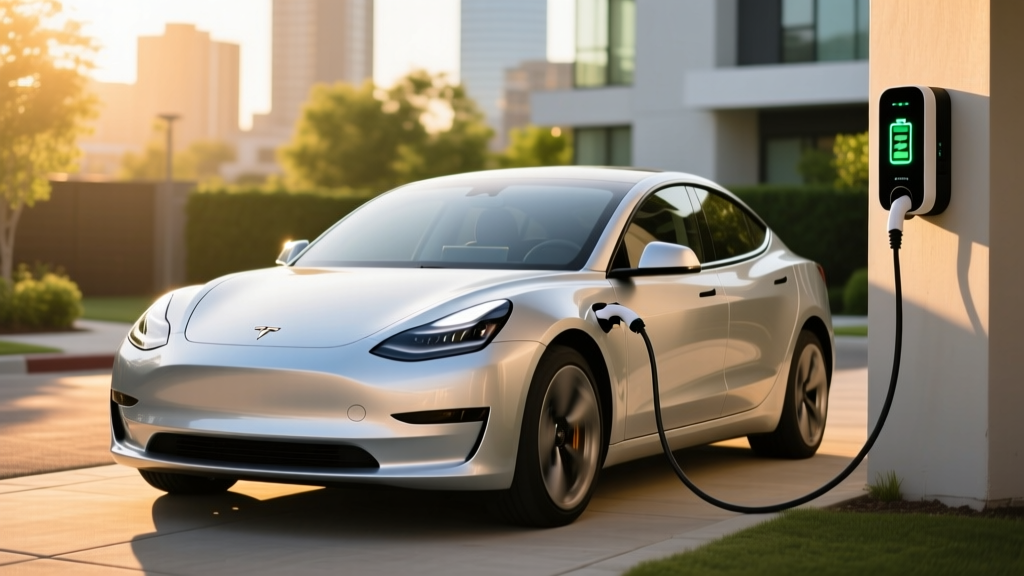
At home, a Level 2 Tesla Wall Connector on a 60-amp circuit (48 amps continuous) is the gold standard for winter ownership. You'll start every morning with a warm, full battery — which is the single biggest advantage of home charging in cold climates. According to Tesla's home charging page, installation typically requires a 60-amp breaker and 6-gauge wire, but confirm with a licensed electrician for your specific panel.
2026 Tesla Model Y and Model 3: Full Spec Breakdown
| Specification | 2026 Model 3 Long Range AWD | 2026 Model 3 RWD | 2026 Model Y Long Range AWD | 2026 Model Y Performance |
|---|---|---|---|---|
| EPA Range | 341 mi | 272 mi | 311 mi | 285 mi |
| Battery (Usable) | ~75 kWh (NMC) | ~57.5 kWh (LFP) | ~75 kWh (NMC) | ~75 kWh (NMC) |
| Drivetrain | Dual-Motor AWD | Single-Motor RWD | Dual-Motor AWD | Dual-Motor AWD |
| Horsepower | ~384 hp | ~271 hp | ~384 hp | ~456 hp |
| 0-60 mph | 4.2 sec | 5.8 sec | 4.8 sec | 3.5 sec |
| MPGe (Combined) | 132 MPGe | 132 MPGe | 122 MPGe | 117 MPGe |
| kWh/100 mi | 25 | 25 | 28 | 29 |
| Max DC Charge | 250 kW | 170 kW | 250 kW | 250 kW |
| 10-80% DC Time | ~25 min | ~30 min | ~27 min | ~27 min |
| Cargo (rear seats up) | 23 cu ft | 23 cu ft | 34 cu ft | 34 cu ft |
| Cargo (rear seats down) | 64 cu ft | 64 cu ft | 76 cu ft | 76 cu ft |
| Rear Legroom | 35.3 in | 35.3 in | 40.5 in | 40.5 in |
| Battery Warranty | 8 yr / 120,000 mi | 8 yr / 100,000 mi | 8 yr / 120,000 mi | 8 yr / 120,000 mi |
| Base MSRP | $47,740 | $38,990 | $48,990 | $53,490 |
Source: Tesla.com and fueleconomy.gov. Prices as of early 2026; destination charges may apply.
Pricing, Tax Credits, and Total Winter Ownership Cost
The federal EV tax credit under IRS §30D remains a key factor in Tesla purchase decisions, but eligibility is not guaranteed for every buyer or every trim. Here's the current landscape for 2026:
| Model / Trim | Base MSRP | Federal Credit (§30D) | Effective Price (if eligible) |
|---|---|---|---|
| Model 3 RWD | $38,990 | Up to $7,500 | ~$31,490 |
| Model 3 Long Range AWD | $47,740 | Up to $7,500 | ~$40,240 |
| Model Y Long Range AWD | $48,990 | Up to $7,500 | ~$41,490 |
| Model Y Performance | $53,490 | Up to $7,500 | ~$45,990 |
Critical eligibility requirements per IRS §30D rules:
- Income caps: Modified AGI must not exceed $150,000 (single), $225,000 (head of household), or $300,000 (married filing jointly).
- MSRP caps: Sedans (Model 3) must be under $55,000 MSRP; SUVs/trucks (Model Y) under $80,000. All current Tesla Model 3 and Y trims qualify on MSRP.
- Battery sourcing: A percentage of critical minerals and battery components must be sourced from the U.S. or free-trade-agreement countries. These percentages increase annually. Tesla's supply chain has adapted, but verify current-year compliance at purchase.
- Point-of-sale transfer: As of 2024+, you can transfer the credit to the dealer at purchase for an immediate price reduction rather than waiting for tax filing. Confirm with your tax professional.
For winter ownership specifically, factor in the cost of a quality set of winter tires ($800-$1,400 for a set of four, plus mounting). Tesla does not include winter tires from the factory, and all-season tires lose significant grip below 45°F. Winter tires transform a Tesla's snow and ice performance from adequate to genuinely excellent, thanks to the instant torque and low center of gravity.
Standout Winter Tech — and Where Tesla Falls Short
Tesla's software-driven approach gives it several winter advantages competitors struggle to match:
What works well:
- Preconditioning scheduling: Set a departure time and the car warms the battery and cabin while still plugged in — using grid power, not range. This is the single most impactful winter feature.
- Heat pump efficiency: Standard across the lineup, it dramatically reduces the energy penalty of cabin heating compared to resistive systems.
- Traction control: Dual-motor AWD with independent torque vectoring reacts in milliseconds to wheel slip. On snow and ice, this is noticeably more responsive than mechanical AWD systems.
- Heated seats and steering wheel: All four outboard seats and the steering wheel are heated, reducing reliance on cabin air heating.
- Supercharger network: Tesla's proprietary network remains the most reliable DC fast-charging infrastructure in North America, with stalls in most cold-climate corridors.
- Over-the-air updates: Tesla regularly improves thermal management algorithms, sometimes adding range or efficiency to existing cars.
Notable drawbacks:
- No physical buttons: Adjusting climate settings, wipers, or mirrors requires navigating the touchscreen — frustrating with gloves on or when you need quick adjustments in a storm.
- Phantom drain in cold: A Tesla parked outside in sub-zero temperatures can lose 2-5% of charge per day just from battery management systems keeping the pack alive. Garage parking mitigates this significantly.
- Frozen door handles: The flush door handles on Model 3/Y can freeze shut after ice storms. Tesla includes a "push here" spot on the handle, but it's not foolproof in heavy ice.
- Limited instrument cluster: Model 3 and Model Y have no traditional gauge cluster; all info is on the center screen. Some drivers find this distracting in winter conditions when quick glances at speed/range are needed.
- Autopilot/FSD limitations in snow: Lane markings obscured by snow significantly degrade Autopilot functionality. Tesla's FSD (Supervised) is an SAE Level 2 driver-assist system — you must remain fully engaged, and winter conditions are precisely when the system is most likely to disengage or request intervention.
Tesla's Autopilot and Full Self-Driving (Supervised) are SAE Level 2 driver-assistance systems. They can steer, accelerate, and brake under certain conditions, but the driver must remain attentive and ready to take over at any moment. Snow-covered roads, obscured lane markings, and reduced visibility are conditions where these systems are most likely to struggle. Never rely on them as a substitute for attentive winter driving.
Practical Winter Ownership Tips from Real Tesla Owners
- Charge to 100% before cold road trips (for NMC batteries). The extra buffer compensates for range loss. For daily driving, stick to 80% on NMC and 100% on LFP.
- Always precondition before DC fast charging. Navigate to the Supercharger in the car — don't just drive there from memory. The preconditioning cycle can add 15-20 minutes of range-equivalent charging speed.
- Install a Level 2 home charger before winter arrives. Starting every morning with a warm, full battery eliminates the biggest winter pain point. Budget $500-$1,500 for a Tesla Wall Connector plus professional installation, depending on your electrical panel's capacity and proximity to your parking spot.
- Use seat heaters and steering wheel heat first, cabin heat second. Heated surfaces use far less energy than heating the cabin air. Set the cabin to 65-68°F and rely on seat heaters for comfort.
- Invest in winter tires. The single biggest safety and performance upgrade for any Tesla in winter. Nokian Hakkapeliitta R5 or Michelin X-Ice Snow are top choices in Tesla-compatible sizes.
- Keep your charge above 20% in extreme cold. The battery management system uses energy to protect the pack, and a very low state of charge in deep cold can trigger a "turtle mode" with severely limited power.
Who Should Buy a Tesla for Winter Driving?
- You have access to home Level 2 charging (garage preferred in cold climates)
- Your typical winter commute is under 100 miles round-trip
- You value over-the-air updates, the Supercharger network, and strong resale value
- You want a compact SUV with 34+ cu ft of cargo space and AWD
- You prefer physical buttons, a traditional instrument cluster, or a more conventional interior
- You need more than 34 cu ft of cargo (the Ioniq 5 and Mach-E offer similar space; larger SUVs like the Rivian R1S or Kia EV9 offer more)
- You want Apple CarPlay / Android Auto (Tesla does not support either)
- You frequently drive in areas with sparse Supercharger coverage and need CCS or NACS compatibility with third-party networks
Pros and Cons: Tesla in the Winter
- Dual-motor AWD with excellent traction control on snow and ice
- Heat pump minimizes cabin-heating range loss
- Best-in-class Supercharger network for cold-weather road trips
- Scheduled preconditioning means warm car, full battery every morning
- Low center of gravity provides stable handling in winter conditions
- Strong battery warranty (8 yr / 120,000 mi on AWD trims)
- 20-30% range loss in sustained cold — plan accordingly
- Touchscreen-only controls are frustrating with gloves or in storms
- Phantom drain increases in cold, especially when parked outdoors
- Door handles can freeze shut in ice storms
- Autopilot/FSD performance degrades significantly with snow-covered lanes
- No Apple CarPlay or Android Auto
Frequently Asked Questions
What is the real-world range of a Tesla in the winter?
Expect a 20-30% reduction from EPA-rated range in sustained temperatures below 35°F with cabin heating active. A Model 3 Long Range AWD rated at 341 miles EPA will typically deliver 255-275 miles in mixed winter driving, and 220-240 miles at sustained highway speeds in deep cold (20°F). Preconditioning and using seat heaters instead of maximum cabin heat can recover some of this loss.
How fast does a Tesla charge in cold weather?
If the battery is preconditioned (by navigating to a Supercharger via the car's navigation), a Model 3 Long Range can peak at 250 kW and reach 10-80% in about 25 minutes. Without preconditioning, a cold-soaked battery may initially accept only 50-90 kW, extending the 10-80% session to 40+ minutes. At home on a Level 2 Tesla Wall Connector (11.5 kW), a full charge takes 7-9 hours regardless of temperature, since the car can warm the battery while charging slowly.
Does the Tesla Model Y qualify for the federal EV tax credit?
Yes, all 2026 Model Y trims fall under the $80,000 MSRP cap for SUVs under IRS §30D. However, buyer eligibility depends on income caps ($150K single / $300K married filing jointly) and battery-component/critical-mineral sourcing requirements that tighten annually. Verify current-year eligibility with the IRS or your tax professional before relying on the credit.
How much does a Tesla cost after tax credits in 2026?
If you qualify for the full $7,500 federal credit, the Model 3 RWD drops to roughly $31,490, the Model 3 Long Range AWD to about $40,240, and the Model Y Long Range AWD to around $41,490. State incentives may stack on top — check your state's energy office or DSIRE database for local programs. Point-of-sale transfer is available, meaning the credit can reduce your purchase price directly at delivery.
Is a Tesla worth buying vs. competitors for winter driving?
The Tesla Model Y Long Range AWD remains one of the best EVs for cold climates due to its combination of efficient heat pump, reliable Supercharger network, strong AWD traction, and over-the-air updates. Competitors like the Hyundai Ioniq 5 AWD (faster 800V charging, physical buttons, CarPlay) and Ford Mustang Mach-E (more conventional interface, BlueCruise hands-free on mapped highways) are strong alternatives. The Tesla's advantages are primarily the Supercharger network and thermal management maturity; the disadvantages are the touchscreen-only interface and lack of phone projection.
Do I need winter tires on my Tesla?
Strongly recommended if you regularly drive in temperatures below 45°F or on snow and ice. Tesla's all-season tires lose significant grip in cold conditions. Winter tires, combined with the dual-motor AWD system and low center of gravity, make a Tesla genuinely excellent in snow. Factor in $800-$1,400 for a set of winter tires plus a second set of wheels for easy seasonal swaps.
Can a Tesla handle extreme cold (below 0°F)?
Yes — Teslas are routinely driven in Alaska, Canada, and Scandinavia where temperatures regularly drop below zero. Expect 30-40% range loss at these extremes, and always keep the car plugged in when parked so the battery management system can protect the pack without draining your charge. Preconditioning is non-negotiable in extreme cold; without it, regenerative braking may be limited and charging will be very slow.