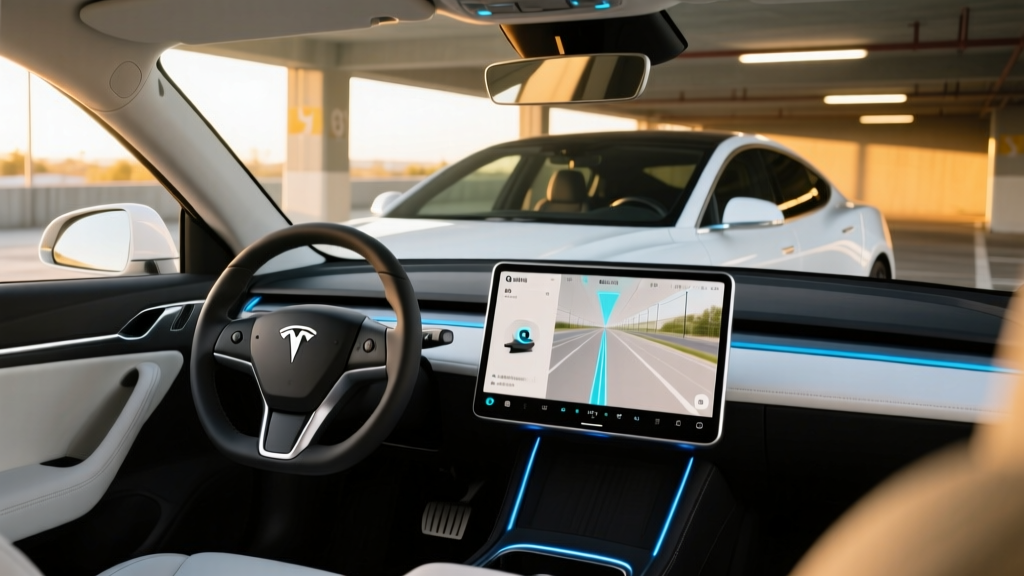
Whether you've just taken delivery of a Model Y or you're researching your first Tesla purchase, the topic of Tesla windows comes up in owner forums more than you might expect. Questions range from "Does the glass block UV?" to "Why is my cabin so hot in summer?" to "Will aftermarket tint void my warranty?" This guide answers those questions with exact specs, real-world thermal data, and practical recommendations for every current Tesla model sold in 2026.
Factory Glass Specs Across the 2026 Tesla Lineup
Tesla uses different glass configurations depending on the model, position (windshield, front side, rear side, rear window, roof), and market. Understanding what leaves the factory helps you decide whether aftermarket tint or ceramic film is worth the investment.
| Model | Windshield | Front Side Windows | Rear Side / Privacy Glass | Roof Glass |
|---|---|---|---|---|
| Model 3 (Highland refresh) | Laminated, UV-blocking PVB interlayer | Tempered, clear (no factory tint) | Tempered, factory privacy tint | Laminated, tinted, IR-reflective coating |
| Model Y (Juniper refresh) | Laminated, UV-blocking PVB interlayer | Tempered, clear | Tempered, factory privacy tint | Laminated, tinted, IR-reflective coating |
| Model S | Laminated, UV-blocking | Tempered, clear | Tempered, factory privacy tint | Fixed panoramic glass roof, tinted |
| Model X | Laminated, UV-blocking | Tempered, clear | Tempered, factory privacy tint | Panoramic windshield + glass roof |
| Cybertruck | Laminated, UV-blocking | Tempered, clear | Tempered, privacy tint | No traditional glass roof (stainless roof panel) |
The critical takeaway: front side windows on all Tesla models ship clear with no meaningful infrared (IR) or UV rejection beyond basic tempered glass. The windshield gets a polyvinyl butyral (PVB) laminated layer that blocks most UV radiation. The roof glass on Model 3 and Model Y uses an IR-reflective coating that significantly reduces solar heat gain — but it doesn't eliminate it entirely.
UV and Infrared Rejection: What Tesla Glass Actually Blocks
Tesla's laminated windshield blocks approximately 98-99% of UVA and UVB radiation thanks to the PVB interlayer. This is standard for laminated automotive glass and is why you rarely see dashboard cracking on Teslas even after years of sun exposure.
However, the tempered glass used in front side windows provides minimal UV or IR rejection — typically only 20-30% IR rejection and roughly 60-70% UV rejection. This is a measurable gap compared to the windshield and explains why drivers report their left arm getting noticeably warmer than their right arm on sunny commutes.
How Window Heat Load Affects Your Real-World Range
Every watt your climate control system consumes is a watt not propelling the car. Tesla's heat pump (standard on all 2026 models) is highly efficient, but solar heat gain through untreated glass forces the system to work harder, especially during summer preconditioning and highway driving in direct sun.
Based on energy consumption data logged by owners using Tesla's built-in energy tracker:
- Cabin cooling load in full sun (95°F+): Can draw 2-4 kW continuously until cabin reaches set temperature
- Range impact in extreme heat: Expect 3-7% range reduction vs. mild-weather EPA estimates when cabin cooling is running hard
- Ceramic tint benefit: Owners report 1-3% range recovery in hot climates after applying high-IR-rejection ceramic film to front side windows and windshield (where legal)
This is a modest but real efficiency gain. Over a year of driving 15,000 miles in a hot climate like Phoenix or Dallas, that translates to roughly 30-60 fewer kWh consumed by climate control — equivalent to one or two free Supercharger sessions.
Aftermarket Window Tint: Types, Costs, and Legal Limits
If you're considering tinting your Tesla's windows, here are the three main film categories available in 2026:
| Film Type | IR Rejection | UV Rejection | Visible Light Transmission (VLT) | Avg. Cost (All Windows) | Best For |
|---|---|---|---|---|---|
| Dyed Film | 10-20% | 95-99% | 5-50% | $200-$400 | Budget; appearance only |
| Carbon / Hybrid Film | 40-60% | 99% | 15-50% | $400-$700 | Good balance of heat rejection and cost |
| Ceramic (Nano-Ceramic) | 80-96% | 99% | 15-80% | $600-$1,200 | Maximum heat rejection; clear legal options |
For Tesla owners, ceramic film is the clear recommendation. It provides the highest IR rejection without requiring dark tint — meaning you can stay within legal VLT limits in most states while still dramatically reducing solar heat gain. Popular brands include XPEL Prime XR Plus, 3M Crystalline, and Llumar FormulaOne Stratos.
State Tint Laws You Need to Know
Window tint legality varies significantly by state. Here are the general rules that affect Tesla owners most:
- Windshield: Most states allow only a non-reflective tint strip on the top 4-6 inches (the "AS-1 line"). A few states (e.g., California, New York) prohibit any aftermarket windshield tint. Clear ceramic film with 70%+ VLT is legal on windshields in most states — check your local code.
- Front side windows: Typically must allow 25-70% VLT depending on state. States like California require 70% VLT (essentially clear), while Texas allows 25%. Clear ceramic film (70-80% VLT) is legal virtually everywhere.
- Rear side and rear window: Most states allow any darkness on these windows, especially on SUVs and trucks (Model Y, Model X, Cybertruck). Sedans (Model 3, Model S) may have stricter rear-window rules in some states.
The Tesla Glass Roof: Heat, UV, and Do You Need a Shade?
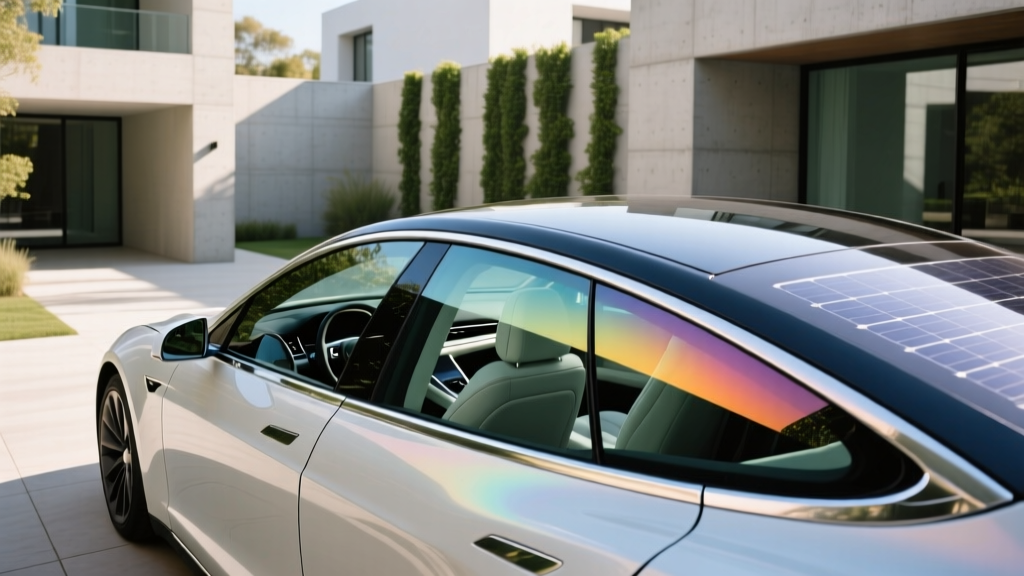
The panoramic glass roof on the Model 3 and Model Y is one of the most discussed features in Tesla ownership. The 2026 Model 3 (Highland) and Model Y (Juniper) both use laminated roof glass with a tinted interlayer and an IR-reflective coating that Tesla says blocks over 99% of UV radiation and significantly reduces infrared heat transmission.
In practice, the roof glass performs well — but not perfectly. Here's what real-world owners measure:
- UV protection: Effectively complete; no reported sunburn or interior fading through the roof
- Heat rejection: The roof surface can reach 130-150°F in direct summer sun, and radiant heat is felt by rear-seat passengers, particularly those with dark hair
- Aftermarket roof shades: Reduce perceived radiant heat by 10-20°F at head level; cost $30-$80 for collapsible fabric panels
- Ceramic roof tint: Some owners apply clear ceramic film to the exterior roof glass for additional IR rejection; costs $150-$300
For the Model Y Juniper (2026), Tesla revised the roof glass coating to improve IR rejection compared to the pre-refresh Model Y. Owners in moderate climates (Pacific Northwest, Northeast) generally find the factory roof adequate. Those in the Southwest, Southeast, or Texas often benefit from a roof shade during summer months.
Cybertruck Glass: What Makes It Different
The Cybertruck uses what Tesla calls "Armor Glass" — a multi-layer laminated glass with a polymer composite interlayer designed for impact resistance. The windshield is significantly more angular and larger than any other Tesla, and the truck lacks a traditional glass roof (the stainless steel exoskeleton serves as the roof structure).
Key Cybertruck glass facts for 2026:
- Windshield size: Approximately 30% larger surface area than the Model X panoramic windshield, meaning greater solar heat gain area
- Replacement cost: Cybertruck windshield replacement runs $1,500-$2,200 due to size, sensor integration, and limited supplier availability — compared to $400-$800 for a Model 3 windshield
- Tint considerations: The large windshield makes clear ceramic film especially valuable for heat reduction; many Cybertruck owners prioritize windshield tint (where legal) over side-window tint
Window-Related Tech Features in 2026 Teslas
Tesla integrates several software and hardware features that interact with the glass and cabin environment:
- Cabin Overheat Protection: Automatically activates HVAC or opens windows slightly (if equipped with ventilated-window feature) when interior temperature exceeds a set threshold (default 105°F). Draws 50-200W continuously — a minor but ongoing energy cost when parked.
- Preconditioning via App: Pre-cools the cabin while plugged in, reducing the battery energy spent on cooling during your drive. Works best when combined with a shaded parking spot or tinted windows.
- Auto-dimming mirrors and windows: Electrochromic auto-dimming is available on the rearview mirror; side mirrors auto-dim on Model S and Model X. No Tesla currently offers electrochromic tint-adjustable side windows (unlike the Boeing 787-style dimmable glass some luxury competitors offer).
- Rain-sensing wipers: Use an optical sensor mounted behind the windshield; aftermarket tint on the windshield's sensor zone can interfere with wiper sensitivity.
Frequently Asked Questions About Tesla Windows
Do Tesla windows block UV rays completely?
The laminated windshield and glass roof block approximately 99% of UV radiation. However, the tempered front side windows block only about 60-70% of UV without aftermarket film. If UV protection is a priority (for skin health or interior preservation), clear ceramic tint on front side windows brings UV rejection to 99% across all glass surfaces.
Is the Tesla glass roof safe in a rollover?
Yes. Tesla's glass roof structures are tested to meet and exceed NHTSA rollover roof-crush standards. The Model 3 and Model Y have consistently earned 5-star NHTSA safety ratings, and the glass roof contributes to structural rigidity when bonded to the body. The laminated construction means the glass cracks but holds together rather than shattering into the cabin.
How much does it cost to replace a Tesla window?
Costs vary by model and glass position. A Model 3 or Model Y front side window replacement typically runs $300-$600 through Tesla Service or a certified glass shop. Windshield replacement ranges from $600-$1,200 for Model 3/Y, $1,000-$1,800 for Model S/X (due to sensor recalibration), and $1,500-$2,200 for Cybertruck. Glass roof replacement is the most expensive, often $1,500-$3,000, and requires significant body-shop labor.
Will window tint interfere with Tesla's cameras or sensors?
Tesla's Autopilot cameras are mounted behind the windshield (behind the rearview mirror housing) and on the front fender repeaters. Windshield tint in the camera zone can degrade camera performance, especially in low light. Professional tint installers familiar with Teslas will cut precise windows around camera and sensor areas or use clear (70%+ VLT) ceramic film that doesn't affect optical clarity. Never apply dark tint over any camera or sensor zone.
Does Tesla offer factory window tint as an option?
No. Tesla does not offer an aftermarket-style tint package from the factory. The rear side windows come with factory privacy glass (approximately 20-25% VLT) on all models, but front side windows ship clear. Any additional tint must be applied aftermarket.
Can I use a windshield sun shade instead of tint?
A reflective windshield sun shade is an effective and legal alternative to windshield tint. Quality shades (like those from Reflectsun or Tesla-specific brands) reduce dashboard surface temperatures by 30-50°F when parked. The downside is convenience — you must deploy and stow the shade every time you park. For daily use, clear ceramic tint is more practical.