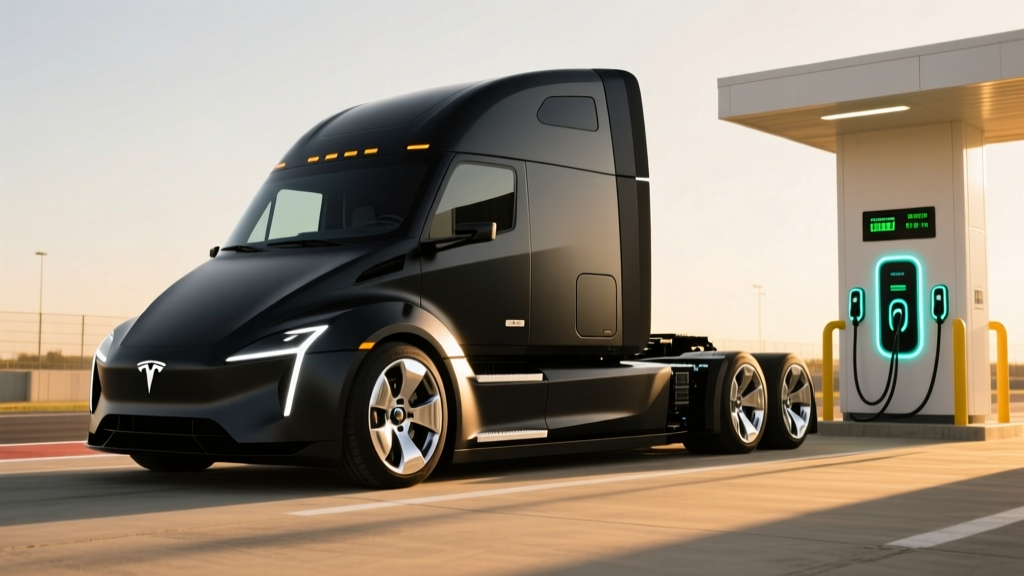
Quick verdict: The Tesla Warthog is not a real vehicle. As of 2026, Tesla's lineup consists of the Model S, Model 3, Model X, Model Y, Cybertruck, and the Tesla Semi. No Tesla model named "Warthog" has been announced, teased, trademarked, or leaked by the company. If you've encountered the term "Tesla Warthog" online, it likely originates from fan renders, speculative concept videos, or confusion with other vehicles — most commonly the Halo franchise's fictional Warthog vehicle or military Humvee/JLTV platforms sometimes nicknamed "Warthog" (a moniker historically associated with the A-10 Thunderbolt II aircraft).
This article addresses the search directly, clarifies what Tesla actually offers in the Warthog's implied segments (rugged off-road truck/SUV), and provides a concrete decision framework for buyers who want Tesla capability in a truck or off-road-oriented package.
Is There a Tesla Warthog? What the Search Actually Means
Tesla has not filed trademarks, published press releases, or shown prototypes for any vehicle called the Warthog. The company's publicly confirmed roadmap as of 2026 includes continued production of the Model 3/Y refresh (Highland and Juniper), Cybertruck ramp-up, the next-generation compact platform (often referred to as "Model 2" or "Redwood"), and the Semi. An off-road-focused, military-styled, or Halo-inspired Tesla does not exist in Tesla's announced portfolio.
The "Warthog" name carries strong associations:
- Military: The Fairchild Republic A-10 Thunderbolt II is nicknamed "Warthog" in U.S. Air Force service.
- Gaming: The M12 Warthog is the iconic light reconnaissance vehicle in the Halo video game series — a rugged, open-top, 4WD military buggy.
- Off-road culture: Enthusiasts sometimes apply "warthog" to boxy, utilitarian off-roaders.
Fan renders combining Tesla's design language with a Warthog-style body have circulated on forums and YouTube, but none represent official Tesla product. If you're shopping for a Tesla that delivers Warthog-adjacent capability — meaning ruggedness, off-road ability, utility, and all-terrain performance — the Cybertruck is the only current model that fits.
The Closest Real Option: 2026 Tesla Cybertruck
Since the Warthog doesn't exist, here's a full spec breakdown of what Tesla actually sells in the truck segment, so buyers can evaluate whether it meets the use case they had in mind.
| Spec | Value |
|---|---|
| EPA Range (AWD) | ~340 miles |
| Battery Capacity | ~123 kWh (NMC chemistry) |
| Max DC Fast Charge | ~250 kW peak (V3 Supercharger); ~350 kW on V4 |
| 10–80% DC Charge Time | ~30–35 minutes (V3); ~20–25 minutes (V4 w/ preconditioning) |
| Level 2 Home Charge Rate | 11.5 kW (~37 miles/hr) |
| 0–60 mph | ~3.9 seconds (AWD) |
| Horsepower | ~600 hp (AWD dual-motor) |
| Drivetrain | Dual-motor AWD |
| Towing Capacity | 11,000 lbs |
| MPGe (combined) | ~70 MPGe (varies by trim) |
| Base MSRP (AWD) | ~$79,990 |
| Battery Warranty | 8 years / 120,000 miles |
Cybertruck Pricing and Federal Tax Credit Eligibility
Cybertruck pricing has shifted multiple times since launch. As of the 2026 model year, here's where trims stand:
| Trim | MSRP | §30D Eligible? | Notes |
|---|---|---|---|
| RWD (if available) | ~$60,990 | Potentially — under $80k truck cap | Limited availability; check IRS sourcing rules |
| AWD Dual-Motor | ~$79,990 | Borderline — at truck MSRP cap | Must meet battery sourcing + buyer income limits |
| Cyberbeast (Tri-Motor) | ~$99,990 | No — exceeds $80,000 truck MSRP cap | Ineligible regardless of income |
IRS §30D rules to know: The federal EV tax credit provides up to $7,500, but eligibility depends on three constraints that frequently trip buyers up:
- MSRP cap: Trucks, SUVs, and vans must be under $80,000. Sedans under $55,000. The AWD Cybertruck sits right at this threshold — options or delivery fees can push it over.
- Buyer income cap: Modified adjusted gross income (MAGI) must not exceed $150,000 (single), $225,000 (head of household), or $300,000 (joint). Per IRS §30D guidelines, the credit phases out entirely above these limits.
- Battery sourcing: Critical minerals and battery components must meet phased-in domestic/free-trade sourcing thresholds. Tesla's U.S. manufacturing gives it an advantage, but specific cell sourcing changes by production batch — always verify with the dealer at point of sale.
The point-of-sale transfer option allows dealerships to apply the credit as an immediate discount rather than waiting for tax filing, but only if all three criteria are met at the time of purchase.
Charging Infrastructure: What Warthog-Seekers Need to Know
A key reason buyers search for rugged Tesla concepts is the Supercharger network advantage. Here's the reality for Cybertruck owners:
| Level | Power (kW) | Miles Added/Hour | Typical Use Case |
|---|---|---|---|
| Level 1 (120V) | ~1.4 kW | ~3–4 mi/hr | Emergency/trickle only |
| Level 2 (240V, 48A) | 11.5 kW | ~37 mi/hr | Daily home charging |
| DC Fast (V3 Supercharger) | Up to 250 kW peak | ~200+ mi in 15 min | Road trips |
| DC Fast (V4 Supercharger) | Up to ~350 kW peak | ~250+ mi in 15 min | Newer stations; preconditioning required |
Charging curve reality: The Cybertruck does not sustain peak kW for the full session. Expect peak rates only between ~10–30% state of charge, tapering progressively above 50%, and sharply above 80%. A 10–80% session on a V3 Supercharger takes approximately 30–35 minutes. Preconditioning the battery via navigation routing to a Supercharger is essential for achieving advertised speeds — without it, cold batteries can limit initial charge rates to under 50 kW.
The Cybertruck uses the NACS (North American Charging Standard) connector natively, meaning direct access to Tesla's Supercharger network without adapters. As of 2026, most major automakers have adopted NACS, but Tesla's network remains the most reliable for long-distance travel based on uptime data.
Off-Road Capability: Does It Match the Warthog Mythos?
The Halo Warthog is defined by extreme off-road agility, all-terrain suspension, and a go-anywhere ethos. How does the Cybertruck compare?
What Cybertruck offers off-road:
- Adaptive air suspension with up to ~16 inches of ground clearance in Extract mode
- Approach/departure/breakover angles suitable for moderate trail use
- Dual-motor torque vectoring for traction management
- Stainless steel exoskeleton — dent and scratch resistant on brush and rocks
- Armor glass (laminated) for impact resistance
Where it falls short of a true Warthog:
- Weight: At ~6,800+ lbs, the Cybertruck is heavy — limiting soft-sand and deep-mud performance compared to lighter platforms like the Jeep Wrangler 4xe or Rivian R1T.
- Size: At ~231 inches long and ~80 inches wide (mirrors excluded), it's too large for narrow forest trails or tight switchbacks.
- Tire options: Factory all-terrain tires are moderate-duty; serious off-roaders will want aftermarket 35-inch mud-terrains and beadlock-capable wheels.
- Underbody protection: While the steel body is tough, skid plate coverage for the battery and drive units should be verified for rock-crawling use cases.
Who Should Buy the Cybertruck (Since the Warthog Isn't Real)
- Best-in-class Supercharger network access for road trips and towing
- Extreme acceleration for a truck (3.9s 0–60 AWD, 2.6s Cyberbeast)
- 11,000-lb towing capacity with integrated trailer brake controller
- Stainless steel body resists dents, scratches, and corrosion
- 6-foot bed with motorized tonneau and 120V/240V bed power outlets
- Over-the-air updates continually add features
- Polarizing design — not universally appealing
- Highway efficiency suffers due to aerodynamics (~2.0–2.2 kWh/mi at 75 mph)
- Panel gaps and build quality inconsistencies reported in early production
- Visibility challenges — large A-pillars, no rear windshield wiper
- Insurance costs above segment average
- No Apple CarPlay/Android Auto — Tesla-only ecosystem
Best for: Tech-forward truck buyers who want EV acceleration, Supercharger road-trip capability, and a bed for utility use — primarily on pavement with occasional light-to-moderate off-road excursions.
Not ideal for: Dedicated off-road enthusiasts who need narrow trail capability, rock-crawling articulation, or the aftermarket ecosystem of a Wrangler/Bronco. Also not suited for buyers who need proven long-term reliability data — the Cybertruck is still early in its production lifecycle.
Competitors to Consider Instead
If the Warthog search reflects a desire for a rugged, off-road-capable electric truck or SUV, these are the real vehicles to cross-shop:
| Vehicle | EPA Range | 0–60 mph | Starting MSRP | Off-Road Strength |
|---|---|---|---|---|
| Rivian R1T (Dual-Motor) | ~352 mi | 4.5s | ~$69,900 | Excellent — quad-motor tank turns, high clearance |
| Ford F-150 Lightning (Platinum) | ~320 mi | ~4.0s | ~$59,990 | Good — Pro Power Onboard, decent clearance |
| GMC Hummer EV (Pickup) | ~329 mi | 3.0s | ~$99,995 | Extreme — CrabWalk, Extract mode, 35" tires |
| Jeep Wrangler 4xe (PHEV) | 22 mi electric / 49 MPGe | ~6.0s | ~$49,995 | Best-in-class trail capability (solid axles) |
The Rivian R1T is the closest analog to what a "Tesla Warthog" buyer likely envisions: a high-tech, fast, off-road-capable electric truck with genuine trail credentials. The GMC Hummer EV leans hardest into the military-vehicle aesthetic. The Wrangler 4xe remains the pragmatic off-road choice despite being a PHEV rather than a full BEV.
Frequently Asked Questions
Is Tesla secretly developing a vehicle called the Warthog?
There is no public evidence — no trademark filings, no leaked internal documents, no supplier leaks — of a Tesla Warthog. Tesla's confirmed pipeline includes the next-gen compact vehicle, Semi production, and Cybertruck variants. Any "Warthog" content online is fan-created speculation.
What is the real-world range of the Cybertruck?
EPA-estimated at ~340 miles for the AWD. Real-world highway driving at 70–80 mph yields approximately 260–290 miles. Cold weather (below 32°F) can reduce range by 20–35%. Towing near the 11,000-lb max can halve range entirely.
How fast does the Cybertruck charge?
On a V3 Supercharger: up to 250 kW peak, 10–80% in ~30–35 minutes. On a V4 Supercharger with battery preconditioning: up to ~350 kW peak, 10–80% in ~20–25 minutes. Home Level 2 at 11.5 kW adds ~37 miles per hour, requiring roughly 10–11 hours for a full charge from near-empty.
Does the Cybertruck qualify for the federal EV tax credit?
The AWD trim at ~$79,990 sits at the §30D MSRP cap for trucks. Eligibility depends on buyer income (under $300k joint), battery component/critical-mineral sourcing compliance, and final as-equipped MSRP staying under $80,000. The Cyberbeast trim exceeds the cap and is ineligible. Always verify current rules at IRS.gov and with your dealer before purchase.
Is the Cybertruck good off-road?
It's capable for moderate trails, fire roads, and snow/sand with its air suspension and AWD torque management. It is not a dedicated rock crawler — its size, weight (~6,800+ lbs), and ground clearance limitations in standard ride height prevent it from matching a Wrangler or Rivian R1T on technical terrain.
Will Tesla ever release a smaller off-road vehicle?
Tesla has not announced a compact off-roader. The next-gen platform ("Redwood") is expected to be a smaller, more affordable crossover — not a rugged truck. Any Warthog-style vehicle remains pure speculation.