The Global EV Heavyweights: How They Stack Up in America
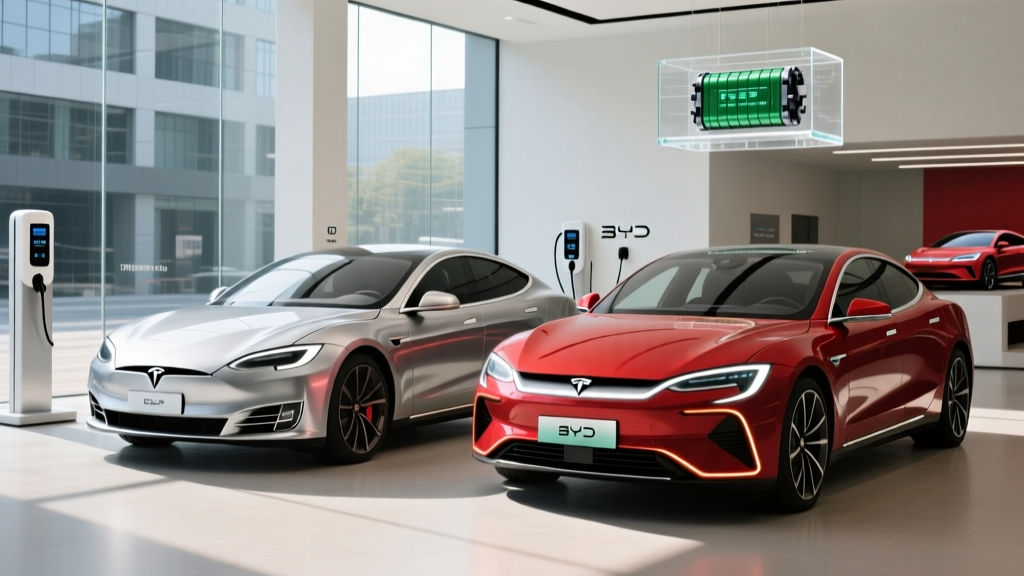
If you've searched "Tesla BYD" lately, you're not alone. BYD surpassed Tesla in global BEV sales volume in late 2023 and has traded the crown ever since. But for US-based EV shoppers in 2026, the comparison is far more nuanced than global sales figures suggest. Tesla's Supercharger network, US-built vehicles, and federal tax credit eligibility give it structural advantages stateside, while BYD's absence from the US passenger-car market (due to 100%+ tariffs on Chinese-built EVs) means most American buyers can't simply walk into a dealership and drive one home.
This guide breaks down what the Tesla vs BYD rivalry actually means for your next EV purchase — covering the models you can buy, the ones you can't, and the data that matters: real-world range, charging speeds, total cost, and tax-credit math.
Spec Showdown: Tesla Model Y vs BYD Sealion 7 (Atto 4)
To make this comparison concrete, we're pitting the best-selling Tesla Model Y (Long Range AWD) against BYD's closest global competitor, the Sealion 7 — a midsize electric SUV sold in Europe, Australia, and Asia. Note: the Sealion 7 is not available in the US market as of 2026.
| Spec | Tesla Model Y LR AWD | BYD Sealion 7 (Design AWD) |
|---|---|---|
| EPA Range | 320 mi (est.) | N/A (WLTP ~311 mi / ~500 km) |
| Battery (usable) | ~75 kWh, NMC | 82.5 kWh, LFP (Blade) |
| Peak DC Charge | 250 kW | 230 kW |
| 10–80% DC Time | ~22 min | ~26 min |
| Level 2 Rate | 11.5 kW (~44 mi/hr) | 11 kW (~40 mi/hr) |
| 0–60 mph | 4.8 sec | 4.5 sec |
| Horsepower | 384 hp | 523 hp |
| Drivetrain | Dual-motor AWD | Dual-motor AWD |
| MPGe (combined) | 117 MPGe | N/A (WLTP ~16.6 kWh/100km) |
| Cargo (behind 2nd row) | 30.2 cu ft | ~27.0 cu ft (est.) |
| Base MSRP (US) | $48,990 | Not sold in US |
| Federal Tax Credit | Up to $7,500 (§30D) | Not eligible |
| Battery Warranty | 8 yr / 120,000 mi | 8 yr / 100,000 mi (global) |
Real-World Range: What the Sticker Doesn't Tell You
EPA estimate: 320 miles. In real-world highway driving at 70 mph in moderate temps (60–75°F), expect roughly 275–295 miles before needing to charge. In cold weather (below 32°F), range can drop to 220–250 miles due to cabin heating and battery resistance. The heat pump on the Model Y helps mitigate this compared to resistive heaters, but physics still wins.
BYD's Sealion 7 quotes WLTP range, which runs ~10–15% more optimistic than EPA testing. Its WLTP figure of ~311 miles would likely translate to an EPA-equivalent 265–280 miles. The LFP Blade battery offers more consistent voltage delivery under load and better longevity, but LFP chemistry loses more range percentage in extreme cold than NMC — sometimes 30–40% below freezing without preconditioning.
Bottom line: On paper, Tesla holds a slight range edge. In practice, both vehicles will deliver 250–290 usable miles in temperate highway conditions and 200–240 miles in winter. Neither is a road-trip dealbreaker if you plan around DC fast chargers.
Charging Speed & Infrastructure: Tesla's Structural Advantage
| Charging Level | Tesla Model Y | BYD Sealion 7 |
|---|---|---|
| Level 1 (120V, 1.4 kW) | ~4 mi/hr | ~4 mi/hr |
| Level 2 (240V, 11–11.5 kW) | ~44 mi/hr | ~40 mi/hr |
| DC Fast (peak kW) | 250 kW (V3 Supercharger) | 230 kW |
| DC 10–80% time | ~22 min | ~26 min |
| Charge curve taper | Strong to ~60%, then gradual taper | Peak sustained to ~55%, steeper taper above 70% |
| Native connector | NACS | CCS2 (global) / GB/T (China) |
| Network access (US) | 20,000+ Superchargers | N/A — not sold in US |
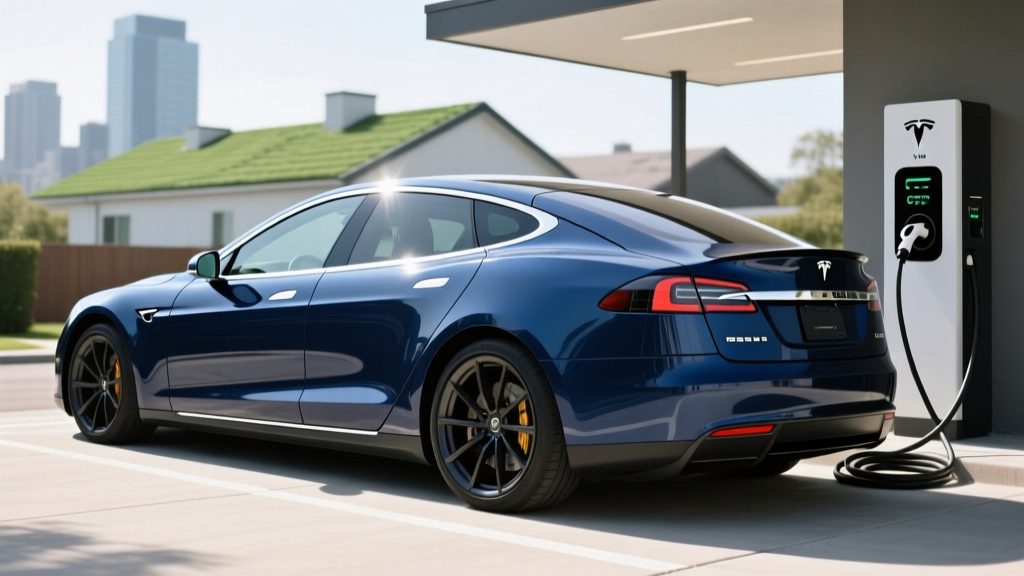
Tesla's charging ecosystem remains its strongest moat in the US market. The Supercharger network consistently delivers reliable, plug-and-charge DC fast charging across 20,000+ stalls nationwide. While other automakers now access Superchargers via NACS adapters, Tesla owners still get native integration: automatic billing, built-in routing with battery preconditioning, and stall availability data in the nav system.
BYD uses CCS2 in export markets and GB/T domestically in China. Its DC charging curve is competitive but not class-leading — the 230 kW peak is impressive, but the sustained rate drops more sharply above 70% SoC than Tesla's curve. On a road trip, this means the last 10–20% takes noticeably longer, adding 8–12 minutes to a typical charge stop.
For US buyers, this section is somewhat academic: you can't charge a BYD at a Supercharger because you can't buy a BYD here. But it matters if you're considering the global picture or anticipating BYD's eventual US market entry (which faces significant tariff and regulatory hurdles as of 2026).
Pricing, Tax Credits, and Total Cost of Ownership
| Trim | MSRP | §30D Credit (est.) | Effective Price |
|---|---|---|---|
| Long Range RWD | $44,990 | Up to $7,500 | ~$37,490 |
| Long Range AWD | $48,990 | Up to $7,500 | ~$41,490 |
| Performance | $53,990 | Up to $7,500 | ~$46,490 |
The federal EV tax credit under IRS §30D can reduce your effective cost by up to $7,500 — but eligibility depends on several factors:
- MSRP cap: SUVs must be under $80,000 (Model Y qualifies).
- Income cap: Modified AGI ≤ $150,000 (single), $225,000 (head of household), $300,000 (joint).
- Battery sourcing: Critical minerals and battery components must meet phased-in percentages from US or FTA-partner countries. Tesla's US-built batteries with Panasonic cells largely comply, but verify at purchase time — rules tighten annually.
- Point-of-sale transfer: As of 2024+, you can transfer the credit to the dealer for an immediate price reduction rather than waiting for tax filing.
BYD vehicles, built in China, are subject to 100%+ tariffs under Section 301 and are not eligible for §30D credits regardless. Even if BYD entered the US market directly, its battery supply chain (CATL, FinDreams) would fail the critical-minerals and component-sourcing tests, disqualifying it from the credit entirely.
5-year TCO note: Tesla's insurance costs tend to run 15–25% higher than comparable ICE vehicles due to repair complexity and parts pricing. BYD's global insurance data is sparse but generally lower in right-hand-drive markets. Factor in $1,800–$2,400/year for Model Y insurance depending on your state and driving record.
Tech, Interior, and Driver Assistance
Tesla's interior remains polarizing: minimalist to a fault, with nearly all controls funneled through the 15.4-inch center touchscreen. The 2026 Model Y "Juniper" refresh adds a rear touchscreen, ventilated front seats, ambient lighting, and a power-folding second row — addressing many of the prior generation's comfort complaints. Build quality from the Austin and Shanghai factories has improved markedly, though panel-gap variance still shows up on some units.
BYD's Sealion 7 takes a more traditional approach: a 15.6-inch rotating center screen, a 10.25-inch driver cluster, physical HVAC controls, and a more layered dashboard design. Material quality rivals European competitors at this price point, with soft-touch surfaces and quilted seat options. It feels more like a premium Hyundai or VW than a Tesla.
Tesla's Autopilot and FSD (Supervised) are SAE Level 2 driver-assistance systems. The driver must remain fully engaged, hands on or near the wheel, eyes on the road. These are not self-driving systems. BYD's ADAS suite (called BYD Pilot) is also Level 2. Only Level 4 services like Waymo operate without a human driver — and those are limited robotaxi deployments, not consumer vehicles.
Tesla's FSD (Supervised) has expanded its operational domain significantly in 2025–2026, handling complex urban intersections and highway interchanges with increasing competence. However, it still requires active supervision and can make unpredictable decisions in construction zones or unusual traffic patterns. BYD's driver-assist is competent for highway lane-keeping and adaptive cruise but less ambitious in urban autonomy.
Who Should Buy Which?
- You live in the US and want a vehicle you can actually buy and service locally
- Road-trip charging reliability is a top priority (Supercharger network)
- You want the $7,500 federal tax credit applied at point of sale
- You value over-the-air updates and a mature software ecosystem
- Resale value matters — Tesla's depreciation curve has stabilized
- LFP Blade battery offers excellent cycle life and thermal stability
- More traditional interior with physical controls and premium materials
- Strong global pricing (€48,000–55,000 in Europe) undercuts Tesla in many markets
- Higher peak horsepower in AWD trims
- Better cold-climate battery preconditioning in LFP chemistry evolution
For US buyers in 2026, the decision is effectively made for you: Tesla is purchasable, serviceable, and credit-eligible. BYD is not. If you're shopping globally or watching for future market entries, BYD's LFP technology and aggressive pricing make it the most credible threat to Tesla's dominance — but tariffs, supply-chain rules, and dealer-network absence keep it offshore for now.
Pros and Cons at a Glance
- 320 mi EPA range; strong real-world efficiency
- 250 kW Supercharger access — best US network
- $7,500 federal credit (most buyers qualify)
- Class-leading software and OTA updates
- Strong cargo space (30.2 cu ft + frunk)
- Insurance costs 15–25% above segment average
- Minimalist interior not for everyone
- Service center wait times in some metro areas
- FSD (Supervised) still requires full driver attention
- NMC battery degrades faster than LFP at high SoC
Frequently Asked Questions
Can I buy a BYD in the United States in 2026?
No. BYD does not sell passenger vehicles in the US market. Chinese-built EVs face 100%+ tariffs under Section 301 trade actions, making them economically unviable for US import. BYD has not announced plans for a US factory or CKD assembly partnership as of early 2026.
Does the Tesla Model Y qualify for the full $7,500 federal tax credit?
Most buyers will qualify, but eligibility depends on your income (≤$150K single / $300K joint), the vehicle's MSRP (under $80K for SUVs — Model Y qualifies), and battery-sourcing compliance. Tesla's US-built vehicles with domestic battery assembly generally meet the 2026 critical-minerals and component thresholds. Verify at point of purchase, as rules tighten each year. You can transfer the credit to the dealer for an immediate price reduction per IRS guidelines.
What's the real-world highway range of the Tesla Model Y Long Range?
EPA rates it at 320 miles. In real-world 70-mph highway driving at moderate temperatures, expect 275–295 miles. In freezing weather, plan for 220–250 miles. Preconditioning the battery before fast-charging stops helps recover some efficiency.
Is BYD's Blade Battery safer than Tesla's NMC cells?
BYD's LFP Blade Battery has demonstrated exceptional thermal stability in nail-penetration tests, with no thermal runaway. NMC cells (used in most Tesla Model Y variants) have higher energy density but are more prone to thermal events if damaged. Both chemistries are safe in normal operation with proper BMS management, but LFP has a structural safety advantage in abuse scenarios. Tesla has begun using LFP in standard-range models globally.
How does Tesla's Supercharger network compare to CCS networks for reliability?
Tesla's Supercharger network consistently posts 99.9%+ uptime with native plug-and-charge billing. Third-party CCS networks (Electrify America, EVgo, ChargePoint) have improved but still experience 10–20% failure rates at some stations according to J.D. Power studies. For road-trip-heavy buyers, this reliability gap remains Tesla's strongest selling point.