Quick Verdict: The 85 kWh Model S in Context
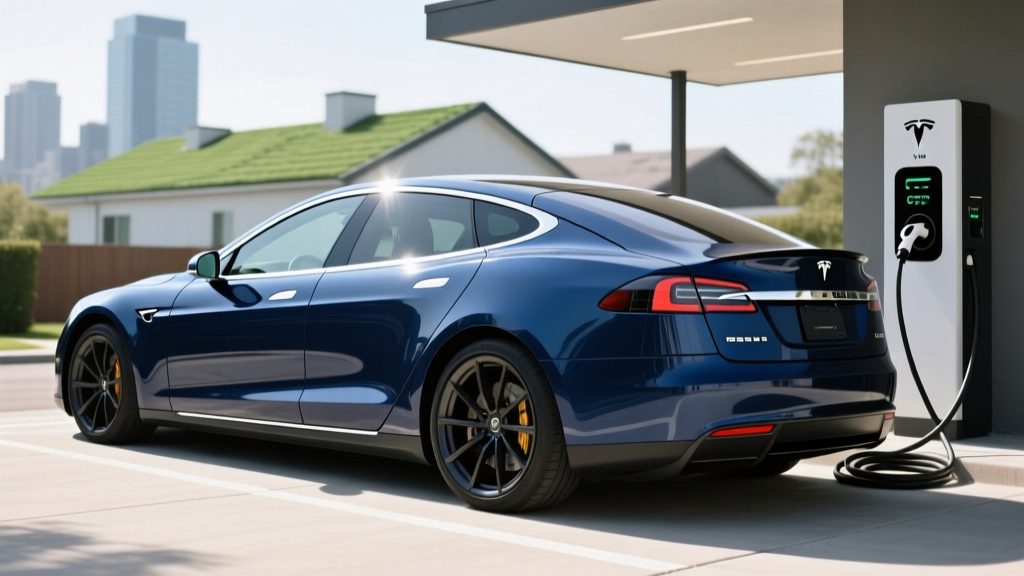
The Tesla Model S originally launched with an 85 kWh battery variant — a configuration Tesla discontinued years ago in favor of larger packs (currently 100 kWh in the 2026 Model S Long Range and Plaid). If you're searching for a "Tesla 85 Model S" in 2026, you're almost certainly looking at the used market, where 2012–2016 Model S 85 examples trade between $12,000 and $28,000 depending on mileage, battery health, and trim. This review covers the 85 kWh variant's real-world specs, what ownership looks like today, and how it stacks up against modern alternatives.
| Spec | Value |
|---|---|
| Battery Capacity | 85 kWh gross (~81 kWh usable), NMC chemistry |
| EPA Range (Original) | 265 miles (2013–2015); 253 miles (2016 refresh) |
| Real-World Range Today | ~160–210 miles (depending on battery degradation) |
| Motor / Drivetrain | Single-motor RWD (pre-2014); Dual-motor AWD (85D, late 2014+) |
| Horsepower | 362 hp (RWD); 518 hp (85D AWD) |
| 0–60 mph | 5.4 sec (RWD); 3.9 sec (85D) |
| DC Fast Charge (Max) | ~120 kW peak (Supercharger V2) |
| 10–80% DC Charge Time | ~40–45 minutes |
| Level 2 Home Charging | Up to 10 kW (Dual Charger) / ~29 mi/hr |
| Efficiency (EPA) | 89 MPGe combined / 38 kWh/100 mi |
| Cargo Volume | 26.3 cu ft (rear); 5.3 cu ft (frunk) |
| Battery Warranty (Original) | 8 years / unlimited miles |
| Used Price Range (2026) | $12,000–$28,000 |
Real-World Range: What the EPA Sticker Doesn't Tell You
EPA Sticker: 265 miles (original, 2013 model year)
Real-World Expectation in 2026: 160–210 miles on a full charge, depending on battery State of Health (SoH)
The 85 kWh Model S used Samsung SDI and Panasonic NMC (nickel-manganese-cobalt) cells. After 8–12 years of service, most packs have degraded 15–30%, meaning usable capacity often sits between 57 and 72 kWh. A car that originally delivered 265 EPA miles may now realistically provide 180–210 miles in mild weather with a healthy pack, or as little as 150–170 miles if the battery has seen heavy Supercharging or high-mileage use.
Highway driving at 70+ mph reduces range by roughly 10–15% versus the EPA combined figure due to aerodynamic drag — expect 150–180 real highway miles from a degraded pack. Cold weather (below 32°F) compounds this further, with a 20–30% range penalty from increased battery resistance and cabin heating demands. In sub-freezing conditions, plan for as few as 120–140 miles from a pack at 75% SoH.
According to fueleconomy.gov, the 2014 Model S 85 RWD was rated at 89 MPGe combined and consumed 38 kWh per 100 miles when new. Efficiency degrades slightly as the battery ages and internal resistance rises, so real-world consumption often climbs to 40–44 kWh/100 mi in an older pack.
Charging Speed: Supercharger and Home Charging Specs
| Charging Level | Max Power | Rate / Time |
|---|---|---|
| Level 1 (120V household) | ~1.4 kW | ~3–4 miles per hour |
| Level 2 (240V, 40A) | ~10 kW (single charger) | ~29 miles per hour |
| Level 2 (240V, Dual Charger) | ~20 kW | ~58 miles per hour |
| DC Fast Charge (Supercharger V2) | ~120 kW peak | 10–80% in ~40–45 min |
| DC Fast Charge (V3 Supercharger) | Limited to ~120 kW | No V3 speed benefit — older architecture |
The Model S 85 charges via Tesla's proprietary connector (now being phased out in favor of NACS on new vehicles, but still fully supported at Superchargers). Peak DC charging hits roughly 120 kW, but the charge curve tapers significantly above 60% State of Charge. You'll see 90–110 kW from 10–50% SoC, dropping to 40–60 kW by 70%, and below 20 kW past 85%. This taper is why the 10–80% time stretches to 40–45 minutes — considerably slower than modern EVs like the Hyundai Ioniq 5 (18 min) or the current Model S Long Range (27 min at 250 kW peak).
At home on a Level 2 wall connector, the single onboard charger delivers up to 10 kW (29 mi/hr). Cars equipped with the optional Dual Charger can accept up to 20 kW, filling the 85 kWh pack from empty in roughly 4.5 hours. Note that kW measures charging power (the rate of energy delivery), while kWh measures battery capacity (total energy stored) — don't confuse the two when evaluating chargers.
For a full breakdown of home charger installation costs, including panel upgrades and electrician rates, see our Level 2 home charging guide.
Performance and Drivetrain
The rear-wheel-drive Model S 85 produces 362 horsepower and hits 0–60 mph in 5.4 seconds — still brisk by any standard. The dual-motor 85D (introduced late 2014) bumps output to 518 hp and drops the 0–60 time to 3.9 seconds, with all-wheel-drive traction that transforms wet-weather and snow confidence.
Regenerative braking on the 85 kWh models is strong but lacks the adjustable one-pedal driving modes found in newer EVs. The "Low" regen setting feels closer to a gas car's engine braking, while "Standard" provides meaningful deceleration but won't always bring the car to a complete stop without touching the brake pedal — a quirk Tesla addressed in later software updates on newer hardware.
Ride quality remains a highlight. The air suspension (optional on early models, standard on later builds) delivers a compliant highway cruise, though some 8–10-year-old units will need air strut replacements at $1,200–$2,000 per corner if they haven't been serviced.
Interior, Cargo, and Technology
The pre-refresh (2012–2015) Model S 85 features a 17-inch portrait touchscreen that was revolutionary at launch but shows its age in 2026. The original MCU1 (NVIDIA Tegra 3) infotainment processor is sluggish by modern standards — slow map rendering, delayed touch response, and limited app support. Tesla offered an MCU2 upgrade (Intel Atom) for ~$2,000, which dramatically improves responsiveness and enables features like Netflix streaming and the modern Tesla UI. Verify whether a used example has received this upgrade.
The 2016 refresh brought a new front fascia (no more black grille), updated LED headlights, and revised interior materials. Post-refresh 85 kWh cars (very few, as Tesla transitioned to 90D and 100D badges) are more desirable on the used market.
Cargo space totals 26.3 cubic feet behind the rear seats and 5.3 cubic feet in the front trunk (frunk), for a combined 31.6 cu ft — competitive with a midsize SUV. Rear legroom measures 35.4 inches, adequate for adults on longer trips. The hatchback liftgate makes loading bulky items far easier than a traditional sedan trunk.
Autopilot and Driver-Assistance Systems
SAE Automation Level: Level 2
Autopilot and FSD on the Model S 85 are driver-assistance systems, not self-driving. You must keep your hands on the wheel and eyes on the road at all times.
Early Model S 85 vehicles (pre-September 2014) have no Autopilot hardware at all. Cars built from late 2014 onward include Hardware 1 (HW1), which supports basic Autopilot — lane centering, adaptive cruise control, and automatic emergency braking. HW1 does not support Full Self-Driving (FSD) capability, and Tesla has ceased major feature updates for this hardware generation.
This is a critical distinction versus newer Teslas: a 2015 Model S 85 with Autopilot will feel like a generation behind a 2024+ Tesla running HW4/AI5 hardware. The lane-keeping is adequate for highway use but less confident in construction zones, faded lane markings, or complex interchanges.
What Autopilot HW1 does NOT do: Navigate on Autopilot (automatic exits and interchanges), recognize traffic lights and stop signs, or perform autosteer on city streets. These features require HW2.0 or later, which the 85 kWh Model S never received.
Pricing, Tax Credits, and Ownership Costs
| Factor | Detail |
|---|---|
| Used Price Range | $12,000–$28,000 (depending on mileage, SoH, and trim) |
| Federal Used EV Credit (§25E) | Up to $4,000 or 30% of sale price (whichever is lower) |
| Income Cap (§25E) | $75,000 single / $112,500 HOH / $150,000 joint (MAGI) |
| Vehicle Price Cap (§25E) | Sale price must be ≤ $25,000 |
| Dealer Requirement | Must purchase from a licensed dealer (private sales excluded) |
| New-Vehicle §30D Credit | Not applicable — Model S 85 is no longer sold new |
| Estimated Out-of-Pocket (Best Case) | $11,000–$21,000 after $4,000 credit |
The new-vehicle §30D federal tax credit does not apply here — the 85 kWh Model S has been out of production since 2016. However, the §25E used EV credit (introduced in 2023) can provide up to $4,000 if you meet the requirements. Per IRS guidelines, the vehicle must sell for $25,000 or less, you must buy from a licensed dealer, and your modified adjusted gross income must fall under the caps listed above. The credit is non-refundable, meaning you need sufficient tax liability to claim it.
Ownership costs to budget for:
- Battery replacement: $12,000–$18,000 for a remanufactured 85 kWh pack if yours fails outside warranty. Tesla's original 8-year/unlimited-mile battery warranty has expired on all 85 kWh cars as of 2024.
- Insurance: $1,800–$3,200/year depending on state and driver profile — Teslas carry higher premiums due to repair costs.
- Electricity: At $0.15/kWh national average, a full charge costs ~$12.75, yielding roughly $0.05–$0.07 per mile versus $0.12–$0.15/mi for a comparable gas sedan.
- Maintenance: Minimal — no oil changes, fewer brake replacements due to regen. Budget $500–$1,000/year for cabin air filters, wipers, tire rotation, and 12V battery replacement ($300–$500 every 3–4 years).
Who Should Buy a Model S 85 in 2026?
Pros
- Low entry price for a luxury EV — $12K–$28K buys a lot of car
- Spacious hatchback cargo area (31.6 cu ft combined)
- Air suspension ride quality still competitive
- Access to Tesla Supercharger network (proprietary connector, no adapter needed)
- Over-the-air updates still provide minor improvements
- Strong 0–60 performance (especially 85D)
Cons
- Battery degradation reduces range to 160–210 miles
- Original 8-year battery warranty has expired on all examples
- MCU1 infotainment is slow without the $2,000 MCU2 upgrade
- Autopilot HW1 is limited and no longer receiving feature updates
- DC charging capped at ~120 kW — 40+ min for 10–80%
- No access to FSD features
- Air suspension and drive unit repairs are expensive out of warranty
Best for: Budget-conscious buyers who want a spacious, comfortable EV for commuting and moderate road trips (under 200 miles between charging stops). The 85D variant suits drivers in snow-belt states who need AWD. If your daily commute is under 80 miles round-trip and you can charge at home, the degraded range is manageable.
Skip it if: You need reliable 300+ mile road-trip range, the latest driver-assist tech, or warranty peace of mind. In that case, consider a certified pre-owned 2021+ Model S Long Range or a new 2026 Model S ($79,990 base) with a current 4-year/50,000-mile vehicle warranty and 8-year/150,000-mile battery warranty.
How It Compares to Modern Alternatives
| Model S 85 (Used) | 2026 Model S LR (New) | 2026 Hyundai Ioniq 6 SE | 2026 Chevrolet Blazer EV RS | |
|---|---|---|---|---|
| Price | $12K–$28K | $79,990 | $42,600 | $48,600 |
| EPA Range | 265 mi (new) | 402 mi | 361 mi | 324 mi |
| Real-World Range | 160–210 mi | ~340–370 mi | ~300–330 mi | ~270–300 mi |
| DC Fast Charge | 120 kW peak | 250 kW peak | 240 kW peak | 190 kW peak |
| 10–80% Time | ~42 min | ~27 min | ~18 min | ~28 min |
| Battery Warranty | Expired | 8 yr/150K mi | 10 yr/100K mi | 8 yr/100K mi |
The used Model S 85 wins purely on price — nothing else at $15,000–$20,000 offers this much interior space, performance, and Supercharger access. But the trade-offs are real: degraded range, expired warranty, slow charging by modern standards, and aging tech. A new Ioniq 6 or Blazer EV delivers more usable range, dramatically faster charging, full warranties, and modern ADAS — at 2–3× the price.
Frequently Asked Questions
What is the real-world range of a Tesla Model S 85 in 2026?
Expect 160–210 miles on a full charge, depending on battery State of Health. Most 8–12-year-old packs have degraded 15–30%. Highway driving at 70+ mph and cold weather (below 32°F) will reduce this further — plan for 120–150 miles in worst-case winter highway conditions.
How fast does the Model S 85 charge at home and on DC fast chargers?
On a Level 2 home charger (240V, 40A), the single onboard charger delivers ~10 kW, adding about 29 miles of range per hour. Dual-charger-equipped cars can accept up to 20 kW (~58 mi/hr). On DC fast charging, the 85 kWh pack peaks at ~120 kW, with a 10–80% charge taking approximately 40–45 minutes due to significant taper above 60% SoC.
Does a used Model S 85 qualify for any federal tax credit?
Not the new-vehicle §30D credit — that only applies to new EVs. However, you may qualify for the §25E used clean vehicle credit: up to $4,000 or 30% of the sale price (whichever is less), provided the sale price is $25,000 or under, you buy from a licensed dealer, and your income is below the MAGI caps ($75K single / $150K joint). Consult a tax professional and review IRS §25E guidance for your specific situation.
Is the Model S 85 worth buying versus a newer used EV?
It depends on your budget and risk tolerance. At $15,000–$20,000, it's one of the most affordable ways into a luxury EV with Supercharger access and strong performance. But you're accepting an expired battery warranty, degraded range, aging infotainment, and potential $12,000–$18,000 battery replacement risk. If you can stretch to $30,000–$40,000, a used 2020–2022 Model 3 Long Range or Model Y offers better range, faster charging, HW3 Autopilot, and remaining battery warranty.
What are the biggest risks of buying a used Model S 85?
The top concerns are: (1) battery degradation and the cost of replacement ($12K–$18K), (2) air suspension failure ($1,200–$2,000 per strut), (3) drive unit replacement ($3,000–$5,000), and (4) the MCU1 infotainment being slow and feature-limited without the $2,000 MCU2 upgrade. Always request a pre-purchase inspection from a Tesla-qualified shop and check the battery's State of Health via the car's service menu or a third-party diagnostic tool.
Can I still use Tesla Superchargers with a Model S 85?
Yes. The Model S 85 uses Tesla's proprietary connector and has full access to the Supercharger network — no adapter required. As Tesla transitions to NACS as the industry standard, legacy proprietary-connector vehicles like the 85 kWh Model S will continue to be supported at Supercharger stalls, though some newer stalls may require an adapter as the network adds NACS-native connectors.