Tesla owners and prospective buyers frequently ask: does Tesla have a vehicle recovery system? The short answer is yes — but not in the way aftermarket solutions like LoJack or OnStar work. Tesla builds GPS tracking, remote immobilization, and Sentry Mode surveillance directly into every vehicle's connected architecture. There's no separate subscription-based "recovery package" to purchase. Instead, these capabilities are woven into the Tesla app and the car's always-connected modem.
This guide breaks down exactly what Tesla's anti-theft and recovery tools can do, their limitations, how they compare to dedicated recovery systems, and what you should know as a 2026 Tesla owner or shopper. We'll also cover the full ownership picture — range, charging, pricing, and tax credits — so you have the complete data set to make a decision.
Tesla's Built-In Vehicle Recovery Features Explained
Every Tesla sold in the U.S. ships with a built-in cellular modem and GPS receiver. These power several features that collectively function as a vehicle recovery system:
- Tesla App GPS Tracking: The app shows your vehicle's real-time location whenever the car has cellular connectivity. If your Tesla is stolen, you can share this location with law enforcement.
- Remote Immobilization (PIN to Drive): Through the app, you can disable the vehicle remotely, preventing it from being driven even if the thief has the key fob or phone key. Tesla support can also assist with disabling the car.
- Sentry Mode: When parked and locked, exterior cameras record activity around the car if motion or impacts are detected. Footage is saved to a USB drive (or Tesla's built-in dashcam storage in newer models) and can provide evidence or suspect identification.
- Walk-Away Door Lock & Alarm: The vehicle automatically locks and arms its alarm when your phone key moves out of Bluetooth range.
- Speed Limit Mode & Valet Mode: These restrict vehicle speed and lock certain settings, reducing the usefulness of a stolen car to a thief.
How Tesla's Recovery System Compares to Dedicated Alternatives
| Feature | Tesla (Built-In) | OnStar (GM) | LoJack |
|---|---|---|---|
| Real-time GPS tracking | ✅ Via app | ✅ Via app + call center | ❌ Police-only tracking |
| Remote immobilization | ✅ App + Tesla support | ✅ Call center assisted | ❌ Not available |
| Surveillance cameras | ✅ Sentry Mode | ❌ | ❌ |
| Monthly subscription cost | $0 (included) | $15–$45/mo | $0 (one-time ~$700) |
| Works if thief disconnects battery | ⚠️ Limited | ⚠️ Limited | ✅ Hidden RF transmitter |
Tesla's approach is comprehensive for the cost (free), but it has one vulnerability: if a sophisticated thief disconnects the 12V battery or jams the cellular signal, app-based tracking goes offline. Dedicated systems like LoJack use hidden radio-frequency transmitters that police can track independently — an advantage in organized theft scenarios.
Model 3 as Reference: Full 2026 Specs & Recovery Context
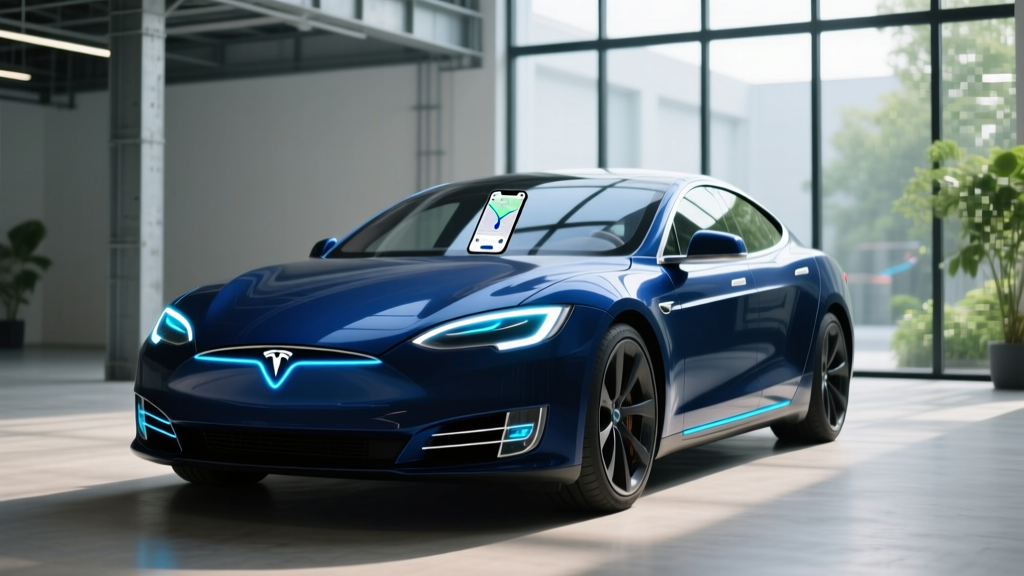
To ground this discussion in a specific vehicle, here's the 2026 Tesla Model 3 — Tesla's volume seller and the model most buyers are researching when they ask about recovery features.
| Spec | RWD (Base) | Long Range AWD | Performance |
|---|---|---|---|
| EPA Range | 272 mi | 341 mi | 315 mi |
| Battery (usable) | ~60 kWh (LFP) | ~75 kWh (NMC) | ~75 kWh (NMC) |
| 0–60 mph | 5.8 sec | 4.2 sec | 2.9 sec |
| Horsepower | 271 hp | 346 hp | 510 hp |
| Max DC Fast Charge | 170 kW | 250 kW | 250 kW |
| 10–80% DCFC Time | ~25 min | ~22 min | ~22 min |
| Level 2 Home Rate | 11.5 kW (~44 mi/hr) | 11.5 kW (~44 mi/hr) | 11.5 kW (~44 mi/hr) |
| Efficiency (MPGe) | 132 MPGe | 124 MPGe | 113 MPGe |
| Base MSRP | $38,990 | $45,490 | $52,990 |
Charging Speed: What You Need for Daily Use and Road Trips
Tesla's Supercharger network remains the most reliable DC fast-charging ecosystem in the U.S., with most stalls delivering 150–250 kW. Here's what that means in practice:
| Charging Level | Power | Miles Added per Hour | Best Use Case |
|---|---|---|---|
| Level 1 (120V outlet) | ~1.4 kW | ~5 mi/hr | Emergency / overnight trickle |
| Level 2 (240V home) | 11.5 kW | ~44 mi/hr | Daily home charging |
| DC Fast (V3 Supercharger) | Up to 250 kW | ~1,000 mi/hr (peak) | Road trips |
Charge curve reality: The 250 kW peak on Long Range and Performance trims only holds from roughly 10–30% state of charge. Above 50%, the rate tapers significantly. Plan road-trip stops around the 10–80% window for the fastest sessions. Above 80%, expect the rate to drop below 50 kW as the battery management system protects cell health.
Pricing, Tax Credits, and Total Cost
| Trim | Base MSRP | §30D Credit Eligibility | Effective Price (est.) |
|---|---|---|---|
| RWD | $38,990 | Up to $3,750* | ~$35,240 |
| Long Range AWD | $45,490 | Up to $3,750* | ~$41,740 |
| Performance | $52,990 | Up to $3,750* | ~$49,240 |
*Tax credit caveats: Under current IRS §30D rules, the federal EV tax credit is up to $7,500, split between a critical-minerals component ($3,750) and a battery-components component ($3,750). As of 2026, most Tesla Model 3 variants qualify for only the $3,750 critical-minerals portion due to battery-component sourcing restrictions (Foreign Entity of Concern rules). Additional requirements apply:
- Buyer AGI must not exceed $150,000 (single), $225,000 (head of household), or $300,000 (joint).
- Vehicle MSRP must be under $55,000 for sedans (Model 3 qualifies on all trims).
- Credit can be transferred at point of sale as a down-payment reduction.
Verify current eligibility on IRS.gov before purchasing — sourcing rules change as supply chains shift.
Interior, Cargo, and Daily Livability
The refreshed Model 3 (sometimes called "Highland") brought meaningful improvements to ride quality, cabin noise, and materials. Key dimensions:
- Front legroom: 42.7 inches
- Rear legroom: 35.2 inches (adequate for adults on shorter trips)
- Cargo (rear trunk): 21.0 cu ft
- Frunk (front trunk): 3.1 cu ft
- Total cargo: 24.1 cu ft (less than a Model Y, competitive with compact sedans)
The 15.4-inch center touchscreen handles all infotainment, climate, and vehicle controls. There are no physical stalks — turn signals are on the steering wheel rim, and gear selection is via the touchscreen or a backup console button strip. This minimalism divides opinion but reduces parts that can break.
Standout Tech and Notable Drawbacks
Pros
- Class-leading efficiency (kWh/100mi)
- Supercharger network access — most reliable DCFC ecosystem
- OTA updates continuously add features
- Sentry Mode provides passive surveillance
- Low center of gravity, responsive handling
- Strong resale value relative to other EVs
Cons
- No physical controls — steep learning curve
- Panel gaps and build consistency still variable
- Rear seat comfort lags behind Hyundai Ioniq 6
- Insurance premiums above segment average
- No Apple CarPlay or Android Auto
- FSD (Supervised) remains SAE Level 2 — driver must stay engaged
Battery Warranty and Longevity
Tesla covers the Model 3 battery and drive unit for:
- RWD: 8 years / 100,000 miles (whichever comes first)
- Long Range & Performance: 8 years / 120,000 miles
The warranty guarantees at least 70% battery capacity retention during the coverage period. Real-world data from Tesla's fleet shows average degradation of roughly 10–12% over 150,000 miles for NMC packs. LFP packs (RWD) tend to show less degradation but have lower energy density. For a detailed breakdown of LFP vs. NMC chemistry trade-offs, see our battery technology guide.
Who the Model 3 Suits Best
- Commuters: Excellent. Efficiency and home charging make daily driving cheap (~$0.04–0.06/mile on residential electricity).
- Road trippers: Very good. Supercharger coverage and 22-minute 10–80% sessions minimize downtime.
- Families with small children: Adequate. Rear seat fits car seats, but cargo space is tighter than a Model Y or crossover.
- Towing: Not recommended. The Model 3 is not rated for towing in the U.S.
- Cold-climate owners: Acceptable with preconditioning. The heat pump helps, but LFP range loss in sub-freezing temps is significant — consider Long Range AWD if you live above the 40th parallel.
Frequently Asked Questions
Can police track a stolen Tesla?
Yes. The owner can share the vehicle's GPS location from the Tesla app with law enforcement. However, Tesla does not have a direct law-enforcement liaison service like OnStar. Recovery depends on the owner reporting the theft and providing location data to police.
What happens if a thief disables the Tesla's connectivity?
If the 12V battery is disconnected or the cellular modem is damaged, GPS tracking and remote features go offline. This is Tesla's main vulnerability compared to hidden RF-based systems like LoJack. For high-theft areas, some owners add an aftermarket GPS tracker (e.g., Apple AirTag or dedicated hardwired unit) as a secondary layer.
Does Sentry Mode drain the battery significantly?
Sentry Mode consumes roughly 1–2 miles of range per hour of use, or about 24–48 miles over a full day. It automatically disables if the battery drops below 20% to preserve driving range. For daily parking, the energy cost is minor if you charge at home overnight.
Is the Model 3 still worth buying in 2026 vs. competitors?
The Model 3 remains the efficiency benchmark in its class (132 MPGe on the RWD trim) and benefits from Supercharger access. Key competitors include the Hyundai Ioniq 6 (more comfortable rear seat, 361-mi range on SEL), BMW i4 (more premium interior, but pricier), and the Chevrolet Bolt EUV (far cheaper, but slower charging). If charging speed and network reliability are your top priorities, Tesla still leads. If interior comfort and physical controls matter more, test-drive the Ioniq 6.
Does the Tesla Model 3 qualify for the full $7,500 federal tax credit?
As of 2026, the Model 3 typically qualifies for $3,750 (the critical-minerals half of the credit) due to battery-component sourcing restrictions under the Inflation Reduction Act. The full $7,500 requires both the critical-minerals and battery-component thresholds to be met. Check fueleconomy.gov for the latest eligible VIN list before purchasing.