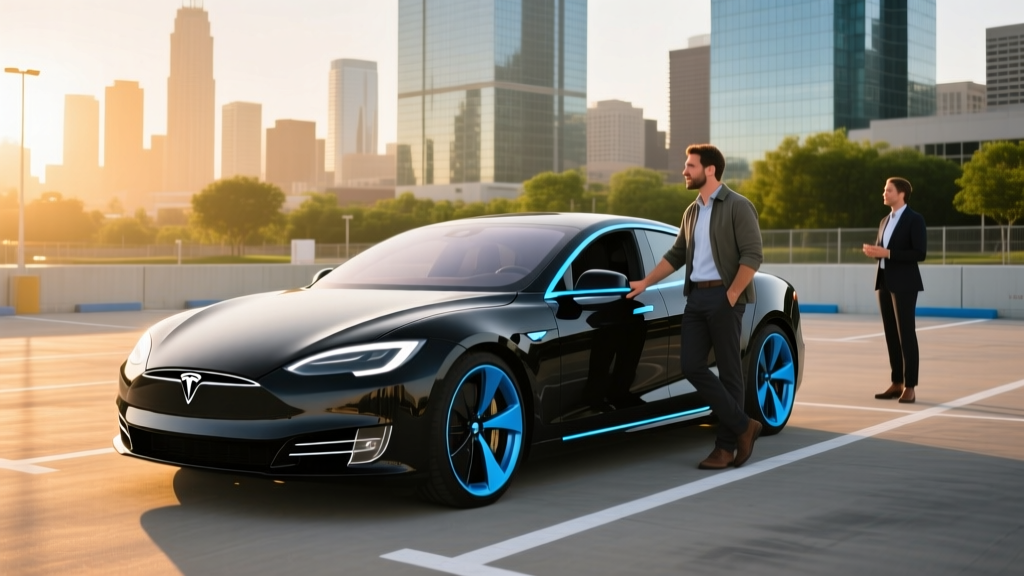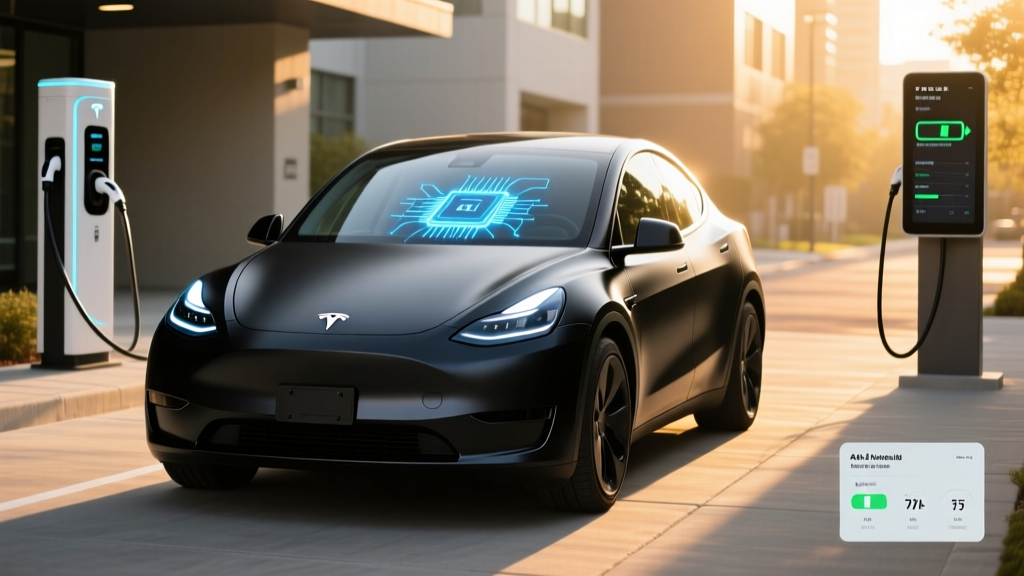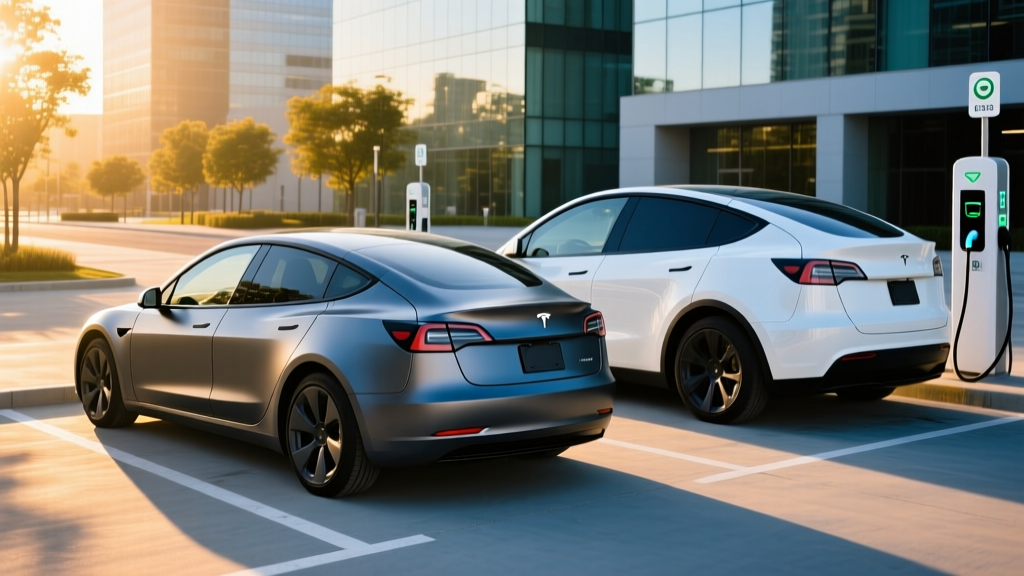
For years, Tesla has defined the default EV purchase. But as legacy automakers close the gap on range, charging speed, and interior quality, the question in 2026 isn't just which Tesla to buy — it's whether a Tesla still represents the best overall value in the electric vehicle market. We put the two volume sellers, the refreshed Model 3 and the updated Model Y, under a microscope to find out.
The Quick Verdict on Tesla Value
Tesla's value proposition in 2026 rests on three pillars: class-leading efficiency (more miles per kWh than nearly every rival), the Supercharger network's unmatched reliability, and aggressive pricing that undercuts most competitors at the base trim. Where Tesla's value weakens is in interior material quality, the absence of traditional physical controls, and the extra cost of its most desirable driver-assist features. If you prioritize low cost-per-mile, fast DC charging, and over-the-air updates, a Model 3 or Model Y remains hard to beat. If you want a plush cabin, Apple CarPlay, or a traditional dealership experience, competitors from Hyundai, BMW, and Ford make a compelling case.
2026 Model 3 vs. Model Y: Spec-by-Spec Breakdown
| Specification | Model 3 Long Range AWD | Model Y Long Range AWD |
|---|---|---|
| Base MSRP | $42,380 | $44,380 |
| EPA Range | 363 miles | 337 miles |
| Battery (usable) | ~79 kWh (NMC) | ~79 kWh (NMC) |
| Efficiency | 24 kWh/100mi (140 MPGe) | 26 kWh/100mi (129 MPGe) |
| Max DC Fast Charge | 250 kW | 250 kW |
| 10–80% DC Charge Time | ~25 min | ~27 min |
| Level 2 Home Charge Rate | 11.5 kW (~44 mi/hr) | 11.5 kW (~40 mi/hr) |
| 0–60 mph | 4.2 sec | 4.8 sec |
| Horsepower | ~384 hp (dual motor) | ~384 hp (dual motor) |
| Drivetrain | Dual-motor AWD | Dual-motor AWD |
| Cargo Volume | 23 cu ft (trunk) + frunk | 76 cu ft (rear seats folded) + frunk |
| Legroom (front/rear) | 42.4 / 35.3 in | 41.8 / 38.5 in |
| Battery Warranty | 8 yr / 120,000 mi | 8 yr / 120,000 mi |
Real-World Range: What the EPA Sticker Doesn't Tell You
EPA Estimate: Model 3 Long Range — 363 miles | Model Y Long Range — 337 miles
Real-World Expectation: In mixed highway driving at 70 mph, expect roughly 300–320 miles from the Model 3 and 280–300 miles from the Model Y. In sub-freezing winter conditions (below 32°F), plan for a 20–30% reduction, bringing usable range down to approximately 220–260 miles depending on cabin heat usage and whether you precondition the battery.
Tesla's efficiency advantage is real and measurable. The Model 3 Long Range's 24 kWh per 100 miles is among the best of any AWD electric sedan on the market, according to EPA data at fueleconomy.gov. That efficiency translates directly into fewer charging stops on road trips and lower electricity costs per mile — a core part of the Tesla value equation.
However, Tesla uses NMC (nickel manganese cobalt) battery chemistry in Long Range models rather than the LFP (lithium iron phosphate) found in the base RWD trims. NMC offers higher energy density (more range per kilogram) but degrades slightly faster if routinely charged to 100%. For daily driving, Tesla recommends an 80% charge limit for NMC — which effectively reduces your daily usable range to around 260–290 miles for the Model 3.
Charging Speed and the Supercharger Advantage
| Charging Level | Power | Miles Added per Hour | Use Case |
|---|---|---|---|
| Level 1 (120V outlet) | ~1.4 kW | ~5 mi/hr | Emergency / overnight trickle |
| Level 2 (240V home) | 11.5 kW | 40–44 mi/hr | Daily home charging |
| DC Fast (Supercharger V3) | Up to 250 kW | ~200 mi in 15 min | Road trips |
| DC Fast (Supercharger V4) | Up to 350 kW (future) | TBD | Next-gen stalls rolling out |
The headline DC charging number — 250 kW peak — is competitive but no longer class-leading. The Hyundai Ioniq 6 peaks at roughly 240 kW on an 800V architecture and sustains higher average wattage through its charge curve, completing a 10–80% charge in approximately 18 minutes compared to Tesla's 25. The Porsche Taycan and Kia EV6 also outpace Tesla on sustained charge rate thanks to 800-volt systems, whereas Tesla's architecture remains 400V.
Where Tesla still dominates is the network. Tesla Superchargers are the most reliable DC fast-charging network in North America, with uptime consistently above 95% and seamless plug-and-charge integration. With Ford, GM, Rivian, and others now using NACS adapters to access Superchargers, the network is more crowded than in 2023, but Tesla owners still benefit from built-in routing, battery preconditioning, and automatic billing — friction that third-party networks still can't fully match.
For home charging, Tesla's Wall Connector at 11.5 kW (48 amps) adds roughly 44 miles of range per hour on the Model 3 — enough to fully replenish overnight on a standard NEMA 14-50 outlet or hardwired circuit. Expect to pay $800–$1,500 for a professional home installation depending on panel capacity and run length.
Pricing, Trims, and the Federal Tax Credit Equation
| Trim | MSRP | Est. §30D Credit | Effective Price |
|---|---|---|---|
| Model 3 RWD | $38,380 | Up to $7,500* | ~$30,880 |
| Model 3 Long Range AWD | $42,380 | Up to $7,500* | ~$34,880 |
| Model 3 Performance | $52,380 | Up to $7,500* | ~$44,880 |
| Model Y Long Range AWD | $44,380 | Up to $7,500* | ~$36,880 |
| Model Y Performance | $51,380 | Up to $7,500* | ~$43,880 |
*Federal EV tax credit eligibility under IRS §30D is subject to multiple requirements. Source: IRS.gov clean vehicle credits.
The asterisk matters enormously. Under current §30D rules, the full $7,500 credit requires:
- MSRP cap: Sedans (Model 3) must be under $55,000; SUVs/pickups/vans (Model Y) under $80,000 — all Tesla trims listed above qualify.
- Buyer income cap: Adjusted gross income must not exceed $150,000 (single), $225,000 (head of household), or $300,000 (joint filers).
- Battery sourcing: A percentage of critical minerals and battery components must be sourced from the U.S. or free-trade-agreement partners. Tesla's U.S.-built vehicles with increasingly domestic supply chains have generally met these thresholds, but requirements tighten annually. Verify the specific VIN's eligibility on the IRS portal before purchase.
- Point-of-sale transfer: As of 2024, eligible buyers can transfer the credit to the dealer at purchase, receiving the discount immediately rather than waiting to claim it on their tax return.
The base Model 3 RWD at an effective ~$30,880 (after credit) is arguably the strongest value in the entire EV market. It undercuts the Hyundai Ioniq 6, BMW i4, and Polestar 2 on price while delivering comparable or better range.
Performance, Tech, and Daily Livability
The dual-motor Long Range models deliver 384 horsepower and sub-5-second 0–60 times — genuinely quick for vehicles that prioritize efficiency. The Performance trims drop to 2.9 seconds (Model 3) and 3.5 seconds (Model Y) with track-oriented suspension tuning.
Tesla's infotainment remains entirely screen-centric with a 15.4-inch center display and no physical buttons, stalks, or instrument cluster. This minimalism is polarizing: fans love the clean aesthetic and regular over-the-air updates; critics point to the frustration of adjusting mirrors, climate, or wipers through menus while driving. There is still no Apple CarPlay or Android Auto — a dealbreaker for some buyers in 2026.
On the driver-assist front, Tesla's Basic Autopilot (lane centering + adaptive cruise) is standard and competent. Full Self-Driving (Supervised) remains a $8,000 add-on (or $99/month subscription) and is an SAE Level 2 system — meaning the driver must remain fully engaged, hands on the wheel, eyes on the road at all times. It is not autonomous driving. For hands-off, eyes-off highway cruising, GM's Super Cruise and Ford's BlueCruise on approved highways offer a more relaxed experience within their operational limits.
ADAS Reality Check: Tesla Autopilot and FSD (Supervised) are SAE Level 2 driver-assistance systems. They do not make the vehicle self-driving. The driver is legally and practically responsible for all vehicle operation at all times. Do not disengage attention based on marketing language.
Pros, Cons, and the Honest Trade-Offs
Where Tesla Value Wins
- Best-in-class efficiency — lowest kWh/100mi in segment reduces charging cost per mile
- Supercharger network reliability — 95%+ uptime, seamless integration
- Aggressive base pricing — Model 3 RWD at ~$31K after credit is a segment benchmark
- Over-the-air updates continuously add features post-purchase
- Strong resale value relative to most EV competitors
- Spacious frunk + trunk (Model Y: 76 cu ft total with seats folded)
Where Tesla Value Falls Short
- Interior materials and NVH still lag BMW i4, Genesis GV60, and Hyundai Ioniq 5 at similar prices
- No Apple CarPlay or Android Auto
- FSD is expensive and remains Level 2 — not autonomous
- 400V architecture limits sustained DC charge rate vs. 800V competitors
- Touchscreen-only controls can be distracting while driving
- NMC battery requires 80% daily charge limit for longevity (reduces daily usable range)
Who Should Buy a Tesla in 2026?
The Model 3 is ideal for: Solo commuters and couples who want maximum range per dollar, frequent Supercharger road trips, and don't mind a minimalist interior. The RWD trim with its LFP battery (which can be charged to 100% daily without degradation concerns) is the purest value play.
The Model Y is ideal for: Families needing rear-seat space and cargo versatility. With 76 cu ft of cargo room and available third-row seating (for small children), it competes directly with the Ford Mustang Mach-E, Hyundai Ioniq 5, and Kia EV6 — and typically wins on total range and charging-network convenience.
Look elsewhere if: You prioritize a luxury interior (BMW i4, Genesis Electrified G80), need Apple CarPlay (nearly every competitor), want hands-free highway driving (GM Super Cruise, Ford BlueCruise), or need 800V ultra-fast charging (Hyundai/Kia/Porsche).
Frequently Asked Questions
What is the real-world range of the 2026 Tesla Model 3 and Model Y?
Expect 300–320 highway miles from the Model 3 Long Range (EPA 363) and 280–300 from the Model Y Long Range (EPA 337). In freezing weather, subtract 20–30%, yielding roughly 220–260 miles depending on conditions and preconditioning.
How fast does a Tesla charge at home and on the road?
At home on a Level 2 Wall Connector (11.5 kW), the Model 3 gains roughly 44 miles per hour, fully charging overnight. On a V3 Supercharger (250 kW DC), a 10–80% charge takes approximately 25 minutes for the Model 3 and 27 minutes for the Model Y. Charging slows significantly above 80% due to battery-management taper — plan to charge to 80% on road trips for the best time-to-miles ratio.
How much does a Tesla cost after the federal tax credit?
The base Model 3 RWD starts at $38,380 and can drop to approximately $30,880 if you qualify for the full $7,500 §30D credit. The Model Y Long Range drops from $44,380 to roughly $36,880. Eligibility depends on your income, the vehicle's battery sourcing, and MSRP caps. Verify your specific situation on IRS.gov or with a tax professional.
Is a Tesla still worth buying vs. Hyundai, Kia, or Ford?
For pure efficiency, charging-network reliability, and base price, yes. The Model 3 RWD and Model Y Long Range remain segment benchmarks. However, if interior quality, CarPlay integration, 800V ultra-fast charging, or hands-free driving assists matter more to you, the Ioniq 5/6, EV6, and Mustang Mach-E are strong alternatives worth test-driving.
Does the Tesla Model 3 or Model Y qualify for the $7,500 federal tax credit?
Both models qualify on MSRP (under the $55K sedan / $80K SUV cap). Full credit eligibility also requires meeting buyer income limits ($150K single / $300K joint) and battery critical-mineral and component sourcing thresholds that tighten each year. Check the IRS portal for the specific VIN before committing to purchase.
What is the battery warranty on a 2026 Tesla?
Tesla covers the Model 3 and Model Y battery and drive unit for 8 years or 120,000 miles (Long Range/Performance) with a minimum 70% capacity retention threshold. The base RWD Model 3 is covered for 8 years or 100,000 miles.