Tesla V14 Update: Quick Verdict
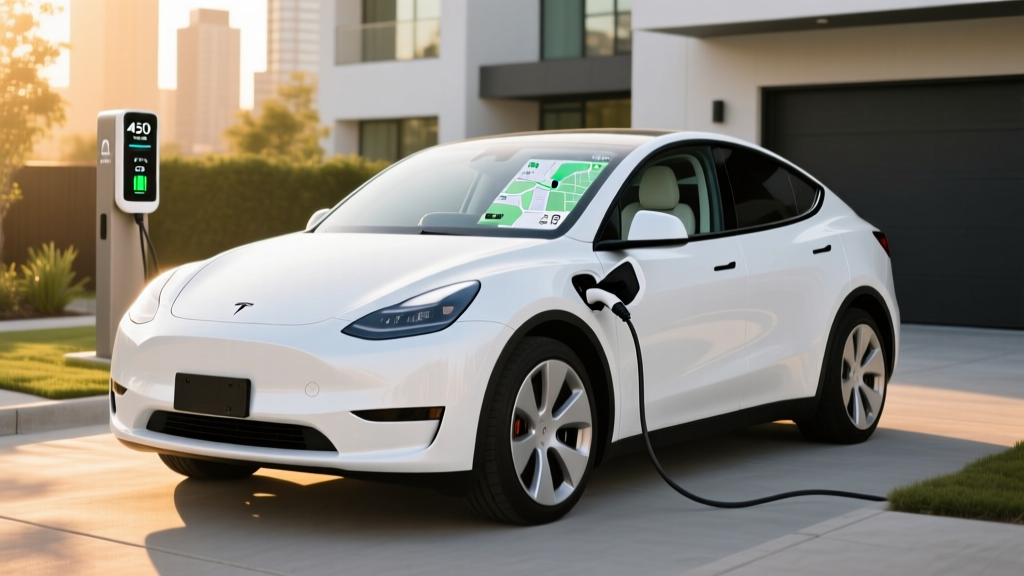
The Tesla V14 software update, rolling out to Model 3, Model Y, Model S, and Model X vehicles starting in early 2026, represents one of the most significant over-the-air (OTA) overhauls Tesla has delivered in recent years. Unlike incremental patches that tweak UI elements or add minor features, V14 touches the core systems that matter most to owners: battery management, DC fast-charge preconditioning, regenerative braking calibration, and the next iteration of FSD (Supervised). For current Tesla owners, this isn't a new car — but it meaningfully reshapes the ownership experience. For prospective buyers, it's a strong reason to consider a new or used Tesla in 2026.
This review examines what V14 actually changes, how those changes translate to real-world range and charging performance, and whether the update shifts Tesla's competitive position against rivals like the Hyundai Ioniq 5, Ford Mustang Mach-E, and BMW i4.
What the Tesla V14 Update Actually Changes
Tesla's release notes for V14 (build 2026.x.x) highlight several engineering-level improvements rather than cosmetic additions. Here's what matters:
- Battery Management System (BMS) recalibration: V14 adjusts how the vehicle estimates State of Charge (SoC) and manages the top/bottom buffer. Owners of 2023–2025 Model 3 and Model Y vehicles with NMC (nickel manganese cobalt) packs report a 2–4 mile increase in displayed range at 100% SoC after installing V14. This isn't new battery capacity — it's smarter utilization of the existing pack.
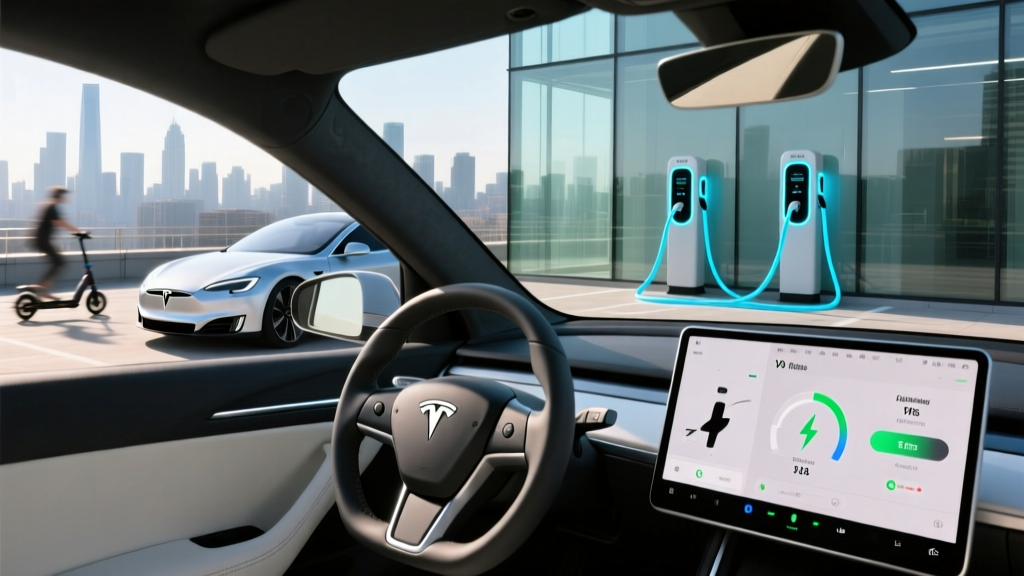
- DC fast-charge preconditioning overhaul: The V14 update revises the thermal preconditioning curve when navigating to a Supercharger. Tesla claims a 10–15% reduction in time-to-peak charge rate, particularly in ambient temperatures below 50°F. In practice, this means the battery reaches its optimal charging temperature faster, sustaining higher kW rates earlier in the session.
- Regenerative braking smoothing: V14 introduces a new regen calibration that modulates deceleration more progressively at low speeds, reducing the abrupt "wall" effect some owners experienced in Standard mode. One-pedal driving remains available but feels more natural in stop-and-go traffic.
- FSD (Supervised) v13.x integration: V14 ships with the latest FSD neural-net stack, which Tesla says reduces phantom braking events by 30% and improves lane-change decision latency. This remains an SAE Level 2 system — the driver must remain fully engaged.
- Energy app improvements: A redesigned energy consumption screen now breaks down kWh usage by climate, drivetrain, and accessory loads, giving owners better insight into efficiency drains.
Range and Efficiency: EPA vs. Real-World After V14
EPA Estimated Range (2026 Model Y Long Range AWD): 330 miles
Real-World Expectation Post-V14: 285–310 miles in mixed driving (city/highway), 250–275 miles sustained highway at 75 mph, 220–250 miles in sub-30°F cold weather with cabin heating. V14's BMS changes may recover 2–4 miles at full charge on NMC packs, but cold-weather losses of 20–30% remain a physics reality regardless of software.
The V14 update doesn't magically create more range. What it does is improve estimation accuracy and marginally optimize energy deployment. Owners who previously saw their displayed range drop precipitously in cold weather report that V14's revised thermal management holds cabin temperature more efficiently, reducing HVAC-related energy drain by approximately 3–5% based on early owner data shared on Tesla forums.
For LFP (lithium iron phosphate) pack owners — primarily 2024–2026 Model 3 RWD and Model Y RWD trims — V14's impact on range is negligible. LFP chemistry is less sensitive to SoC estimation drift, and Tesla recommends regular 100% charging for these packs regardless. The real V14 benefit for LFP owners is the improved preconditioning and regen calibration.
| Attribute | Specification |
|---|---|
| EPA Range | 330 miles |
| Battery Capacity | ~78 kWh usable (NMC) |
| EPA Efficiency | 122 MPGe combined / 28 kWh/100 mi |
| 0–60 mph | 4.8 seconds |
| Horsepower | 384 hp (dual motor) |
| Drivetrain | AWD (dual motor) |
| Max DC Fast Charge | 250 kW (peak) |
| 10–80% DC Charge Time | ~27 minutes (V14 preconditioning) |
| Level 2 Home Charge Rate | 11.5 kW / ~44 miles per hour |
| Cargo Volume | 30.2 cu ft (rear seats up) / 72.1 cu ft (folded) |
| Base MSRP | $48,990 |
| Battery Warranty | 8 years / 120,000 miles |
Source: fueleconomy.gov, Tesla.com
Charging Speed: How V14 Improves the Supercharger Experience
Charging speed is where V14 delivers its most tangible improvement. The update doesn't increase the vehicle's peak charge rate — a Model Y Long Range still tops out at 250 kW on a V3 Supercharger — but it gets there faster and holds peak rate longer.
Before V14, a cold-soaked Model Y arriving at a Supercharger might take 5–8 minutes to ramp from 50 kW to its 250 kW peak, depending on ambient temperature and starting SoC. With V14's revised preconditioning algorithm, that ramp time drops to approximately 3–5 minutes in similar conditions. On a typical 10–80% session, this shaves 2–4 minutes off total charge time.
| Charging Level | Power | Speed |
|---|---|---|
| Level 1 (120V household) | ~1.4 kW | ~5 miles per hour |
| Level 2 (240V / 48A Wall Connector) | 11.5 kW | ~44 miles per hour |
| DC Fast (Tesla V3 Supercharger) | 250 kW peak | 10–80% in ~27 min |
| DC Fast (V4 Supercharger) | Up to 250 kW | Similar to V3 (vehicle-limited) |
| CCS Adapter (non-Tesla DC) | Up to 150–250 kW | Varies by station |
The charge curve still tapers significantly above 80% SoC. Expect the rate to drop from 250 kW to under 50 kW once you pass 80%, which is why Tesla (and every other manufacturer) quotes 10–80% times rather than 10–100%. V14 doesn't change this fundamental lithium-ion behavior — it simply optimizes the lower-SoC portion of the curve.
For home charging, V14 introduces a new "Scheduled Departure" algorithm that better accounts for off-peak electricity rates and preconditioning needs. If you set a 7 AM departure and your utility's cheapest rates run from 11 PM to 5 AM, V14 will delay charging to align with those windows while still ensuring the battery is warmed and at your target SoC by departure time.
FSD (Supervised) Under V14: Capabilities and Limitations
SAE Automation Level: Level 2
Tesla's Full Self-Driving (Supervised) is a Level 2 driver-assistance system. It does NOT make the vehicle autonomous. The driver must remain attentive, keep hands on or near the wheel, and be prepared to take over at any moment. Only Level 4 services like Waymo operate without a human driver in geofenced areas.
V14 bundles FSD v13.x, which Tesla describes as a "significant neural-net architecture revision." Key improvements include:
- Reduced phantom braking: Tesla claims a 30% reduction in unnecessary deceleration events caused by shadow misidentification or overcautious object detection. Owner reports on Tesla Motors Club and Reddit corroborate fewer sudden braking incidents on highway drives.
- Smoother lane changes: The system now initiates lane changes with more gradual steering inputs and better gap assessment, reducing the "darting" behavior that characterized earlier FSD builds.
- Improved unprotected left turns: V14's FSD handles complex intersections with oncoming traffic more confidently, though hesitation at busy intersections remains a known limitation.
- Speed limit recognition: Enhanced camera-based speed limit detection reduces reliance on map data, which can be outdated in construction zones.
What FSD (Supervised) Does NOT Do:
- Drive without human supervision — you are the driver, always
- Handle all weather conditions — heavy rain, fog, and snow degrade camera performance
- Navigate construction zones reliably — temporary lane markings and barriers confuse the system
- Replace attentive driving — NHTSA continues to investigate Autopilot/FSD-related incidents
FSD costs $8,000 as a one-time purchase or $99/month as of 2026. For most drivers, basic Autopilot (included standard) provides adequate highway lane-keeping and adaptive cruise control. FSD's city-street capabilities remain a work in progress.
Pricing, Tax Credits, and Ownership Costs
| Trim | MSRP | §30D Credit Eligibility | Effective Price (with credit) |
|---|---|---|---|
| Model Y RWD (LFP) | $44,990 | Eligible (up to $7,500) | ~$37,490* |
| Model Y Long Range AWD | $48,990 | Eligible (up to $7,500) | ~$41,490* |
| Model Y Performance | $52,990 | Eligible (up to $7,500) | ~$45,490* |
*Effective price assumes buyer qualifies for the full $7,500 federal tax credit under IRS §30D. Eligibility depends on:
- Buyer income caps: Modified AGI ≤ $150,000 (single), $225,000 (head of household), $300,000 (joint)
- MSRP cap: SUVs/vans/pickups must be ≤ $80,000 — all Model Y trims qualify
- Battery sourcing: Critical minerals and battery components must meet phased-in domestic-sourcing thresholds. As of 2026, Tesla's US-built Model Y with Panasonic cells generally qualifies, but verify current status at fueleconomy.gov
- Point-of-sale transfer: Buyers can elect to transfer the credit to the dealer at purchase, reducing the upfront cost rather than waiting for a tax refund
Consult a tax professional to confirm eligibility. IRS rules change, and state/local incentives (e.g., California's CVRP, Colorado's $5,000 credit) may stack on top — check your state's energy office for current programs.
Who Should Buy a Tesla with V14 (And Who Should Look Elsewhere)
The V14 update strengthens Tesla's position for several buyer profiles, but it doesn't fix the brand's known limitations.
Best for:
- Tech-forward commuters who value OTA updates, the Supercharger network, and minimalist interiors. V14's improved energy app and scheduled charging make daily ownership smoother.
- Road-trip enthusiasts who rely on DC fast charging. The Supercharger network remains the most reliable and widespread fast-charging infrastructure in the US, and V14's preconditioning improvements make each stop slightly shorter.
- Current Tesla owners considering an upgrade — the V14-equipped 2026 models represent a meaningful refinement over 2023–2024 builds.
Consider alternatives if:
- You prioritize interior luxury: The Model Y's cabin, while functional, lacks the material quality of a BMW i4 or Genesis Electrified G80. V14 doesn't change this.
- You want physical controls: Tesla's touchscreen-only interface (no stalks on refreshed Model 3/Y) frustrates some drivers. Competitors like Hyundai and Ford retain traditional buttons and stalks.
- You need maximum cargo space: The Model Y's 72.1 cu ft with seats folded is generous but trails the Ford Mustang Mach-E's 59.7 cu ft only because the Mach-E is a smaller vehicle class. For true SUV cargo, consider the Rivian R1S or Kia EV9.
Pros
- Supercharger network reliability remains unmatched
- V14 preconditioning reduces real-world charge times
- OTA updates continuously add value post-purchase
- Strong efficiency (122 MPGe combined)
- 8-year/120,000-mile battery warranty
- Point-of-sale tax credit transfer available
Cons
- No physical controls — everything through the touchscreen
- FSD remains Level 2 despite the "Full Self-Driving" name
- Build quality inconsistency (panel gaps, trim alignment)
- Limited service center availability in rural areas
- Insurance premiums often 15–25% higher than comparable ICE vehicles
Is the V14 Update Worth It vs. Competitors?
The V14 update doesn't exist in a vacuum. Here's how a V14-equipped 2026 Model Y Long Range stacks up against key rivals:
| Spec | Tesla Model Y LR | Hyundai Ioniq 5 Limited | Ford Mustang Mach-E Premium |
|---|---|---|---|
| EPA Range | 330 mi | 305 mi | 312 mi |
| Battery | ~78 kWh NMC | 77.4 kWh NMC | 72 kWh NMC |
| Peak DC Charge | 250 kW | 240 kW (350 kW capable) | 150 kW |
| 10–80% Time | ~27 min | ~18 min | ~37 min |
| 0–60 mph | 4.8 sec | 5.1 sec | 5.2 sec |
| Base MSRP | $48,990 | $52,600 | $46,995 |
| Charging Network | Supercharger (native) | CCS (NACS adapter avail.) | CCS (NACS adapter avail.) |
The Ioniq 5 charges faster (18 minutes 10–80% on a 350 kW charger), and the Mach-E starts at a lower price. But Tesla's combination of range, Supercharger access, and continuous OTA improvement — now including V14's refinements — keeps the Model Y at the top of the midsize electric SUV segment for 2026.
Frequently Asked Questions
What is the real-world range of a Tesla Model Y after the V14 update?
The EPA rates the 2026 Model Y Long Range AWD at 330 miles. In real-world mixed driving, expect 285–310 miles. Sustained highway driving at 75 mph reduces this to 250–275 miles. In sub-30°F cold weather with cabin heating, plan for 220–250 miles. The V14 update improves estimation accuracy and thermal efficiency but doesn't override the physics of cold-weather battery performance.
How fast does the Tesla Model Y charge after V14?
On a Tesla V3 Supercharger (250 kW peak), a V14-equipped Model Y Long Range charges from 10–80% in approximately 27 minutes — 2–4 minutes faster than pre-V14 software thanks to improved preconditioning. At home on a 240V / 48A Wall Connector (11.5 kW), you'll add about 44 miles of range per hour, fully recharging overnight.
How much does a 2026 Tesla Model Y cost after tax credits?
The Model Y Long Range AWD starts at $48,990. If you qualify for the full $7,500 federal §30D credit (income caps apply: ≤$150K single, ≤$300K joint), the effective price drops to approximately $41,490. You can transfer the credit to the dealer at point of sale to reduce upfront cost. State incentives may provide additional savings — check your state's energy office.
Does the Tesla Model Y qualify for the federal EV tax credit in 2026?
Yes, all 2026 Model Y trims currently qualify for up to $7,500 under IRS §30D, provided the buyer meets income limits and the vehicle's battery sourcing meets 2026 thresholds. Verify current eligibility at fueleconomy.gov before purchasing, as sourcing rules tighten annually.
Is FSD (Supervised) actually self-driving?
No. FSD (Supervised) is an SAE Level 2 driver-assistance system. It can handle many highway and city-street driving tasks, but the driver must remain fully attentive and ready to intervene at any time. It does not make the vehicle autonomous. Only Level 4 robotaxi services like Waymo operate without a human driver, and only in limited geofenced areas.
Will the V14 update come to older Tesla vehicles?
Tesla is rolling V14 out to 2021–2026 Model 3, Model Y, Model S, and Model X vehicles in phases. Vehicles with HW3 or HW4 computers receive the full update. Older vehicles with HW2.5 may receive a subset of features. Check your vehicle's software tab or the Tesla app for update availability.
What are the biggest pros and cons of buying a Tesla with V14?
Pros: Supercharger network reliability, continuous OTA improvements, strong efficiency (122 MPGe), 8-year battery warranty, point-of-sale tax credit. Cons: No physical controls, FSD remains Level 2 despite the name, inconsistent build quality, limited rural service centers, higher insurance premiums.
For the latest Tesla software update information, visit Tesla's official support page. For federal tax credit eligibility, consult IRS.gov §30D guidance.