Why the Chevy Equinox EV Is Suddenly Everywhere
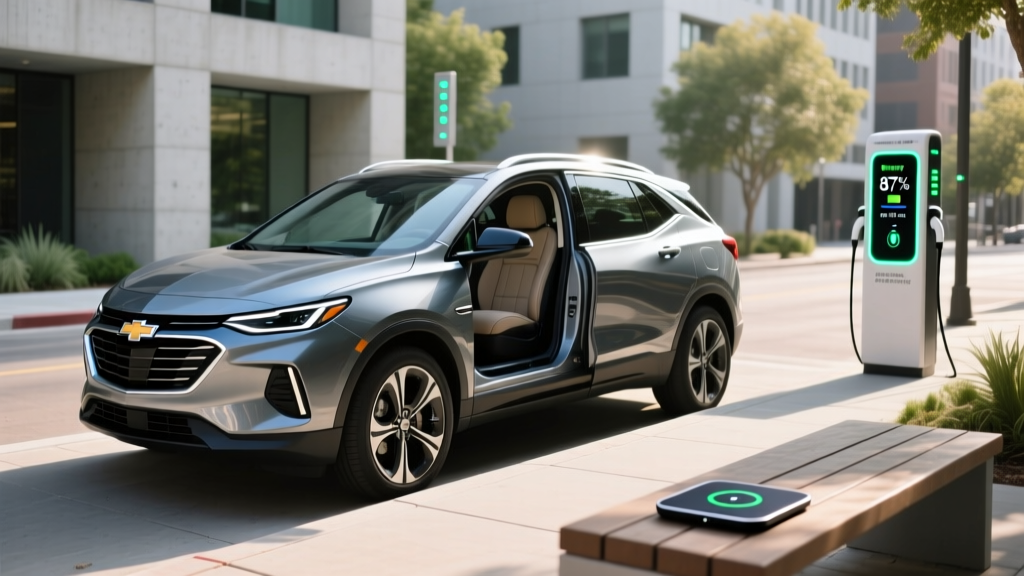
The Chevrolet Equinox EV has become one of the most talked-about entries in the mainstream electric crossover segment, and the numbers back it up. Equinox EV Q3 2025 sales reflected a steep ramp-up in deliveries as Chevrolet finally achieved consistent production throughput at its Ramos Arizpe, Mexico assembly plant. For context, GM reported over 14,000 Equinox EV deliveries in Q3 2025 alone — a massive jump from the trickle of early-2024 hand-builds and a clear signal that the sub-$35,000 EV market has a serious new contender.
But sales volume doesn't tell you whether this is the right EV for your driveway. After spending time with the 2025 Equinox EV across multiple trims, here's the data-driven breakdown — range, charging, pricing, and the real-world ownership picture that marketing brochures leave out.
Range, Battery, and Efficiency: The Numbers That Matter
The 2025 Equinox EV rides on GM's Ultium platform with an 85 kWh usable lithium-ion battery pack using NMC (nickel manganese cobalt) chemistry. This is the same modular architecture underpinning the Blazer EV and Cadillac Lyriq, though tuned differently for cost and efficiency in the Equinox.
| Specification | Equinox EV (FWD) | Equinox EV (AWD) |
|---|---|---|
| Battery (usable) | 85 kWh, NMC | 85 kWh, NMC |
| EPA Range | 319 mi (LT2/LT3) | 285–307 mi |
| Efficiency | 3.5 mi/kWh (104 MPGe) | 3.2 mi/kWh (95 MPGe) |
| 0–60 mph | 8.1 sec | 7.0 sec (dual-motor) |
| Horsepower | 213 hp | 288 hp |
| Drivetrain | FWD, single motor | AWD, dual motor |
Efficiency is competitive for the segment. At 3.5 mi/kWh (FWD), the Equinox EV extracts solid distance from each unit of energy, though the Hyundai Ioniq 5 and Tesla Model Y still edge it out in aerodynamic efficiency. According to fueleconomy.gov, the FWD Equinox EV rates at 104 MPGe combined — respectable for a crossover this size.
Charging Speed: DC Fast, Level 2, and the Curve You Should Know
Charging is where mainstream EV buyers either gain confidence or develop anxiety. The Equinox EV supports up to 150 kW peak DC fast charging on CCS1-equipped public stations (adapters available for NACS/Tesla Superchargers via GM's approved adapter program starting in 2025).
| Charging Level | Power / Rate | Speed / Time |
|---|---|---|
| Level 1 (120V household) | ~1.4 kW | ~4 mi/hr added |
| Level 2 (240V home, 48A) | 11.5 kW | ~38 mi/hr added; full charge ~9.5 hr |
| DC Fast Charge (peak) | 150 kW | 10–80% in ~32 min |
| DC Fast Charge (sustained avg) | ~95–110 kW avg | Expect taper above 80% SoC |
Charging-curve reality: The 150 kW peak is not sustained for the full session. Like most NMC packs, the Equinox EV tapers its charge rate as the battery fills. You'll see peak rates between 10–40% state of charge (SoC), with a significant taper above 60% and another steep drop above 80%. Planning road-trip stops to 80% — not 100% — is the efficient move. A typical 10–80% session takes approximately 32 minutes at a functioning 150+ kW charger.
For home charging, the onboard 11.5 kW Level 2 acceptor is a strong point. With a properly installed 240V/48A circuit (NEMA 14-50 or hardwired EVSE), you'll recover roughly 38 miles of range per hour — enough to fully replenish overnight from any realistic daily drive. Home installation typically runs $500–$1,500 for the charger and electrician, though a 200A panel upgrade can add $1,500–$3,000 if your home needs one.
Performance and Driving Dynamics
The FWD Equinox EV delivers 213 horsepower and 236 lb-ft of torque — adequate for commuting and merging, but not thrilling. The 8.1-second 0–60 time puts it in the "sensible crossover" lane rather than the "performance EV" lane. Where it impresses is ride quality: the Ultium skateboard chassis gives it a low center of gravity and composed highway manners, and regenerative braking offers a one-pedal driving mode with adjustable intensity.
The AWD dual-motor variant bumps output to 288 hp and drops 0–60 to approximately 7.0 seconds. For buyers in snow-belt states, the AWD system provides meaningful traction confidence without the range penalty of a traditional mechanical AWD setup. That said, if you prioritize maximum range over all-weather grip, the FWD is the smarter spec.
Pricing, Trims, and the Federal Tax Credit Question
This is where the Equinox EV's sales surge makes sense. Chevrolet positioned this as the most affordable 300+ mile EV in the US market at launch, and the pricing structure remains aggressive for the 2025 model year.
| Trim | Base MSRP | Est. After §30D Credit* | Drivetrain |
|---|---|---|---|
| LT2 (FWD) | $33,600 | ~$26,100 | FWD |
| LT3 (FWD) | $37,400 | ~$29,900 | FWD |
| RS (FWD) | $41,900 | ~$34,400 | FWD |
| RS Launch (AWD) | $43,400 | ~$35,900 | AWD |
*Destination charge (~$1,395) not included. Tax credit estimates assume full §30D eligibility.
Does the Equinox EV Qualify for the $7,500 Federal Tax Credit?
The Equinox EV is assembled in Mexico (Ramos Arizpe plant), which disqualifies it from the §30D new clean vehicle credit under the current final-assembly-in-North-America requirement as published by the IRS. This is a critical detail that many early headlines missed.
However, buyers may still benefit from:
- State and local incentives — many states (California, Colorado, New York, Massachusetts, and others) offer their own EV rebates that do not require US assembly. Check your state energy office or DMV for current programs.
- Lease loophole (§45W) — leasing an Equinox EV through a qualifying lessor may pass through a $7,500 commercial clean vehicle credit as a lease incentive, effectively reducing your monthly payment. Confirm with your dealer and tax professional.
- Used EV credit (§25E) — once Equinox EVs enter the used market, the $4,000 used-EV credit (for vehicles under $25,000, buyer income caps apply) may become available.
- Final assembly in North America (VIN check at NHTSA VIN decoder)
- MSRP cap: $55,000 for SUVs/crossovers, $50,000 for sedans
- Buyer AGI cap: $150K single / $225K HOH / $300K joint
- Battery critical minerals and component sourcing thresholds (phasing up annually)
- Point-of-sale transfer available at participating dealers
Interior Space, Tech, and Daily Livability
The Equinox EV is a compact crossover by EPA classification, but its Ultium skateboard layout frees up meaningful interior volume compared to gas-platform competitors.
- Cargo (behind rear seats): 26.4 cu ft
- Cargo (rear seats folded): 57.2 cu ft
- Front legroom: 42.2 inches
- Rear legroom: 37.8 inches
- Front trunk (frunk): Not available — GM opted for underhood component packaging
The centerpiece of the cabin is a massive 17.7-inch diagonal infotainment touchscreen running Google Built-In (Google Maps, Google Assistant, Play Store). It's paired with an 11-inch digital instrument cluster. Wireless Apple CarPlay and Android Auto are standard. The interface is responsive, though the screen's sheer size means some climate and vehicle controls require more taps than physical buttons would.
On the driver-assistance front, the Equinox EV comes with Chevy Safety Assist as standard: automatic emergency braking, forward collision alert, lane keep assist, following distance indicator, and IntelliBeam auto high beams. Super Cruise — GM's hands-free highway driving system (SAE Level 2) — is available on higher trims and covers over 750,000 miles of mapped highways. Note: Super Cruise requires driver attention monitoring and is not autonomous driving. You must remain engaged.
Warranty and Long-Term Ownership
GM backs the Equinox EV with competitive warranty coverage:
- Battery & propulsion: 8 years / 100,000 miles (covers capacity below 70% of original)
- Limited vehicle warranty: 3 years / 36,000 miles bumper-to-bumper
- Powertrain (non-battery): 5 years / 60,000 miles
- Corrosion: 6 years / 100,000 miles
The 70% capacity retention threshold over 8 years is industry-standard. Real-world NMC degradation data from the broader Ultium fleet is still maturing, but early indications from the Lyriq and Blazer EV suggest 5–8% total degradation over the first 50,000 miles — well within warranty limits. For longevity, GM recommends keeping daily charge limits around 80% and only charging to 100% for road trips.
Pros, Cons, and the Competition
- 319-mi EPA range at a $33,600 starting price — best range-per-dollar in segment
- Spacious cabin with class-leading rear legroom
- 17.7" Google Built-In infotainment is modern and functional
- Available Super Cruise hands-free highway driving
- 11.5 kW Level 2 onboard charging is faster than some rivals
- Composed ride quality from low-CG Ultium platform
- Does NOT qualify for §30D federal tax credit (Mexico assembly)
- No frunk — misses cargo versatility of Ioniq 5 or Model Y
- 150 kW peak DC charging trails Ioniq 5 (240 kW) and Model Y (250 kW)
- FWD 213 hp feels leisurely for highway merging when loaded
- Infotainment relies heavily on touchscreen — limited physical controls
- Dealer markups and availability still inconsistent in some regions
Equinox EV vs. Key Competitors
The Equinox EV competes directly with the Hyundai Ioniq 5, Tesla Model Y, Kia EV6, and Ford Mustang Mach-E. Its primary advantage is entry price vs. range — no rival matches 319 miles of EPA range at $33,600 MSRP. However:
- Hyundai Ioniq 5: Charges faster (240 kW peak, 10–80% in ~18 min), offers a frunk, qualifies for §30D (US assembly since late 2024). Range tops out at 303 mi.
- Tesla Model Y: Superior Supercharger network access, more cargo space, faster DC charging. Starting price higher; Juniper refresh brings updated interior.
- Kia EV6: Shares Ioniq 5's 800V fast-charging architecture. Sportier driving dynamics. Similar pricing.
- Ford Mustang Mach-E: More engaging to drive, larger Supercharger-compatible network. Range up to 320 mi (extended RWD), but pricing starts higher.
Who Should Buy the Equinox EV?
- You want 300+ miles of range at the lowest possible MSRP
- Your primary use is commuting and suburban errands with overnight home charging
- You value a large infotainment screen and Google-native navigation
- You want available Super Cruise for highway-heavy commutes
- Your state offers its own EV incentives that offset the missing §30D credit
- You rely on the $7,500 federal credit and can't use the lease workaround
- You take frequent 400+ mile road trips and need the fastest possible DC charging
- You want a frunk or maximum cargo versatility
- You prioritize sporty driving dynamics over comfort
Frequently Asked Questions
What is the real-world range of the Equinox EV?
The EPA rates the FWD Equinox EV at 319 miles. In real-world mixed driving, expect 280–300 miles. Sustained highway driving at 70+ mph drops this to 270–290 miles. Cold weather (below 32°F) can reduce range to 220–250 miles depending on cabin heating use and driving style.
How fast does the Equinox EV charge?
On a DC fast charger, it peaks at 150 kW and achieves a 10–80% charge in approximately 32 minutes. At home on a 240V Level 2 charger (11.5 kW), it adds about 38 miles of range per hour, fully charging overnight in roughly 9.5 hours.
How much does the Equinox EV cost after incentives?
The base LT2 starts at $33,600 MSRP. Because it's assembled in Mexico, it does not qualify for the $7,500 §30D federal tax credit. However, leasing may unlock a $7,500 lease incentive through the §45W commercial credit, and many state programs offer independent rebates. Final out-of-pocket cost depends heavily on your state and whether you buy or lease.
Is the Equinox EV worth buying over the Ioniq 5 or Model Y?
If lowest MSRP for maximum range is your priority, the Equinox EV is hard to beat. If fast DC charging, frunk cargo space, or federal tax credit eligibility matter more, the Ioniq 5 (now US-built) or Model Y may serve you better. Test-drive all three before deciding.
What are the biggest pros and cons?
Top pros: class-leading range-per-dollar, spacious cabin, excellent infotainment, available Super Cruise. Top cons: no federal §30D credit eligibility, slower DC charging than rivals, no frunk, modest FWD acceleration.
Does the Equinox EV have a frunk?
No. GM uses the front compartment for power electronics and HVAC components. All cargo space is in the rear (26.4 cu ft behind rear seats, 57.2 cu ft with seats folded).
Is Super Cruise self-driving?
No. Super Cruise is an SAE Level 2 driver-assistance system. It provides hands-free steering, acceleration, and braking on mapped highways, but requires continuous driver attention monitoring via an infrared camera. You must remain alert and ready to take over at any time.