Tesla's over-the-air software strategy has long been one of its most compelling ownership advantages, and the latest release continues that tradition. For owners of vehicles equipped with Hardware 3 (HW3) — the Autopilot computer introduced in 2019 and installed in millions of Teslas through early 2023 — Tesla's V14 Lite update for HW3 includes improved autonomy features that refine the Full Self-Driving (Supervised) experience without requiring a hardware swap. This review examines what V14 Lite delivers for HW3 vehicles, then provides a comprehensive ownership profile of the current-generation Tesla Model 3 Long Range AWD as the platform most affected by this update.
What Tesla's V14 Lite Update for HW3 Actually Changes
The V14 Lite branch is a parallel software track designed specifically for the HW3 neural-network processor, which has less compute headroom than the current HW4 (AI4) hardware shipping in new Teslas since mid-2023. Rather than porting the full V14 stack — which leverages HW4's higher-resolution cameras and additional processing cores — V14 Lite optimizes the end-to-end neural net for HW3's constraints.
Key improvements reported by HW3 FSD (Supervised) users running V14 Lite include:
- Smoother lane-centering on multi-lane highways, with fewer micro-corrections at speeds above 65 mph
- Improved intersection handling, particularly for unprotected left turns with oncoming traffic
- Better speed-limit recognition in construction zones where temporary signage is posted
- Reduced phantom braking events on shaded highway overpasses — a longstanding HW3 pain point
- Refined parking assist with tighter parallel-park maneuvers in spaces as short as 1.2x vehicle length
HW3 owners should note that V14 Lite does not bring HW4-exclusive features such as the higher-fidelity camera feed visualization or the expanded object-detection range. Tesla has indicated that HW3 will continue receiving safety and usability updates through at least 2027, but the performance ceiling is inherently lower than AI4-equipped vehicles.
2026 Tesla Model 3 Long Range AWD: Spec Overview
The Model 3 Long Range AWD remains the volume variant most HW3 owners drive and the platform where V14 Lite improvements are most broadly felt. Here is the full spec profile for the 2026 model year.
| Spec | Value |
|---|---|
| EPA Range | 341 miles |
| Battery (usable) | ~75 kWh, NMC (nickel-manganese-cobalt) |
| Drivetrain | Dual-motor AWD |
| Horsepower | 384 hp (combined) |
| 0–60 mph | 4.2 seconds |
| Efficiency | 132 MPGe combined / 25 kWh/100 mi |
| Max DC Fast Charge | 250 kW (peak) |
| 10–80% DC Charge | ~25 minutes (preconditioned) |
| Level 2 Home Charge | 11.5 kW (~44 mi/hr) |
| Cargo Volume | 23 cu ft (rear trunk + frunk combined) |
| Rear Legroom | 35.3 inches |
| Base MSRP | $47,740 (before destination) |
| Battery Warranty | 8 years / 120,000 miles (≥70% retention) |
Real-World Range: What the EPA Number Doesn't Tell You
- Highway (70–75 mph, mild weather): ~280–300 miles
- Mixed city/highway (55–65 mph avg): ~310–330 miles
- Cold weather (below 32°F, highway): ~230–260 miles — NMC chemistry loses 20–30% range in sustained freezing temps
- Efficiency-optimized (55 mph, no HVAC, flat terrain): up to ~340 miles
The Model 3's heat pump (standard since the 2021 refresh) mitigates some cold-weather losses compared to resistive-heating EVs, but physics is physics: NMC batteries exhibit higher internal resistance in freezing conditions, reducing both available capacity and regenerative-braking effectiveness. Preconditioning the battery while plugged in — a feature accessible via the Tesla app — recovers roughly 5–8% of cold-weather range by warming the cells before departure.
Charging Speed and Network Access
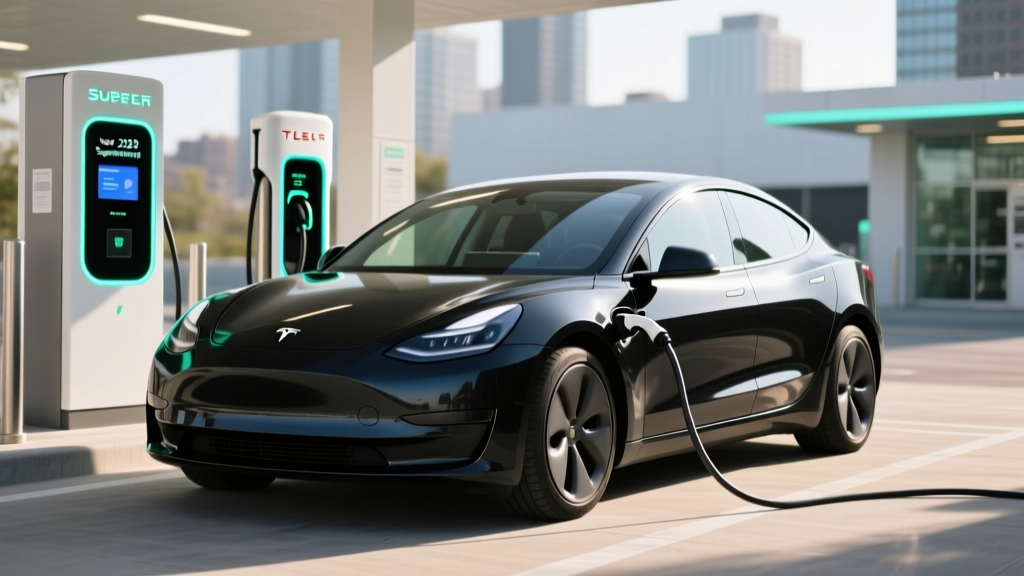
Tesla's Supercharger network remains the most reliable DC fast-charging ecosystem in North America, and the Model 3 Long Range takes full advantage of it. Here's what charging looks like across levels:
| Level | Power (kW) | Miles Added per Hour | Typical Use Case |
|---|---|---|---|
| Level 1 (120V) | ~1.4 kW | ~5 mi/hr | Emergency / overnight trickle |
| Level 2 (240V, 48A) | 11.5 kW | ~44 mi/hr | Home daily charging |
| DC Fast (Supercharger V3/V4) | 250 kW peak | ~175 mi in 15 min | Road trips |
Charging curve reality: The 250 kW peak rate holds only between roughly 10–30% state of charge. Above 50%, the rate tapers to ~120 kW, and above 80% it drops to ~45 kW. This is why Tesla (and every other manufacturer) quotes 10–80% times rather than 0–100%. A full 10–80% session takes about 25 minutes when the battery is preconditioned — either by navigating to a Supercharger in the car (which triggers automatic thermal prep) or by using the app preconditioning feature while plugged in at home.
For home Level 2 charging, the Tesla Wall Connector at 48 amps on a 60-amp circuit delivers the full 11.5 kW the Model 3's onboard charger can accept. Expect a full overnight charge from 20% to 100% in roughly 7 hours. Installation costs for a dedicated 60A circuit typically range from $800–$2,000 depending on panel proximity and local permitting, per Tesla's installation guidance.
Pricing, Trims, and Federal Tax Credit Eligibility
| Trim | MSRP | Est. After §30D Credit | Drivetrain / Range |
|---|---|---|---|
| RWD (LFP battery) | $38,990 | ~$31,490* | RWD / 272 mi EPA |
| Long Range AWD | $47,740 | ~$40,240* | AWD / 341 mi EPA |
| Performance | $54,990 | ~$47,490* | AWD / 315 mi EPA |
*Tax credit estimates assume full §30D eligibility. Actual credit depends on battery sourcing, buyer income, and MSRP caps. See checklist below.
Under current IRS §30D rules, the federal clean vehicle credit provides up to $7,500 — split into $3,750 for critical-minerals sourcing and $3,750 for battery-component manufacturing. Eligibility is not automatic. Here's what you must satisfy:
- MSRP cap: Sedans must be ≤$55,000. The Model 3 RWD and Long Range qualify; the Performance trim at $54,990 squeaks under the cap (before destination fees — verify final sticker).
- Buyer income cap: Modified AGI ≤$150,000 (single), ≤$225,000 (head of household), ≤$300,000 (joint). Exceed these and the credit phases out entirely.
- Battery sourcing: Critical minerals and battery components must meet escalating domestic/free-trade-partner thresholds. Tesla's shifting supply chains mean eligibility can change mid-year — always verify the specific VIN's sourcing status on the IRS portal before purchase.
- Point-of-sale transfer: Since 2024, buyers can transfer the credit to the dealer at purchase, reducing the upfront cost rather than waiting for a tax refund. This is available for the Model 3.
Bottom line: The Model 3 Long Range AWD at ~$40,240 after the credit (for eligible buyers) undercuts most AWD electric sedans with comparable range. However, confirm your specific eligibility with a tax professional — do not assume the full $7,500 applies without verifying sourcing and income requirements.
Interior, Tech, and Standout Features
The refreshed Model 3 interior (introduced for the 2024 model year and carried into 2026) addressed many of the prior generation's criticisms. Key features include:
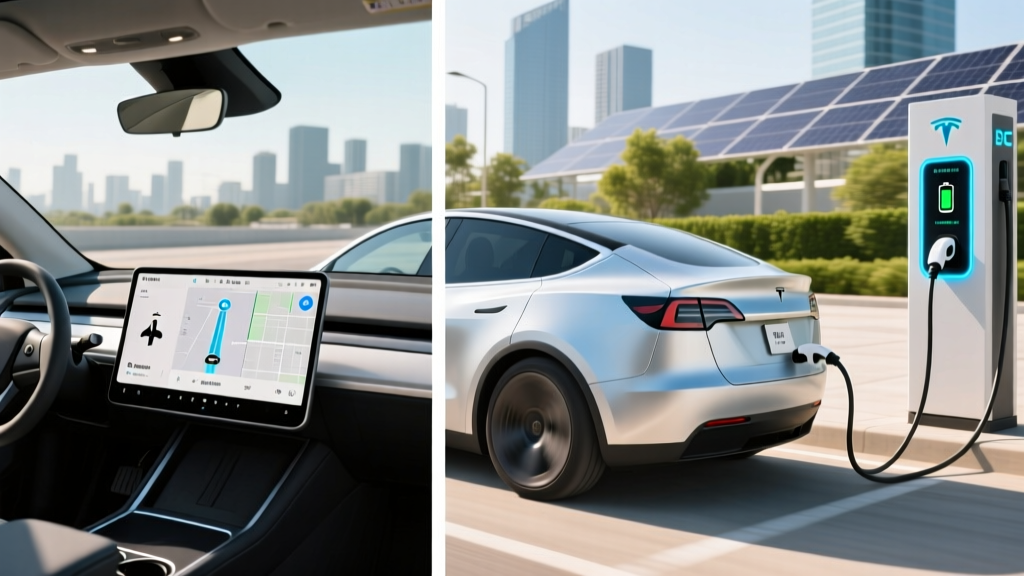
- 15.4-inch center touchscreen with faster processor and improved responsiveness
- Rear 8-inch touchscreen for climate and media controls (passenger-facing)
- Ventilated front seats and ambient lighting (Long Range and above)
- Acoustic glass all around — a significant cabin-noise improvement over pre-2024 models
- Turn-signal stalk removal — signals are now on the steering wheel, which remains controversial among owners
- No Apple CarPlay / Android Auto — Tesla's proprietary infotainment only
The FSD (Supervised) system — the beneficiary of the V14 Lite update on HW3 cars — adds navigational on-ramp-to-off-ramp highway driving, city-street traffic-light and stop-sign recognition, and autosteer on surface streets. It costs $8,000 as a one-time purchase or $99/month as of 2026. Given that it remains Level 2 and requires constant supervision, many buyers are better served by the included Basic Autopilot (lane-centering and adaptive cruise) and skipping the FSD upgrade unless they log heavy highway miles and value the convenience.
- FSD (Supervised) does NOT drive autonomously — you are the driver at all times
- HW3 vehicles will not receive HW4-exclusive features (higher-res visualization, extended detection range)
- No CarPlay/Android Auto support — a dealbreaker for some buyers
- Turn-signal stalk deletion is a usability regression for many drivers
- Service center wait times in high-density markets can stretch 2–4 weeks for non-critical repairs
Model 3 Long Range vs. Key Competitors
| Spec | Tesla Model 3 LR AWD | Hyundai Ioniq 6 SEL AWD | BMW i4 xDrive40 |
|---|---|---|---|
| EPA Range | 341 mi | 316 mi | 297 mi |
| Battery | ~75 kWh NMC | 77.4 kWh NMC | 81.5 kWh NMC |
| Peak DC Charge | 250 kW | 240 kW (800V) | 205 kW |
| 10–80% Time | ~25 min | ~18 min | ~31 min |
| 0–60 mph | 4.2 sec | 5.1 sec | 4.7 sec |
| Base MSRP | $47,740 | $49,400 | $58,295 |
| Charging Port | NACS (native) | CCS1 (NACS adapter avail.) | CCS1 (NACS adapter avail.) |
The Ioniq 6's 800-volt architecture gives it a faster 10–80% charge time, and its interior materials are arguably more premium at a similar price. The BMW i4 offers traditional luxury build quality and CarPlay but costs significantly more with less range. The Model 3's advantages remain its Supercharger network access (native NACS, no adapter needed), best-in-class efficiency (25 kWh/100 mi), and the continuous software-improvement pipeline that V14 Lite exemplifies.
- 341-mile EPA range — top of the electric sedan class
- Supercharger network: 6,000+ V3/V4 stalls in North America
- Continuous OTA updates (V14 Lite for HW3 is a prime example)
- Best-in-class efficiency at 25 kWh/100 mi
- Strong acceleration (4.2 sec 0–60) with dual-motor AWD traction
- Eligible for up to $7,500 §30D credit (verify VIN sourcing)
- No Apple CarPlay or Android Auto
- Steering-wheel turn signals are a usability downgrade
- HW3 cars permanently capped below HW4 feature set
- FSD costs $8,000 extra and remains Level 2 (not autonomous)
- Service center availability varies widely by market
- Rear legroom (35.3 in.) is tighter than midsize competitors
Who Should Buy the Model 3 Long Range in 2026?
- Choose the Model 3 LR if: You want maximum range per dollar in an AWD sedan, rely on road-trip charging infrastructure (Superchargers), and value ongoing software improvements. Ideal for tech-forward commuters driving 30–80 miles daily who can charge at home overnight.
- Look elsewhere if: You need CarPlay, prefer physical controls, want a traditional luxury badge, or regularly carry rear-seat adults who need more legroom. The Ioniq 6 or Polestar 2 may suit those priorities better.
- Wait if: You're currently on HW3 and considering an FSD purchase specifically for V14 Lite features. The improvements are incremental, and HW4 vehicles will receive the full V14 stack with greater capability.
Frequently Asked Questions
Does my HW3 Tesla get all V14 features after the Lite update?
No. V14 Lite is an optimized subset of the full V14 stack, tailored to HW3's processing limits. HW4-exclusive features — such as higher-resolution surround-view visualization and extended object-detection range — are not available on HW3 and likely never will be. Tesla has committed to supporting HW3 with safety and usability updates, but the hardware ceiling is fixed.
Is FSD (Supervised) worth $8,000 on an HW3 vehicle?
For most drivers, no. The included Basic Autopilot handles highway lane-centering and adaptive cruise competently. FSD (Supervised) adds city-street autosteer and traffic-light recognition, but it still requires full driver attention (Level 2). If you commute on surface streets with frequent stops and value the convenience, the $99/month subscription is a lower-risk way to test it before committing to the full purchase.
How much does it cost to charge a Model 3 Long Range at home?
At the US average residential electricity rate of ~$0.17/kWh (2026 EIA data), a full 75 kWh charge costs roughly $12.75, yielding about 341 miles of range. That's approximately $0.037 per mile — compared to ~$0.12–$0.15/mile for a 30 MPG gas car at $3.50/gallon. Annual fuel savings for a 12,000-mile driver: roughly $1,000–$1,400.
Will the Model 3 RWD with LFP battery receive V14 Lite?
Yes, if equipped with HW3. The RWD trim uses a lithium iron phosphate (LFP) battery, which has different charge/discharge characteristics but runs the same Autopilot hardware. V14 Lite's autonomy improvements are processor-dependent, not battery-dependent, so LFP and NMC vehicles on HW3 receive the same software update.
Does the 2026 Model 3 qualify for the $7,500 federal tax credit?
The Model 3 RWD and Long Range AWD are eligible for up to $7,500 under §30D, provided the buyer meets income caps ($150K single / $300K joint) and the specific VIN's battery meets critical-mineral and component-sourcing thresholds. The Performance trim's MSRP must be verified against the $55,000 sedan cap including destination. Always check the IRS clean vehicle portal and confirm with your tax professional before relying on the credit in your purchase decision. See IRS §30D guidance for current rules.
What's the real-world range of the Model 3 Long Range in winter?
In sustained freezing temperatures with highway driving, expect 230–260 miles from a full charge — roughly a 23–32% reduction from the 341-mile EPA figure. Using the heat pump (standard), preconditioning while plugged in, and seat/steering-wheel heaters instead of cabin air heating can recover 5–10% of that loss. For cold-climate commuters with short trips and garage parking, the impact is less severe — typically 10–15%.