Search "free charge Tesla" and you'll find a tangle of outdated forum posts, expired referral codes, and legacy owner bragging rights. The era of unlimited free Supercharging for life is effectively over, but Tesla still offers limited free charging through specific programs in 2026. This guide untangles what's actually available today — and pairs it with a complete review of the vehicle most new buyers are plugging into those chargers: the 2026 Tesla Model 3.
Does Free Tesla Charging Still Exist in 2026?
The short answer: yes, but only in narrow circumstances. Here's where free Supercharger credits still surface:
- Tesla Referral Program: Tesla periodically runs referral promotions awarding Supercharger credits (typically 1,000–5,000 miles worth) to both referrer and referee. These rotate on and off without notice — check Tesla's referral page for current status.
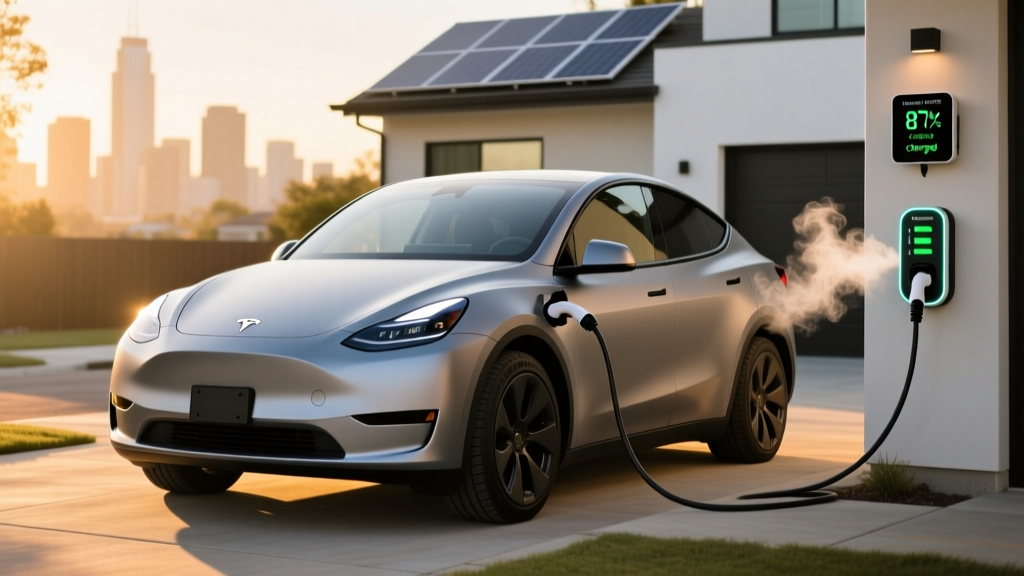
- Destination Charging Partners: Many hotels, restaurants, and shopping centers with Tesla Wall Connectors offer complimentary Level 2 charging as a customer amenity. This isn't Supercharging (it's 11–22 kW, not 250 kW), but it's genuinely free while you stay or shop.
- Legacy Vehicles: Some 2017-era Model S and Model X vehicles retain unlimited free Supercharging, either transferrable or non-transferrable. These are tied to specific VINs and are increasingly rare on the used market.
- Promotional Delivery Incentives: Near quarter-end, Tesla has offered 10,000 free Supercharger miles to buyers who take delivery before a deadline. These are sporadic and region-specific.
- Workplace & Municipal Chargers: Not Tesla-exclusive, but many public and workplace Level 2 stations remain free. Apps like PlugShare filter for zero-cost stations.
2026 Tesla Model 3: Specs at a Glance
| Spec | RWD Standard Range | Long Range AWD | Performance |
|---|---|---|---|
| EPA Range | 272 mi | 363 mi | 315 mi |
| Battery Capacity (usable) | ~60 kWh | ~75 kWh | ~75 kWh |
| Battery Chemistry | LFP (Lithium Iron Phosphate) | NMC (Nickel Manganese Cobalt) | NMC |
| Max DC Fast Charge | 170 kW | 250 kW | 250 kW |
| 10–80% DC Charge Time | ~25 min | ~22 min | ~22 min |
| Level 2 Home Charge Rate | 11.5 kW (~44 mi/hr) | 11.5 kW (~44 mi/hr) | 11.5 kW (~44 mi/hr) |
| 0–60 mph | 5.8 sec | 4.2 sec | 2.9 sec |
| Horsepower | 283 hp | 346 hp | 510 hp |
| Drivetrain | RWD (Single Motor) | AWD (Dual Motor) | AWD (Dual Motor) |
| MPGe (Combined) | 132 MPGe | 132 MPGe | 119 MPGe |
| Efficiency | 25 kWh/100 mi | 25 kWh/100 mi | 28 kWh/100 mi |
| Base MSRP | $38,990 | $45,490 | $52,990 |
Source: fueleconomy.gov and Tesla official specifications.
Real-World Range: What the EPA Sticker Doesn't Tell You
EPA Estimate: 272 mi (RWD) / 363 mi (Long Range)
Highway driving (70–80 mph, steady): Expect ~230 mi (RWD) / ~305 mi (Long Range). Aerodynamic drag disproportionately reduces EV range at sustained highway speeds.
Cold weather (below 32°F / 0°C): Range drops 20–30%. The Long Range AWD may deliver ~250–275 mi in freezing conditions. The Model 3's heat pump helps, but battery chemistry still suffers in cold.
City/stop-and-go with regen: Can meet or slightly exceed EPA numbers, especially in mild weather. Regenerative braking recaptures energy that gas cars waste.
The Model 3's LFP battery (RWD trim) is notably more tolerant of repeated 100% charging — Tesla recommends charging LFP to 100% at least weekly for calibration. The NMC packs in Long Range and Performance trims benefit from daily charging to 80%, reserving 100% for road trips. This matters for daily usability: if your commute requires 200 miles of range, the LFP car gives you all 272 EPA miles daily, while the NMC car effectively gives you ~290 of its 363 miles.
Charging Speed: Supercharger, Home, and the Charge Curve
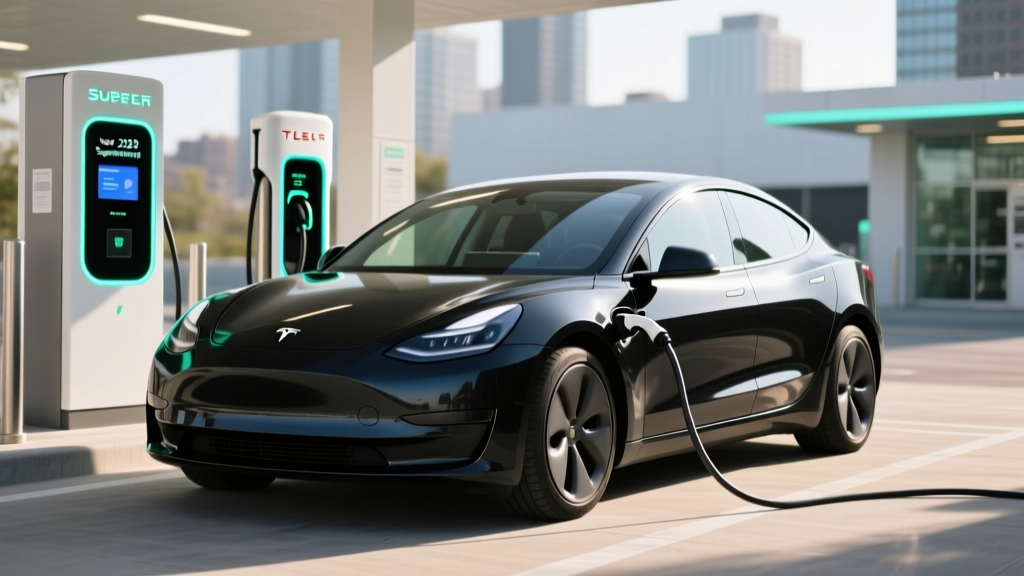
Tesla's Supercharger network remains the gold standard for reliability — over 65,000 stalls globally, with V4 cabinets delivering up to 250 kW to capable vehicles. Here's what charging actually looks like across levels:
| Charging Level | Power | Miles Added Per Hour | Typical Use Case |
|---|---|---|---|
| Level 1 (120V outlet) | ~1.4 kW | ~5 mi/hr | Emergency/trickle only |
| Level 2 (240V, 48A) | 11.5 kW | ~44 mi/hr | Daily home charging |
| DC Fast (V3 Supercharger) | Up to 250 kW | ~1,000+ mi/hr (peak) | Road trips |
| DC Fast (CCS adapter, non-Tesla) | Up to 250 kW | Varies by station | Expanding network access |
The charge curve reality: The "250 kW" peak is just that — a peak, sustained only between roughly 10–30% state of charge (SoC). Above 50%, the rate tapers significantly. By 80%, you're pulling perhaps 60–80 kW. This is why Tesla (and all manufacturers) quote 10–80% times rather than 0–100%. Charging from 80–100% on a DC fast charger can take as long as 10–80%. For road trips, plan to hop between chargers at ~80% rather than waiting for a full fill.
Preconditioning matters: Navigate to a Supercharger using the car's built-in navigation, and the Model 3 will preheat the battery en route, enabling faster charge rates upon arrival. Cold-soaked batteries without preconditioning may charge at half the peak rate. Always navigate to your charger — don't just drive there.
Performance, Handling, and Daily Driving
Even the base RWD Model 3 delivers 283 hp and a 5.8-second 0–60 mph time — quicker than most gas-powered sport sedans. The dual-motor AWD Long Range drops that to 4.2 seconds with the traction advantage of all-wheel drive. The Performance trim's 2.9-second sprint enters supercar territory.
The Highlandland refresh (introduced for 2024, carried into 2026) improved ride quality substantially with revised dampers, better sound insulation, and ventilated front seats. Cabin noise at highway speeds is markedly lower than pre-2024 models. The steering remains quick but numb — a common Tesla characteristic that prioritizes efficiency over feedback.
Cargo space: 23 cu ft of combined trunk and frunk space (15.6 cu ft rear trunk + 3.1 cu ft frunk on AWD; slightly more frunk on RWD). Rear seat legroom is 35.3 inches — adequate for adults on shorter trips, tight for tall passengers on long hauls. The 60/40 split-folding rear seats expand cargo capacity for longer items.
Pricing, Tax Credits, and Total Cost
| Trim | Base MSRP | Destination Fee | Federal Credit (§30D) | Effective Price (before state incentives) |
|---|---|---|---|---|
| RWD Standard Range | $38,990 | $1,390 | Up to $7,500* | ~$32,880 |
| Long Range AWD | $45,490 | $1,390 | Up to $7,500* | ~$39,380 |
| Performance AWD | $52,990 | $1,390 | Up to $7,500* | ~$46,880 |
*Federal tax credit eligibility per IRS §30D rules requires:
- Buyer income caps: Modified AGI ≤ $150,000 (single) / ≤ $300,000 (joint)
- MSRP cap: Vehicle MSRP ≤ $55,000 (sedans — all Model 3 trims qualify)
- Battery sourcing: Critical minerals and battery components must meet phased-in domestic/free-trade sourcing thresholds. Verify current eligibility at the point of sale, as supply chains shift.
- Point-of-sale transfer: As of 2024+, you can transfer the credit to the dealer at purchase, reducing your out-of-pocket cost immediately rather than waiting for tax filing.
5-year ownership snapshot (Long Range AWD, 15,000 mi/yr):
- Electricity cost (home + Supercharger mix at $0.15/kWh avg): ~$2,800
- Equivalent gas car fuel cost (30 MPG at $3.50/gal): ~$8,750
- Maintenance savings (no oil changes, fewer brake replacements due to regen): ~$2,000–$3,000
- Insurance premium: Typically 15–25% higher than comparable gas sedans
Technology, Autopilot, and Software
The Model 3's 15.4-inch center touchscreen runs Tesla's proprietary infotainment OS — no Apple CarPlay or Android Auto, but native Spotify, Netflix, YouTube (while parked), and a capable navigation system with real-time Supercharger routing. The 2026 refresh added a rear-seat 8-inch touchscreen for climate and media control.
Autopilot (included): Lane centering, adaptive cruise control, and automatic emergency braking. This is SAE Level 2 driver assistance — you must keep hands on the wheel and eyes on the road. It handles highway driving well but does not stop for traffic lights, navigate complex interchanges autonomously, or function without active driver supervision.
Full Self-Driving (Supervised) — $8,000 option or $99/month: Adds automatic lane changes, navigation-guided on/off-ramp transitions, traffic light and stop sign recognition, and a city-streets driving mode. Despite the name, this remains SAE Level 2. You are the driver at all times. Tesla's FSD has improved substantially, but it still makes errors — phantom braking, misread lane markings, and hesitation at complex intersections require constant vigilance.
The Tesla Model 3, whether on basic Autopilot or FSD (Supervised), is a Level 2 vehicle. The driver must monitor the environment and intervene at any moment. True "self-driving" (Level 4) is currently limited to geofenced robotaxi services like Waymo in select cities. No consumer Tesla is self-driving.
Warranty Coverage
- Basic Vehicle: 4 years / 50,000 miles
- Battery & Drive Unit (RWD): 8 years / 100,000 miles, with ≥70% capacity retention
- Battery & Drive Unit (Long Range/Performance): 8 years / 120,000 miles, with ≥70% capacity retention
The 70% retention threshold is standard across the industry but worth noting: if your 363-mile Long Range drops to 255 miles of range after 8 years, that's within warranty spec and Tesla would not replace the battery. In practice, Tesla's NMC batteries have shown ~10–12% degradation at 100,000 miles based on fleet data, and LFP batteries often degrade even less while tolerating more charge cycles.
Pros and Cons
- Class-leading efficiency (25 kWh/100 mi) translates to lower charging costs
- Supercharger network reliability remains unmatched
- LFP battery (RWD) offers exceptional cycle life and 100% daily charging
- Over-the-air updates continuously add features
- Strong resale value relative to most EVs
- Minimal maintenance costs (no oil, minimal brake wear)
- No Apple CarPlay or Android Auto
- Rear seat legroom tight for tall adults (35.3 in)
- Panel gaps and paint quality still inconsistent on some builds
- FSD (Supervised) is expensive and still requires full driver attention
- Insurance premiums run 15–25% above comparable sedans
- All touchscreen controls — no physical buttons for climate, mirrors, or glovebox
Who Should Buy the 2026 Tesla Model 3?
Best for: Tech-forward commuters with home charging access who want the lowest cost-per-mile in the EV sedan segment, access to the most reliable fast-charging network, and a vehicle that improves via software updates. The Long Range AWD is the sweet spot for road-trippers who need 300+ real-world highway miles between stops.
Consider alternatives if: You need a spacious rear seat for family duty (look at the Model Y or Hyundai Ioniq 5), you refuse to live without Apple CarPlay (BMW i4, Hyundai Ioniq 6), or you want a traditional luxury dealership experience with physical service centers (BMW i4, Mercedes EQB).
Frequently Asked Questions
Can I get free Supercharging on a new Tesla in 2026?
Not as a standard feature. Free Supercharger credits are only available through limited-time referral promotions, delivery incentives, or legacy vehicles from 2017. Budget $0.28–$0.36/kWh for Supercharging costs.
Does the Tesla Model 3 qualify for the $7,500 federal tax credit?
All three trims fall under the $55,000 sedan MSRP cap. Eligibility depends on your income (≤$150K single / ≤$300K joint), and the vehicle's battery sourcing compliance at time of purchase. Verify on the IRS clean vehicle lookup tool before buying.
How long does it take to charge a Model 3 at home?
On a 240V/48A Level 2 home charger (11.5 kW), a depleted Long Range battery (75 kWh) charges in roughly 7–8 hours. Most owners plug in nightly and wake up full — home charging is the primary refueling method for 85%+ of Tesla owners.
What's the real highway range of the Model 3 Long Range?
The EPA rates it at 363 miles, but sustained 75 mph highway driving in mild weather yields roughly 300–310 miles. In cold weather (below freezing), expect 250–275 miles. Plan road-trip stops at ~200–220 miles apart for a comfortable buffer.
Is the Model 3 cheaper to own than a gas car?
Over 5 years at 15,000 mi/yr, the Long Range AWD saves roughly $5,000–$6,500 in fuel and maintenance versus a 30 MPG gas sedan, partially offset by higher insurance premiums (~$1,500–$2,500 more over 5 years). The federal tax credit accelerates the break-even point to roughly year 2–3 depending on your local electricity rates.
For the latest EPA efficiency data, visit fueleconomy.gov. For current federal tax credit rules, see the IRS clean vehicle credit page. Safety ratings available at NHTSA.