How Many Teslas Have Been Sold in the US? The Numbers Behind the Dominance
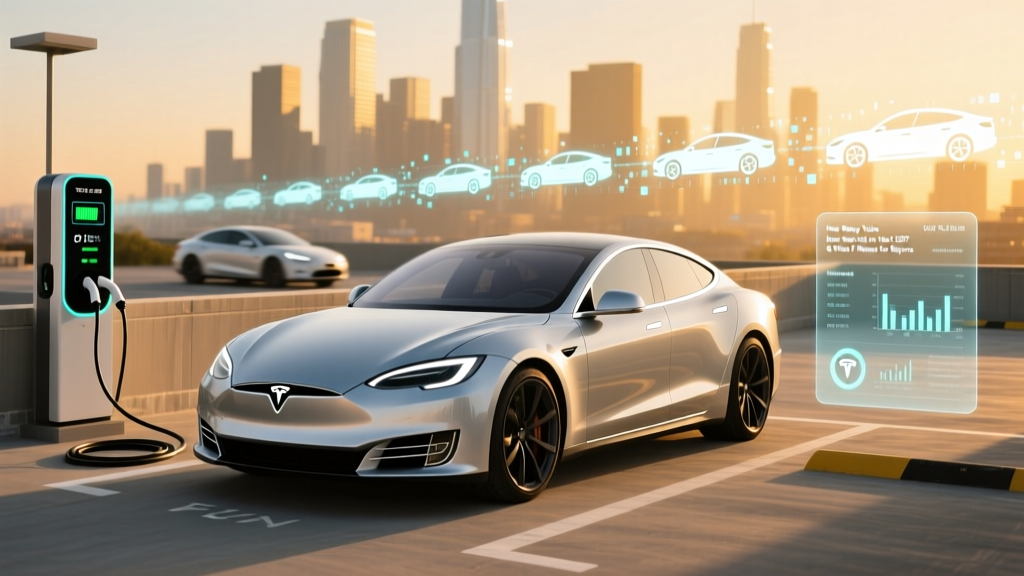
If you've ever pulled into a Supercharger and waited in line behind six other Model Ys, you've witnessed the answer to a question that keeps coming up in EV forums: how many Teslas have been sold in the US? The short answer is staggering — Tesla has delivered an estimated 4.5 to 5 million vehicles to US customers since the original Roadster launched in 2008, making it not just the best-selling EV brand in America, but the brand that effectively defined the modern electric car category for an entire generation of drivers.
But raw sales numbers only tell half the story. For anyone shopping for a Tesla in 2026 — or weighing one against the growing field of competitors — understanding which Teslas are on the road, what their ownership trajectory looks like, and how Tesla's market dominance is shifting matters far more than a single cumulative figure. This guide breaks down US Tesla sales by model, what that volume means for real buyers, and which current Tesla lineup delivers the best value in 2026.
US Tesla Sales by Model: Where the Volume Lives
Tesla doesn't publish US-specific delivery breakdowns, but industry analysts — including data from the Kelley Blue Book team and Cox Automotive — have reconstructed reasonably accurate estimates from global delivery reports, registration data, and regional mix ratios. Here's where US cumulative sales stand heading into 2026:
| Model | Est. US Cumulative Sales | Launch Year | Share of US Fleet |
|---|---|---|---|
| Model 3 | ~1,650,000 | 2017 | ~35% |
| Model Y | ~1,500,000 | 2020 | ~32% |
| Model S | ~350,000 | 2012 | ~7% |
| Model X | ~280,000 | 2015 | ~6% |
| Cybertruck | ~175,000 | 2023 | ~4% |
| Roadster (Gen 1) | ~1,400 | 2008 | <1% |
| Semi | ~500 (fleet) | 2022 | <1% |
The Model 3 and Model Y together account for roughly two-thirds of every Tesla on American roads. That dominance has real-world implications for parts availability, third-party service expertise, resale comparables, and — critically — Supercharger congestion patterns in high-density metro areas.
2026 Tesla Lineup: Specs That Matter to Buyers
With context on the fleet size, let's look at what Tesla actually sells today. Below is the 2026 lineup with the specs EV buyers actually use to make purchase decisions. Note that Tesla adjusts pricing and trims frequently — these figures reflect early 2026 configurations.
| Spec | Model 3 Long Range AWD | Model Y Long Range AWD | Cybertruck AWD | Model S Long Range |
|---|---|---|---|---|
| EPA Range | 341 mi | 320 mi | 340 mi | 402 mi |
| Battery (usable) | ~75 kWh (NMC) | ~75 kWh (NMC) | ~123 kWh (NMC) | ~95 kWh (NMC) |
| Peak DC Charge | 250 kW | 250 kW | 250 kW (800V arch) | 250 kW |
| 10–80% DC Time | ~25 min | ~27 min | ~20 min | ~30 min |
| Level 2 Rate | 11.5 kW (~44 mi/hr) | 11.5 kW (~44 mi/hr) | 17 kW (~52 mi/hr) | 11.5 kW (~40 mi/hr) |
| 0–60 mph | 4.2 sec | 4.8 sec | 3.9 sec | 3.1 sec |
| Horsepower | 346 hp | 384 hp | 600 hp | 670 hp |
| Drivetrain | Dual-motor AWD | Dual-motor AWD | Tri-motor AWD | Dual-motor AWD |
| MPGe (combined) | 132 MPGe | 122 MPGe | 76 MPGe | 120 MPGe |
| Cargo (rear+frunk) | 23 cu ft + 3.1 cu ft | 34 cu ft + 4.1 cu ft | 34 cu ft + bed | 28 cu ft + 2.5 cu ft |
| Base MSRP | $47,740 | $49,990 | $79,990 | $79,990 |
Sources: fueleconomy.gov, Tesla.com 2026 spec pages. Cybertruck MPGe reflects the large-battery AWD trim.
EPA numbers are measured under controlled conditions. For the Model Y Long Range (EPA 320 mi), expect roughly 270–290 miles in mixed highway driving at 70+ mph, and as low as 230–250 miles in sustained sub-freezing winter conditions. The Model 3 Long Range (EPA 341 mi) typically returns 290–310 miles on the highway. Tesla's thermal management and heat pump help, but physics still wins in cold weather — plan charging stops accordingly.
Charging: Tesla's Biggest Structural Advantage
The question "how many Teslas have been sold in the US" matters partly because of the Supercharger network. Over 6,500 Supercharger stalls now operate across the US, and with the NACS connector becoming the de facto North American standard (adopted by Ford, GM, Rivian, Hyundai, and others through 2025–2026), Tesla's charging moat is both a product feature and an infrastructure revenue stream.
| Charging Method | Power (kW) | Miles Added Per Hour | Typical Use Case |
|---|---|---|---|
| Level 1 (120V outlet) | 1.4 kW | ~3–5 mi/hr | Emergency/overnight trickle |
| Level 2 (240V, 48A home) | 11.5 kW | ~40–44 mi/hr | Daily home charging |
| DC Fast (V3 Supercharger) | 250 kW peak | ~1,000 mi/hr (peak) | Road trips, 10–80% in ~25 min |
| DC Fast (V4 Supercharger) | Up to 350 kW | Varies by vehicle | Cybertruck/next-gen models |
A critical nuance many new Tesla buyers miss: peak kW is not sustained kW. A Model Y Long Range may hit 250 kW at 10% state of charge, but the charge curve tapers significantly above 50% SoC and drops sharply past 80%. That 10–80% time of ~27 minutes is a realistic road-trip number, but charging from 80–100% can add another 25+ minutes — which is why Tesla's navigation system recommends charging to 80% at Superchargers unless you specifically override it.
For home charging, a Level 2 Tesla Wall Connector on a 60A circuit (48A continuous) is the gold standard. Expect $500–$1,500 for a professional installation on an existing 200A panel, or $2,000–$5,000+ if a panel upgrade to 200A or 400A is needed. Always get a quote from a licensed electrician before purchasing equipment.
Federal Tax Credit: What You'll Actually Pay
Tesla's pricing story in 2026 is inseparable from the federal EV tax credit under IRS §30D. Here's where each model stands:
| Model | Base MSRP | MSRP Cap (§30D) | Est. Credit Eligibility | Effective Price (with credit) |
|---|---|---|---|---|
| Model 3 RWD | $38,990 | $55,000 (sedan) | Up to $7,500* | ~$31,490 |
| Model 3 Long Range | $47,740 | $55,000 (sedan) | Up to $7,500* | ~$40,240 |
| Model Y Long Range | $49,990 | $80,000 (SUV) | Up to $7,500* | ~$42,490 |
| Cybertruck AWD | $79,990 | $80,000 (truck) | Up to $7,500* | ~$72,490 |
| Model S Long Range | $79,990 | $55,000 (sedan) | Not eligible | $79,990 |
*Critical caveats: The §30D credit is subject to buyer income caps ($150K single / $300K joint MAGI), critical-mineral and battery-component sourcing requirements that shift annually, and the point-of-sale transfer option. Tesla's battery sourcing has historically drawn scrutiny under these rules. Always verify current-year eligibility on irs.gov and consult a tax professional before relying on the credit in your purchase budget.
Is Tesla Still Worth Buying vs. the Competition?
The volume question — how many Teslas have been sold — cuts both ways. High fleet numbers mean proven reliability data, abundant used-market comparables, strong third-party accessory ecosystems, and Supercharger density that competitors still can't match. But it also means Tesla's market share is eroding as every legacy automaker now fields credible EV alternatives.
- Supercharger network: 6,500+ stalls, 99%+ uptime
- Best-in-class efficiency (kWh/mi) across the lineup
- OTA updates continue adding features years post-purchase
- Strong resale value relative to most EVs
- Lowest cost-per-mile of any premium EV brand
- Minimalist interior isn't for everyone; no physical controls
- FSD (Supervised) remains SAE Level 2 — driver must stay engaged
- Service center wait times in high-volume metro areas
- No Apple CarPlay/Android Auto support
- Panel gaps and build quality still inconsistent vs. German/Korean rivals
Choose Tesla If:
- You road-trip frequently and need the most reliable fast-charging network
- You want the lowest kWh/mi consumption in your class
- You value continuous OTA feature updates
- You prefer a minimalist, screen-centric cabin
Look at Competitors If:
- You want Apple CarPlay, physical buttons, or a more traditional interior (Hyundai Ioniq 5, BMW i4)
- You need a luxury sedan with a plush ride (BMW i5, Mercedes EQE)
- You want a 3-row electric SUV (Kia EV9, Rivian R1S)
- You prioritize build-quality consistency over software innovation
Who Should Buy Which Tesla in 2026?
With millions of Teslas on US roads, the brand now serves distinct buyer profiles across its lineup:
- Daily commuter, budget-conscious: Model 3 RWD at ~$38,990 (potentially ~$31,490 after credit) delivers 272 miles of EPA range, 132 MPGe, and the lowest cost-per-mile in the Tesla family. Ideal for single professionals or couples with home charging.
- Family hauler, road-trip ready: Model Y Long Range remains the default for families needing 34 cu ft of cargo space, 320 miles of range, and Supercharger access. The refresh ("Juniper") improved ride quality and cabin noise.
- Truck buyer, work + lifestyle: Cybertruck AWD at ~$79,990 offers 11,000-lb towing, a stainless-steel bed, and tri-motor performance — but its size, efficiency (76 MPGe), and polarizing design limit its audience.
- Performance sedan enthusiast: Model S Long Range still delivers 402 miles of range and a 3.1-second 0–60, but at $79,990 with no tax credit, it's a niche buy against the Lucid Air and BMW i5 M60.
Tesla US Sales FAQs
How many Teslas are currently on US roads?
Based on cumulative delivery estimates and typical vehicle retention rates, approximately 4 to 4.5 million Teslas are actively registered and operational in the United States as of early 2026. Some early Model S vehicles from 2012–2014 have been retired, but Tesla's battery longevity means the vast majority of units sold remain in service.
Which Tesla model sells the most in the US?
The Model Y has overtaken the Model 3 as Tesla's best-selling US vehicle in annual volume since 2022, reflecting the broader consumer shift toward crossovers. However, the Model 3 retains a slight edge in cumulative lifetime US deliveries due to its earlier launch (2017 vs. 2020).
Does buying a high-volume EV brand matter for ownership?
Yes, in practical ways. High fleet volume means more third-party repair shops developing EV expertise, more used-Tesla price data for trade-in negotiations, a larger accessory and aftermarket ecosystem, and — for Tesla specifically — denser Supercharger coverage in high-traffic corridors where volume justifies infrastructure investment.
How does Tesla's US market share compare to other EV brands?
Tesla's share of the US EV market has declined from a peak of ~79% in 2020 to an estimated 45–50% in 2025–2026, as Ford, Hyundai/Kia, GM, BMW, and Rivian have expanded their EV lineups. However, Tesla still outsells any single competitor by a wide margin in pure volume, and its Supercharger network gives it a structural advantage that market-share percentages alone don't capture.
Will the growing Tesla fleet hurt resale values?
Tesla resale values have already corrected significantly from the 2021–2022 peak, with 3-year-old Model 3 vehicles retaining roughly 55–60% of original MSRP in early 2026 — competitive with luxury sedans generally but below Toyota/Porsche EV retention. As the fleet ages and more off-lease units enter the used market, expect continued moderate depreciation pressure, partially offset by the federal used-EV tax credit (§25E) making pre-owned Teslas more attractive to second buyers.
What's the best way to verify Tesla sales data?
Tesla publishes global quarterly delivery reports on its investor relations page. For US-specific breakdowns, the most reliable sources are registration data compilations from Kelley Blue Book, Cox Automotive, and the Alliance for Automotive Innovation's EV market reports. State-level DMV registration data (available in California, Texas, and Florida) provides the most granular picture.