What Exactly Is the Tesla Tunnel in Vegas?
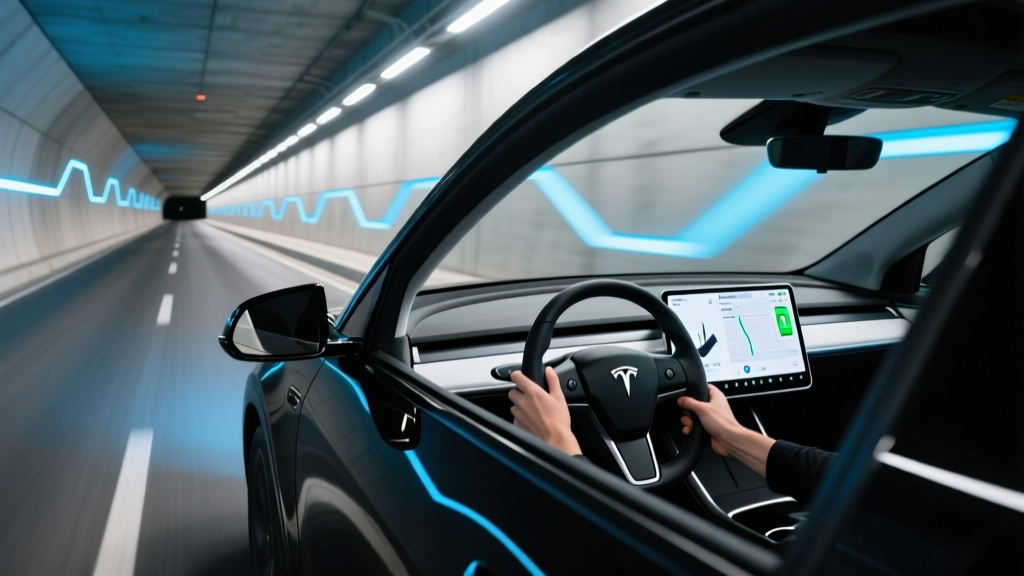
If you've attended CES, SEMA, or any major trade show at the Las Vegas Convention Center (LVCC) since 2021, you've likely encountered the Tesla tunnel in Vegas — officially called the Vegas Loop. Built by Elon Musk's The Boring Company, this underground network of narrow, single-lane tunnels shuttles passengers between convention halls, resort casinos, and eventually the Strip's major hotels in Tesla Model Y vehicles driven by human operators.
As of early 2026, the Vegas Loop spans over 25 miles of tunnel with more than 60 stations, connecting the LVCC campus to properties including Resorts World, Wynn/Encore, Westgate, and the upcoming UNLV extension. It's not autonomous — despite early promises of "skates" and autonomous pods, the system relies on human-driven Tesla Model Y SUVs navigating tight, neon-lit concrete tunnels at speeds up to roughly 35 mph.
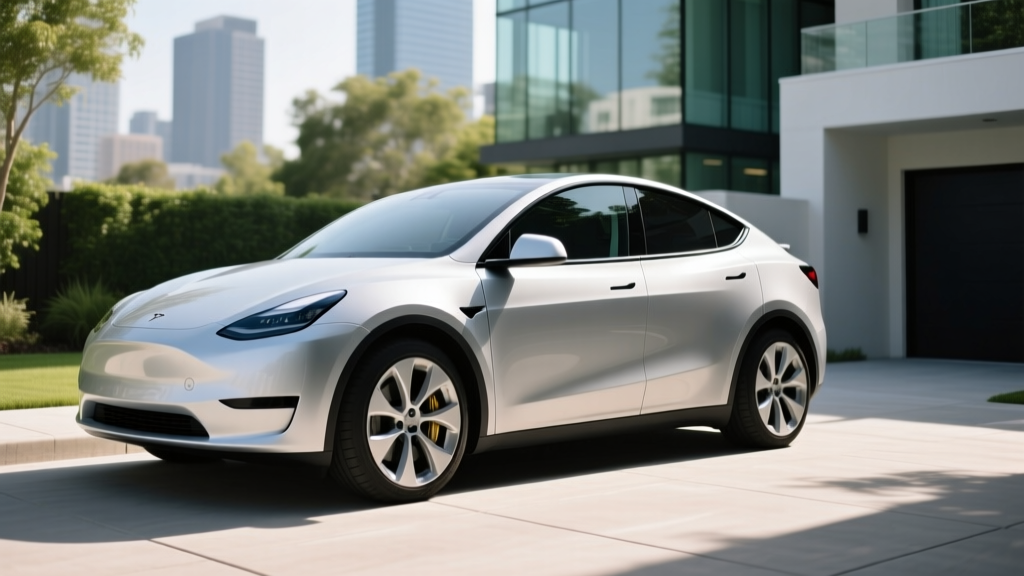
For EV shoppers, the Vegas Loop offers something rare: a chance to ride in a Model Y intensively used in commercial service and observe how the platform holds up under extreme duty cycles. Below, we profile the vehicle at the heart of the system — the 2026 Tesla Model Y Long Range AWD — and explain what tunnel transit means (and doesn't mean) for prospective buyers.
2026 Tesla Model Y Long Range AWD: Core Specifications
The Model Y that operates in the Vegas tunnel is the Long Range All-Wheel-Drive variant, the volume seller in Tesla's lineup and the same configuration available at any Tesla showroom. Here's what you're looking at for the 2026 model year:
| Spec | Value |
|---|---|
| EPA-estimated range | 320 miles |
| Battery capacity (usable) | ~78 kWh, NMC chemistry |
| Drivetrain | Dual-motor AWD |
| Horsepower | 384 hp (combined) |
| 0–60 mph | 4.8 seconds |
| Peak DC fast-charge rate | 250 kW (Supercharger V3/V4) |
| 10–80% DC charge time | ~25 minutes |
| Level 2 home charge rate | 11.5 kW (~44 mi/hr) |
| MPGe (combined) | 111 MPGe |
| Efficiency | 28 kWh/100 mi |
| Cargo volume (rear seats up) | 30.2 cu ft |
| Cargo volume (rear seats folded) | 72.1 cu ft |
| Base MSRP | $44,990 |
| Battery & drive unit warranty | 8 years / 120,000 miles |
The EPA rates the 2026 Model Y Long Range AWD at 320 miles. In real-world highway driving at 70–75 mph in moderate temperatures (65–80°F), expect roughly 265–285 miles before needing a charge. In cold weather (below 32°F), cabin heating and battery conditioning can reduce effective range to 220–245 miles. Vegas Loop vehicles, which operate in climate-controlled tunnels with short stop-and-go cycles, experience far less range variability — one reason the platform was selected for this service.
Charging the Model Y: Speeds, Connectors, and Infrastructure
One question EV buyers consistently ask: How fast does it actually charge? The Model Y Long Range AWD remains compatible with Tesla's Supercharger network (now using the NACS connector, which Tesla opened to other automakers starting in 2024–2025) and supports CCS1 charging via adapter.
| Charging Level | Power (kW) | Speed / Time |
|---|---|---|
| Level 1 (120V household) | ~1.4 kW | ~5 miles per hour |
| Level 2 (240V home wall connector) | 11.5 kW | ~44 miles per hour |
| DC fast charge (Supercharger V3/V4) | Up to 250 kW peak | 10–80% in ~25 min |
| DC fast charge (CCS1 via adapter) | Up to 150–170 kW | 10–80% in ~32 min |
Charging-curve reality: The 250 kW peak only holds briefly at low state-of-charge (roughly 10–25%). Above 50% SoC, the rate tapers significantly — often dropping below 100 kW past 70%. This is normal for NMC lithium-ion packs and why Tesla's navigation system preconditions the battery when you route to a Supercharger, warming the cells to accept higher initial power.
For the Vegas Loop fleet, The Boring Company operates dedicated Supercharger depots near tunnel access points, enabling quick turnaround between shifts. For private owners, a home Level 2 installation (typically $500–$1,500 for equipment plus $800–$2,500 for electrician labor, depending on panel capacity) remains the most practical daily charging solution.
Performance and Driving Dynamics
The dual-motor AWD Model Y produces 384 hp and reaches 60 mph in 4.8 seconds — quick by any measure, and more than adequate for merging onto freeways or navigating tunnel environments. The Performance trim (starting at $49,990) drops that 0–60 time to 3.5 seconds with 456 hp, though the Long Range variant is the better value for most buyers.
Ride quality in the 2026 Model Y has improved over earlier model years thanks to revised suspension tuning and acoustic glass introduced with the "Juniper" refresh. Road noise is noticeably lower, and the adaptive damping (on Performance trims) smooths out expansion joints. That said, the Model Y still rides firmer than a Hyundai Ioniq 5 or Ford Mustang Mach-E — something you'll notice on rough pavement but not inside the smooth concrete of the Vegas tunnel.
Tech, Driver Assistance, and the Autonomy Question
Every Model Y ships with Basic Autopilot, which includes Traffic-Aware Cruise Control and Autosteer (lane centering). This is an SAE Level 2 driver-assistance system — meaning the driver must remain fully engaged, hands on or near the wheel, and eyes on the road at all times.
Tesla's Full Self-Driving (Supervised) option, priced at $8,000 or $99/month in 2026, is also an SAE Level 2 system. Despite the name, it does not make the vehicle autonomous. The driver is legally and operationally responsible at all times. True driverless (SAE Level 4) service in the U.S. is currently limited to geofenced robotaxi operators like Waymo in select cities. The Vegas Loop uses human drivers — not FSD — for tunnel operations.
The 2026 Model Y's infotainment runs on a 15.4-inch center touchscreen with Tesla's latest software stack. Notable features include:
- Over-the-air software updates (frequent, free for core features)
- Sentry Mode dashcam recording when parked
- Dog Mode and Camp Mode climate presets
- Native Spotify, Apple Music, and Tidal integration
- Phone-as-key via Bluetooth
- Heat pump HVAC (standard — critical for cold-climate efficiency)
Pricing, Tax Credits, and Total Cost
The 2026 Tesla Model Y Long Range AWD starts at $44,990 (destination included). A typical well-equipped build with FSD, a premium interior color, and 20-inch wheels can push the as-tested price to $55,000–$58,000.
| Trim | MSRP | §30D Credit Eligible? |
|---|---|---|
| Long Range AWD | $44,990 | Yes — up to $7,500 (see caveats below) |
| Long Range AWD w/ FSD | ~$52,990 | Yes — up to $7,500 |
| Performance AWD | $49,990 | Yes — up to $7,500 |
Federal tax credit caveats (IRS §30D, 2026 rules): The $7,500 credit is not automatic. Eligibility depends on:
- Buyer income caps: Modified AGI ≤ $150,000 (single), $225,000 (head of household), $300,000 (joint).
- MSRP cap: SUVs must be ≤ $80,000 (Model Y qualifies across all trims).
- Battery sourcing: A percentage of critical minerals and battery components must be sourced from the U.S. or free-trade-agreement countries. Tesla's U.S.-built battery cells have generally met these thresholds, but the IRS updates qualifying lists periodically — verify at fueleconomy.gov before purchasing.
- Point-of-sale transfer: As of 2024, buyers can transfer the credit to the dealer at purchase, reducing the upfront price rather than waiting for a tax refund.
Always consult a tax professional and check the latest IRS guidance on clean vehicle credits before finalizing a purchase.
Pros, Cons, and Who the Model Y Suits Best
- Access to Tesla Supercharger network (most reliable DC fast-charging in the U.S.)
- Class-leading efficiency (28 kWh/100 mi)
- Strong real-world range (265–285 mi highway)
- Spacious cargo area (72 cu ft seats folded)
- Continuous OTA improvements
- Heat pump standard — excellent cold-weather efficiency
- Firm ride compared to Ioniq 5, Mach-E
- No physical instrument cluster or stalks (turn signals on steering wheel)
- FSD remains Level 2 despite the name and $8,000 cost
- Insurance premiums often 15–25% higher than comparable EVs
- Minimal dealer service network — reliant on mobile service and Tesla service centers
Who should buy the Model Y?
- Daily commuters: Excellent efficiency and home charging make it ideal for 30–80 mile round trips.
- Road-trip families: Supercharger coverage and 72 cu ft of cargo space handle cross-country travel well.
- Tech-forward buyers: OTA updates and software integration are best-in-class.
- Not ideal for: Buyers who prioritize plush ride quality, physical controls, or traditional dealer service experiences.
The Vegas Loop: What Tunnel Transit Gets Right and Wrong
The Tesla tunnel in Vegas demonstrates that EVs are well-suited to enclosed transit environments: zero tailpipe emissions underground, instant torque for quick acceleration between stations, and quiet operation. However, the system's reliance on human drivers, single-lane tunnels, and point-to-point routing limits throughput compared to traditional light rail or automated people movers.
For EV buyers, the takeaway is practical: the Model Y platform is durable enough for commercial fleet duty cycles in Las Vegas heat. Tesla's battery warranty of 8 years / 120,000 miles (with a guaranteed minimum 70% capacity retention) provides long-term confidence, and real-world degradation data from high-mileage Teslas shows most packs retain 85–90% capacity at 100,000 miles.
Frequently Asked Questions
Is the Tesla tunnel in Vegas self-driving?
No. The Vegas Loop uses human drivers operating Tesla Model Y vehicles. Despite early marketing about autonomous "skates," The Boring Company has deployed conventional driven Teslas in its tunnels.
Can I ride the Vegas Loop as a tourist?
Yes. The Vegas Loop is open to the public, not just convention attendees. Fares typically range from $3–$5 per trip within the LVCC campus, with longer routes to Strip resorts priced higher. Download the Boring Company app or pay at station kiosks.
Does the 2026 Model Y qualify for the $7,500 federal tax credit?
Yes, the Model Y qualifies under IRS §30D for 2026, but buyer income caps, MSRP limits, and battery-sourcing requirements all apply. Verify your personal eligibility at fueleconomy.gov and confirm current sourcing compliance before purchase.
How does the Model Y compare to the Hyundai Ioniq 5 or Ford Mustang Mach-E?
The Model Y leads in charging network access and efficiency (28 kWh/100 mi vs. 30–34 for competitors). The Ioniq 5 offers faster 10–80% charging (~18 min at 350 kW chargers) and a more comfortable ride. The Mach-E provides a more traditional interior layout. All three are strong choices — test-drive each.
What's the real-world range of the Model Y Long Range AWD?
EPA-rated at 320 miles. Expect 265–285 miles on the highway in moderate weather, and 220–245 miles in sub-freezing conditions. City and tunnel driving (like the Vegas Loop) can approach or slightly exceed the EPA estimate due to regenerative braking at low speeds.
Sources: EPA Fuel Economy — Tesla Model Y, IRS Clean Vehicle Credits, NHTSA.