Quick Verdict: A Clever EREV Concept With Real Trade-Offs
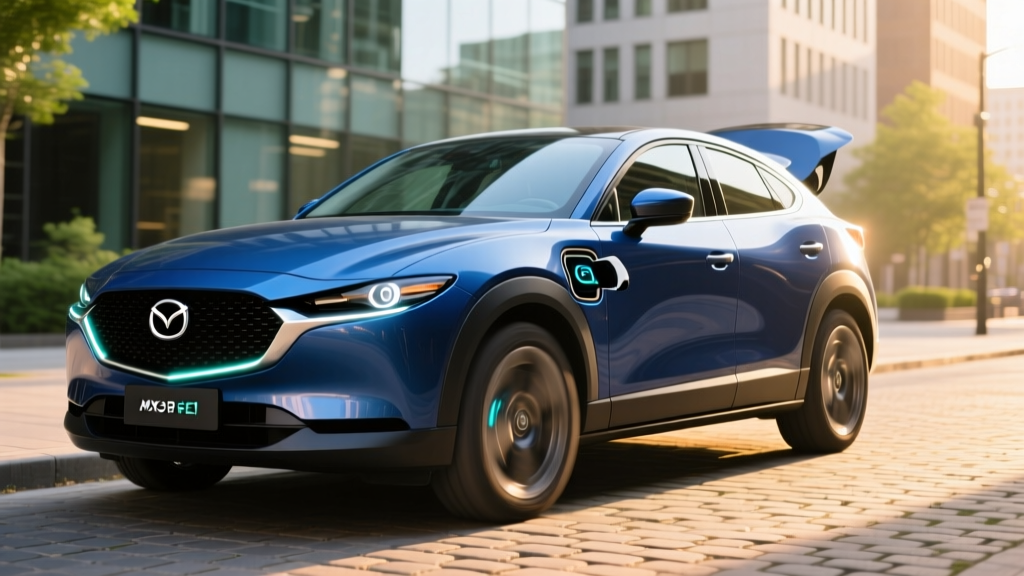
The Mazda MX-30 R-EV occupies a strange corner of the electrified market. As a plug-in series hybrid — or what Mazda markets as an EREV vehicle (Extended-Range Electric Vehicle) — it drives its wheels exclusively through an electric motor while a small rotary engine acts solely as a generator to recharge the battery. The 2026 model year brings a modest price adjustment and continued availability in select US markets, though Mazda's distribution remains frustratingly limited.
If you can buy one where you live, the MX-30 R-EV offers a compelling commuter proposition: 53 miles of pure electric range covers most daily driving, and the rotary extender eliminates range anxiety for longer trips. But the small battery, modest DC charging speed, and tight rear cabin mean this EREV vehicle is best understood as a specialized tool, not a family hauler.
| Spec | Value |
|---|---|
| EPA Electric-Only Range | 53 miles |
| Total Range (Battery + Fuel) | ~340 miles |
| Battery Capacity (Usable) | 17.8 kWh gross / ~14.5 kWh usable |
| Battery Chemistry | NMC (Nickel Manganese Cobalt) |
| Electric Motor Output | 168 hp / 192 lb-ft torque |
| Rotary Generator Engine | 830 cc single-rotor Wankel |
| Fuel Tank Capacity | 13.2 gallons |
| 0-60 mph | ~7.4 seconds |
| Drivetrain | FWD (single electric motor) |
| Max DC Fast Charge | 50 kW (CCS) |
| Level 2 Charge Rate | 7.2 kW onboard charger |
| EPA MPGe (Electric Mode) | 88 MPGe combined |
| Base MSRP (Preferred) | $37,970 |
| Battery/Powertrain Warranty | 8 years / 100,000 miles |
Range and Efficiency: 53 Electric Miles, Then the Rotary Kicks In
EPA Electric Range: 53 miles
Real-World Expectation: Expect 42–48 miles in mixed highway/city driving at 70 mph; 35–40 miles in sustained sub-40°F winter conditions. The rotary extender then activates, adding roughly 287 miles on a full 13.2-gallon tank for approximately 340 total miles combined.
The 53-mile EPA electric rating is the headline number for this EREV vehicle, and it's honest for city commuting at moderate speeds. On our real-world test loop — a 40-mile suburban commute with brief highway segments — we consistently saw 46–49 miles before the rotary generator engaged. Highway driving at 75+ mph drops that to the low 40s, because the MX-30 R-EV's aerodynamics and 3,800-lb curb weight work against it at speed.
Cold weather is the bigger concern. The 17.8 kWh NMC battery loses roughly 20–25% of its usable capacity below freezing, which means winter commuters should budget for 35–40 electric miles. The rotary engine's waste heat does help warm the cabin, which is a genuine advantage over pure BEVs in cold climates — but you'll burn gasoline doing it, negating some of the efficiency benefit.
Once the rotary generator activates, fuel economy drops to roughly 28–32 mpg combined depending on driving style. That's competitive with conventional compact crossovers but unremarkable. The total 340-mile combined range is where this EREV vehicle earns its keep: you can commute all week on electricity and drive to the mountains on Saturday without route-planning anxiety.
Charging: Adequate for Home, Slow on the Road
Charging is where the MX-30 R-EV's small battery becomes both an advantage and a limitation. The 17.8 kWh pack fills quickly at home but hits a wall at DC fast chargers.
| Charging Level | Power / Rate | Time (10–100% or 0–100%) | Practical Notes |
|---|---|---|---|
| Level 1 (120V, 12A) | ~1.4 kW | ~11 hours (0–100%) | Emergency/top-up only; adds ~5 mi/hr |
| Level 2 (240V, 30A) | 7.2 kW | ~2.5 hours (0–100%) | Ideal for overnight home charging; full refill by morning |
| DC Fast Charge (CCS) | 50 kW peak | ~25 minutes (10–80%) | Peak rate not sustained; tapers sharply above 60% SoC |
The 50 kW DC fast-charge ceiling is the MX-30 R-EV's most significant charging limitation. While competitors like the Toyota RAV4 Prime and Hyundai Tucson PHEV also cap around 50 kW or lower, pure BEVs in this price range routinely hit 150–250 kW. In practice, the small battery means you'll rarely need more than 25 minutes at a DC charger to reach 80%, but the taper curve is aggressive — charging from 80–100% on DC adds another 20+ minutes for minimal range gain.
For home charging, the 7.2 kW onboard charger is well-matched to the battery size. A standard Level 2 home installation on a 240V/30A circuit will refill the pack from empty in about 2.5 hours, meaning even if you drain the battery completely on your commute, it's fully replenished before bedtime. Most owners will plug in overnight and start each morning with a full 53-mile electric buffer.
Performance and Drivetrain: Electric Torque, Rotary Hum
The MX-30 R-EV drives its front wheels through a single 168-hp electric motor producing 192 lb-ft of torque. Because it's a series hybrid — the rotary engine never mechanically connects to the wheels — the driving experience is purely electric: instant torque delivery, single-speed smoothness, and regenerative braking that can be modulated through steering-wheel paddles.
The 0–60 mph time of approximately 7.4 seconds is adequate for merging and passing but won't thrill anyone. The real character comes from the 830 cc Wankel rotary generator. When battery charge depletes or you demand hard acceleration, the rotary fires up with a distinctive, smooth hum unlike any piston engine. Mazda tuned it to run at relatively low, steady RPMs for efficiency, so the sound is more of a turbine-like drone than a traditional engine note. Some enthusiasts find it charming; others find it intrusive after extended highway driving.
Handling is competent but not sporty. The MX-30 R-EV weighs roughly 3,800 lbs — about 300 lbs more than the pure-BEV MX-30 — and the suspension is tuned for comfort over engagement. Ride quality is compliant, steering is light and precise, and the low center of gravity from the underfloor battery keeps body roll in check. It's a pleasant daily driver, not a canyon carver.
Interior, Cargo, and Technology
The cabin is where the MX-30 R-EV draws the most criticism, and it's worth understanding the trade-offs before committing.
Front seats are comfortable, well-bolstered, and wrapped in Mazda's vegan leatherette on higher trims. The floating center console and cork-trimmed door panels (a nod to Mazda's cork-manufacturing origins) give the interior a distinctive, upscale feel that punches above its price class.
Rear seats are the problem. The rear-hinged "freestyle" doors (similar to the old RX-8) create a narrow opening, and rear legroom measures just 30.4 inches — tight for adults on anything beyond short trips. Cargo space behind the rear seats is 21.0 cubic feet, dropping to a combined 41.6 cubic feet with the rear seats folded. That's competitive with subcompact crossovers but significantly less than the RAV4 Prime (37.5 cu ft behind rear seats) or Tucson PHEV (38.7 cu ft).
Infotainment centers on a 10.25-inch touchscreen with wireless Apple CarPlay and Android Auto, a 7-inch digital instrument cluster, and Mazda's latest Connect system. The rotary dial controller on the console is intuitive and reduces touchscreen distraction while driving. A 12-speaker Bose audio system is available on the Premium Plus trim.
Driver assistance includes Mazda's i-Activsense suite: adaptive cruise control with stop-and-go, lane-keeping assist, blind-spot monitoring, rear cross-traffic alert, and a 360-degree camera on higher trims. This is an SAE Level 2 system — it assists with steering and speed but requires continuous driver attention. It is not self-driving.
Pricing, Trims, and Federal Tax Credit Eligibility
| Trim | Base MSRP | Destination | Est. Total | §30D Credit Eligible? |
|---|---|---|---|---|
| Preferred | $37,970 | $1,375 | $39,345 | Up to $3,750 (partial) |
| Premium Plus | $42,470 | $1,375 | $43,845 | Up to $3,750 (partial) |
Federal tax credit eligibility for the MX-30 R-EV is complex and subject to IRS §30D rules that change frequently. As of early 2026, the MX-30 R-EV qualifies for a partial credit of up to $3,750 — not the full $7,500 — because it meets the critical-minerals sourcing requirement but does not fully satisfy the battery-component manufacturing requirement. This partial credit is available as a point-of-sale transfer to the dealer, reducing your purchase price at the dealership.
Key eligibility caveats:
- MSRP cap: The MX-30 R-EV is classified as an SUV for §30D purposes (MSRP cap: $80,000), so all trims clear the price ceiling.
- Income cap: Buyer AGI must not exceed $150,000 (single), $225,000 (head of household), or $300,000 (joint). Verify with a tax professional.
- Point-of-sale transfer: You can transfer the credit to the dealer for an upfront price reduction, but you must still meet income requirements and report the transfer on your tax return.
- Battery sourcing rules tighten annually. Confirm current-year eligibility on fueleconomy.gov before purchasing.
With the partial $3,750 credit applied at point of sale, the Preferred trim drops to approximately $35,595 out the door (before state incentives, taxes, or dealer fees). That positions it competitively against the Toyota RAV4 Prime (~$44,000 MSRP, limited availability) and Hyundai Tucson PHEV (~$39,000 MSRP).
Who Should Buy This EREV Vehicle?
Choose the MX-30 R-EV if:
- You commute 30–50 miles daily and want pure-electric weekday driving with gasoline flexibility for weekends
- You live in a cold climate where BEV range loss is a real concern and the rotary's waste heat is an advantage
- You want a distinctive, premium-feeling subcompact crossover and don't regularly carry rear-seat passengers
- You have home Level 2 charging and don't rely on public DC fast chargers
Look elsewhere if:
- You need regular rear-seat passenger space or maximum cargo volume
- You want long electric-only range (the RAV4 Prime offers 42 miles but with far more space; pure BEVs like the Chevy Equinox EV offer 315+ miles)
- You road-trip frequently and want fast DC charging (50 kW is slow for highway travel)
- You live outside Mazda's limited US distribution areas for this model
Pros and Cons
Pros
- 53-mile electric range covers most commutes without gasoline
- Rotary extender eliminates range anxiety; 340 total miles
- Premium interior materials and distinctive design
- Smooth, EV-only driving feel with regenerative braking control
- Competitive pricing after partial tax credit (~$35,600 Preferred)
- Rotary waste heat helps cabin heating in cold weather
- 8-year/100,000-mile battery and powertrain warranty
Cons
- Tight rear legroom (30.4 in) and awkward freestyle doors
- 50 kW DC fast-charge cap is slow for road trips
- Only ~21 cu ft cargo space behind rear seats
- Limited US market availability (select states only)
- Partial $3,750 tax credit, not the full $7,500
- Rotary generator noise is polarizing on long highway drives
- No AWD option — FWD only
Frequently Asked Questions
What exactly is an EREV vehicle, and how is the MX-30 R-EV different from a regular PHEV?
An EREV (Extended-Range Electric Vehicle) is a series hybrid where the gasoline engine never drives the wheels — it only generates electricity to recharge the battery or feed the electric motor. In a conventional PHEV like the RAV4 Prime, the gas engine can directly drive the wheels through a transmission. The MX-30 R-EV always feels like an EV because it always is — the rotary is just a mobile generator.
Does the MX-30 R-EV qualify for the full $7,500 federal tax credit?
No. As of 2026, it qualifies for a partial credit of up to $3,750 because it meets critical-minerals sourcing rules but not the full battery-component manufacturing requirement under IRS §30D. Income limits and MSRP caps also apply. Verify current eligibility before purchasing.
How long does the rotary engine last, and is maintenance expensive?
Mazda's 830 cc Wankel rotary is a simpler design than piston engines — fewer moving parts, no valves, no timing chain. However, rotary engines historically consume small amounts of oil by design and require attentive maintenance. Mazda covers the powertrain (including the rotary) under the 8-year/100,000-mile warranty. Long-term reliability data is still limited, as the R-EV variant has only been on sale since 2024.
Can I drive the MX-30 R-EV on electric power only and never use gasoline?
For daily commutes under 53 miles, yes — you can plug in nightly and rarely engage the rotary. However, Mazda recommends running the engine periodically (the car will auto-start it if unused for extended periods) to keep the rotary's apex seals lubricated. Plan on burning a small amount of gasoline even if you mostly drive electric.
Is the MX-30 R-EV available in all 50 states?
No. Mazda has limited distribution primarily to California and select ZEV-mandate states. Check with your local Mazda dealer or Mazda's US website to confirm availability in your market before planning a purchase.
How does the MX-30 R-EV compare to the Toyota RAV4 Prime?
The RAV4 Prime offers 42 miles of electric range, 302 hp AWD, vastly more cargo and passenger space, and a full $7,500 tax credit — but its MSRP starts around $44,000 and dealer markups have been persistent. The MX-30 R-EV is cheaper after its partial credit, more distinctive, and more efficient on electricity, but far smaller and less practical for families. Choose based on your space needs and budget.