Tesla owners love a good Easter egg, and few have generated as much curiosity as Tron Mode. But beyond the light show, the Tesla Model 3 remains one of the most capable and efficient electric sedans on the market. This guide answers exactly what Tron Mode does, then delivers a comprehensive, numbers-driven review of the current Tesla Model 3 — covering real-world range, charging speeds, pricing after federal tax credits, and whether it still earns its spot against growing competition in 2026.
What Is Tesla Tron Mode?
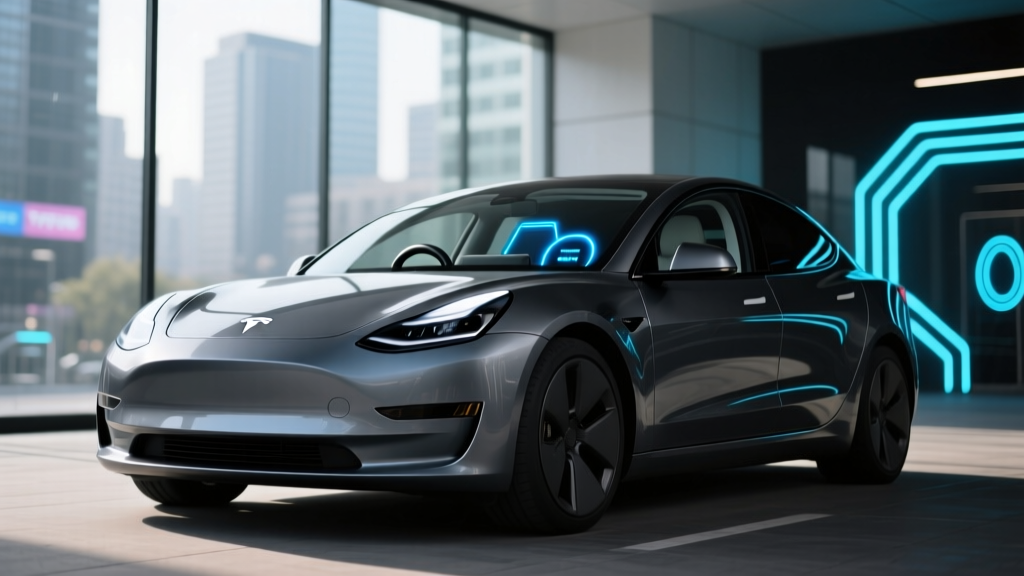
Tesla Tron Mode is a hidden Easter egg buried in the vehicle's software that transforms the Model 3's (and Model Y's) interior ambient lighting and instrument cluster display to mimic the neon-blue aesthetic of the 1982 Disney film Tron. To activate it, owners typically tap and hold a specific area on the touchscreen — often the "About" section in the software menu — for several seconds until the interface transforms.
When engaged, Tron Mode alters the visual theme of the central touchscreen with a glowing, circuit-board-inspired blue color scheme. On equipped vehicles with ambient interior lighting, the cabin LEDs shift to a matching cool blue. It's purely cosmetic — no performance, range, or driving behavior changes occur. Think of it as Tesla's nod to its tech-savvy owner base: a fun party trick you can show passengers or enjoy during a nighttime drive.
Tron Mode joins a long list of Tesla Easter eggs including the Rainbow Road visualization (activate by holding the Autopilot cruise-control stalk down for several seconds while driving with Autosteer engaged), the Mars rover visualization, and various holiday-themed light shows. Tesla has historically added and occasionally removed Easter eggs through over-the-air (OTA) software updates, so availability can vary by software version.
Tesla Model 3 Specs at a Glance
| Attribute | Long Range AWD | Performance AWD | RWD (Standard) |
|---|---|---|---|
| EPA Range | 346 miles | 315 miles | 272 miles |
| Battery (usable) | ~75 kWh (NMC) | ~75 kWh (NMC) | ~57.5 kWh (LFP) |
| Drivetrain | Dual-motor AWD | Dual-motor AWD | Single-motor RWD |
| Horsepower | ~346 hp | ~510 hp | ~271 hp |
| 0–60 mph | 4.2 seconds | 2.9 seconds | 5.8 seconds |
| Max DC Fast Charge | ~170 kW | ~250 kW | ~170 kW |
| 10–80% DC Time | ~27 min | ~18 min | ~25 min |
| Level 2 Home Rate | 11.5 kW (~44 mi/hr) | 11.5 kW (~44 mi/hr) | 11.5 kW (~44 mi/hr) |
| EPA Efficiency | 132 MPGe / 25 kWh/100mi | 119 MPGe / 28 kWh/100mi | 132 MPGe / 25 kWh/100mi |
| Base MSRP | $47,740 | $54,990 | $38,990 |
Source: fueleconomy.gov and Tesla.com. Prices exclude destination fee. Specs reflect current model year.
Real-World Range: What the EPA Number Doesn't Tell You
EPA sticker: 346 miles (Long Range AWD)
Real-world highway (70 mph, moderate climate): ~285–310 miles
Real-world cold weather (below 32°F, mixed driving): ~240–275 miles
Best-case city/commute (mild weather, regen-heavy): ~330–350 miles
The Long Range AWD Model 3 carries an EPA-estimated 346 miles of range — one of the highest figures in its class. But EPA testing uses a blended cycle that doesn't fully reflect sustained highway driving or extreme temperatures.
In real-world highway testing at 70–75 mph in moderate temperatures (60–75°F), expect roughly 285–310 miles before needing to charge. The Model 3's efficiency advantage comes from its low drag coefficient (0.219 Cd) and Tesla's heat pump, which recovers waste heat from the drivetrain to warm the cabin — reducing the range penalty that plagues EVs without one.
Cold weather is the great equalizer for all EVs. In sustained sub-freezing conditions, lithium-ion batteries experience increased internal resistance, and cabin heating draws significant energy even with a heat pump. Plan for a 20–30% range reduction in winter, putting the Long Range model at roughly 240–275 miles of usable range. Preconditioning the battery while plugged in — a feature Tesla's app makes easy — mitigates some of this loss by warming the pack before you drive.
The RWD model uses an LFP (lithium iron phosphate) battery, which offers excellent longevity and can be charged to 100% daily without degradation concerns. However, LFP chemistry loses more capacity in cold weather than NMC, so winter range on the RWD model can dip to around 190–215 miles in freezing conditions.
Charging Speed: DC Fast Charging and Home Level 2
| Charging Method | Power (kW) | Miles Added per Hour | Notes |
|---|---|---|---|
| Level 1 (120V household) | ~1.4 kW | ~4–5 mi/hr | Emergency/top-up only |
| Level 2 (240V, 48A Wall Connector) | 11.5 kW | ~44 mi/hr | Full charge overnight (~7–8 hrs) |
| DC Fast (Long Range / RWD) | Peak ~170 kW | ~650+ mi/hr (peak) | 10–80% in ~25–27 min |
| DC Fast (Performance) | Peak ~250 kW | ~950+ mi/hr (peak) | 10–80% in ~18 min |
| Tesla Supercharger V4 | Up to 250 kW | Varies by trim | CCS connector with NACS adapter |
Charging speed is where trim selection matters significantly. The Performance model supports peak DC fast charging at roughly 250 kW at Tesla Superchargers and compatible CCS stations, enabling a 10–80% charge in approximately 18 minutes. The Long Range and RWD trims peak closer to 170 kW, adding a few minutes to that session.
A critical nuance: peak kW is not sustained kW. All lithium-ion batteries taper charge rate as the battery fills. The Model 3 typically holds its peak rate from roughly 10% to 40–50% state of charge, then progressively reduces power. By 80%, you're typically at 40–60 kW regardless of trim. This is why the 10–80% metric is more useful than peak kW alone — it captures the entire usable charging window.
For home charging, Tesla's Wall Connector at 48 amps on a 240V/60A circuit delivers 11.5 kW — enough to add roughly 44 miles of range per hour of charging. A full charge from 10% takes about 7–8 hours, easily achievable overnight. Installation typically requires a NEMA 14-60 outlet or hardwired connection; budget $500–$2,000 for a licensed electrician depending on your panel capacity and run distance.
Tesla's North American Charging Standard (NACS) connector is now the industry standard, with Ford, GM, Rivian, and others adopting it. The Model 3 natively uses NACS, giving you seamless access to the Supercharger network — currently over 6,000 stations and 60,000+ connectors in North America — without adapters. For non-Tesla CCS public chargers (Electrify America, EVgo), newer Model 3 vehicles ship with NACS and can use CCS stations via adapter or at stations equipped with NACS cables.
Pricing, Trims, and Federal Tax Credit Eligibility
| Trim | Base MSRP | Est. §30D Credit | Effective Price |
|---|---|---|---|
| RWD | $38,990 | Up to $7,500* | ~$31,490* |
| Long Range AWD | $47,740 | Up to $7,500* | ~$40,240* |
| Performance AWD | $54,990 | Up to $7,500* | ~$47,490* |
*Federal §30D tax credit eligibility depends on buyer income, battery component sourcing, and critical mineral requirements. Credit can be applied as a point-of-sale rebate. Verify current eligibility at IRS.gov.
All three Model 3 trims fall under the IRS §30D MSRP cap of $55,000 for sedans, making them potentially eligible for the full $7,500 federal tax credit. However, eligibility is not automatic — it depends on three factors:
- Buyer income caps: Modified adjusted gross income must not exceed $150,000 (single), $225,000 (head of household), or $300,000 (joint filers).
- Battery component sourcing: A percentage of battery components must be manufactured or assembled in North America. This threshold increases annually.
- Critical minerals: A percentage of critical minerals in the battery must be sourced from the US or a free-trade-agreement partner. This threshold also increases annually.
If both the battery-component and critical-minerals requirements are met, the full $7,500 is available. If only one is met, the credit is $3,750. Tesla provides sourcing information on its website, and the credit can now be transferred to the dealer at point of sale — meaning you receive it as an instant price reduction rather than waiting to claim it on your tax return. Always confirm current eligibility before purchasing, as sourcing rules tighten each year.
Interior, Tech, and What It's Like to Live With
The refreshed Model 3 (introduced for the 2024 model year and continuing into 2026) brought meaningful improvements to cabin quality, ride comfort, and noise isolation. Tesla added ventilated front seats, ambient lighting, a rear passenger touchscreen, and significantly improved sound-deadening materials. The result is a cabin that finally feels competitive with luxury European sedans in the $45,000–$55,000 range.
Cargo and passenger space:
- Front headroom: 40.3 inches
- Front legroom: 42.7 inches
- Rear headroom: 37.8 inches
- Rear legroom: 35.2 inches
- Trunk cargo volume: 23 cu ft (rear seats up)
- Frunk (front trunk): 3.1 cu ft
- Total with seats folded: ~61 cu ft
The Model 3's trunk is generous for a compact sedan, and the 60/40 split-folding rear seats expand capacity for longer items. The frunk is small but useful for charging cables or a bag of groceries. Rear-seat legroom is adequate for adults on shorter trips but tighter than a Hyundai Ioniq 6 or BMW i4 for taller passengers on long drives.
Standout tech features:
- 15.4-inch central touchscreen with responsive, phone-like interface
- 8-inch rear passenger touchscreen for climate and media control
- Tesla Autopilot (standard) with adaptive cruise and lane centering — SAE Level 2 driver-assist, requires active driver supervision
- Full Self-Driving (Supervised) available as a $8,000 add-on — still Level 2, not autonomous
- OTA software updates that add features, Easter eggs (including Tron Mode), and improvements
- Tesla app with remote preconditioning, location sharing, Sentry Mode camera access, and service scheduling
- Sentry Mode dashcam recording with USB or glovebox storage
Notable drawbacks:
- No physical stalks for turn signals or wipers — all controlled via touchscreen or steering-wheel buttons (refreshed model)
- No Apple CarPlay or Android Auto — Tesla's native system only
- Rear visibility is limited by the sloping roofline; rely on the backup camera
- Service center wait times can be lengthy in some metro areas
- Insurance premiums tend to run 15–30% higher than comparable gas sedans
Warranty, Battery Longevity, and Ownership Costs
Tesla provides the following warranty coverage for the Model 3:
- Basic vehicle: 4 years / 50,000 miles
- Battery & drive unit (RWD): 8 years / 100,000 miles
- Battery & drive unit (Long Range / Performance): 8 years / 120,000 miles
- Battery capacity retention guarantee: Minimum 70% of original capacity during warranty period
Tesla's battery warranty guarantees that the pack will retain at least 70% of its original capacity over the warranty term. In practice, Tesla's own fleet data shows that Model 3 batteries degrade approximately 10–12% over the first 100,000 miles, with the curve flattening significantly afterward. NMC packs (Long Range, Performance) typically see slightly more early degradation than LFP packs (RWD), but LFP is more sensitive to cold-weather range loss.
The RWD model's LFP battery has a distinct ownership advantage: Tesla recommends charging it to 100% regularly, which simplifies daily use and means you always have access to the full 272 miles. NMC owners are advised to set daily charge limits to 80% for longevity, reserving 100% for road trips — effectively giving you ~277 daily usable miles on the Long Range model.
Five-year total cost of ownership for the Model 3 benefits from zero oil changes, minimal brake wear (regenerative braking extends pad life significantly), and electricity costs that average $0.12–$0.16/kWh at home — roughly $4–$5 per 100 miles versus $12–$16 per 100 miles for a comparable gas sedan at $3.50/gallon. Factor in potential insurance premiums 15–30% higher than gas equivalents, and the savings narrow but remain meaningful for most buyers.
How the Model 3 Stacks Up Against Competitors
| Spec | Tesla Model 3 LR | Hyundai Ioniq 6 SEL | BMW i4 eDrive40 |
|---|---|---|---|
| EPA Range | 346 mi | 342 mi | 307 mi |
| Battery | ~75 kWh NMC | 77.4 kWh NMC | 83.9 kWh NMC |
| DC Fast Charge (peak) | ~170 kW | ~240 kW | ~205 kW |
| 0–60 mph | 4.2 sec | 5.1 sec | 5.5 sec |
| Base MSRP | $47,740 | ~$46,500 | ~$57,900 |
| Charging Network | Supercharger (native NACS) | NACS adapter for Supercharger | NACS adapter for Supercharger |
The Model 3 Long Range trades peak DC charging speed with the Ioniq 6 (which supports ~240 kW on 800V architecture) but matches or beats it on range, acceleration, and access to the Supercharger network without an adapter. The BMW i4 offers a more premium interior and traditional sedan ergonomics but at a significant price premium and with less range.
The Model 3's strongest competitive advantage remains the Supercharger network — still the most reliable, fastest, and most extensive DC fast-charging network in North America. While competitors now have NACS adapter access, Tesla owners enjoy native plug-and-charge simplicity and the most integrated navigation-to-charger preconditioning in the industry.
Who Should Buy the Tesla Model 3?
✅ Choose the Model 3 if:
- You want the longest range per dollar in a premium sedan
- Supercharger network reliability is a top priority for road trips
- You value OTA updates that continuously add features
- You commute daily and want minimal operating costs
- You appreciate Easter eggs like Tron Mode and light shows
❌ Look elsewhere if:
- You need CarPlay/Android Auto integration
- You prefer physical buttons and stalks over touchscreen controls
- Rear-seat passenger space is a priority (consider Ioniq 6 or an SUV)
- You want faster DC charging peaks (Ioniq 6's 800V system)
- Local Tesla service center access is limited in your area
The Model 3 is best suited for tech-comfortable commuters and road-trippers who prioritize efficiency, range, and charging infrastructure. The RWD model at ~$31,490 after the federal credit is one of the most affordable ways into a 270+ mile EV with premium features. The Long Range AWD is the sweet spot for most buyers — 346 miles of EPA range, dual-motor traction, and strong performance at a reasonable price. The Performance trim is for driving enthusiasts who want supercar-rivaling acceleration in a practical daily driver.
Frequently Asked Questions
Does Tron Mode affect range or performance?
No. Tron Mode is purely a visual Easter egg that changes the touchscreen color scheme and ambient lighting to a Tron-inspired blue theme. It has zero impact on battery consumption, range, acceleration, or any vehicle system.
How do I activate Tron Mode on my Tesla?
On most Model 3 and Model Y vehicles running recent software, press and hold the "About" area in the Software menu (Controls > Software > Software Update Preferences) for approximately 5–10 seconds. The screen will transition to the Tron theme. Availability may vary by software version — Tesla occasionally modifies Easter eggs in OTA updates.
Does the Tesla Model 3 qualify for the $7,500 federal tax credit?
All current Model 3 trims fall under the $55,000 MSRP cap for sedans under IRS §30D. However, the full $7,500 credit depends on meeting both battery-component and critical-mineral sourcing requirements, as well as buyer income limits ($150K single / $300K joint). The credit can be transferred at point of sale as an instant discount. Check current eligibility at IRS.gov before purchasing.
What is the real-world range of the Model 3 Long Range?
Expect approximately 285–310 miles in real-world highway driving at 70–75 mph in moderate temperatures, versus the 346-mile EPA estimate. In cold weather (below 32°F), plan for 240–275 miles. City driving with heavy regenerative braking can approach or match the EPA figure in mild weather.
How long does it take to charge a Model 3 at home?
Using a Tesla Wall Connector on a 240V/60A circuit (11.5 kW), a full charge from 10% takes approximately 7–8 hours. Most owners plug in nightly and wake up to a full battery. Level 1 (120V) charging adds only ~4–5 miles per hour and is suitable only for emergency top-ups or very low daily mileage.
Is the Model 3 still worth buying vs. newer competitors?
Yes, particularly for buyers who value range efficiency, the Supercharger network, and continuous software improvements. The Model 3 Long Range at ~$40,240 after the federal credit offers more EPA range than most competitors at a lower price. Its main trade-offs are the touchscreen-only interface, lack of CarPlay, and slightly slower DC charging peaks versus 800V competitors like the Ioniq 6.