The Quick Answer on Electric Convertibles Cars
If you're searching for electric convertibles cars you can actually buy today, the short list is brutally short. As of the 2026 model year, the only mainstream, currently-in-production electric convertible available new in the U.S. is the MINI Cooper SE Convertible — a compact, two-door drop-top with roughly 114 miles of EPA-estimated range and a starting MSRP near $40,000. The previously announced MG Cyberster remains a limited-import, niche offering with uncertain U.S. availability. There is no electric equivalent yet to a Mustang convertible, BMW 4 Series, or Mazda MX-5 in battery-electric form. If you need open-air electric driving today, you're choosing between a small city runabout or waiting for the next wave of models from legacy and startup automakers.
The Current Electric Convertible Landscape
The electric convertible segment is still in its infancy. Automakers have prioritized SUVs, crossovers, and sedans for electrification — vehicles with higher sales volumes, easier battery packaging, and better aerodynamic efficiency. Convertibles present unique engineering challenges for EVs:
- Structural rigidity: Removing a fixed roof requires reinforced sills and floors to maintain torsional stiffness, adding weight that cuts into range.
- Aerodynamics: Open-top driving increases drag significantly, reducing highway efficiency by 15–25% compared to a hardtop equivalent.
- Battery packaging: The convertible top mechanism competes for space with battery modules, often limiting total kWh capacity.
- Niche demand: Convertibles represent a small fraction of new-car sales, making the business case for a dedicated EV platform harder to justify.
This is why most electric convertibles cars you've seen in headlines — the Fisker Ocean Extreme with its SolarSky roof, the Tesla Roadster prototype — are either discontinued, indefinitely delayed, or not true convertibles in the traditional sense.
2026 Models You Can Actually Buy or Order
MINI Cooper SE Convertible (2026)
The most accessible electric convertible on the market. Based on the latest MINI Cooper Electric platform, it offers a fabric soft top that opens in roughly 18 seconds at speeds up to 18 mph.
| Spec | Value |
|---|---|
| EPA Range (est.) | ~114 miles |
| Real-World Range (highway/cold) | ~85–100 miles |
| Battery Capacity | ~40.7 kWh (usable), NMC chemistry |
| Peak DC Fast Charge | ~95 kW |
| 10–80% DC Charge Time | ~30 minutes |
| Level 2 Charge Rate | ~11 kW (~4 hours full charge) |
| Horsepower | 215 HP |
| 0–60 mph | ~6.5 seconds |
| Base MSRP | ~$39,900 |
| Federal Tax Credit (§30D) | Not eligible (assembled in Germany) |
| Battery Warranty | 8 years / 100,000 miles |
MG Cyberster (Limited U.S. Availability)
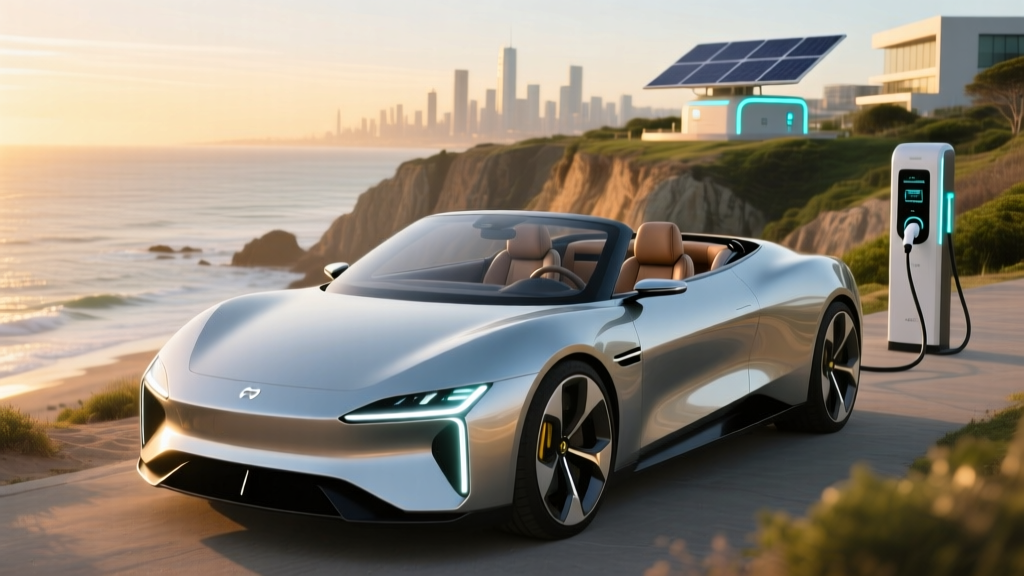
MG's electric roadster has generated significant buzz with its scissor-door design and claimed 316-mile WLTP range. However, U.S. availability remains uncertain and limited. MG (owned by SAIC Motor) has not established a widespread U.S. dealer network for this model, and import homologation is ongoing. If you can source one through a specialty importer:
| Spec | Value (WLTP / Preliminary) |
|---|---|
| WLTP Range | ~316 miles (single motor), ~270 miles (dual motor) |
| Estimated EPA Range | ~250–270 miles (single motor, if EPA-certified) |
| Battery Capacity | ~77 kWh usable, NMC |
| Peak DC Fast Charge | Reported ~120 kW |
| Horsepower | 335 HP (single motor) / 536 HP (dual motor) |
| 0–60 mph | ~4.9 sec (single) / ~3.2 sec (dual) |
| Estimated Price | $55,000–$70,000+ (import-dependent) |
| Federal Tax Credit | Not eligible (Chinese manufacture) |
Important caveat: WLTP range figures are measured under a different, more lenient testing cycle than the EPA. Expect real-world EPA numbers to be 15–20% lower. Until MG formally launches U.S. sales with EPA certification and NHTSA compliance, treat all specs as preliminary.
Electric Convertible vs. Gas Convertible: Cost and Ownership
Let's compare the MINI Cooper SE Convertible against the closest gas-powered rival, the MINI Cooper S Convertible, over a 5-year ownership period assuming 12,000 miles/year.
| Category | MINI Cooper SE Convertible (EV) | MINI Cooper S Convertible (Gas) |
|---|---|---|
| Base MSRP | $39,900 | $36,400 |
| Federal Tax Credit | $0 (not eligible) | N/A |
| Effective Purchase Price | $39,900 | $36,400 |
| Fuel/Energy Cost (5 yr) | ~$3,240 (at $0.15/kWh, 3.5 mi/kWh) | ~$9,000 (at $3.50/gal, 28 MPG combined) |
| Maintenance (5 yr) | ~$1,200 (no oil, fewer brake replacements) | ~$3,500 (oil changes, filters, brake wear) |
| Insurance (5 yr est.) | ~$7,500 | ~$6,500 |
| Estimated Depreciation (5 yr) | ~$18,000 | ~$16,000 |
| 5-Year Total Cost of Ownership | ~$69,840 | ~$71,400 |
| Cost Per Mile | ~$1.16 | ~$1.19 |
The EV breaks roughly even over five years despite the higher purchase price, primarily thanks to fuel and maintenance savings. However, the lack of a federal tax credit on the German-built MINI SE Convertible eliminates a significant advantage that other EVs enjoy. If you have access to cheap home electricity (under $0.12/kWh), the EV pulls further ahead.
Real-World Ownership Considerations
Home Charging Access
With ~114 miles of range, the MINI Cooper SE Convertible demands reliable home charging. Most owners will need a Level 2 home charger (240V, ~11 kW) to fully recharge overnight in roughly 4 hours. If you're limited to a standard 120V outlet (Level 1), expect to recover only ~25 miles of range in 8 hours — insufficient if you drive more than 30 miles daily.
- Level 2 charger equipment: $400–$700 (e.g., ChargePoint Home Flex, Emporia Level 2)
- Electrician installation: $500–$1,500 (depending on panel proximity and conduit runs)
- Panel upgrade (if needed): $1,500–$3,000 for older homes with 100A service
Check with a licensed electrician before purchasing to confirm your electrical panel has capacity for a dedicated 40A or 50A circuit.
Climate and Seasonal Reality
Convertibles and cold weather are an awkward pairing, and EVs compound this. Lithium-ion batteries lose efficiency in cold temperatures, and cabin heating draws heavily from the traction battery:
- Mild climate (60–80°F): Expect near-EPA range, top-down driving is comfortable
- Cold climate (below 40°F): Plan for 25–35% range reduction; the convertible top's insulation is thinner than a hardtop, increasing heating demands
- Hot climate (above 95°F): A/C usage reduces range by ~10–15%; battery thermal management may also draw power
If you live in a northern climate with harsh winters, an electric convertible will be a fair-weather second or third car — not a daily driver for all seasons.
Driving Patterns That Work
With 85–114 miles of real-world range, the current electric convertible is best suited for:
- Urban and suburban commuting under 40 miles round-trip
- Weekend leisure drives with charging at home between trips
- Warm-climate, top-down cruising where efficiency is less impacted
If your daily commute exceeds 60 miles one way, or you regularly take road trips over 150 miles, an electric convertible with current range limitations will require careful planning and frequent DC fast-charging stops.
Common Misconceptions About Electric Convertibles
| Myth | Fact |
|---|---|
| "There are plenty of electric convertibles to choose from." | As of 2026, only one mainstream model (MINI Cooper SE Convertible) is widely available new in the U.S. The segment is extremely limited. |
| "Electric convertibles have the same range as EV sedans." | Convertible aerodynamics (top down) increase drag by 15–25%, reducing highway range. Structural reinforcement also adds weight, further reducing efficiency. |
| "The Tesla Roadster is an electric convertible." | The Tesla Roadster (announced 2017) is a coupe with a removable glass roof panel — a targa-style design, not a traditional soft-top or retractable hardtop convertible. It remains unreleased as of 2026. |
| "I can get a $7,500 tax credit on any electric convertible." | Federal §30D tax credit eligibility depends on final assembly location, battery sourcing, MSRP caps, and buyer income limits. The German-built MINI SE Convertible does not currently qualify. Always check IRS guidelines for current rules. |
| "An electric convertible will save me money immediately." | Without a tax credit, the upfront premium over a gas convertible may take 5+ years to recoup through fuel and maintenance savings alone. |
What's Coming: Announced and Upcoming Models
The electric convertible pipeline offers some hope for buyers willing to wait:
- Porsche Boxster EV (announced): Porsche has confirmed the next-generation Boxster will be fully electric, built on the PPE platform. Expected in the 2027–2028 timeframe. Anticipated range: 250+ miles EPA. Pricing will likely start above $75,000.
- Fiat 124 Spider successor (speculative): Stellantis has hinted at an electric Fiat roadster, but nothing is confirmed for the U.S. market.
- Chinese-market models: Several Chinese automakers have shown electric convertible concepts, but U.S. import barriers and tariff structures make near-term availability unlikely.
All of these are announced or speculative — none are available for purchase today, and final specs, pricing, and availability may change significantly before launch.
Decision Framework: Should You Buy an Electric Convertible?
Choose an Electric Convertible (MINI Cooper SE) If:
- You want a fun, open-air city and suburban car with zero tailpipe emissions
- Your daily driving is under 60 miles round-trip
- You have access to Level 2 home charging (or can install it)
- You live in a mild climate or accept this as a fair-weather vehicle
- You're okay with a two-seat (or 2+2 with tiny rear seats) compact car
- You value instant torque, quiet operation, and minimal maintenance
Stick With a Gas Convertible If:
- You regularly drive more than 150 miles between stops
- You live in an apartment or lack home charging access
- You need a four-season daily driver in a cold climate
- You want a larger, more powerful convertible (Mustang, BMW 4 Series, etc.)
- You need the lowest possible upfront cost and maximum model selection
Wait for Upcoming Models If:
- You want 250+ miles of range in an electric drop-top
- You're eyeing a premium option like the upcoming electric Porsche Boxster
- You need a four-seat electric convertible with practical trunk space
First-Time EV Buyer Essentials for Convertible Shoppers
If the MINI Cooper SE Convertible would be your first EV, here's what you need to know beyond the window sticker:
- kW vs. kWh: kW (kilowatts) measures power — how fast you charge or how hard the motor pushes. kWh (kilowatt-hours) measures energy — the size of the battery. The MINI's ~40.7 kWh battery stores energy; its 95 kW peak charge rate is how fast it can accept energy at a DC fast charger.
- Charge curve taper: The advertised 95 kW peak only applies at low state-of-charge (roughly 10–30%). Above 80%, charging slows dramatically to protect battery health. A 10–80% charge takes ~30 minutes; 80–100% can take another 25–30 minutes.
- Preconditioning: On cold days, use the car's preconditioning feature while still plugged in to warm the battery before driving. This preserves range and enables faster DC charging.
- Insurance: EVs often carry higher insurance premiums due to repair costs and specialized parts. Get quotes before committing — budget $100–$200/year more than a comparable gas model.
- Tire wear: EVs are heavier and deliver instant torque, which accelerates tire wear. Budget for tire replacement every 25,000–35,000 miles instead of the 40,000+ miles typical of lighter gas cars.
- State incentives: While the federal credit may not apply, some states offer their own EV rebates or HOV lane access. Check your state's energy office or DMV for current programs.
Frequently Asked Questions
Are there any electric convertibles with over 200 miles of range?
Not currently available in the U.S. market. The MG Cyberster claims ~250–270 miles (estimated EPA equivalent), but it lacks widespread U.S. availability and formal EPA certification. The upcoming electric Porsche Boxster is expected to exceed 250 miles when it arrives around 2027–2028.
Can I charge an electric convertible at a Tesla Supercharger?
The MINI Cooper SE Convertible uses the CCS1 connector standard. Tesla has begun opening select Supercharger stations to non-Tesla EVs via the built-in adapter or through the Tesla app, but availability varies by location. Check the Tesla app or Tesla's non-Tesla charging page for compatible stations near you.
Does the convertible top affect EV range?
Yes. Driving with the top down increases aerodynamic drag by roughly 15–25%, depending on speed. At highway speeds (70+ mph), the effect is most pronounced. In city driving under 45 mph, the range impact is smaller — roughly 5–10%. The top-up position is more aerodynamically efficient, though still less so than a fixed hardtop due to the softer, less optimized roofline.
What happens to the battery in extreme heat with the top down?
Modern EVs like the MINI Cooper SE have active thermal management systems that cool the battery pack during driving and charging. However, parking in direct sunlight with the top down in 100°F+ heat will raise cabin and battery temperatures. Preconditioning the car while plugged in before driving helps mitigate this. Long-term battery degradation data for convertibles specifically is limited, but fueleconomy.gov provides general EV efficiency data adjusted for temperature.
Is an electric convertible practical as a only car?
For most households, no. The combination of limited range (~85–114 real-world miles), two-seat (or 2+2 micro-seat) practicality, minimal trunk space with the top down, and seasonal limitations makes it best suited as a second or third vehicle. If your household has another car for longer trips and daily hauling, an electric convertible can be an excellent fair-weather fun car.
Will more electric convertibles be available soon?
The next major entry is expected to be the electric Porsche Boxster, likely arriving for the 2027 or 2028 model year. Beyond that, the segment depends on automaker willingness to invest in a niche body style. As battery energy density improves and costs decline, the business case for electric convertibles strengthens — but don't expect a flood of options before 2028.