Ownership of a Tesla Model 3 or Model Y goes far beyond the spec sheet. After logging tens of thousands of miles across multiple Tesla vehicles, I've found that the biggest efficiency and convenience gains come from features most owners never activate. These Tesla tricks—buried in submenus, undocumented gestures, and thermal-management behaviors—can recover 15–30 miles of range, cut your Supercharger bill, and transform daily usability.
This guide pairs each trick with hard data: EPA range figures from fueleconomy.gov, real-world cold-weather losses, charging-curve realities, and the exact 2026 pricing and §30D tax-credit rules you need before buying. Whether you're a new owner or shopping your first Tesla, these are the features and habits that actually move the needle.
Tesla Trick #1: Precondition the Battery to Unlock Peak DC Charging Speed
The single most impactful Tesla trick is also the least understood. Tesla's battery management system (BMS) throttles DC fast-charging power when the battery pack is cold. If you drive to a Supercharger without preconditioning, your peak charge rate may be cut by 40–60% for the first 10–15 minutes.
The trick: Set a Supercharger as your navigation destination at least 15–20 minutes before arrival. The car will automatically begin warming the battery pack to the optimal ~95°F (35°C) temperature window, enabling peak charge rates immediately upon plug-in.
| Specification | Value |
|---|---|
| EPA Estimated Range | 341 miles |
| Real-World Range (highway 75 mph) | ~275–295 miles |
| Real-World Range (cold, 20°F) | ~230–260 miles |
| Battery Capacity (usable) | ~75 kWh (NMC chemistry) |
| Max DC Fast-Charge Rate | 250 kW peak (V3 Supercharger) |
| 10–80% DC Fast-Charge Time | ~25–28 minutes (preconditioned) |
| Level 2 Home Charging (48A / 11.5 kW) | ~44 miles per hour of charging |
| Level 2 Home Charging (32A / 7.7 kW) | ~30 miles per hour of charging |
| 0–60 mph | 4.2 seconds |
| Horsepower | ~346 hp (dual motor AWD) |
| Drivetrain | Dual-motor all-wheel drive |
| EPA Efficiency | 132 MPGe combined / 25 kWh/100 mi |
| Cargo Volume | 23 cu ft (rear trunk) + 3.1 cu ft (frunk) |
| Rear Legroom | 35.2 inches |
| Battery & Drive Unit Warranty | 8 years / 120,000 miles (70% capacity retention minimum) |
| Base MSRP (Long Range AWD) | $47,740 (before destination) |
Why it matters: On a V3 Supercharger (250 kW peak), a preconditioned Model 3 Long Range can accept ~250 kW from roughly 10–30% state of charge before the charge curve tapers. Without preconditioning, that same session may start at 90–120 kW, adding 8–12 minutes to your stop. Over a year of road trips, that's hours recovered.
Tesla Trick #2: Use Scheduled Departure + Off-Peak Charging to Slash Electricity Costs
Most Tesla owners plug in when they get home and let the car charge immediately. This often means charging during peak utility rate windows (4–9 PM in many regions), where electricity can cost $0.25–$0.45/kWh.
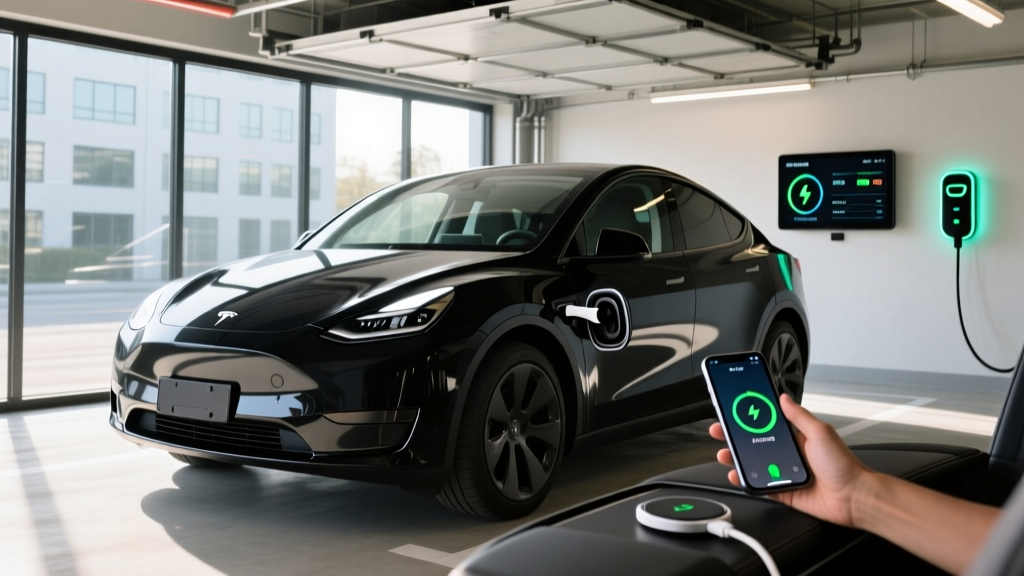
The trick: In the Tesla app, set a Scheduled Departure time (e.g., 7:30 AM) and enable Off-Peak Charging with your utility's off-peak window (often 11 PM – 6 AM). The car will delay charging until rates drop, then finish just before you leave—warming the battery and cabin in the process.
At off-peak rates of $0.08–$0.12/kWh, a full 75 kWh charge costs roughly $6–$9. At peak rates, that same charge costs $19–$34. Over a year of daily commuting, this trick alone saves $400–$800 depending on your utility's rate structure.
Tesla Trick #3: Enable Regenerative Braking "Hold" Mode for One-Pedal Driving
Tesla removed the adjustable regen strength toggle in 2020 but restored it for newer vehicles in late 2023. If your Model 3 or Model Y offers the setting, switch regenerative braking to "Hold" mode (under Controls > Pedals & Steering).
The trick: Hold mode brings the car to a complete stop using regen alone and holds it without touching the brake pedal. This recovers more kinetic energy than the default "Stop" mode, reduces brake pad wear (Tesla owners routinely report 80,000+ miles on original brake pads), and makes stop-and-go traffic dramatically less fatiguing.
In city driving, Hold mode can improve efficiency by 3–7% compared to blending friction brakes, because the motor recaptures energy that brake pads would waste as heat.
Tesla Trick #4: Monitor the Charge Curve—Don't Wait Past 80% at Superchargers
DC fast charging is not linear. Tesla's charge curve peaks early and tapers aggressively above 80% state of charge to protect the NMC battery cells.
| State of Charge | Approx. Power (kW) | Miles Added in 5 Min |
|---|---|---|
| 10–30% | 220–250 kW | ~55–65 miles |
| 30–50% | 170–210 kW | ~42–52 miles |
| 50–70% | 120–160 kW | ~30–40 miles |
| 70–80% | 75–110 kW | ~18–27 miles |
| 80–90% | 40–65 kW | ~10–16 miles |
| 90–100% | 15–35 kW | ~4–8 miles |
The trick: Plan road-trip stops to arrive at ~10–15% SoC and charge only to 70–80%. Charging from 10% to 80% takes roughly 25–28 minutes. Charging from 80% to 100% takes an additional 25–35 minutes at rapidly declining power. On a multi-stop road trip, two shorter charges (10→80%) are faster than one long charge (10→100%).
Tesla Trick #5: Unlock Hidden Sentry Mode & Dashcam Features
Sentry Mode uses Tesla's eight external cameras to monitor your surroundings while parked, recording clips when motion or impacts are detected. But most owners don't optimize it.
The tricks:
- Exclude trusted locations: Set your home and workplace as Sentry Mode exclusions so the system doesn't run (and drain ~1 mile of range per hour) while parked in your garage.
- Use the USB drive viewer: Insert a formatted USB drive (or use Tesla's Glovebox USB-C port on newer models) to save dashcam and Sentry clips. Review footage directly on the car's touchscreen via the Dashcam viewer app—no laptop needed.
- Live camera access: With Premium Connectivity ($9.99/month), use the Tesla app to view live camera feeds remotely, check on your car, and even use the horn and lights to deter threats.
Range cost reality: Sentry Mode consumes roughly 200–300 watts continuously. Over a 10-hour workday, that's 2–3 kWh, or approximately 8–12 miles of range. At home in a garage, it's wasted energy—hence the exclusion trick.
Tesla Trick #6: Hyper-Mile with Chill Mode and Climate Tweaks
If you're trying to squeeze maximum range from a charge, two settings make a measurable difference:
Chill Mode (Controls > Pedals & Steering > Acceleration): This limits torque output and softens throttle response. In testing, Chill Mode reduces energy consumption by 3–5% in mixed driving by discouraging aggressive acceleration—the single largest efficiency killer in EVs.
Seat heaters over cabin heat: Tesla's heat pump (standard on all Model 3/Y since 2021) is efficient, but resistive seat heaters and the heated steering wheel draw far less power than heating the entire cabin air. In temperatures between 35–50°F, using seat heaters with the cabin set to 65°F instead of 72°F can recover 10–20 miles of range on a 200-mile trip.
Pros
- Class-leading Supercharger network: 60,000+ V3/V4 stalls globally with 99.5%+ uptime
- Best-in-class efficiency: 25 kWh/100mi (Model 3 LR) beats most competitors by 10–15%
- Over-the-air updates add new features quarterly without dealer visits
- Strong resale value relative to other EVs
- Excellent thermal management preserves battery longevity
- Frunk + rear trunk provides 26+ cu ft total cargo space
Cons
- No Apple CarPlay or Android Auto—Tesla's native UI only
- Panel gap quality still inconsistent compared to legacy luxury brands
- Insurance premiums 15–30% higher than comparable non-Tesla EVs
- FSD (Supervised) remains SAE Level 2—requires full driver attention at all times
- No physical buttons for climate, wipers, or glovebox—everything is touchscreen
- Rear visibility is limited; relies heavily on backup camera
Tesla Trick #7: Navigate the 2026 Federal EV Tax Credit (§30D)
Federal tax credit eligibility for Tesla vehicles in 2026 involves a web of requirements under IRS §30D. The credit is now available as a point-of-sale transfer, meaning you can apply it as an immediate discount at purchase rather than waiting to claim it on your tax return.
| Model / Trim | Base MSRP | Max §30D Credit | Effective Price (if eligible) |
|---|---|---|---|
| Model 3 RWD | $38,990 | $7,500 | $31,490 |
| Model 3 Long Range AWD | $47,740 | $7,500 | $40,240 |
| Model 3 Performance | $54,990 | $7,500 | $47,490 |
| Model Y Long Range AWD | $46,630 | $7,500 | $39,130 |
| Model Y Performance | $52,490 | $7,500 | $44,990 |
Critical eligibility caveats (per IRS §30D rules):
- Income caps: Modified AGI must not exceed $150,000 (single), $225,000 (head of household), or $300,000 (married filing jointly).
- MSRP caps: Sedans (Model 3) must be under $55,000 MSRP; SUVs/trucks (Model Y) must be under $80,000. All current Model 3 and Model Y trims qualify.
- Battery sourcing: A percentage of critical minerals and battery components must be sourced from the US or free-trade-agreement countries. These thresholds increase annually. Verify current-year compliance on the IRS qualified vehicles list before purchasing, as eligibility can change mid-year.
- Point-of-sale transfer: You can transfer the credit to the dealer at purchase for an immediate price reduction, but you must still meet income requirements when filing taxes. If your income exceeds the cap, the IRS will recapture the credit.
Tesla Trick #8: Use Tesla Profiles and Automatic Climate Presets
Every Tesla supports multiple driver profiles linked to specific key fobs or phone keys. The trick is to configure each profile with personalized settings that load automatically:
- Seat position, mirror angles, and steering wheel height adjust automatically when your phone is detected.
- Climate presets: Set your preferred cabin temperature, seat heater level, and steering wheel heater for each profile. The car remembers and applies these on entry.
- Navigation favorites, media presets, and drive mode (Chill, Sport) all tie to your profile.
For households with two drivers, this eliminates 30+ seconds of manual adjustment per trip. Over a year, it's a meaningful quality-of-life improvement.
Tesla Trick #9: Optimize Autopilot and FSD (Supervised) for Real Conditions
The tricks:
- Set following distance to 3–4 on highways for smoother braking and better regen recovery. Distance 2 causes aggressive deceleration that wastes energy.
- Use the "Assertive" FSD profile sparingly: It makes more aggressive lane changes and tighter gap acceptance, which can be useful in dense traffic but increases energy consumption and passenger discomfort.
- Disengage before construction zones: FSD struggles with temporary lane markings, cones, and shifted lanes. Take over manually to avoid sudden braking or incorrect pathing.
- Enable Automatic Blind Spot Camera: When you activate a turn signal, the car displays the blind-spot camera feed on the touchscreen—critical since the Model 3/Y have no traditional side mirrors with blind-spot indicators.
Tesla Trick #10: Schedule Software Updates and Manage the 12V Battery
Tesla pushes over-the-air (OTA) software updates every 2–6 weeks. These can add features, improve efficiency, and fix bugs—but poorly timed updates can interrupt your schedule.
The trick: Set your update preference to "Standard" (not "Advanced") and schedule updates for a specific window (e.g., 2–4 AM Tuesday). The car downloads updates over Wi-Fi and installs during your chosen window. Avoid "Advanced" unless you want updates within 24 hours of release, which can interrupt morning routines.
12V battery awareness: Tesla switched to a lithium-ion 12V battery in 2021+ Model 3/Y vehicles, which lasts longer than the previous lead-acid unit but can still fail. If the car will sit unused for 3+ weeks, keep it plugged in to a Level 2 charger. The car will maintain the 12V battery from the high-voltage pack. A dead 12V battery means you cannot unlock or start the car, even if the main battery is full.
Who Should Buy a Tesla in 2026?
Choose the Model 3 if: You prioritize efficiency (25 kWh/100mi is best-in-class), want the lowest entry price ($38,990 before credits), commute solo or with one passenger, and value driving dynamics. The refreshed "Highland" Model 3 has improved ride quality, ventilated seats, and a quieter cabin.
Choose the Model Y if: You need family cargo space (76 cu ft with rear seats folded), prefer a higher seating position, tow occasionally (3,500 lb capacity), or regularly carry rear-seat passengers. The Model Y's hatchback design makes it far more practical for strollers, groceries, and luggage.
Look at competitors if: You need Apple CarPlay (Hyundai Ioniq 5, BMW i4), prefer physical buttons and traditional controls, want a luxury badge (BMW iX, Mercedes EQB), or live in an area with sparse Supercharger coverage and need CCS compatibility with Electrify America stations (though Tesla now offers a CCS adapter).
Frequently Asked Questions
What is the real-world range of a Tesla Model 3 Long Range?
The EPA rates the 2026 Model 3 Long Range AWD at 341 miles. In real-world highway driving at 70–75 mph in moderate temperatures, expect 275–295 miles. In cold weather below 30°F, range drops to approximately 230–260 miles. City driving with regenerative braking can actually exceed the EPA estimate, sometimes reaching 320–340 miles in stop-and-go traffic at moderate speeds.
How fast does a Tesla charge at home and on the road?
On a V3 Supercharger (250 kW peak), the Model 3 Long Range charges from 10% to 80% in approximately 25–28 minutes when the battery is preconditioned. At home on a 48-amp Level 2 charger (11.5 kW), you'll add roughly 44 miles of range per hour—enough to fully recharge overnight. On a standard 120V outlet (Level 1, ~1.4 kW), expect only 3–5 miles per hour, which is suitable only for overnight top-ups on low-mileage days.
Does the Tesla Model 3 qualify for the $7,500 federal tax credit?
Yes, the 2026 Model 3 qualifies for up to $7,500 under IRS §30D, provided you meet income caps ($150K single / $300K joint), the vehicle MSRP is under $55,000 (all trims qualify), and battery-sourcing requirements are met for the current production batch. The credit can be transferred at the point of sale for an immediate price reduction. Always verify eligibility on the IRS qualified clean vehicles page before purchasing, as sourcing compliance can shift.
Is a Tesla worth buying versus the Hyundai Ioniq 5 or BMW i4?
The Tesla's advantages are the Supercharger network (unmatched reliability and coverage), OTA updates, best-in-class efficiency, and strong resale value. The Ioniq 5 offers 800V ultra-fast charging (10–80% in ~18 minutes on a 350 kW charger), Apple CarPlay, and a more distinctive design. The BMW i4 provides a traditional luxury interior with physical controls and CarPlay. If Supercharger access matters for your road-trip habits, Tesla still holds the edge. If you mostly drive locally and want CarPlay, the Ioniq 5 is a strong alternative.
How long does a Tesla battery last, and what does replacement cost?
Tesla warranties the Model 3/Y battery for 8 years or 120,000 miles (whichever comes first), guaranteeing at least 70% capacity retention. Real-world data from fleet operators shows most Tesla NMC batteries retain 85–92% capacity at 100,000 miles when owners avoid frequent 100% charges and minimize DC fast charging. A full battery replacement outside warranty currently costs $12,000–$16,000 depending on the pack. For daily use, Tesla recommends charging to 80% (or 100% for LFP-equipped RWD models) and only charging to 100% before long trips.
What's the biggest mistake new Tesla owners make?
The most common mistakes are: (1) not preconditioning before Supercharging, which adds 10–15 minutes to every road-trip stop; (2) charging to 100% daily on NMC batteries, which accelerates degradation; (3) leaving Sentry Mode on at home, wasting range; and (4) not scheduling off-peak charging, which doubles or triples home electricity costs. The tricks in this guide address each of these directly.
Sources: EPA range and efficiency data from fueleconomy.gov. Federal tax credit rules from IRS §30D. Tesla specifications from tesla.com. Safety ratings from NHTSA and IIHS.