The Quick Answer: Does an Electric Toyota Tacoma Exist?
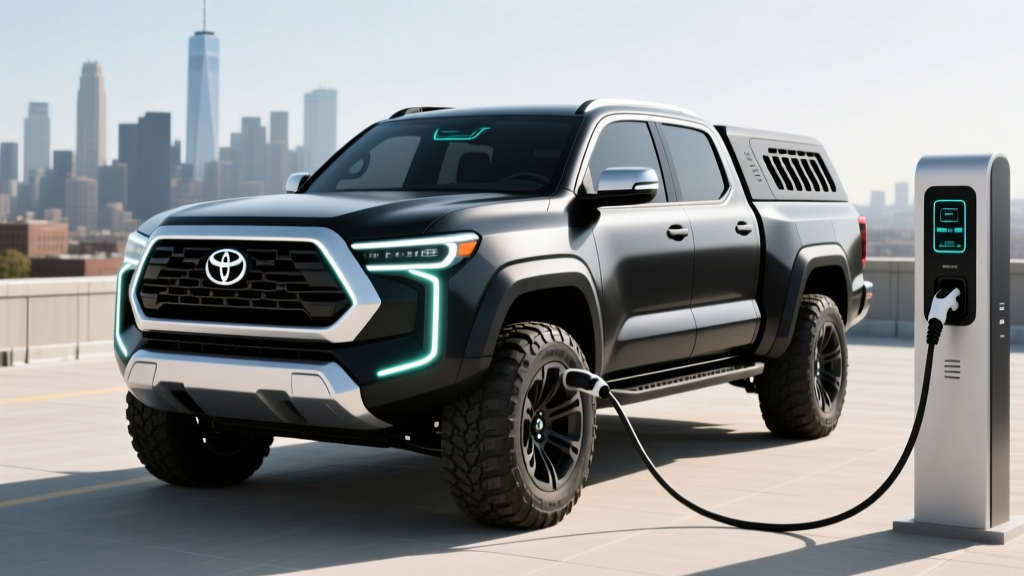
As of early 2026, Toyota does not sell a fully electric Tacoma. There is no battery-electric (BEV) Tacoma in Toyota's U.S. lineup, nor has one been officially announced with a confirmed production date. The current fourth-generation Tacoma (introduced for 2024) is available with a turbocharged 2.4-liter gasoline engine or the i-Force Max hybrid powertrain, which pairs that same turbo four-cylinder with a small electric motor integrated into the transmission. If you're searching for an "electric Toyota Tacoma," the closest option Toyota currently offers is this hybrid variant — not a plug-in, and not a zero-tailpipe-emission vehicle.
That said, Toyota has signaled broader EV truck ambitions. The company unveiled the bZ4X electric SUV and has committed to expanding its battery-electric lineup globally. Industry reports suggest Toyota is developing an electric pickup to compete in the growing EV truck segment, but no production timeline, battery specs, or pricing has been confirmed for a Tacoma-sized electric truck. Until Toyota makes an official announcement, buyers seeking an electrified midsize pickup must weigh the Tacoma i-Force Max hybrid against fully electric alternatives from other manufacturers.
The Closest Thing: 2026 Toyota Tacoma i-Force Max Hybrid
The i-Force Max is Toyota's hybrid powertrain for the Tacoma, available on TRD Off-Road, TRD Sport, Limited, and TRD Pro trims. It is a conventional hybrid (HEV), not a plug-in hybrid (PHEV). That means you cannot charge it from a wall outlet — the small battery recharges solely through regenerative braking and the gasoline engine.
| Spec | Value |
|---|---|
| Powertrain | 2.4L turbo 4-cyl + electric motor (HEV) |
| Combined Output | 326 hp / 465 lb-ft torque |
| EPA Fuel Economy (4x4) | ~23 MPG combined (varies by trim) |
| Electric-Only Driving | Not available (no EV mode) |
| Plug-In Charging | No — HEV, not PHEV |
| Towing Capacity | Up to 6,000 lbs |
| Base MSRP (TRD Off-Road 4x4) | ~$42,900 |
| Federal EV Tax Credit (§30D) | Not eligible (not a BEV or PHEV) |
The hybrid system delivers a meaningful torque bump over the standard turbo four (which makes 278 hp), making it feel more responsive at low speeds and under load. Fuel economy, however, is only marginally better than the non-hybrid — typically 1-2 MPG combined. This is a performance-oriented hybrid, not a fuel-sipping one. There is no electric-only range, no plug, and no eligibility for the IRS §30D federal clean vehicle credit, which requires a plug-in battery-electric or plug-in hybrid vehicle with at least 7 kWh of battery capacity.
Electric Truck Alternatives: What Can You Actually Buy?
If you want a fully electric pickup truck in 2026, the Tacoma-sized (midsize) EV truck segment remains extremely thin. Most available electric trucks are full-size. Here's how the landscape looks:
| Vehicle | Type | EPA Range | Starting MSRP | §30D Credit Eligible? |
|---|---|---|---|---|
| Ford F-150 Lightning | BEV (full-size) | 230–320 mi | ~$55,000 | Yes (varies by sourcing/income) |
| Rivian R1T (Dual-Motor) | BEV (midsize) | 270–410 mi | ~$75,000 | Yes (varies; check battery sourcing) |
| Chevrolet Silverado EV | BEV (full-size) | ~390–440 mi | ~$57,000 | Yes (varies) |
| Toyota Tacoma i-Force Max | HEV (midsize) | N/A (gas+hybrid) | ~$42,900 | No |
The Rivian R1T is the closest competitor to a hypothetical electric Tacoma in terms of size — it's a midsize truck with genuine off-road capability. However, it starts roughly $30,000 higher than the Tacoma hybrid. The F-150 Lightning and Silverado EV are substantially larger vehicles, which matters for garage fit, parking, and daily maneuverability. None of these directly replicate the Tacoma's combination of midsize footprint, off-road reputation, and sub-$45,000 entry price — but they do offer zero tailpipe emissions, lower per-mile fueling costs, and access to the federal tax credit (subject to IRS income and battery-sourcing requirements).
Real Costs: Tacoma Hybrid vs. an Electric Truck
The purchase price is only part of the equation. Let's compare five-year ownership costs for the Tacoma i-Force Max against a representative electric truck (Ford F-150 Lightning extended-range), assuming 15,000 miles per year, home charging access, and a national-average electricity rate of $0.16/kWh versus $3.50/gallon gasoline.
| Cost Category | Tacoma i-Force Max (HEV) | F-150 Lightning (BEV) |
|---|---|---|
| Purchase Price (base) | $42,900 | $55,000 |
| Federal Tax Credit | $0 | Up to $7,500 (if eligible) |
| Effective Purchase | $42,900 | ~$47,500 |
| Fuel/Energy (5 yr / 75k mi) | ~$11,400 (gas @ 23 MPG) | ~$4,500 (electric @ 2.0 kWh/mi) |
| Maintenance (5 yr) | ~$3,000 (oil, filters, brakes) | ~$1,200 (no oil changes, regen saves brakes) |
| Insurance (5 yr est.) | ~$8,500 | ~$10,500 |
| Estimated 5-Yr Total | ~$65,800 | ~$63,700 |
Key takeaways: The Lightning's higher sticker price is partially offset by the federal tax credit and substantially lower fueling costs. Over five years, the total cost of ownership is remarkably close — with the EV pulling slightly ahead on operating costs but trailing on insurance premiums (EV insurance tends to run 15-25% higher due to repair costs and battery replacement risk). Your actual numbers depend heavily on local electricity rates, gasoline prices, state incentives, and whether you qualify for the §30D credit based on income caps ($150K single / $300K joint) and battery-sourcing requirements.
Note: State and local incentives vary widely and change frequently. Check your state's energy office or fueleconomy.gov for current programs.
What Should a First-Time EV Truck Buyer Know?
If you're coming from a Tacoma or another midsize gas truck and considering your first electric vehicle, these realities matter before you sign anything:
Charging Access Is Non-Negotiable
Home Level 2 charging (240V, typically 7–11 kW) is the foundation of practical EV ownership. Without it, you're dependent on public DC fast charging, which costs 2–4× more per mile than home charging and adds significant time to your routine. A Level 2 home installation typically costs $800–$2,500 depending on panel capacity and run length — more if your home needs a 200-amp panel upgrade ($1,500–$3,000). If you rent, live in a condo, or lack garage/driveway access, an EV truck becomes substantially less convenient.
Range Shrinks Under Load and in Cold
EPA range estimates are generated under mild conditions. Real-world range in an electric truck drops 15–30% in sustained cold weather (below 30°F), and towing can cut range by 40–50%. A truck rated at 300 miles EPA may deliver only 160–180 miles while towing a trailer in winter. If you regularly tow or live in a cold climate, plan for this.
Charging Speed Is Measured in a Curve, Not a Peak
Manufacturers advertise peak DC fast-charge rates (e.g., "up to 250 kW"), but that peak is sustained only briefly at low state of charge. Above 80% SoC, charging slows dramatically to protect battery health. A 10–80% charge might take 20–25 minutes at a capable charger, but 80–100% can add another 20 minutes. Plan road trips around 10–80% charges for efficiency.
Myths vs. Facts: Electric Trucks and the Tacoma
| Myth | Fact |
|---|---|
| "Toyota makes an electric Tacoma." | As of 2026, no fully electric Tacoma exists. The i-Force Max is a conventional hybrid (HEV) — no plug, no EV mode. |
| "EV trucks can't tow." | EV trucks like the F-150 Lightning tow up to 10,000 lbs and deliver instant torque. The limitation is range reduction (40–50%) while towing, not capability. |
| "Hybrid means I can plug it in." | The Tacoma i-Force Max is an HEV, not a PHEV. It has no charge port. Only plug-in hybrids (PHEVs) and battery-electric vehicles (BEVs) can be charged externally. |
| "EV batteries need replacing every few years." | Modern EV batteries are warrantied for 8 years/100,000 miles minimum (federally mandated). Real-world degradation data shows most lose 5–10% capacity over that period, not catastrophic failure. |
| "I'll get the full $7,500 tax credit." | The §30D credit has income caps, MSRP caps ($80K for trucks), battery-sourcing requirements, and must be claimed in the tax year of purchase or transferred at point of sale. Eligibility is not universal — verify at irs.gov. |
Decision Framework: What Should You Buy?
Choose the Toyota Tacoma i-Force Max Hybrid if:
- You want a midsize truck with proven off-road capability and Toyota's reliability reputation
- You don't have reliable access to home Level 2 charging
- You regularly tow and don't want to manage range limitations
- You want a lower upfront purchase price (sub-$45K) and don't need EV tax credits
- You drive in remote areas with sparse charging infrastructure
Choose a fully electric truck (F-150 Lightning, Rivian R1T, Silverado EV) if:
- You have home Level 2 charging access and drive mostly within 150 miles of home
- You want the lowest per-mile fueling cost and minimal scheduled maintenance
- You qualify for the federal §30D tax credit (check income and sourcing rules)
- You value instant torque, quiet operation, and zero tailpipe emissions
- You're willing to accept a higher upfront cost and plan road trips around charging
Wait for a potential electric Tacoma if:
- You want a midsize electric truck specifically from Toyota
- You're not in a rush — no production date has been confirmed
- You're comfortable that specs, pricing, and availability remain entirely unknown
Frequently Asked Questions
Will Toyota ever make an electric Tacoma?
Toyota has indicated it will expand its EV lineup, and an electric midsize pickup is widely expected at some point. However, as of early 2026, Toyota has not announced a production electric Tacoma with confirmed specs, pricing, or a release date. Any reports of a specific launch year remain speculative until Toyota officially confirms details.
Is the Tacoma i-Force Max a plug-in hybrid?
No. The i-Force Max is a conventional hybrid (HEV). It has no charge port, no electric-only driving mode, and no external charging capability. The small battery is recharged exclusively through regenerative braking and the gasoline engine. If you want a Toyota plug-in hybrid, the RAV4 Prime (PHEV) offers about 42 miles of electric-only range — but it's an SUV, not a truck.
Does the Tacoma hybrid qualify for any tax credits?
The Tacoma i-Force Max does not qualify for the federal §30D clean vehicle credit, which requires a battery-electric or plug-in hybrid vehicle with at least 7 kWh of battery capacity. Conventional hybrids are excluded. Some states may offer minor incentives for hybrids, but these vary by jurisdiction and change frequently — check your state's energy office for current programs.
What's the best electric truck for someone who wants a Tacoma-sized vehicle?
The Rivian R1T is the closest midsize electric truck currently available, with strong off-road capability and up to 410 miles of EPA range (with the Max Pack battery). However, it starts around $75,000 — significantly more than the Tacoma. If size is less important than price, the Ford F-150 Lightning starts around $55,000 and is a full-size truck. There is currently no electric truck that matches the Tacoma's combination of midsize dimensions, off-road heritage, and sub-$45,000 pricing.
How much does it cost to charge an electric truck at home?
At the U.S. national average electricity rate of roughly $0.16/kWh, charging a truck with a 130 kWh battery (like the F-150 Lightning extended range) from empty to full costs approximately $20.80. That delivers around 280–300 real-world miles — roughly equivalent to $3.50/gallon gas in a truck getting 17 MPG. Over 15,000 miles per year, home charging an electric truck typically costs $800–$1,200 versus $2,000–$2,800 for gasoline, depending on local rates and driving patterns.
Can I install a Level 2 charger in my garage?
Most single-family homes with a 200-amp electrical panel can support a Level 2 (240V, 32–48 amp) charger installation. Costs typically range from $800 to $2,500 for the charger unit and electrician labor, assuming the panel is near the garage. If your home has an older 100-amp panel, an upgrade to 200 amps may be required, adding $1,500–$3,000. Always get a quote from a licensed electrician before purchasing equipment — they can assess your panel capacity, wire run distance, and local permit requirements.
Sources: EPA fuel economy data via fueleconomy.gov; IRS §30D credit rules via irs.gov; Toyota specifications via toyota.com.