Why Everyone Is Asking If Tesla Is Giving Up on Car Sales
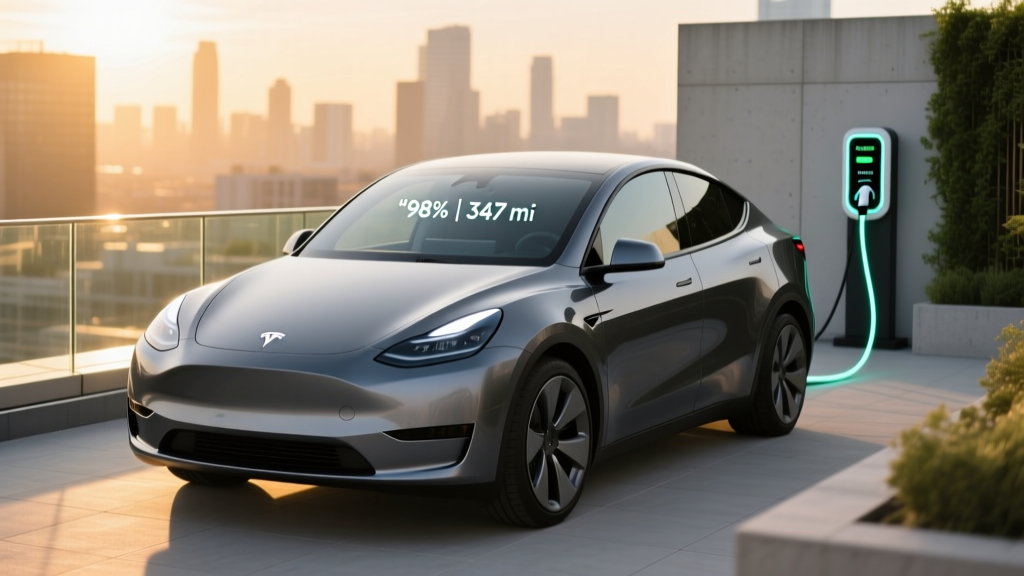
Type "tesla throws in the towel on car sales" into any search engine in 2026 and you'll find a storm of headlines, Reddit threads, and YouTube takes. The narrative is seductive: price cuts, inventory piles, Elon Musk's political distractions, and rising competition from Hyundai, BYD, and Ford have supposedly pushed Tesla to the brink. But the data tells a more nuanced story. Tesla still sells more EVs in the U.S. than any other brand, and the refreshed 2026 Model Y (Juniper) remains the best-selling electric vehicle in America. What has changed is the margin structure, the competitive landscape, and the brand's cultural cachet.
This review cuts through the clickbait. We'll put the 2026 Tesla Model Y Long Range AWD through the full AutoEdgeView gauntlet — EPA vs. real-world range, charging curves, tax credit eligibility, and whether it still deserves your garage versus a Hyundai Ioniq 5, Ford Mustang Mach-E, or Chevrolet Equinox EV.
2026 Tesla Model Y Long Range AWD: Core Specs
| Spec | Value |
|---|---|
| EPA Range | 320 miles |
| Battery (usable) | ~75 kWh, NMC (nickel-manganese-cobalt) |
| Drivetrain | Dual-motor AWD |
| Horsepower | 384 hp (combined) |
| 0–60 mph | 4.8 seconds |
| Peak DC Fast Charge | 250 kW (Supercharger V3/V4) |
| 10–80% DC Time | ~25 minutes |
| Level 2 Home Charge | 11.5 kW (~44 mi/hr) |
| Efficiency | 122 MPGe combined / 28 kWh/100 mi |
| Cargo (rear seats up) | 30.2 cu ft |
| Cargo (rear seats folded) | 72.1 cu ft |
| Rear Legroom | 41.6 in (Juniper stretch) |
| Base MSRP | $46,630 (incl. destination) |
| As-Tested (FSD, red paint, 20" wheels) | $56,130 |
| Battery/Drive Unit Warranty | 8 years / 120,000 miles |
| Basic Vehicle Warranty | 4 years / 50,000 miles |
Source: fueleconomy.gov and Tesla's official 2026 spec sheet.
Real-World Range: What 320 EPA Miles Actually Means
Real-World Highway (70 mph, 72°F): ~275–290 miles
Real-World Highway (32°F, heater on): ~225–250 miles
City/Commuter (regen-heavy): ~310–330 miles
The Juniper refresh added a heat pump as standard and slightly improved the drag coefficient to 0.23 Cd, which helps highway efficiency. But physics is physics: at 70 mph with climate control, expect roughly 10–15% below EPA. In sub-freezing winter conditions — particularly the Midwest and Northeast — plan on losing 20–30% of rated range. The Model Y's NMC chemistry is energy-dense but more temperature-sensitive than LFP packs found in the base RWD trim.
For most commuters doing 40–60 miles round trip with home charging, the Long Range AWD offers a comfortable 4–5 day buffer between charges. Road trippers will find Superchargers roughly every 150–180 miles on major interstates, making 300-mile days trivial with one 20-minute stop.
Charging Speed: The Supercharger Moat Still Matters
| Level | Power | Miles Added per Hour | Notes |
|---|---|---|---|
| Level 1 (120V household) | ~1.4 kW | ~5 mi/hr | Emergency/top-up only |
| Level 2 (240V, 48A Wall Connector) | 11.5 kW | ~44 mi/hr | Full charge in ~7 hours |
| DC Fast (Tesla Supercharger V3) | Peak 250 kW | ~1,000 mi/hr at peak | 10–80% in ~25 min |
| DC Fast (CCS adapter, Electrify America) | Peak ~150 kW | ~600 mi/hr at peak | Slower curve, taper early |
Tesla's charging curve on V3 Superchargers remains among the best in the industry. The pack pulls a sustained 240–250 kW from roughly 10% to 35% SoC, then tapers to ~150 kW by 60%, and drops sharply above 85%. This is why Tesla quotes 10–80% times rather than 0–100% — charging the final 20% can take as long as the first 70%.
Since 2024, Tesla has opened its Supercharger network to NACS-equipped rivals (Ford, Rivian, GM via adapter), which has increased stall congestion at popular corridors. However, Tesla owners still benefit from native plug-and-charge integration and automatic battery preconditioning when navigating to a Supercharger — a feature that warms the pack for optimal charge acceptance and is still not universally matched by competitors.
Tax Credits, Pricing, and the True Cost to Buy
| Item | Amount |
|---|---|
| Long Range AWD MSRP (incl. destination) | $46,630 |
| Federal §30D Credit (if eligible) | –$7,500 (point-of-sale) |
| Effective Price (qualified buyer) | $39,130 |
| Estimated State Rebate (CA, CO, MA vary) | –$1,000 to –$4,000 |
The Model Y Long Range AWD qualifies for the full $7,500 IRS §30D federal tax credit for 2026, available as a point-of-sale reduction at the dealer. But eligibility is not automatic:
- MSRP cap: SUVs must be under $80,000 — the Model Y clears this easily.
- Buyer income cap: AGI must not exceed $150,000 (single) / $300,000 (joint).
- Battery sourcing: A percentage of critical minerals and battery components must be sourced from the U.S. or FTA partners. Tesla's Austin-built packs have met this threshold through 2026, but the rules tighten annually.
If you exceed the income cap, the base RWD Model Y (starting ~$41,630) is still credit-eligible and uses an LFP battery, which trades some range (295 mi EPA) for longer cycle life and the ability to charge to 100% daily without degradation concerns.
Pros, Cons, and the Verdict vs. Competitors
Pros
- Supercharger network remains the most reliable public DC network in North America
- Class-leading efficiency (122 MPGe combined)
- Best-in-class cargo volume (72.1 cu ft folded) for a crossover EV
- Over-the-air updates continuously add features
- Strong resale value relative to most EVs
- Native NACS — no adapter needed at Superchargers
Cons
- No physical stalks — turn signals are on the steering wheel (Juniper change, polarizing)
- Minimalist interior feels sparse at $47K+ price point
- FSD (Supervised) remains a Level 2 system, not true autonomy
- Brand perception has eroded among some buyer demographics since 2024
- Ride quality firm on 20" wheels; 19" recommended for comfort
- Rear visibility compromised by sloping roofline
Choose the Hyundai Ioniq 5 if: You prefer 800V ultra-fast charging (10–80% in 18 min), a more distinctive design, and physical buttons.
Choose the Ford Mustang Mach-E if: You want a sportier driving feel and don't mind slightly lower efficiency.
Choose the Chevrolet Equinox EV if: Budget is paramount — it starts ~$33K and still delivers 315+ mi of range.
Who Should Actually Buy the 2026 Model Y?
The Model Y Long Range AWD is a Swiss-army-knife EV: competent at commuting, family hauling, and road-tripping without excelling at any single one. It suits:
- Two-adult-plus-kids households who need cargo flexibility but don't need three-row SUV space.
- High-mileage commuters (15,000+ mi/year) who benefit from its 28 kWh/100 mi efficiency — roughly $0.045/mile on average U.S. electricity rates.
- Road-trippers who value Supercharger density over destination-charging patience.
It does not suit buyers who want luxury interior materials (look at Genesis GV70 Electrified), heavy towing (Rivian R1S is better), or those who have soured on the Tesla brand for cultural reasons — a real and measurable market shift since 2024 that contributes to the "tesla throws in the towel on car sales" search trend.
Frequently Asked Questions
Is Tesla actually throwing in the towel on car sales in 2026?
No. Tesla delivered over 1.8 million vehicles globally in 2025 and remains the U.S. EV sales leader. However, its market share has dropped from ~65% in 2022 to roughly 45% in 2025 as competitors launched credible alternatives. Price cuts have compressed margins, and brand sentiment has declined in some demographics — but "giving up" overstates the data.
What is the real-world range of the 2026 Model Y Long Range?
Expect ~275–290 miles at highway speeds in mild weather, and ~225–250 miles in freezing conditions. City driving with regenerative braking can exceed the 320-mile EPA estimate.
How fast does the 2026 Model Y charge at home and on the road?
At home on a 240V/48A Wall Connector, it adds ~44 miles of range per hour (full charge in ~7 hours). On a V3 Supercharger, 10–80% takes about 25 minutes, peaking at 250 kW.
Does the 2026 Model Y qualify for the $7,500 federal EV tax credit?
Yes, if the buyer's AGI is under $150K (single) or $300K (joint), and the vehicle's MSRP is under $80K (it is). The credit is available as a point-of-sale reduction. Always verify current-year rules on irs.gov.
Is the Model Y still worth buying vs. Hyundai Ioniq 5 or Ford Mach-E?
It depends on priorities. The Model Y wins on efficiency, cargo space, and Supercharger access. The Ioniq 5 wins on DC charge speed (800V architecture) and interior design. The Mach-E wins on driving dynamics. All three are excellent — the "right" choice is use-case specific.
Is Tesla's Full Self-Driving actually self-driving?
No. FSD (Supervised) is an SAE Level 2 driver-assist system. The driver must remain attentive, hands on or near the wheel, and legally responsible at all times. Only Level 4 services like Waymo operate without a human driver — and only in geofenced areas.
The Bottom Line
Tesla hasn't thrown in the towel — but the towel is smaller than it used to be. The 2026 Model Y Juniper is a more refined, slightly more comfortable, and still brutally efficient EV that earns its best-seller status on merit, not monopoly. At an effective ~$39K after the federal credit, it's one of the best value-per-mile vehicles on the road. Just go in with eyes open about the interior minimalism, the polarizing steering-wheel controls, and the reality that FSD is an expensive driver-assist, not a chauffeur.