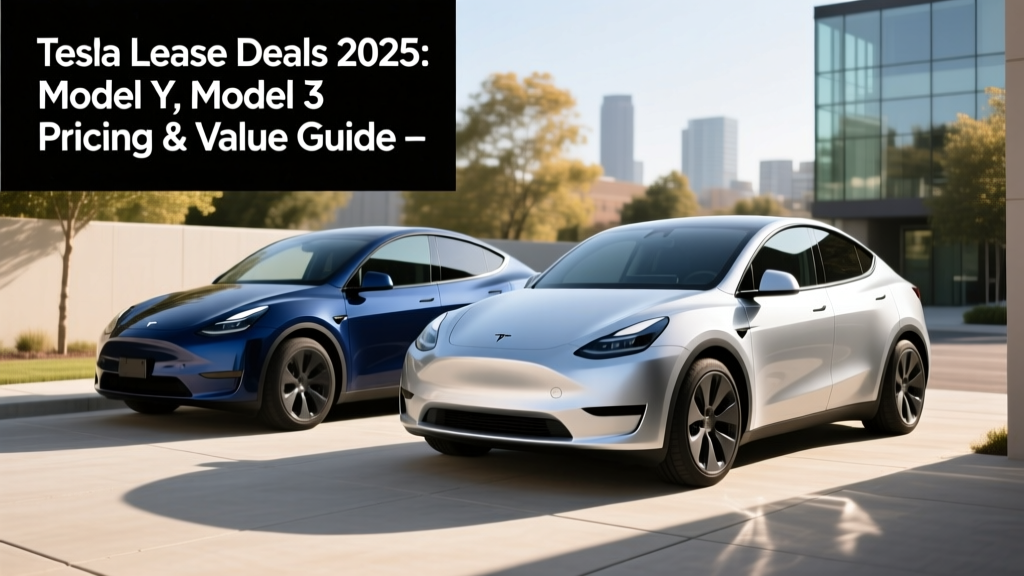
The Tesla Terafab announcement has dominated EV headlines since the company revealed its plans for a next-generation manufacturing mega-facility designed to produce Tesla's long-awaited affordable vehicle platform. Unlike previous Gigafactories focused on scaling existing models, the Terafab is engineered around a fundamentally new vehicle architecture — one that Tesla CEO Elon Musk has said will target a sub-$30,000 price point before incentives.
As of mid-2026, Tesla has not opened pre-orders or deliveries for the Terafab-produced vehicle. What follows is a data-driven breakdown of everything confirmed, projected, or strongly indicated by Tesla's public statements, earnings calls, and regulatory filings — paired with the real-world ownership context buyers need before they get their hopes up.
Projected Specs: What We Know About the Terafab Vehicle
Tesla has been intentionally guarded about final specifications, but a combination of executive commentary, supplier leaks, and Tesla's engineering trajectory allows us to assemble a credible preliminary spec sheet. Where figures are estimated, we've flagged them clearly.
| Attribute | Projected / Confirmed |
|---|---|
| EPA Range (est.) | ~250–300 miles (base); ~330+ miles (Long Range) |
| Battery Capacity | ~50–55 kWh usable (base); ~75 kWh (Long Range) |
| Battery Chemistry | LFP (base); NMC/NCA (Long Range) |
| Max DC Fast Charge | ~170–200 kW (est. peak) |
| 10–80% DC Charge Time | ~22–28 minutes (projected) |
| Level 2 Home Charging | ~11.5 kW / ~38–44 miles per hour |
| 0–60 mph | ~5.8 sec (RWD base); ~4.5 sec (AWD LR) |
| Horsepower | ~200 hp (base RWD); ~350 hp (AWD LR) |
| Drivetrain | RWD (base); Dual-Motor AWD (available) |
| Efficiency | ~130 MPGe / ~26 kWh/100mi (est.) |
| Base MSRP | ~$25,000–$30,000 (target, before incentives) |
| Battery Warranty | 8 years / 100,000 miles (projected, consistent with Tesla's existing compact-EV warranty) |
Range Reality Check: EPA Sticker vs. the Real World
EPA Estimated: ~250–300 mi (base LFP); ~330+ mi (Long Range NMC)
Real-World Highway (70 mph, mild weather): Expect ~220–260 mi (base); ~280–300 mi (LR)
Cold-Weather (below 32°F, mixed driving): Expect 20–30% reduction — roughly ~175–210 mi (base); ~230–250 mi (LR)
LFP chemistry in the base model is more resilient to cold-induced degradation over time, but still suffers immediate range loss in freezing temps. Preconditioning via the Tesla app is essential for winter efficiency.
Tesla's efficiency engineering is among the best in the industry — the company consistently achieves real-world numbers closer to EPA estimates than competitors. The unboxed manufacturing process and lighter, more compact vehicle platform should help. But physics is physics: a ~50–55 kWh battery in the base model simply cannot deliver 300+ miles in cold highway driving. Buyers in northern climates should plan around the ~200-mile cold-weather real-world figure and charge accordingly.
The Long Range variant with NMC chemistry offers a more comfortable buffer for road trips and cold weather, but it will come at a price premium — likely pushing it above $35,000 and potentially above the IRS §30D MSRP cap for sedans/compact vehicles ($55,000, which it should clear, but income limits will still apply).
Charging: DC Fast Charge Speed and Home Setup
Charging speed is where the Terafab vehicle's compact battery becomes a double-edged sword. A smaller battery charges to full faster in absolute time, but it also typically accepts a lower peak kW rate than a 75–100 kWh pack.
| Charging Level | Power (kW) | Speed / Time |
|---|---|---|
| Level 1 (120V household) | ~1.4 kW | ~3–5 miles per hour |
| Level 2 (240V home, 48A) | ~11.5 kW | ~38–44 miles per hour; full charge in ~5–7 hrs |
| DC Fast Charge (peak) | ~170–200 kW | 10–80% in ~22–28 min |
Understanding kW vs. kWh: kW (kilowatts) measures charging power — how fast energy flows into the battery. kWh (kilowatt-hours) measures battery capacity — how much energy the battery stores. A 170 kW charge rate into a 50 kWh battery will taper significantly above 50–60% State of Charge (SoC). The advertised peak rate is only sustained for a portion of the session — the charge curve slows to protect battery health.
Tesla's Supercharger network — now with NACS connectors standard — remains the most reliable DC fast-charging ecosystem in the U.S. Terafab vehicles will charge natively on Superchargers without adapters, a significant advantage over CCS-equipped competitors relying on third-party networks like Electrify America or EVgo, whose uptime records are less consistent.
Performance and Driving Dynamics
The base Terafab vehicle will be a single-motor, rear-wheel-drive configuration producing approximately 200 hp. This is adequate for commuting and city driving — the 0–60 mph time of roughly 5.8 seconds is quicker than most gas-powered compact cars and more than sufficient for highway merging.
The available dual-motor AWD variant (likely badged as Long Range or Performance) pushes output to ~350 hp with a 0–60 time near 4.5 seconds. Tesla's instantaneous electric torque delivery makes these numbers feel even quicker in practice, especially in stoplight-to-stoplight city driving.
Regenerative braking will be aggressive by default, enabling one-pedal driving in most conditions. Tesla's thermal management system — a competitive advantage honed over years of production — should keep battery temperatures optimized during repeated hard acceleration and fast charging, reducing the performance degradation that cheaper EV platforms exhibit under stress.
Pricing, Trims, and Federal Tax Credit Eligibility
The headline number from the Tesla Terafab announcement is the sub-$30,000 target. Tesla has stated repeatedly that the next-generation vehicle will be priced around $25,000, though production realities, tariff exposure, and trim configurations could push the effective base price closer to $27,000–$30,000.
| Trim | Est. MSRP | §30D Credit | Effective Price |
|---|---|---|---|
| Base RWD | ~$25,000–$28,000 | Up to $7,500 (if eligible) | ~$17,500–$20,500 |
| Long Range AWD | ~$33,000–$38,000 | Up to $7,500 (if eligible) | ~$25,500–$30,500 |
Federal tax credit reality check: The IRS §30D Clean Vehicle Credit offers up to $7,500, but eligibility is not guaranteed. Key requirements for 2026 include:
- MSRP cap: The vehicle must have an MSRP at or below $55,000 for sedans/compact vehicles. The Terafab vehicle should easily clear this.
- Buyer income cap: Modified adjusted gross income must not exceed $150,000 (single), $225,000 (head of household), or $300,000 (joint). Higher earners are excluded.
- Battery sourcing: A percentage of critical minerals and battery components must be sourced from the U.S. or free-trade-agreement countries. This threshold increases annually and is the most common disqualifier. Tesla's vertical integration and domestic battery production (especially at the Terafab itself) may give it an advantage, but final compliance depends on the specific cell supply chain at time of delivery.
- Point-of-sale transfer: Eligible buyers can apply the credit at the dealership as an instant discount rather than waiting for tax filing.
We strongly recommend consulting a tax professional and checking the latest fueleconomy.gov tax credit database closer to the vehicle's on-sale date for confirmed eligibility.
Interior, Cargo, and Technology
The Terafab vehicle is expected to be a compact crossover or hatchback — smaller than the Model Y but larger than a subcompact. Tesla's minimalist interior philosophy will carry over: a single central touchscreen (likely 15.4" or similar), no traditional instrument cluster, and a stripped-down dashboard with premium materials only where visible.
Projected dimensions:
- Cargo volume: ~22–26 cu ft (rear seats up); ~55–62 cu ft (rear seats folded)
- Rear legroom: ~35–37 inches
- Front trunk (frunk): ~3–5 cu ft (smaller than Model Y due to compact platform)
Tech and driver assistance: The Terafab vehicle will ship with Tesla's latest hardware suite (HW5 or equivalent) supporting Autopilot standard and Full Self-Driving (Supervised) as a paid option or subscription. It's critical to understand that FSD is a SAE Level 2 driver-assistance system — the driver must remain fully engaged, hands on or near the wheel, and eyes on the road at all times. It is not autonomous driving.
Tesla Autopilot and FSD (Supervised) are SAE Level 2 systems. The driver is responsible for all vehicle operation. Only Level 4 services like Waymo operate without a human driver, and those are geofenced robotaxis — not consumer vehicles. Never treat FSD as "self-driving."
Infotainment will include Tesla's built-in navigation with real-time Supercharger routing, over-the-air updates, streaming media, and the Tesla mobile app for remote preconditioning, charging status, and vehicle location. No Apple CarPlay or Android Auto — Tesla has never offered smartphone mirroring and is unlikely to start here.
Warranty, Ownership Costs, and Longevity
Tesla's standard battery and drive unit warranty for its compact vehicles (Model 3 RWD) is 8 years or 100,000 miles, whichever comes first, with a minimum 70% battery capacity retention guarantee. The Terafab vehicle is expected to match or exceed this.
LFP chemistry in the base model is a longevity advantage: LFP cells degrade more slowly than NMC and can be charged to 100% regularly without accelerating wear — a significant practical benefit for daily commuters who need every mile of range. NMC variants should be charged to 80% for daily use and reserved 100% charges for road trips.
Total cost of ownership considerations:
- Charging cost: At the U.S. average electricity rate of ~$0.17/kWh, fully charging a 50 kWh base battery costs ~$8.50 at home — roughly equivalent to 2.5 gallons of gas for 250+ miles of range.
- Insurance: Tesla vehicles historically carry higher insurance premiums than comparable EVs from legacy automakers. Budget $150–$250/month depending on state, age, and driving record.
- Maintenance: Minimal — no oil changes, fewer brake replacements (regen braking preserves pads), cabin air filter and tire rotation are the primary service items.
- Depreciation: Tesla's depreciation has moderated as the brand has matured, but compact EVs from competitors (Hyundai, Kia, Chevrolet) have shown competitive residual values. The Terafab's low starting price may limit absolute depreciation dollars.
Who Should Wait for the Terafab Vehicle — And Who Shouldn't
- You want a sub-$30,000 EV with Supercharger access and don't need 300+ miles of range
- You're a daily commuter with home Level 2 charging and round trips under 150 miles
- You want Tesla's software ecosystem, OTA updates, and Supercharger network without paying Model Y prices
- You qualify for the §30D tax credit and want to maximize the incentive on an affordable EV
- You need a vehicle now — the Terafab product is not yet available for purchase or delivery
- You regularly drive 300+ mile routes in cold weather and can't stop to charge
- You need three rows of seating, significant cargo volume, or towing capacity
- You prefer Apple CarPlay/Android Auto or a traditional dealership service experience
How the Terafab Vehicle Stacks Up Against Competitors
The Terafab vehicle will enter a segment that has grown crowded by 2026. Key competitors include the Chevrolet Equinox EV (~$33,000, 319 mi EPA), Hyundai Kona Electric (~$32,000, 261 mi EPA), and the Volvo EX30 (~$35,000, 275 mi EPA). Tesla's primary advantages will be price (if the $25K target holds), Supercharger network access, and software integration. Its main risks are production delays, interior material quality relative to Hyundai/Volvo, and the absence of Apple CarPlay.
If Tesla delivers a 250+ mile, Supercharger-compatible EV at $25,000 before incentives, it will be the most affordable long-range EV in the U.S. market at launch — a position no competitor currently holds. But "if" is the operative word. Tesla has a documented history of timeline slippage, and production ramp at a new factory with a new platform is historically the hardest phase in automotive manufacturing.
Frequently Asked Questions
What is the real-world range of the Tesla Terafab vehicle?
The base LFP model is projected at ~250–300 miles EPA, with real-world highway driving yielding ~220–260 miles in mild weather and ~175–210 miles in freezing conditions. The Long Range NMC variant should deliver ~280–300 miles real-world in mild conditions.
How fast does it charge at home and on DC fast chargers?
At home on Level 2 (240V, 48A), expect ~11.5 kW or ~38–44 miles of range added per hour. On DC fast chargers, the projected peak rate is ~170–200 kW, achieving a 10–80% charge in roughly 22–28 minutes. Actual charge speed tapers significantly above 60% SoC.
How much does it cost after the federal EV tax credit?
If the base MSRP lands at ~$25,000–$28,000 and you qualify for the full $7,500 §30D credit, the effective price could be as low as ~$17,500–$20,500. Eligibility depends on your income, the vehicle's battery sourcing compliance, and MSRP caps. Confirm with a tax professional and fueleconomy.gov before purchasing.
Does the Terafab vehicle qualify for the federal EV tax credit?
It is projected to qualify based on MSRP (well under the $55,000 cap) and Tesla's domestic manufacturing footprint, but final eligibility depends on 2026 battery-sourcing and critical-mineral thresholds set by the IRS. Tesla's vertical integration at the Terafab may help, but official confirmation will come closer to launch.
Is the Tesla Terafab vehicle worth waiting for vs. buying a competitor now?
If you can wait 12–18+ months and the $25,000 price point is critical to your budget, yes — no current competitor matches that price with Supercharger access. If you need an EV now, the Chevrolet Equinox EV, Hyundai Kona Electric, and base Tesla Model 3 are all available today with confirmed specs, credit eligibility, and delivery timelines.
What are the biggest pros and cons?
- Lowest MSRP in Tesla's lineup — potentially lowest in the U.S. EV market
- Native Supercharger/NACS access — no adapter needed
- LFP battery option for longevity and daily 100% charging
- Tesla software, OTA updates, and app ecosystem
- Strong efficiency (~130 MPGe projected)
- Not yet available — production timeline uncertain
- Base range (~250 mi) may be tight for road trips and cold climates
- No Apple CarPlay or Android Auto
- Minimalist interior may feel sparse vs. Hyundai/Volvo competitors
- Tesla service center availability varies by region
- Insurance premiums likely higher than segment average
This article will be updated as Tesla releases confirmed production specifications, pricing, and delivery timelines for the Terafab vehicle. Last updated: 2026.