Rumors and reports have circulated for months, and the reality is now settling in for EV shoppers: Tesla stops production of several legacy configurations as it consolidates its lineup around higher-volume platforms. For buyers eyeing a Tesla in 2026, the landscape looks meaningfully different than it did even a year ago. This guide breaks down exactly what is still rolling off the line at Fremont and the Austin Gigafactory, what has been sunsetted or is winding down, and — most importantly — which remaining Tesla models (and key competitors) deserve your money right now.
Rather than a single-vehicle review, we are treating the current Tesla lineup as a portfolio review, examining each model's real-world range, charging performance, pricing after federal incentives, and how it stacks up against an increasingly crowded field. Let's get into the numbers.
The 2026 Tesla Lineup: What's Still in Production
As of early 2026, Tesla's core production lineup for the U.S. market centers on four vehicles: the Model 3 (Highland refresh and subsequent updates), the Model Y (Juniper refresh), the Cybertruck, and the Semi (limited fleet production). The Model S and Model X, while not officially declared "discontinued" in a single press release, have seen production volumes reduced to near-zero, with Tesla redirecting Fremont capacity toward the next-generation compact platform and Optimus robotics. Effectively, for new-car buyers, the S and X are no longer practical options.
| Model | Trim | EPA Range | Battery (kWh) | Chemistry | 0-60 mph | HP | Drivetrain | Base MSRP |
|---|---|---|---|---|---|---|---|---|
| Model 3 | RWD | 272 mi | ~60 kWh | LFP | 5.8 s | 283 | RWD | $38,990 |
| Model 3 | Long Range AWD | 363 mi | ~79 kWh | NMC | 4.2 s | 346 | AWD | $45,490 |
| Model 3 | Performance | 315 mi | ~79 kWh | NMC | 2.9 s | 510 | AWD | $52,990 |
| Model Y | RWD | 277 mi | ~60 kWh | LFP | 6.5 s | 295 | RWD | $41,990 |
| Model Y | Long Range AWD | 330 mi | ~79 kWh | NMC | 4.8 s | 384 | AWD | $47,490 |
| Model Y | Performance | 285 mi | ~79 kWh | NMC | 3.5 s | 456 | AWD | $52,490 |
| Cybertruck | AWD | 340 mi | ~123 kWh | NMC | 4.1 s | 600 | AWD | $79,990 |
| Cybertruck | Cyberbeast | 320 mi | ~123 kWh | NMC | 2.6 s | 845 | AWD | $99,990 |
Sources: fueleconomy.gov, Tesla.com official specs. MSRP reflects base destination-included pricing as of early 2026.
Real-World Range: What the EPA Sticker Doesn't Tell You
EPA estimates are a starting point, not a guarantee. Across the 2026 Tesla lineup, expect the following real-world adjustments:
- Highway driving (75+ mph): Subtract 10–15% from EPA. A Model 3 Long Range rated at 363 miles will deliver roughly 310–325 miles at sustained interstate speeds.
- Cold weather (below 32°F): Subtract 20–35% depending on cabin heating use and preconditioning. LFP-equipped RWD models are more susceptible due to lower energy density and less aggressive battery thermal management at extreme cold.
- City/stop-and-go with regen: You may match or slightly exceed EPA thanks to regenerative braking recapturing energy.
The Model 3 Long Range AWD remains the range champion of the lineup, and its NMC chemistry handles cold-weather preconditioning better than the LFP packs in RWD trims. If you live in the upper Midwest or Northeast, prioritize NMC trims.
Charging Speed: DC Fast Charging and Home Level 2
Charging speed is where Tesla's Supercharger network advantage meets the physics of battery chemistry. Here is what each platform actually delivers — not just the peak number, but the sustained curve that determines your actual road-trip stop time.
| Model / Trim | Max DC Fast Charge (kW) | 10–80% DC Time | Level 2 Home Rate (kW) | Level 2 Miles/Hr | Connector |
|---|---|---|---|---|---|
| Model 3 RWD (LFP) | 170 kW | ~30 min | 11.5 kW | ~37 mi/hr | NACS |
| Model 3 LR / Perf (NMC) | 250 kW | ~25 min | 11.5 kW | ~44 mi/hr | NACS |
| Model Y RWD (LFP) | 170 kW | ~32 min | 11.5 kW | ~35 mi/hr | NACS |
| Model Y LR / Perf (NMC) | 250 kW | ~27 min | 11.5 kW | ~42 mi/hr | NACS |
| Cybertruck AWD / Beast | 250+ kW (800V arch) | ~22 min | 11.5 kW (est.) | ~30 mi/hr | NACS |
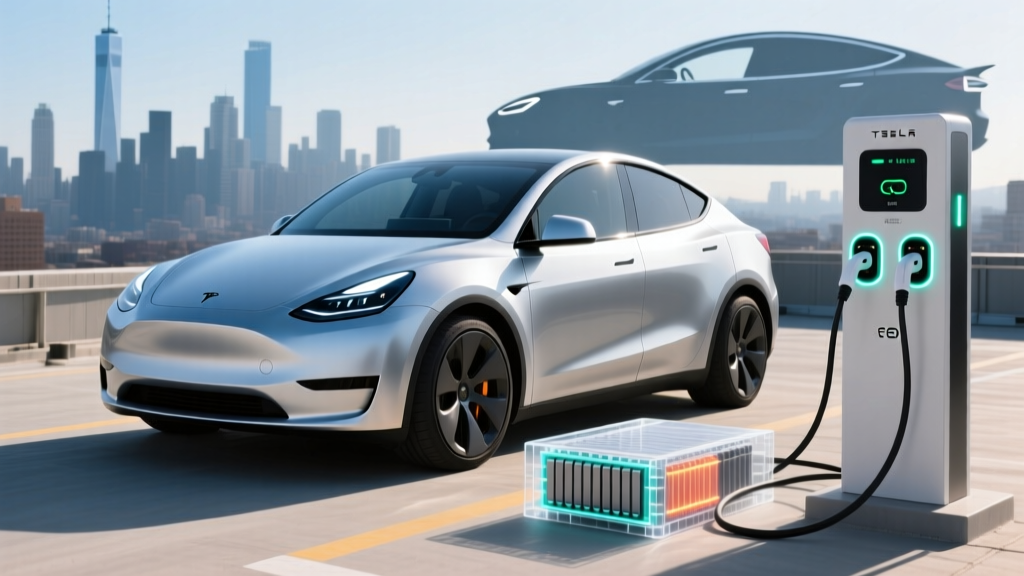
Key insight on the charge curve: The 250 kW peak on NMC trims is sustained only between roughly 10–40% State of Charge (SoC). Above 60%, the rate tapers significantly — by 80%, you may be pulling under 80 kW. This is normal lithium-ion behavior, but it means the last 20% takes almost as long as the first 50%. On road trips, plan stops around 10–80% and move on; don't wait for a full charge.
The LFP (lithium iron phosphate) packs in RWD trims charge slower at DC but have a critical advantage: Tesla recommends charging LFP batteries to 100% regularly to maintain cell balancing, effectively giving you the full 60 kWh usable capacity daily. NMC owners should set daily charge limits to 80% for longevity, meaning a Model 3 Long Range's daily usable range is closer to 290 miles, not 363.
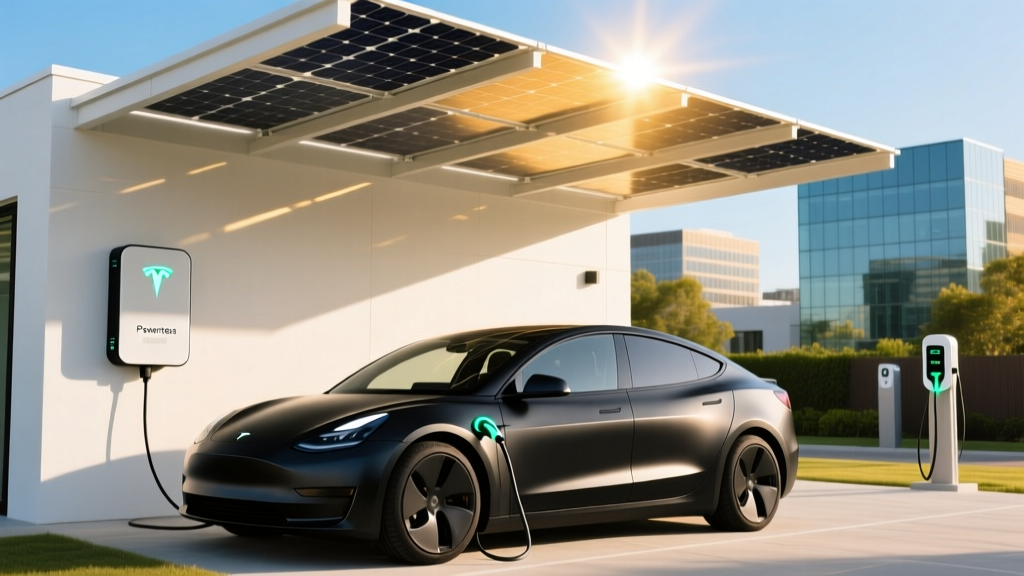
For home charging, all 2026 Teslas accept 11.5 kW on Level 2 (48 amps on a 60-amp circuit). A full overnight charge from 20% to 80% takes roughly 5–6 hours depending on pack size. Installation of a NACS Wall Connector on a 60-amp dedicated circuit typically runs $800–$2,000 including electrician labor, depending on panel proximity and local permitting.
Efficiency: MPGe and kWh per 100 Miles
Tesla continues to lead the industry in drivetrain efficiency — the ratio of electrical energy consumed to distance traveled. Here is how the lineup stacks up per EPA data:
- Model 3 RWD: 132 MPGe combined / 25 kWh per 100 miles
- Model 3 Long Range AWD: 125 MPGe combined / 27 kWh per 100 miles
- Model Y Long Range AWD: 117 MPGe combined / 29 kWh per 100 miles
- Cybertruck AWD: ~70 MPGe combined / ~48 kWh per 100 miles (heavy, un-aerodynamic — efficiency is the trade-off)
At the U.S. average electricity rate of ~$0.17/kWh, a Model 3 Long Range costs roughly $4.59 to drive 100 miles. A comparable gas sedan at 30 MPG with fuel at $3.40/gallon costs $11.33. That is a per-mile savings of nearly 60% — and even more if you charge on off-peak utility rates or have rooftop solar.
Pricing, Trims, and Federal Tax Credit Eligibility
Tesla's pricing has shifted multiple times over the past two years, but as of early 2026, here is where the lineup lands — and critically, which models qualify for the §30D federal EV tax credit.
| Model / Trim | Base MSRP | §30D Credit | Effective Price | MSRP Cap Eligible? | Battery Sourcing |
|---|---|---|---|---|---|
| Model 3 RWD | $38,990 | Up to $7,500 | ~$31,490 | ✅ Yes (sedan cap: $55,000) | Partial — verify current-year IRS guidance |
| Model 3 Long Range | $45,490 | Up to $7,500 | ~$37,990 | ✅ Yes | Partial — verify |
| Model 3 Performance | $52,990 | Up to $7,500 | ~$45,490 | ✅ Yes | Partial — verify |
| Model Y RWD | $41,990 | Up to $7,500 | ~$34,490 | ✅ Yes (SUV cap: $80,000) | Partial — verify |
| Model Y Long Range | $47,490 | Up to $7,500 | ~$39,990 | ✅ Yes | Partial — verify |
| Model Y Performance | $52,490 | Up to $7,500 | ~$44,990 | ✅ Yes | Partial — verify |
| Cybertruck AWD | $79,990 | $0 (exceeds SUV cap) | $79,990 | ❌ No — at cap limit | N/A |
| Cybertruck Cyberbeast | $99,990 | $0 | $99,990 | ❌ No | N/A |
The federal EV tax credit under IRS §30D is subject to multiple eligibility gates. As of 2026, the key requirements include:
- Buyer income caps: Modified AGI must not exceed $150,000 (single), $225,000 (head of household), or $300,000 (joint filers).
- MSRP caps: Sedans must be ≤$55,000; SUVs, trucks, and vans must be ≤$80,000.
- Battery sourcing requirements: A percentage of critical minerals and battery components must be sourced from the U.S. or free-trade-agreement partners. These thresholds tighten annually. Tesla's U.S.-built vehicles have a sourcing advantage, but exact credit amounts (full $7,500 vs. partial $3,750) depend on current-year mineral/component percentages.
- Point-of-sale transfer: As of 2024+, buyers can transfer the credit to the dealer at purchase, reducing the purchase price directly rather than waiting for a tax refund.
Always verify current eligibility on IRS.gov and consult a tax professional before relying on credit amounts for purchase decisions.
Interior Space, Cargo, and Practicality
The Model 3 remains a compact executive sedan. Rear legroom is adequate at 35.2 inches but tight for tall passengers on long trips. Cargo volume is 23 cu ft (trunk + frunk combined). The Highland refresh improved cabin materials, added ventilated front seats, and reduced road noise substantially.
The Model Y is the practicality winner. With 76 cu ft of cargo space (rear seats folded) and available third-row seating for two small children, it competes directly with midsize crossovers. Rear legroom is 40.5 inches — genuinely comfortable for adults. The Juniper refresh brought a refreshed interior with ambient lighting, a rear-seat touchscreen, and improved suspension tuning.
The Cybertruck offers a 6.5-foot bed with a motorized tonneau cover and 11,000-lb towing capacity (AWD trim), but its 6-foot-wide footprint and stainless-steel exoskeleton make it impractical for standard garages. Interior space is generous but the driving position and visibility take adjustment.
Driver Assistance and Technology
Tesla's Autopilot and Full Self-Driving (Supervised) are SAE Level 2 driver-assistance systems. Despite the "Full Self-Driving" name, the driver must remain fully engaged — hands on the wheel (or torque-confirmed), eyes on the road, ready to take over at any moment. Tesla is not a Level 4 autonomous system. Only services like Waymo operate at Level 4 in geofenced areas. Do not treat any Tesla driver-assist feature as self-driving.
That clarification aside, Tesla's vision-based driver-assist stack remains among the most capable in consumer vehicles. The 2026 FSD (Supervised) system handles highway lane changes, on-ramp to off-ramp navigation, traffic-light recognition, and urban street turns with increasing smoothness. However, it still requires intervention in construction zones, during heavy rain, and at complex unprotected left turns.
Standard Autopilot (included with every Tesla) provides adaptive cruise control and lane-centering on highways. FSD (Supervised) remains a $8,000 one-time purchase or $99/month subscription — a significant cost that buyers should weigh carefully against their actual driving patterns. For pure highway commuters, standard Autopilot is often sufficient.
The infotainment system runs on Tesla's proprietary OS with a 15.4-inch center display (Model 3/Y), integrated navigation with real-time Supercharger routing, over-the-air updates, and a robust app ecosystem. No Apple CarPlay or Android Auto is offered — a deliberate choice that frustrates some buyers but keeps the interface unified.
Warranty Coverage
Tesla's warranty structure is straightforward:
- Basic Vehicle Limited Warranty: 4 years / 50,000 miles, whichever comes first.
- Battery & Drive Unit Warranty (Model 3/Y RWD with LFP): 8 years / 100,000 miles, with minimum 70% capacity retention.
- Battery & Drive Unit Warranty (Model 3/Y Long Range & Performance, NMC): 8 years / 120,000 miles, with minimum 70% capacity retention.
- Cybertruck Battery & Drive Unit: 8 years / 150,000 miles, minimum 70% retention.
The 70% retention threshold is industry-standard. Real-world degradation data from high-mileage Tesla owners suggests most NMC packs retain 85–90% capacity at 100,000 miles when charged primarily to 80% and DC fast-charged moderately. LFP packs show even slower degradation curves but may experience larger calibration drift if never charged to 100%.
Is a Tesla Still Worth Buying vs. Key Competitors?
- Supercharger network: 20,000+ stalls in North America, with NACS now adopted by Ford, GM, Rivian, Hyundai, and others — but Tesla owners still get priority pricing and seamless plug-and-charge integration.
- Efficiency leadership: Best-in-class kWh/100mi across the sedan and crossover segments.
- OTA updates: Continuous feature additions and performance improvements post-purchase.
- Resale value: Teslas continue to hold value better than most EV competitors, though depreciation has accelerated since 2023 price cuts.
- Vertical integration: From battery cell production to software to charging, Tesla controls more of the ownership experience than any other automaker.
- Interior quality: Hyundai Ioniq 6, BMW i4, and even the refreshed Nissan Ariya offer more premium cabin materials at similar prices.
- Ride comfort: The Model Y's suspension, while improved, still transmits more road imperfection than a Genesis GV60 or Ford Mustang Mach-E.
- Service wait times: Tesla's service center network has not scaled with its sales volume. Mobile service handles minor issues, but bodywork and drivetrain repairs can involve multi-week waits in major metros.
- No CarPlay: For buyers deeply embedded in the Apple or Google ecosystem, this remains a dealbreaker.
- Panel gaps and build consistency: Improved from early Fremont days, but still not at German or Korean build-quality standards.
- Choose the Model 3 RWD if: You want the cheapest entry into the Supercharger ecosystem, commute under 50 miles daily, and can charge at home. At ~$31,490 after the credit, it is one of the best value propositions in EVs.
- Choose the Model 3 Long Range if: You take regular road trips, live in a cold-weather state, or need the confidence of 300+ real-world miles. The NMC pack and AWD justify the $6,500 premium.
- Choose the Model Y Long Range if: You need cargo space, carry rear-seat passengers regularly, or want a family EV that can handle a Costco run and a 400-mile road trip in the same weekend.
- Consider the Hyundai Ioniq 5 instead if: You prioritize interior space, 800V ultra-fast charging (10–80% in ~18 min at 350 kW chargers), and a more conventional crossover aesthetic.
- Consider the Ford Mustang Mach-E instead if: You want a more engaging driving experience, Apple CarPlay/Android Auto, and Ford dealer service accessibility.
- Skip the Cybertruck unless: You genuinely need a truck bed, 11,000-lb towing, and are prepared for the $80K+ price with no federal credit. The Rivian R1T and Ford F-150 Lightning offer more practical truck utility at lower prices.
Frequently Asked Questions
Why is Tesla stopping production of the Model S and Model X?
Tesla has not issued a single formal discontinuation announcement, but production volumes of the Model S and Model X have dropped dramatically as Tesla redirects Fremont factory capacity toward its next-generation compact vehicle platform and Optimus humanoid robot program. The S and X occupy a low-volume luxury niche that no longer aligns with Tesla's volume-growth strategy. For 2026 buyers, remaining new inventory is extremely limited, and ordering new is effectively no longer an option.
What is the real-world range of the 2026 Tesla Model 3 Long Range?
The EPA rates it at 363 miles. In real-world mixed driving, expect 310–330 miles at highway speeds, and 250–280 miles in sub-freezing winter conditions. City driving with regenerative braking can approach or match the EPA number.
How fast does a Tesla charge on a road trip?
NMC-equipped models (Long Range, Performance) peak at 250 kW on V3/V4 Superchargers, adding roughly 200 miles in 15 minutes from a low state of charge. A typical 10–80% session takes 22–27 minutes. LFP-equipped RWD models peak at 170 kW, adding roughly 150 miles in 15 minutes.
Does the 2026 Tesla Model Y qualify for the $7,500 federal tax credit?
The Model Y falls under the $80,000 SUV MSRP cap and is assembled in the U.S., making it a strong candidate. However, the exact credit amount ($7,500 full vs. $3,750 partial) depends on current-year critical-mineral and battery-component sourcing thresholds under IRS §30D. Buyer income caps also apply. Verify on IRS.gov before purchasing.
Is Tesla's FSD (Supervised) actually self-driving?
No. FSD (Supervised) is an SAE Level 2 driver-assistance system. It requires continuous driver supervision — hands must be ready to steer, and eyes must remain on the road. Tesla's camera-based system is capable but not autonomous. Only Level 4 services like Waymo operate without a human driver in geofenced areas.
Should I buy a Tesla now or wait for the next-generation compact model?
Tesla has announced a next-generation compact vehicle (sometimes referred to as the "Model 2" or "Redwood") expected to start around $25,000, but as of early 2026, it is not yet in production or available for order. If you need a vehicle now, the current Model 3 RWD at ~$31,490 after incentives is an excellent value. If you can wait 12–18 months and want the lowest possible price point, monitoring the compact model's production timeline is worthwhile — but treat any announced timeline with skepticism until vehicles are actually being delivered.
What happens to my Tesla's resale value now that Tesla stops production of legacy models?
Model S and X values may actually stabilize or appreciate slightly as they become scarce, similar to low-production enthusiast vehicles. Model 3 and Y resale values are driven by the much larger factors of overall EV market supply, ongoing price competition from Hyundai, Ford, and Chinese manufacturers, and general depreciation curves. Tesla's continued OTA support and Supercharger network access provide a floor that most competitors cannot match.
Editorial note: EV specifications, pricing, and tax credit eligibility change frequently. All figures in this article reflect the best available data as of early 2026. Always confirm current specs on Tesla.com, range and efficiency on fueleconomy.gov, and credit eligibility on IRS.gov before making a purchase decision.