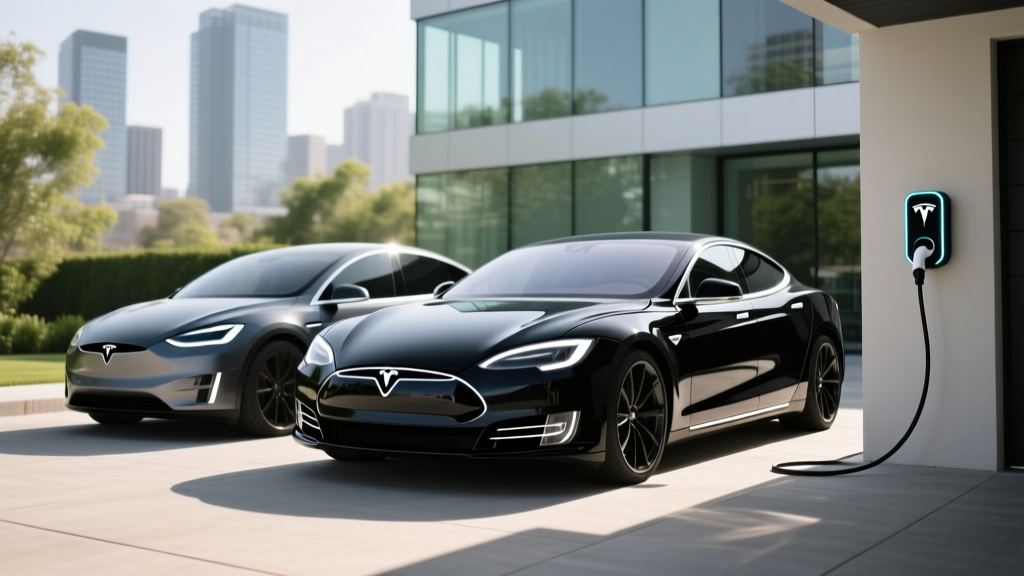
Rumors vs. Reality: Is Tesla Actually Halting Model S and X Production?
Searches around Tesla stopping production of Model S and X have surged as the automaker reshapes its lineup around higher-volume platforms like the refreshed Model Y and the Cybertruck. As of early 2026, Tesla has not issued an official discontinuation notice for either the Model S sedan or the Model X SUV. Both remain listed on Tesla's configurator and are available to order. However, production volumes at the Fremont factory have been scaled back significantly, and delivery windows have stretched—signals that Tesla may be managing a wind-down rather than a full-scale manufacturing push.
For buyers considering one of these flagship EVs, the question isn't just whether they'll be built—it's whether they're still a smart purchase in 2026. This review breaks down the current specs, real-world usability, charging performance, pricing, and tax credit situation so you can make an informed decision before any potential discontinuation closes the window.
2026 Tesla Model S and Model X: Core Specifications at a Glance
| Spec | Model S (Dual Motor) | Model S Plaid | Model X (Dual Motor) | Model X Plaid |
|---|---|---|---|---|
| EPA Range | 402 mi | 359 mi | 335 mi | 311 mi |
| Battery (usable) | ~95 kWh (NMC) | ~95 kWh (NMC) | ~95 kWh (NMC) | ~95 kWh (NMC) |
| Drivetrain | AWD Dual Motor | AWD Tri-Motor | AWD Dual Motor | AWD Tri-Motor |
| Horsepower | 670 hp | 1,020 hp | 670 hp | 1,020 hp |
| 0–60 mph | 3.1 sec | 1.99 sec | 3.8 sec | 2.5 sec |
| Peak DC Fast Charge | 250 kW | 250 kW | 250 kW | 250 kW |
| 10–80% DC Time | ~30 min | ~30 min | ~30 min | ~30 min |
| Level 2 Home Charge | 11.5 kW (~34 mi/hr) | 11.5 kW (~34 mi/hr) | 11.5 kW (~34 mi/hr) | 11.5 kW (~34 mi/hr) |
| MPGe (combined) | 120 MPGe | 116 MPGe | 109 MPGe | 101 MPGe |
| Base MSRP | $74,990 | $89,990 | $79,990 | $94,990 |
Source: fueleconomy.gov and Tesla official specifications. Specs reflect 2026 model year as listed.
Real-World Range: What the EPA Sticker Doesn't Tell You
Model S Dual Motor: EPA 402 mi → Expect ~330–360 mi on highway road trips; ~270–310 mi in sub-freezing winter conditions.
Model S Plaid: EPA 359 mi → Expect ~290–320 mi highway; ~240–280 mi in cold weather.
Model X Dual Motor: EPA 335 mi → Expect ~270–300 mi highway; ~220–260 mi in cold weather.
Model X Plaid: EPA 311 mi → Expect ~250–280 mi highway; ~210–245 mi in cold weather.
The Model S Dual Motor's 402-mile EPA rating remains one of the highest of any production EV sold in the U.S. But EPA estimates are derived from a mix of city and highway driving cycles with climate control set moderately. In sustained highway driving at 70–80 mph, aerodynamic drag pushes energy consumption higher—expect roughly 15–18% below the sticker figure.
Cold weather compounds this further. Lithium-ion NMC batteries lose efficiency in freezing temperatures, and cabin heating draws significant power even with Tesla's heat pump system. In real-world winter testing at temperatures below 30°F, range typically drops 20–30% from the EPA figure. Preconditioning the battery while plugged in mitigates some of this loss, but it's a factor any buyer in northern climates must plan around.
The Model X, being heavier and less aerodynamic (it's a large SUV with falcon-wing doors that add weight), sacrifices roughly 65–90 miles of EPA range compared to the equivalent Model S powertrain. That's the physics of moving more mass through more air resistance—no software update changes it.
Charging Performance: Speeds, Curves, and Infrastructure
| Charging Level | Power | Miles Added per Hour | Notes |
|---|---|---|---|
| Level 1 (120V) | ~1.4 kW | ~3–4 mi/hr | Emergency/trickle only |
| Level 2 (240V, 48A) | 11.5 kW | ~34 mi/hr | Full overnight charge in ~10 hr |
| DC Fast Charge | Peak 250 kW | ~750 mi/hr (peak) | 10–80% in ~30 min |
Both the Model S and Model X peak at 250 kW on Tesla Supercharger V3 stalls. That's a competitive rate, though it now trails the 350 kW capability of vehicles on the Hyundai E-GMP platform (Ioniq 5, Ioniq 6) and the upcoming 800V architectures from Porsche and Lucid.
The critical metric isn't peak kW—it's the charging curve. Tesla's NMC pack sustains near-peak power from roughly 10% to 45% state of charge, then progressively tapers. From 80% to 100%, charging slows dramatically to protect battery longevity—adding the final 20% can take as long as the first 70%. For road trips, the practical strategy is to charge from 10% to 80% (~30 minutes) and drive on, which is how Tesla's navigation system plans Supercharger stops by default.
At home, a Wall Connector on a 60-amp circuit delivers 11.5 kW (48 amps continuous). That's roughly 34 miles of range per hour of charging, meaning a depleted Model S Long Range refills overnight in about 10 hours. Most owners who charge nightly never deplete below 30%, so a typical session adds 200+ miles in 6 hours—more than enough for daily use.
One infrastructure advantage: Tesla's Supercharger network remains the most reliable DC fast-charging ecosystem in the U.S., with over 25,000 stalls domestically. With other automakers now gaining NACS access, the exclusivity advantage is eroding, but the network's uptime and plug-and-charge simplicity still lead the industry.
Pricing, Trims, and Federal Tax Credit Eligibility
| Trim | Base MSRP | As-Tested (typical) | §30D Credit Eligible? |
|---|---|---|---|
| Model S Dual Motor | $74,990 | $79,000–$85,000 | No (exceeds $55K sedan cap) |
| Model S Plaid | $89,990 | $95,000–$102,000 | No (exceeds $55K sedan cap) |
| Model X Dual Motor | $79,990 | $85,000–$95,000 | No (exceeds $80K SUV cap) |
| Model X Plaid | $94,990 | $100,000–$110,000 | No (exceeds $80K SUV cap) |
This is where the math gets straightforward—and unfavorable. Under current IRS §30D rules, the federal EV tax credit has MSRP caps: $55,000 for sedans and $80,000 for SUVs/vans/pickups. Every Model S trim exceeds the sedan cap. The Model X, classified as an SUV, starts at $79,990—technically under the $80,000 threshold, but once you add any options (paint, wheels, FSD), the as-tested price pushes above it.
Beyond MSRP, §30D also imposes buyer income limits ($150,000 single / $300,000 joint modified AGI) and battery critical-mineral and component sourcing requirements. Even if a base Model X could squeak under the cap, most buyers configuring one will exceed it. Expect to pay full MSRP with no federal credit. Some state-level incentives (California, Colorado, New York) may still apply—check your state's energy office for current programs.
Performance and Driving Dynamics
The Model S Plaid's 1.99-second 0–60 mph time remains one of the quickest acceleration figures of any production car, period. The tri-motor setup (one front, two rear) delivers torque-vectoring precision that makes 1,020 horsepower feel manageable rather than terrifying—most of the time. The standard Dual Motor variant at 670 hp and 3.1 seconds is hardly slow; it out-accelerates most sports cars while seating five adults and their luggage.
The Model X adds roughly 500 pounds of mass compared to the Model S, which shows in its 0–60 times (3.8 seconds Dual Motor, 2.5 seconds Plaid). The falcon-wing rear doors are a conversation piece and genuinely useful in tight parking spaces for loading children into car seats, but they add mechanical complexity and weight. The windshield extends deep into the roof (Tesla calls it a "panoramic" windshield), creating an airy cabin but also significant solar heat gain in summer—tinting is nearly mandatory in warm climates.
Both vehicles use Tesla's adaptive air suspension, which adjusts ride height based on speed and road conditions. The ride quality is firm but compliant—sportier than a Mercedes EQS, less plush than a Lucid Air. Steering is precise and quick, though it lacks the feedback of a Porsche Taycan.
Interior Space, Tech, and Daily Usability
Cargo capacity:
- Model S: 28 cu ft (rear cargo + frunk combined); 64.9 cu ft with rear seats folded
- Model X: 88.1 cu ft max cargo (seats folded); available 6- or 7-seat configurations
Legroom:
- Model S: 42.4 in front / 35.4 in rear
- Model X: 41.2 in front / 37.1 in second row (varies by seat configuration)
The Model X's available third row is best suited for children—adults will find it cramped on longer trips. With the third row folded, the Model X offers class-leading cargo volume for an electric SUV.
Both vehicles feature Tesla's 17-inch center touchscreen running the latest Tesla OS, which remains the benchmark for EV infotainment responsiveness. The yoke steering wheel is standard (a conventional round wheel is available as a no-cost option). The instrument cluster is a small secondary screen behind the yoke—minimalist by design, though some buyers prefer the more detailed gauge clusters in competitors like the Lucid Air or Mercedes EQS.
Driver assistance: Tesla's Autopilot (basic adaptive cruise + lane-keeping) is standard. Full Self-Driving (Supervised) remains a $8,000 add-on or $99/month subscription. It's critical to understand that FSD is an SAE Level 2 system—the driver must remain fully engaged, hands on the yoke, and eyes on the road. It does not make the vehicle autonomous. For true Level 4 driverless operation, only Waymo's robotaxi service currently qualifies in limited U.S. metro areas.
Pros, Cons, and the Verdict
- Class-leading EPA range (Model S: 402 mi)
- Supercharger network access and reliability
- Over-the-air updates keep software current
- Plaid variants offer hypercar-level performance
- Strong resale value relative to luxury EV peers
- Spacious cargo area; Model X offers 6/7 seats
- No federal tax credit eligibility (§30D MSRP caps)
- DC fast charging peaks at 250 kW—trailing 800V competitors
- Panel gaps and interior fit/finish inconsistent at this price
- Yoke steering takes significant adaptation
- Falcon-wing doors add weight and potential maintenance cost
- Production may be winding down—long-term parts/service uncertainty
Should You Buy Now or Wait? The Decision Framework
Buy the Model S now if: You need 350+ real-world highway miles of range, value Supercharger access, and want a sport sedan without waiting for an unannounced successor. The Dual Motor at $74,990 is the efficiency sweet spot.
Buy the Model X now if: You need 6–7 seats in an EV, want falcon-wing convenience for child seats, and can accept no federal tax credit. The Dual Motor offers the best range-to-price ratio in the lineup.
Wait or look elsewhere if: You want the latest 800V charging architecture (consider Hyundai Ioniq 5 N or Porsche Taycan), need federal tax credit eligibility (look at Model Y, Ioniq 5, or Equinox EV), or are concerned about long-term support for a potentially discontinued platform.
Warranty and Long-Term Ownership
Tesla covers both vehicles with:
- Basic vehicle warranty: 4 years / 50,000 miles
- Battery and drive unit warranty: 8 years / 150,000 miles (with minimum 70% capacity retention over the warranty period)
The 150,000-mile battery warranty is competitive within the luxury EV segment. Tesla's NMC packs have demonstrated strong longevity in real-world fleet data, with typical degradation of 8–12% over the first 100,000 miles. However, if Tesla does eventually discontinue the Model S/X platform, long-term parts availability for body panels, suspension components, and the falcon-wing door mechanisms (Model X) becomes a legitimate concern 10+ years out. Tesla has historically supported discontinued models (Roadster, original Model S variants) with parts for years, but the falcon-wing doors' complexity is unique to the Model X.
Frequently Asked Questions
Has Tesla officially announced it is stopping production of Model S and X?
No. As of early 2026, Tesla has not issued a formal discontinuation announcement. Both models remain configurable and orderable on Tesla's website. However, reduced production volume and extended delivery timelines suggest Tesla may be gradually winding down manufacturing rather than investing in a next-generation refresh.
What is the real-world highway range of the 2026 Model S?
The Model S Dual Motor carries an EPA rating of 402 miles. In sustained highway driving at 70–80 mph, expect approximately 330–360 miles before needing to charge. In winter conditions below 30°F, that drops to roughly 270–310 miles. Preconditioning while plugged in helps mitigate cold-weather losses.
How fast do the Model S and Model X charge on DC fast chargers?
Both vehicles peak at 250 kW on Tesla Supercharger V3 stalls, achieving a 10–80% charge in approximately 30 minutes. The charging curve tapers significantly above 80% SoC to protect battery health. At home on a Level 2 Wall Connector (11.5 kW), expect about 34 miles of range per hour of charging.
Do the Model S and Model X qualify for the federal EV tax credit?
Effectively, no. Under IRS §30D rules, sedans must have an MSRP at or below $55,000 and SUVs at or below $80,000 to qualify. All Model S trims exceed the sedan cap. The base Model X Dual Motor starts at $79,990 (under the SUV cap), but adding any options pushes it above $80,000. Additionally, buyer income limits and battery sourcing requirements further restrict eligibility. Check IRS guidance for your specific situation.
Is the Model S or Model X worth buying vs. competitors like the Lucid Air or BMW iX?
The Model S wins on range (402 mi EPA vs. Lucid Air Grand Touring's 512 mi, though the Lucid costs significantly more) and Supercharger network access. The Lucid Air offers superior interior luxury and available 900V+ charging architecture. The BMW iX competes with the Model X but offers less range and fewer seats. If range and charging infrastructure are your top priorities, the Model S remains compelling. If interior quality and the latest charging tech matter more, test-drive the Lucid Air and BMW iX before committing.
What happens to service and parts if Tesla discontinues these models?
Tesla is required to honor warranties regardless of production status, and the company has historically maintained parts inventories for discontinued vehicles. The greater risk is with Model X-specific components like falcon-wing door actuators and hinges—if production ceases entirely, aftermarket support for these complex mechanisms may be limited compared to higher-volume models like the Model Y. Buyers planning to keep the vehicle 10+ years should factor this into their decision.