Search "tesla to stop making cars" and you'll find a storm of headlines, stock-forum speculation, and AI-generated rumor mills. The short answer: no, Tesla is not halting vehicle production in 2026. The company continues to manufacture the Model S, Model 3, Model X, Model Y, and Cybertruck across its Fremont, Austin, and Shanghai factories, while simultaneously expanding its energy storage and robotics divisions.
But the rumor didn't emerge from nowhere. Tesla's strategic重心 (center of gravity) is visibly shifting toward AI, Full Self-Driving software licensing, the Optimus humanoid robot, and Megapack grid-scale batteries. Vehicle sales as a percentage of total revenue have dipped below 80% for the first time. So the real question isn't whether Tesla will stop making cars — it's whether cars will remain Tesla's primary business.
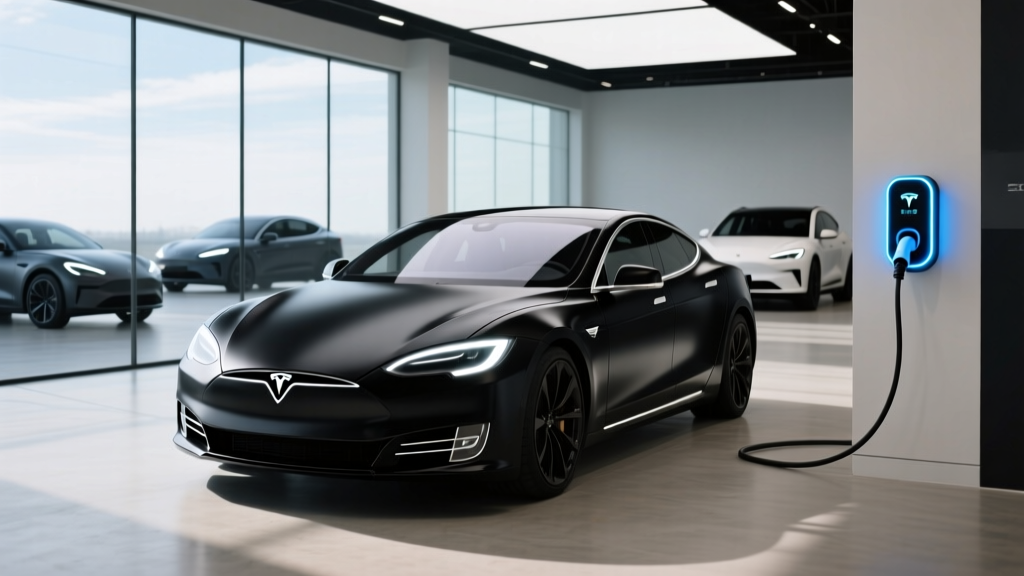
While that macro question plays out, Tesla still sells one of the most technically accomplished electric sedans on the market. The 2026 Model S remains a benchmark for range, charging speed, and powertrain efficiency. Below is our data-driven review of what you're actually buying today, and what Tesla's broader strategy means for current and prospective owners.
2026 Tesla Model S: Quick Verdict
The Model S in 2026 is a mature, highly refined flagship sedan that still leads its segment in EPA-rated range and DC fast-charging throughput. It's not the newest design in Tesla's lineup — the interior architecture dates back to the 2021 refresh — but the powertrain, battery management, and Supercharger network access keep it competitive against the Lucid Air, BMW i7, and Mercedes EQS. If the "Tesla to stop making cars" rumors worry you, consider this: Tesla's vehicle division still generates roughly $70 billion in annual revenue. They aren't walking away from that.
| Specification | Model S Long Range | Model S Plaid |
|---|---|---|
| EPA Range | 402 miles | 359 miles |
| Battery (usable) | ~95 kWh (NMC) | ~95 kWh (NMC) |
| Drivetrain | Dual-Motor AWD | Tri-Motor AWD |
| Horsepower | 670 hp | 1,020 hp |
| 0-60 mph | 3.1 seconds | 1.99 seconds |
| Top Speed | 155 mph | 200 mph |
| Max DC Fast Charge | 250 kW | 250 kW |
| 10-80% DCFC Time | ~25 minutes | ~25 minutes |
| Level 2 Charge Rate | 11.5 kW (~44 mi/hr) | 11.5 kW (~44 mi/hr) |
| MPGe (combined) | 120 MPGe | 116 MPGe |
| kWh/100 mi | 28 kWh | 29 kWh |
| Cargo Volume | 28 cu ft (rear) + frunk | 28 cu ft (rear) + frunk |
| Rear Legroom | 40.9 inches | 40.9 inches |
| Base MSRP | $74,990 | $89,990 |
| Battery Warranty | 8 yr / 150,000 mi | 8 yr / 150,000 mi |
Range and Efficiency: Real-World Expectations
The EPA rates the 2026 Model S Long Range at 402 miles, placing it among the longest-range EVs sold in the United States. Only the Lucid Air Grand Touring (516 miles EPA) exceeds it among production sedans. The Plaid variant drops to 359 miles due to its tri-motor powertrain's higher energy draw.
EPA Rating: 402 miles (Long Range) / 359 miles (Plaid)
Highway driving (70-75 mph): Expect ~320-340 miles in mild weather. Aerodynamic drag at sustained highway speeds cuts efficiency by roughly 15-20% versus the combined EPA cycle.
Cold weather (below 32°F): Plan for 260-300 miles. The Model S uses a heat pump (standard since the 2021 refresh) which mitigates cabin-heating losses, but battery chemistry still loses efficiency in freezing temps.
Best-case city/mixed driving: 380-410 miles is achievable with moderate speeds and regenerative braking.
Efficiency is rated at 120 MPGe combined (28 kWh per 100 miles) for the Long Range. That's excellent for a 4,500+ lb luxury sedan. For context, the BMW i7 xDrive60 achieves 82 MPGe combined, and the Mercedes EQS 580 returns 97 MPGe. Tesla's powertrain and thermal management remain class-leading in energy conversion.
According to fueleconomy.gov, the Model S Long Range's annual electricity cost is approximately $650 based on 15,000 miles of driving and national average electricity rates — roughly one-third the fuel cost of a comparable gasoline luxury sedan.
Charging Speed: DC Fast, Level 2, and the Supercharger Advantage
The Model S peaks at 250 kW on a DC fast charger — specifically at V3 Tesla Superchargers. While some competitors now support 350 kW (Hyundai Ioniq 5, Kia EV6) or even 300+ kW architectures (Lucid Air at ~300 kW), Tesla compensates with the most reliable and extensive proprietary charging network in North America, now exceeding 6,000 V3/V4 stalls in the US alone.
| Charging Level | Power / Rate | Miles Added | Notes |
|---|---|---|---|
| Level 1 (120V household) | ~1.4 kW | ~3-4 mi/hr | Emergency/trickle only |
| Level 2 (240V, 48A Wall Connector) | 11.5 kW | ~44 mi/hr | Full charge in ~8.5 hours |
| DC Fast (V3 Supercharger) | Peak 250 kW | ~200 mi in 15 min | 10-80% in ~25 min |
| DC Fast (CCS adapter, 350 kW stall) | Limited to 250 kW | ~200 mi in 15 min | Car-side cap at 250 kW |
A critical detail for buyers: the Model S uses Tesla's NACS connector natively. With Tesla opening the Supercharger network to NACS-equipped competitors (Ford, Rivian, GM vehicles via adapter), Supercharger stalls are busier than they were in 2023. However, Tesla owners still benefit from seamless plug-and-charge integration with no adapter needed, automatic billing, and route preconditioning that warms the battery before you arrive at a stall.
The charge curve matters more than peak kW. The Model S sustains roughly 200-250 kW between 10-40% State of Charge, then tapers progressively: ~150 kW at 60%, ~80 kW at 80%, and below 40 kW above 90%. This is why the 10-80% metric (~25 minutes) is more useful than peak-kW marketing claims.
Performance: Long Range and Plaid Compared
The dual-motor Long Range delivers 670 horsepower and a 3.1-second 0-60 mph time — figures that would have defined a supercar a decade ago. The tri-motor Plaid produces 1,020 horsepower and hits 60 mph in 1.99 seconds (with rollout subtracted), making it one of the quickest production cars ever built regardless of powertrain.
Both variants feature Tesla's adaptive air suspension (standard since 2021), which provides up to 5.8 inches of ground clearance adjustment. The Plaid adds carbon-ceramic brake rotors (included at this price point) and a track-oriented thermal management system that prevents power derating during repeated hard launches.
One note on the yoke steering wheel: it remains optional on the Model S (a conventional round wheel is standard). On track and in low-speed maneuvering, the yoke's lack of a top rim requires adaptation. Most daily drivers are better served by the conventional wheel.
Interior, Tech, and Cargo Space
The Model S interior was comprehensively refreshed in 2021 and carries forward into 2026 with minimal changes. The cabin centers on a 17-inch landscape-oriented touchscreen running Tesla's proprietary infotainment OS, a 12.3-inch instrument cluster, and an 8-inch rear passenger screen.
Cargo capacity is a standout: 28 cubic feet behind the rear seats (including the rear trunk) plus a front trunk (frunk) large enough for a carry-on bag. Fold the 60/40 rear seats and total volume expands to approximately 55 cubic feet — competitive with midsize luxury SUVs.
Rear legroom measures 40.9 inches, adequate for adults on longer trips, though the sloping roofline limits headroom for passengers over 6 feet tall. Build quality has improved noticeably since the 2021 refresh, with tighter panel gaps and higher-grade materials, though it still trails the fit-and-finish benchmark set by the Mercedes EQS and Lucid Air.
Standard tech features include:
- 22-speaker, 960-watt audio system
- Wireless phone charging (two pads)
- HEPA air filtration with Bioweapon Defense Mode
- Sentry Mode (surveillance recording while parked)
- Over-the-air software updates (frequent, substantial feature additions)
- Tesla Arcade and streaming apps (Netflix, YouTube, Spotify) while parked
Autopilot, FSD, and Driver-Assistance Systems
Both Autopilot (standard) and Full Self-Driving Supervised (optional, $8,000 one-time or $99/month) are SAE Level 2 systems. The driver must remain attentive, keep hands on the wheel, and be prepared to take over at any moment. Tesla's FSD is not Level 4 autonomous — no production Tesla vehicle can drive itself without human supervision. Only robotaxi services like Waymo and Zoox operate at Level 4 in geofenced areas.
Standard Autopilot includes Traffic-Aware Cruise Control and Autosteer (lane-centering on highways). FSD Supervised adds automatic lane changes, navigation-guided on/off-ramp transitions, traffic light and stop sign recognition, and city-street autosteer. In our experience, FSD handles highway driving competently but requires frequent interventions in complex urban environments — construction zones, unprotected left turns, and ambiguous lane markings remain weak points.
Tesla's vision-only approach (no LiDAR, no radar since 2022) continues to draw scrutiny from NHTSA, which has investigated multiple Autopilot-related incidents. Buyers should treat FSD as a convenience feature, not a replacement for attentive driving.
Pricing, Trims, and Federal Tax Credit Eligibility
The 2026 Model S is offered in two trims:
- Model S Long Range: $74,990 MSRP
- Model S Plaid: $89,990 MSRP
Common options include Ultra Red or Midnight Silver Metallic paint ($1,500-$2,500), 21-inch Arachnid wheels ($4,500), and FSD Supervised ($8,000). A well-equipped Long Range typically lands around $85,000-$90,000 before incentives.
| Requirement | Model S Status | Detail |
|---|---|---|
| MSRP Cap (sedans: $55,000) | ❌ Exceeds cap | Model S MSRP starts at $74,990 — well above the $55,000 sedan limit |
| Buyer Income Cap | Varies | $150K single / $300K joint MAGI |
| Battery Critical Minerals | Partial | Tesla sources globally; specific eligibility depends on supply chain year |
| Battery Component Mfg. | Partial | North American assembly required for full credit |
| Point-of-Sale Transfer | N/A | Not applicable if credit is ineligible |
The bottom line on tax credits: the Model S does not qualify for the $7,500 federal EV tax credit under current IRS §30D rules because its MSRP exceeds the $55,000 cap for sedans (the cap is $80,000 for SUVs, trucks, and vans — but the Model S is classified as a sedan). Per IRS.gov, this is a hard disqualifier regardless of income or battery sourcing. Buyers seeking a Tesla with federal credit eligibility should look at the Model 3 (starting ~$38,990) or Model Y (classified as an SUV, starting ~$44,990), both of which may qualify depending on trim and buyer income.
State incentives vary by jurisdiction. California's CVRP program, Colorado's state credit, and various utility rebates may apply — check your state's official energy office for current amounts.
Warranty and Long-Term Ownership
Tesla provides the following warranty coverage for the 2026 Model S:
- Basic Vehicle: 4 years / 50,000 miles
- Battery & Drive Unit: 8 years / 150,000 miles (whichever comes first), with minimum 70% capacity retention guaranteed over the warranty period
The battery warranty's 70% retention threshold is standard for the industry (BMW, Mercedes, and Lucid offer similar terms). Tesla's NMC battery packs have demonstrated strong longevity in real-world data: most Model S packs retain 85-90% capacity at 100,000 miles based on aggregated owner reports. Battery replacement outside warranty currently ranges from $12,000-$18,000 depending on pack configuration — a cost to factor if you plan to keep the vehicle past 150,000 miles.
Maintenance costs are minimal compared to ICE luxury sedans: no oil changes, no transmission fluid, no spark plugs. Expect to budget for tire rotation/replacement (EVs wear tires faster due to instant torque and heavy weight), cabin air filter replacement (~$150 annually), and wiper fluid. Insurance premiums for the Model S are above average — typically $2,500-$3,500/year depending on your profile and state, per industry data.
What "Tesla to Stop Making Cars" Actually Means for Buyers
Let's address the keyword directly. Tesla has made no announcement about ceasing vehicle production. What is happening is a strategic diversification:
- Tesla Energy (Megapack, Powerwall) grew to over $10 billion in annual revenue by late 2025
- FSD licensing discussions with other automakers are ongoing
- Optimus robot development consumes significant R&D budget
- Robotaxi (Cybercab) is announced for limited 2026 deployment
For current and prospective Model S owners, this diversification is largely positive: Tesla's software and AI investments directly improve the vehicle you own through over-the-air updates. The Supercharger network continues expanding. Parts and service infrastructure remains robust.
The risk isn't that Tesla stops making cars — it's that cars become a secondary business line, potentially slowing the pace of new vehicle introductions. The Model S platform is now 14 years old (originally launched 2012, refreshed 2021). A next-generation sedan has been rumored but not officially announced. If you're buying in 2026, you're buying a proven, mature product — not a cutting-edge new platform.
Pros and Cons
Pros
- Class-leading 402-mile EPA range (Long Range)
- 250 kW DC fast charging with Supercharger network access
- Tri-motor Plaid offers supercar-level 1.99s 0-60 mph
- Over-the-air updates continuously add features
- Excellent cargo space (28 cu ft + frunk) for a sedan
- Heat pump standard for cold-weather efficiency
- Strong battery longevity data (85-90% at 100K miles)
Cons
- Does NOT qualify for $7,500 federal tax credit (MSRP cap)
- Interior design aging vs. newer Lucid Air, Mercedes EQS
- FSD ($8,000) is Level 2 only — not autonomous
- Yoke steering requires adaptation; not ideal for all drivers
- Insurance premiums above luxury-segment average
- No 800V architecture (limits future charging-speed upgrades)
- Supercharger stalls increasingly shared with non-Tesla EVs
Who Should Buy the 2026 Model S?
Choose the Model S Long Range if: You want the longest-range luxury sedan under $80,000, frequently road-trip and rely on the Supercharger network, and value powertrain efficiency over interior novelty. Ideal for high-mileage commuters (30K+ miles/year) who benefit from low per-mile electricity costs.
Choose the Model S Plaid if: Track performance matters to you, you want a daily-drivable 1,000+ hp vehicle, and budget is flexible above $90,000.
Look elsewhere if: Federal tax credit eligibility is essential to your purchase math (consider Model 3 or Model Y), you prioritize interior luxury and build quality over performance (Lucid Air, Mercedes EQS), or you want the newest platform design (the Model S architecture is aging).
Frequently Asked Questions
Is Tesla actually going to stop making cars?
No. Tesla continues manufacturing five vehicle models (Model S, 3, X, Y, Cybertruck) across three continents. The company is diversifying into energy storage, AI, and robotics, but vehicle production remains its largest revenue segment at approximately $70 billion annually. No production halt has been announced.
What is the real-world range of the 2026 Model S?
The EPA rates the Long Range at 402 miles and the Plaid at 359 miles. In real-world highway driving at 70-75 mph, expect 320-340 miles (Long Range). In freezing temperatures, plan for 260-300 miles. City driving with regenerative braking can approach or slightly exceed the EPA sticker.
How fast does the Model S charge at home and on the road?
At home on a Level 2 Tesla Wall Connector (240V, 48A), the Model S charges at 11.5 kW, adding approximately 44 miles of range per hour — a full charge takes about 8.5 hours. On a V3 Supercharger, it peaks at 250 kW and charges from 10-80% in roughly 25 minutes, adding up to 200 miles in 15 minutes.
Does the 2026 Model S qualify for the $7,500 federal EV tax credit?
No. Under IRS §30D rules, the federal EV tax credit for sedans is capped at vehicles with an MSRP of $55,000 or less. The Model S starts at $74,990, which disqualifies it regardless of buyer income or battery sourcing. The Model 3 and Model Y (SUV classification, $80K cap) may qualify depending on trim. Consult a tax professional for your specific situation.
Is the Model S worth buying versus the Lucid Air or BMW i7?
It depends on your priorities. The Model S Long Range offers the best combination of range (402 mi), charging infrastructure (Supercharger network), and price ($74,990) in its segment. The Lucid Air Grand Touring offers more range (516 mi EPA) and a more luxurious interior but starts above $110,000 and lacks Supercharger access. The BMW i7 offers superior build quality and comfort but only 318 miles of range and 82 MPGe. For road-trippers who value charging convenience and efficiency, the Model S remains the rational choice.
What is the battery warranty on the 2026 Model S?
Tesla covers the battery and drive unit for 8 years or 150,000 miles (whichever comes first), guaranteeing a minimum of 70% capacity retention over that period. Real-world data shows most Model S NMC battery packs retain 85-90% capacity at 100,000 miles. Out-of-warranty battery replacement currently costs approximately $12,000-$18,000.
Is Tesla's Full Self-Driving actually self-driving?
No. FSD Supervised is an SAE Level 2 driver-assistance system. The driver must remain fully attentive, keep hands on the wheel, and be prepared to take control at any time. It is not autonomous. Only Level 4 robotaxi services like Waymo operate without a human driver, and only in geofenced areas. Tesla has not achieved Level 3 or higher certification from any regulatory body.
Sources: EPA fuel economy data via fueleconomy.gov, IRS §30D clean vehicle credit rules via irs.gov, Tesla official specifications. Tax credit eligibility is subject to change — verify current rules with a tax professional before purchasing.