Why Tesla Stock Split Searches Matter to EV Buyers
If you've searched "stock split Tesla" recently, you're not alone. Retail investors and prospective EV buyers alike track Tesla's share structure because the company has a history of splitting its stock to broaden accessibility — most notably the 3-for-1 split in August 2022 and the 5-for-1 split in August 2020. As of early 2026, Tesla has not announced a new stock split, but the topic resurfaces whenever TSLA's share price climbs into triple-digit territory.
Here's the critical distinction for our readers: a stock split does not change the price of a Tesla vehicle. It changes the number of shares outstanding and the per-share price — nothing more. Whether TSLA trades at $250 or splits to trade at $50, the Model Y still starts at the same MSRP. However, understanding Tesla's financial trajectory matters if you're evaluating the company's long-term viability as your EV manufacturer, considering Tesla stock as part of your investment-to-EV-purchase pipeline, or simply trying to separate financial headlines from vehicle-buying realities.
This guide bridges the gap: we'll explain what a Tesla stock split actually means for buyers, then deliver the concrete vehicle data you need to evaluate the current Tesla lineup — specifically the 2026 Model Y, Tesla's volume seller and the model most cross-shoppers research.
2026 Tesla Model Y: The Numbers That Actually Matter
While investors watch share prices, EV buyers need hard specs. The 2026 Tesla Model Y (refreshed "Juniper" generation) remains Tesla's best-selling vehicle globally and competes directly with the Hyundai Ioniq 5, Ford Mustang Mach-E, and Kia EV6. Here's the complete spec breakdown:
| Spec | Long Range RWD | Long Range AWD | Performance |
|---|---|---|---|
| EPA Range | 320 miles | 300 miles | 277 miles |
| Battery (usable) | ~75 kWh (NMC) | ~75 kWh (NMC) | ~75 kWh (NMC) |
| 0-60 mph | 5.8 sec | 4.8 sec | 3.5 sec |
| Horsepower | 346 hp | 384 hp | 456 hp |
| Drivetrain | RWD (single motor) | AWD (dual motor) | AWD (dual motor) |
| Max DC Fast Charge | 250 kW | 250 kW | 250 kW |
| 10-80% DCFC Time | ~25 min | ~25 min | ~25 min |
| Level 2 Home Charge | 11.5 kW (~44 mi/hr) | 11.5 kW (~44 mi/hr) | 11.5 kW (~44 mi/hr) |
| MPGe (combined) | 123 MPGe | 116 MPGe | 111 MPGe |
| kWh/100 mi | 27 kWh | 29 kWh | 30 kWh |
| Cargo (rear seats up) | 30.2 cu ft | 30.2 cu ft | 30.2 cu ft |
| Cargo (rear seats down) | 72.1 cu ft | 72.1 cu ft | 72.1 cu ft |
| Rear Legroom | 38.4 in | 38.4 in | 38.4 in |
| Base MSRP | $44,990 | $47,990 | $52,490 |
| Battery Warranty | 8 yr / 120,000 mi | 8 yr / 120,000 mi | 8 yr / 120,000 mi |
| Basic Warranty | 4 yr / 50,000 mi | 4 yr / 50,000 mi | 4 yr / 50,000 mi |
Source: EPA fueleconomy.gov, Tesla.com 2026 specs. Figures reflect current Juniper-refresh Model Y.
Real-World Range: What the EPA Sticker Doesn't Tell You
EPA Estimate: 300 miles
Real-World Highway (70-75 mph, mild weather): ~255-270 miles
Real-World Cold Weather (below 30°F, highway): ~210-235 miles
Real-World City/Stop-and-Go (mild weather): ~285-300 miles (regen recovers energy)
Tesla's EPA range estimates are among the more conservative in the industry, but physics still applies. At sustained highway speeds above 70 mph, aerodynamic drag consumes energy faster than the EPA test cycle — which includes significant low-speed and idle segments — would suggest. Expect a 10-15% reduction from the EPA sticker on highway road trips in moderate temperatures.
Cold weather compounds this. Lithium-ion NMC batteries lose efficiency in freezing conditions, and cabin heating (even with the Model Y's heat pump) draws significant power. In sub-30°F testing, owners consistently report 20-30% range reduction on highway drives. The heat pump helps — it's roughly 3-4x more efficient than resistive heating — but it can't eliminate cold-weather losses entirely.
City driving is where the Model Y shines closest to its EPA number. Regenerative braking recovers kinetic energy that gas cars waste as heat, and Tesla's one-pedal driving mode maximizes this recovery. If your commute is mostly stop-and-go at moderate speeds, you'll approach or occasionally exceed the 300-mile sticker on the Long Range AWD.
Charging Speed: DC Fast, Level 2, and the Supercharger Advantage
Charging infrastructure is where Tesla maintains a tangible edge, though that edge is narrowing as the North American Charging Standard (NACS) opens Supercharger networks to Ford, Rivian, and other automakers. Here's what 2026 Model Y owners experience:
| Charging Level | Power | Miles Added/Hour | Notes |
|---|---|---|---|
| Level 1 (120V household) | ~1.4 kW | ~5 mi/hr | Emergency/trickle only; 60+ hours for full charge |
| Level 2 (240V home, 48A) | 11.5 kW | ~44 mi/hr | Full charge overnight (~7-8 hours); requires NEMA 14-50 or hardwired Wall Connector |
| Level 2 (public, 19.2 kW) | 11.5 kW (car-limited) | ~44 mi/hr | Model Y's onboard charger caps at 11.5 kW regardless of station output |
| DC Fast (V3 Supercharger) | 250 kW peak | ~162 mi in 15 min | Peak rate sustained to ~50% SoC, then tapers; 10-80% in ~25 min |
| DC Fast (V4 Supercharger) | 250 kW (current) | Similar to V3 | V4 hardware supports higher rates; Model Y currently limited to 250 kW |
| DC Fast (CCS adapter, EA/others) | Up to 250 kW | Varies by station | Tesla CCS adapter included; third-party networks work but may require adapter |
Charging curve reality check: The "250 kW peak" figure is just that — a peak. The Model Y's charge curve holds near maximum rate from roughly 10% to 50% State of Charge, then progressively tapers. From 80% to 100%, charging slows dramatically to protect battery longevity. This is why Tesla (and every other automaker) quotes 10-80% times rather than 0-100%. If you're road-tripping, plan to charge from 10-80% and move on rather than waiting for that last 20%.
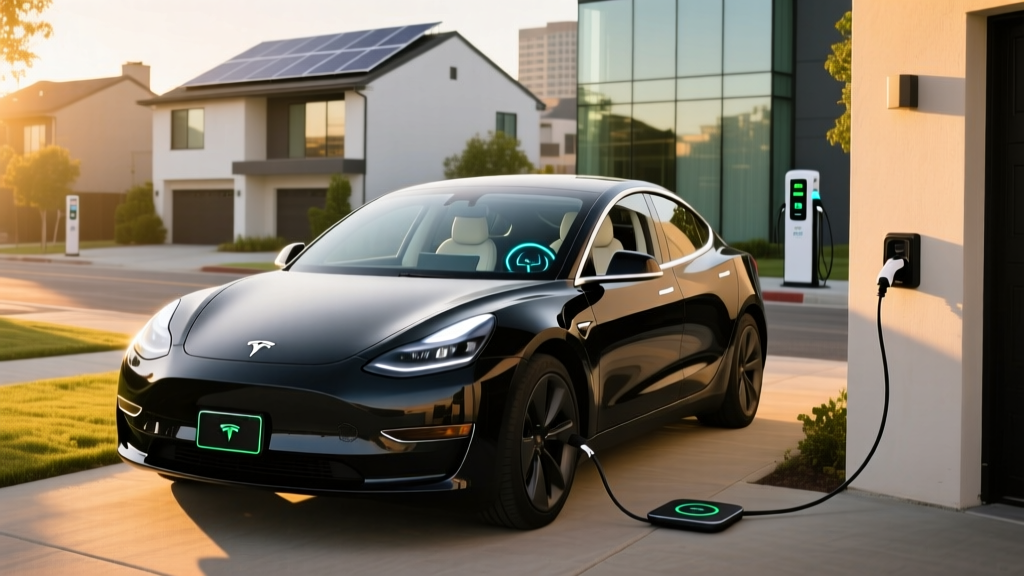
Home charging note: The Tesla Wall Connector ($420) is the most seamless Level 2 option for Tesla owners, offering Wi-Fi connectivity, power sharing between two units, and native NACS plug integration. A licensed electrician will typically charge $500-$1,500 for installation depending on panel proximity and whether a 200A service upgrade is needed. Always get a quote from a licensed electrician before committing.
Pricing, Tax Credits, and the Stock Split Question
Let's address the stock split question directly: Tesla's stock price has zero effect on vehicle pricing. Tesla sets MSRPs based on manufacturing costs, competitive positioning, and demand — not share price. The 2022 3-for-1 split didn't make Teslas cheaper, and any future split won't either.
What does affect your out-of-pocket cost is the federal EV tax credit under IRS §30D. Here's the current landscape for the 2026 Model Y:
| Trim | MSRP | §30D Credit | Effective Price | Point-of-Sale Transfer? |
|---|---|---|---|---|
| Long Range RWD | $44,990 | Up to $7,500* | ~$37,490* | Yes — applied at dealer |
| Long Range AWD | $47,990 | Up to $7,500* | ~$40,490* | Yes — applied at dealer |
| Performance | $52,490 | Up to $7,500* | ~$44,990* | Yes — applied at dealer |
*Credit eligibility requires meeting ALL of the following under current IRS §30D rules:
- MSRP cap: SUVs/vans/pickups must be under $80,000 (all Model Y trims qualify)
- Buyer income cap: AGI ≤ $150,000 (single) / $225,000 (head of household) / $300,000 (joint) — based on current-year or prior-year tax return
- Battery sourcing: Critical minerals and battery components must meet phased-in percentage thresholds from US/free-trade-agreement sources. Tesla's US-built batteries (Austin and Fremont) currently satisfy these requirements for the full $7,500, but sourcing rules tighten annually. Verify current eligibility at fueleconomy.gov before purchasing.
- Point-of-sale transfer: Since Jan 2024, buyers can transfer the credit to the dealer at purchase, reducing the sale price directly rather than waiting for a tax refund. This is now the standard path.
Bottom line: Consult a tax professional to confirm your personal eligibility. The credit can reduce a Model Y Long Range RWD to roughly $37,490 — a price point that competes directly with well-equipped Ioniq 5 and EV6 models. For current rules, see the IRS clean vehicle credit page.
Performance, Tech, and Daily Ownership
The Model Y Performance's 3.5-second 0-60 time is supercar-adjacent, but the Long Range AWD's 4.8 seconds is already quicker than most buyers will ever need. All trims deliver instant torque from standstill, making highway merging and city acceleration effortless. The dual-motor AWD system provides genuine all-weather traction — not just traction-control simulation — because each axle has independent motor control.
Infotainment and tech: The Juniper refresh brought a redesigned 15.4-inch center touchscreen with faster processing, ventilated front seats, ambient lighting, and a rear-seat entertainment screen. Tesla's software remains the industry benchmark for over-the-air updates — your car genuinely improves after purchase. The navigation system integrates real-time Supercharger availability and routes through chargers automatically on long trips.
Driver assistance: Tesla's Autopilot (standard) and Full Self-Driving Supervised ($8,000 option or $99/month subscription) remain SAE Level 2 systems — meaning the driver must remain fully engaged, hands on or near the wheel, eyes on the road. FSD Supervised handles highway lane changes, on/off-ramp navigation, and some city street driving, but it is emphatically not autonomous. You are the driver. NHTSA continues to investigate FSD-related incidents, and buyers should treat it as an advanced convenience feature, not a replacement for attention.
Model Y vs. Key Competitors: Is It Still the Default Choice?
The Model Y no longer wins by default. Here's how it stacks up against the three most common cross-shops in 2026:
| Spec | Tesla Model Y LR AWD | Hyundai Ioniq 5 Long Range AWD | Ford Mustang Mach-E ER AWD | Kia EV6 GT-Line AWD |
|---|---|---|---|---|
| EPA Range | 300 mi | 290 mi | 290 mi | 282 mi |
| Max DCFC | 250 kW | 238 kW (800V) | 150 kW | 238 kW (800V) |
| 10-80% Time | ~25 min | ~18 min | ~36 min | ~18 min |
| 0-60 mph | 4.8 sec | 5.1 sec | 5.1 sec | 4.5 sec |
| Cargo (seats up) | 30.2 cu ft | 27.2 cu ft | 29.7 cu ft | 24.4 cu ft |
| Base MSRP (AWD) | $47,990 | $49,990 | $48,995 | $51,900 |
| NACS Native? | Yes | Yes (2025+) | Adapter needed | Adapter needed |
| Frunk | 4.1 cu ft | 0.85 cu ft | 4.7 cu ft | 0.7 cu ft |
Choose the Ioniq 5 or EV6 if: You value faster 10-80% charging (800V architecture hits ~18 minutes vs. Tesla's ~25), prefer traditional dealership service, or want V2L (vehicle-to-load) capability to power devices from your car.
Choose the Mach-E if: You want a more traditional car-like driving feel, prefer Ford's BlueCruise hands-free highway driving (on approved roads), or find better local dealer inventory and incentives.
Pros and Cons: The Honest Assessment
- Supercharger network access — still the gold standard for reliability and coverage
- Class-leading cargo volume (30.2 cu ft rear seats up, 72.1 cu ft folded)
- Strong efficiency: 27-30 kWh/100mi depending on trim
- Excellent OTA software updates that add features post-purchase
- Heat pump standard (critical for cold-climate range preservation)
- Full $7,500 §30D credit eligibility (verify at purchase)
- High resale value relative to EV competitors
- Extensive service center and mobile service network
- No 800V architecture — DCFC slower than Ioniq 5/EV6 (25 min vs 18 min, 10-80%)
- FSD ($8,000 or $99/mo) is expensive for a Level 2 system
- Minimalist interior isn't for everyone — no physical stalks (turn signals on wheel)
- Build quality improved but still inconsistent vs. legacy automakers
- No Apple CarPlay or Android Auto — Tesla-only infotainment
- Rear-seat visibility compromised by sloping roofline
- Insurance costs tend to run 15-25% higher than comparable non-Tesla EVs
- Turn-signal buttons on steering wheel (no stalk) frustrates some drivers
Who Should Buy the 2026 Model Y?
Ideal for: Families needing a practical daily driver with road-trip capability, commuters with home charging access, and buyers who value the Supercharger network for frequent long-distance travel. The 300-mile AWD range covers most round-trip commutes for a week without charging, and the 25-minute 10-80% DCFC time keeps road-trip stops reasonable.
Less ideal for: Buyers without reliable home or workplace charging (public-only charging adds time and cost), those who prioritize the fastest possible DCFC speeds (look at 800V platforms), or drivers who want Apple CarPlay/Android Auto integration.
Towing note: The Model Y is rated for 3,500 lbs of towing capacity — adequate for a small trailer or pair of jet skis, but not for boats or campers. If you need serious towing, the Ford F-150 Lightning or Rivian R1S are better choices.
Frequently Asked Questions
Does a Tesla stock split make the car cheaper?
No. A stock split changes the number of shares and per-share price for investors. It has no effect on vehicle MSRPs, financing rates, or lease terms. Tesla's vehicle pricing is determined by manufacturing costs, supply chain factors, and competitive market dynamics — not by share price.
What is the real-world range of the 2026 Model Y?
The EPA rates the Long Range AWD at 300 miles. In real-world highway driving at 70-75 mph in mild weather, expect 255-270 miles. In freezing temperatures with highway driving, plan for 210-235 miles. City driving with regenerative braking can approach or match the EPA estimate.
How fast does the Model Y charge at home and on the road?
At home on a 240V Level 2 charger (48A), the Model Y adds roughly 44 miles of range per hour, achieving a full charge in 7-8 hours. On a V3 Supercharger (250 kW DC), it charges from 10-80% in approximately 25 minutes, with peak charge rate sustained to roughly 50% State of Charge before tapering.
Does the 2026 Model Y qualify for the $7,500 federal EV tax credit?
Yes — all Model Y trims fall under the $80,000 SUV MSRP cap, and Tesla's US-manufactured batteries currently meet the critical-mineral and component sourcing thresholds. However, the buyer must also meet income caps ($150K single / $300K joint AGI). Verify current eligibility at fueleconomy.gov and consult a tax professional before relying on the credit.
Is the Model Y worth buying over the Ioniq 5 or EV6?
It depends on your priorities. The Model Y wins on Supercharger network access, cargo space, and software. The Ioniq 5 and EV6 win on DCFC speed (800V architecture, ~18 min 10-80%), V2L capability, and CarPlay support. If you road-trip frequently and value charging reliability, Tesla still has the edge. If you mostly charge at home and want faster public charging when needed, the Korean platforms are compelling.
Will Tesla announce another stock split?
As of early 2026, Tesla has not announced a new stock split. The company previously split 5-for-1 in August 2020 and 3-for-1 in August 2022. Any future split would be announced via Tesla's investor relations page and SEC filings. For vehicle buyers, this is financially irrelevant — focus on MSRP, tax credits, and total cost of ownership instead.