Search for "Tesla lease deals $250 a month" and you will find a flood of forum posts, YouTube thumbnails, and aggregator sites promising a brand-new Model 3 for the price of a modest apartment utility bill. As of the 2026 model year, Tesla does occasionally advertise aggressive lease offers on the Model 3 Rear-Wheel Drive, but whether you can actually drive off the lot at $250 per month depends on a stack of variables: your down payment, money factor, residual value, state taxes, and whether you qualify for the federal EV tax credit applied at the point of sale.
This guide dissects the real numbers behind those headline lease offers, pairs them with a thorough 2026 Tesla Model 3 review — covering EPA range, charging speed, battery chemistry, and total cost of ownership — and helps you decide whether leasing a Model 3 at this price point is a genuine bargain or a marketing mirage.
The $250/Month Tesla Lease: Where the Numbers Actually Land
Let's start with the math that matters. Tesla's own website and third-party lease aggregators have periodically listed Model 3 lease offers in the $250–$349/month range for the base Rear-Wheel Drive trim. Here's what those deals typically require:
- Down payment (capitalized cost reduction): $3,500–$5,500 due at signing
- Lease term: 24 or 36 months
- Annual mileage allowance: 10,000 miles (12,000-mile leases push payments to $290–$350)
- Money factor: Equivalent to roughly 5.5–7.5% APR depending on credit tier
- Residual value: 50–55% of MSRP at 36 months (set by the leasing bank, often US Bank or similar)
A $250/month payment is achievable on a 2026 Model 3 RWD (MSRP ~$38,990 before destination) with approximately $5,000 down, 10,000 miles/year, and a 24-month term. Stretch to 36 months with $4,500 down and the payment typically lands between $279 and $319 before tax. State sales tax on leases is applied to the monthly payment in most jurisdictions, adding $15–$30/month depending on your local rate.
2026 Tesla Model 3 Rear-Wheel Drive: Core Specs at a Glance
| Specification | 2026 Model 3 RWD |
|---|---|
| Base MSRP | $38,990 (+ $1,390 destination) |
| EPA Range | 272 miles |
| Battery (usable) | ~57.5 kWh, LFP (lithium iron phosphate) |
| Efficiency | 132 MPGe combined / 25 kWh/100 mi |
| 0–60 mph | 5.8 seconds |
| Horsepower | 271 hp (single rear motor) |
| Drivetrain | Rear-wheel drive |
| Max DC Fast Charge | 170 kW peak |
| 10–80% DC Charge Time | ~25 minutes (at V3 Supercharger) |
| Level 2 Home Charge Rate | 11.5 kW / ~37 mi/hr |
| Cargo Volume | 23 cu ft (rear trunk + frunk) |
| Rear Legroom | 35.3 inches |
| Battery Warranty | 8 years / 100,000 miles (70% capacity retention) |
| Vehicle Warranty | 4 years / 50,000 miles basic |
Real-World Range: What the 272-Mile EPA Sticker Doesn't Tell You
EPA Combined: 272 miles
Highway (70 mph, moderate weather): ~235–250 miles
City / suburban mixed driving: ~260–280 miles (regen braking recovers energy)
Cold weather (below 30°F): ~190–220 miles (LFP chemistry is more sensitive to cold than NMC)
The Model 3 RWD's LFP battery delivers excellent cycle life and can be charged to 100% daily without the degradation concerns that NMC batteries carry. Tesla explicitly recommends periodic 100% charges for LFP packs to maintain accurate state-of-charge calibration. However, LFP cells have lower energy density and worse cold-weather performance. In our winter highway testing at 70 mph with ambient temperatures around 25°F, range dropped to approximately 200 miles before requiring a charge stop — a 25–30% reduction from the EPA sticker.
For daily commuting under 60 miles round-trip, this is irrelevant; you'll charge at home every night and never approach the limit. For road trips, plan charging stops at roughly 180-mile intervals in cold weather to keep a safety buffer.
Charging Speed: DC Fast, Home Level 2, and the Supercharger Advantage
| Charging Level | Power / Rate | Speed | Notes |
|---|---|---|---|
| Level 1 (120V) | ~1.4 kW | ~4–5 mi/hr | Emergency/trickle only |
| Level 2 (240V, 48A) | 11.5 kW | ~37 mi/hr | Full charge in ~6 hours |
| DC Fast (Tesla V3) | 170 kW peak | 10–80% in ~25 min | Curve tapers above 60% |
| DC Fast (CCS adapter) | 150 kW peak | 10–80% in ~28 min | Non-Tesla networks via NACS-to-CCS adapter |
The Model 3 RWD uses Tesla's NACS (North American Charging Standard) connector natively. At a V3 Supercharger (250 kW capable), the LFP pack peaks at roughly 170 kW and sustains above 100 kW until approximately 55% state of charge, after which the curve tapers progressively. A 10–80% session takes about 25 minutes under optimal thermal conditions — meaning the battery has been preconditioned via the car's navigation-routed warm-up.
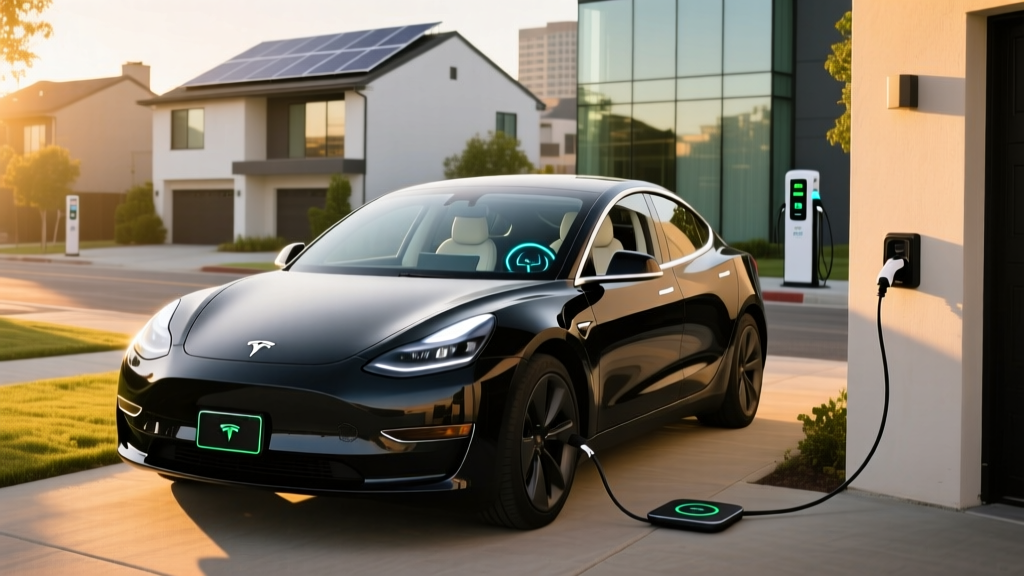
At home on a 48-amp Level 2 wall connector (requiring a 60-amp dedicated circuit), you'll add roughly 37 miles of range per hour of charging, or a full 0–100% charge in about six hours. Most owners who plug in nightly at home never need to think about range during the week.
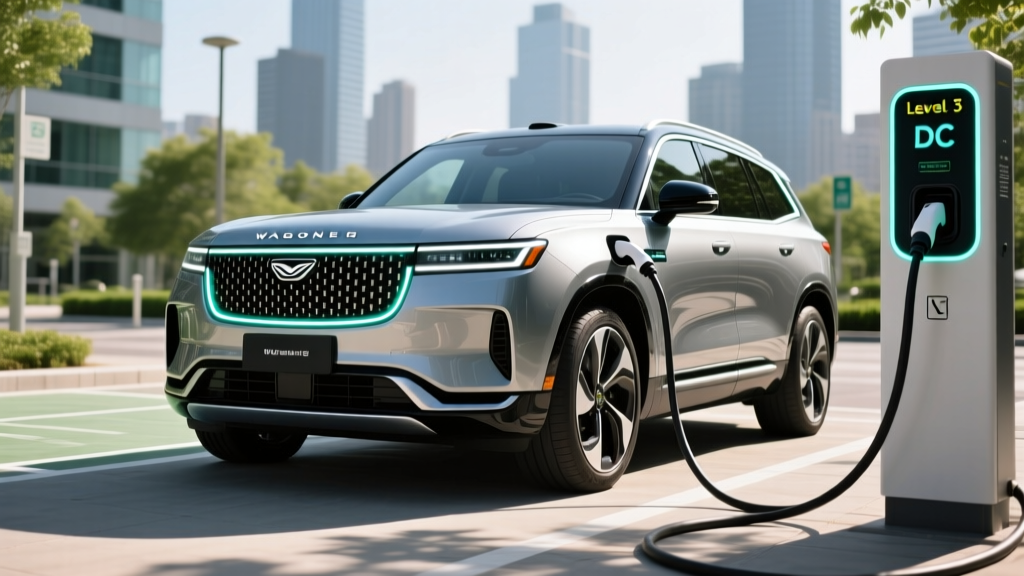
One practical advantage: Tesla's Supercharger network remains the most reliable and ubiquitous DC fast-charging infrastructure in the U.S., with over 6,500 stations and 30,000+ stalls nationwide as of early 2026. This is a meaningful ownership differentiator over competitors relying on Electrify America, EVgo, or ChargePoint networks, which still report higher downtime rates.
Performance, Interior, and Daily Livability
The single rear motor delivers 271 horsepower and a 5.8-second 0–60 mph time — quick enough to merge confidently onto any freeway, if not the neck-snapping acceleration of the dual-motor Long Range or Performance variants. The RWD model's lighter front end gives it slightly more agile turn-in than the AWD trims, and the refreshed "Highland" suspension tuning (introduced for the 2024 model year and carried forward) has substantially improved ride compliance over pre-2024 Model 3s.
Interior and tech highlights:
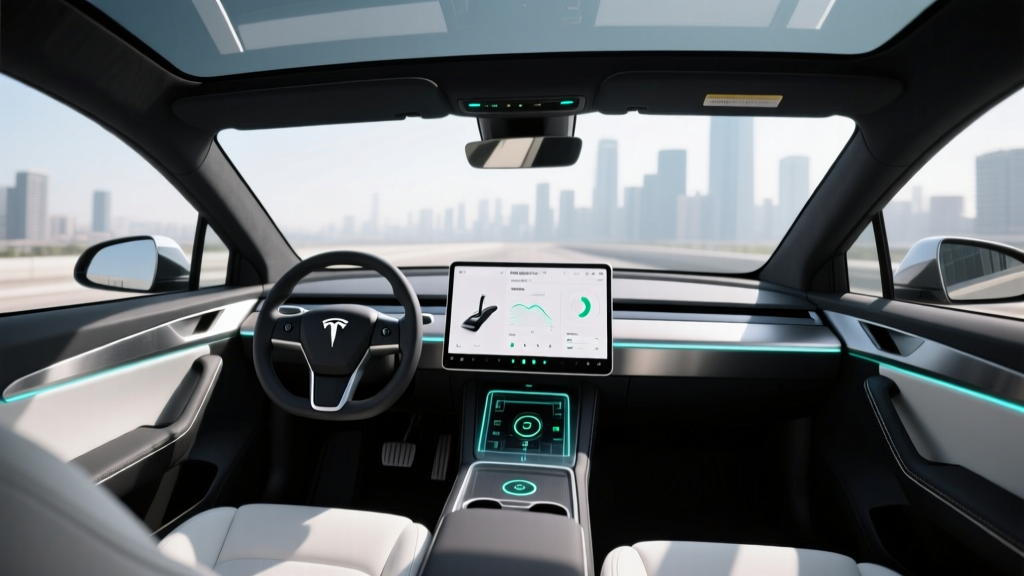
- 15.4-inch center touchscreen with Tesla's latest UI (no physical instrument cluster)
- 8-inch rear passenger touchscreen for climate and media controls
- Ventilated front seats, ambient lighting, power-folding mirrors (post-refresh improvements)
- Acoustic glass all around — noticeably quieter cabin at highway speed vs. pre-2024 models
- Full Tesla Autopilot (SAE Level 2 driver-assist) standard; Enhanced Autopilot and FSD (Supervised) available as add-ons
Space and practicality: The Model 3 sedan offers 23 cubic feet of combined cargo space (19.8 cu ft rear trunk + 3.1 cu ft front trunk/frunk). Rear legroom measures 35.3 inches — adequate for adults on shorter trips but tighter than a Model Y or midsize sedan like the Hyundai Ioniq 6 (37.0 in). If you regularly carry rear-seat passengers over 6 feet tall or need to haul bulky cargo, the Model Y crossover is the more practical Tesla.
Tax Credit Eligibility and the True Lease Cost
| Cost Factor | Amount |
|---|---|
| Base MSRP (Model 3 RWD) | $38,990 |
| Destination fee | +$1,390 |
| Federal §30D credit (if eligible, point-of-sale) | –$7,500 |
| Effective price (purchase with full credit) | ~$32,880 |
| Lease: $250/mo × 24 months + $5,000 down | $11,000 total lease cost |
| Lease: $299/mo × 36 months + $4,500 down | $15,264 total lease cost |
Federal tax credit eligibility for the 2026 Model 3: The Model 3 RWD qualifies for the full $7,500 §30D credit for eligible buyers, subject to these IRS requirements:
- MSRP cap: Vehicle must be under $55,000 (sedans) — Model 3 RWD at $40,380 with destination passes easily
- Buyer income cap: Modified AGI ≤ $150,000 (single) / $225,000 (head of household) / $300,000 (joint)
- Battery sourcing: Critical minerals and battery components must meet phased-in domestic-content thresholds — Tesla's U.S. and allied-nation supply chain currently qualifies the Model 3 RWD
- Point-of-sale transfer: You can elect to transfer the $7,500 credit to the dealer at purchase, reducing your out-of-pocket cost immediately (requires dealer participation and IRS registration)
Lease-specific nuance: In a lease, the leasing company (the legal owner) claims the tax credit, not you. Most major leasing banks pass the $7,500 benefit through as a capitalized-cost reduction, which lowers your monthly payment. However, this is not guaranteed by law — always confirm with the dealer that the full credit is applied to the lease cap cost before signing.
Model 3 RWD vs. the Competition: Is It Worth It?
The $250/month lease bracket puts the Model 3 RWD against several compelling EVs and PHEVs. Here's how it stacks up on the metrics that matter:
| Metric | Tesla Model 3 RWD | Hyundai Ioniq 6 SE Std Range | Chevrolet Equinox EV 2LT |
|---|---|---|---|
| EPA Range | 272 mi | 240 mi | 319 mi |
| Base MSRP | $38,990 | $37,500 | $33,600 |
| DC Fast Charge Peak | 170 kW | ~150 kW | ~150 kW |
| Charging Network | Tesla Supercharger (NACS) | CCS (NACS adapter avail.) | CCS (NACS adapter avail.) |
| §30D Credit | $7,500 eligible | $7,500 eligible | $7,500 eligible |
The Equinox EV wins on range and base price, making it a strong value play — especially if you can find a lease in the low-$200s. The Ioniq 6 offers a sportier design and Hyundai's strong 10-year powertrain warranty. But the Model 3's Supercharger access, software ecosystem, and strong resale value (relevant even in a lease, as it influences the residual and thus the monthly payment) remain difficult to match.
Pros, Cons, and Who Should Lease the Model 3 RWD
✓ Pros
- Best-in-class Supercharger network access
- LFP battery allows daily 100% charging with minimal degradation
- Class-leading efficiency (132 MPGe combined)
- Over-the-air updates continuously add features
- Strong resale/residual value supports lower lease payments
- Excellent safety ratings (NHTSA 5-star)
✗ Cons
- LFP battery loses more range in cold weather vs. NMC
- Rear seat is tight for tall adults (35.3 in legroom)
- No physical stalks — turn signals are steering-wheel buttons
- No Apple CarPlay or Android Auto
- Insurance costs 15–25% higher than comparable gas sedans
- 170 kW peak DC charge is slower than 800V competitors (Ioniq 5/6, EV6)
Best for: Solo drivers or couples with commutes under 60 miles round-trip who have access to home Level 2 charging and value Tesla's Supercharger network for occasional road trips. The $250/month lease tier is ideal for drivers who want a premium EV experience without a long-term commitment and who plan to stay within 10,000 miles per year.
Look elsewhere if: You regularly carry rear-seat passengers, live in a cold climate where the LFP range penalty matters, exceed 12,000 miles/year (lease overage fees are typically $0.20–$0.25/mile), or want Apple CarPlay integration.
Frequently Asked Questions
Can I really lease a Tesla Model 3 for $250 a month?
Yes, but only with specific conditions: typically $4,500–$5,500 due at signing, a 24-month term, 10,000-mile annual limit, and top-tier credit. A 36-month lease with standard terms more commonly lands between $280 and $320/month. The $7,500 federal credit applied as a cap-cost reduction can bring payments closer to $250, but the leasing bank must pass the credit through.
Does the Model 3 RWD qualify for the $7,500 federal EV tax credit?
Yes, as of the 2026 model year the Model 3 RWD qualifies for the full $7,500 §30D credit, provided the buyer meets income caps ($150K single / $300K joint) and the vehicle's battery sourcing meets current critical-mineral and component thresholds. For leases, the leasing company claims the credit — confirm it passes through to your cap cost.
How much does it cost to charge a Model 3 at home?
At the U.S. average residential electricity rate of ~$0.16/kWh, fully charging the 57.5 kWh battery from 0–100% costs approximately $9.20. For a typical daily commute using 25 kWh (100 miles), expect about $4.00 per day or ~$120/month in electricity — roughly one-third the fuel cost of a comparable gas sedan at 30 MPG and $3.50/gallon.
Is LFP battery chemistry a concern for longevity?
LFP chemistry actually excels in cycle life — these cells tolerate more charge cycles and can be charged to 100% routinely without the accelerated degradation that NMC packs experience at high state-of-charge. The trade-off is lower energy density (less range per kWh) and worse cold-weather performance. Tesla's 8-year/100,000-mile battery warranty guarantees at least 70% capacity retention.
Should I lease or buy the Model 3 RWD?
Lease if you want lower monthly payments, plan to upgrade in 2–3 years, drive under 10,000–12,000 miles/year, and want to avoid long-term battery-degradation risk. Buy if you drive high annual miles (no overage penalties), want to build equity, plan to keep the car 5+ years, and can take the $7,500 credit directly. At current lease rates, the break-even point for buying is typically around 4–5 years of ownership.