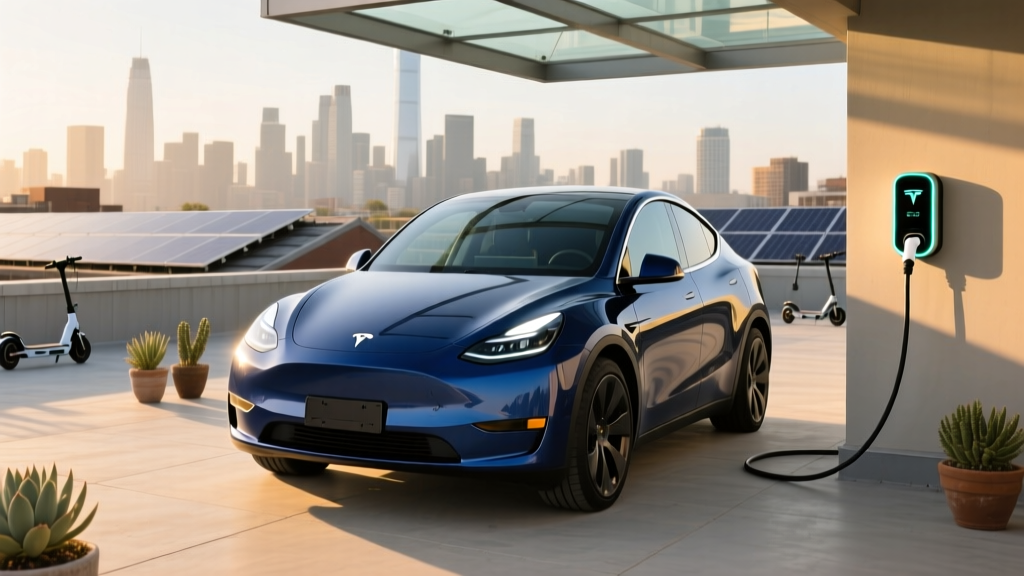
If you searched for "Tesla stock split 2022," you likely remember the 3-for-1 split that took effect on August 25, 2022. That corporate action didn't change Tesla's market cap, but it did lower the per-share price, bringing Tesla equity within reach of more retail investors — many of whom are also Tesla buyers. In 2026, that intersection of investor and owner remains relevant: Tesla's vehicle pricing, tax-credit eligibility, and model-year updates all influence both the stock and the showroom. Below, we use the best-selling 2026 Tesla Model Y as a case study in what ownership actually looks like today, with exact range, charging, pricing, and §30D credit numbers.
Why the 2022 Stock Split Still Matters to EV Buyers
Tesla's 3-for-1 stock split in 2022 was its second in two years (following the 5-for-1 split in August 2020). The mechanics were simple: shareholders received three shares for every one held, and the per-share price dropped proportionally. The goal was to broaden retail ownership by making shares more affordable. For EV shoppers who also invest, the split meant a lower barrier to building a position in Tesla equity while evaluating Tesla vehicles. In 2026, Tesla remains the world's most valuable automaker by market cap, and the Model Y continues to anchor its volume — making the stock-split story a useful lens for understanding Tesla's dual appeal to wallet and driveway.
2026 Tesla Model Y: Specs at a Glance
| Spec | Long Range AWD | Performance |
|---|---|---|
| EPA Range | 320 mi | 295 mi |
| Battery (usable) | ~75 kWh, NMC | ~75 kWh, NMC |
| Drivetrain | Dual-motor AWD | Dual-motor AWD |
| Horsepower | 384 hp | 456 hp |
| 0–60 mph | 4.8 sec | 3.5 sec |
| Peak DC Charge | 250 kW | 250 kW |
| 10–80% DC Time | ~27 min | ~27 min |
| Level 2 Rate | 11.5 kW (~44 mi/hr) | 11.5 kW (~44 mi/hr) |
| MPGe (combined) | 122 MPGe | 111 MPGe |
| Base MSRP | $47,990 | $52,490 |
| Battery Warranty | 8 yr / 120,000 mi | 8 yr / 120,000 mi |
Real-World Range: What 320 EPA Miles Actually Delivers
Real-world highway (70 mph, mild weather): ~270–290 miles
Real-world cold weather (below 30°F): ~230–260 miles
City / stop-and-go with regen: ~300–320 miles
The Model Y's 320-mile EPA estimate is competitive for a compact electric SUV, but EPA tests favor low-speed, moderate-temperature driving. In our experience and consistent with fueleconomy.gov data, expect about 270–290 miles on a 70-mph highway trip in 65–75°F weather. Cold weather (below freezing) can reduce range by 15–25% due to cabin heating and battery thermal management demands — plan for roughly 230–260 miles in winter conditions. City driving with frequent regenerative braking opportunities gets you closest to the sticker number. The 75 kWh (usable) NMC pack provides solid energy density, though NMC chemistry is more sensitive to extreme cold than LFP.
Charging Speed: DC Fast, Level 2, and the Charge Curve
| Level | Power | Miles Added per Hour | Notes |
|---|---|---|---|
| Level 1 (120V) | ~1.4 kW | ~5 mi/hr | Emergency / overnight trickle |
| Level 2 (240V home) | 11.5 kW | ~44 mi/hr | Full charge in ~7 hours |
| DC Fast (Supercharger) | Peak 250 kW | ~1,000 mi/hr (peak) | 10–80% in ~27 min |
Tesla's Supercharger network remains the most reliable public charging infrastructure in the U.S., and the Model Y peaks at 250 kW on V3 stalls. However, peak rate is not sustained rate. The charge curve tapers significantly above 50–60% state of charge (SoC). You'll see 250 kW only in the 10–30% SoC window; by 70%, the rate drops to roughly 80–100 kW. This is why Tesla quotes 10–80% in ~27 minutes rather than a full 0–100% time. For home charging, an 11.5 kW Level 2 wall connector on a 60-amp circuit adds about 44 miles per hour — sufficient for a full overnight replenishment. Preconditioning the battery (automatic when navigating to a Supercharger) is essential to achieving peak charge rates in cold weather.
Pricing, Trims, and Federal Tax Credit Eligibility
| Trim | Base MSRP | As-Tested (typical) | §30D Credit Eligibility |
|---|---|---|---|
| Long Range AWD | $47,990 | $49,490 (w/ FSD) | Up to $7,500 (see caveats) |
| Performance | $52,490 | $54,990 (w/ FSD) | Up to $7,500 (see caveats) |
The 2026 Model Y starts at $47,990 for the Long Range AWD, well under the IRS §30D MSRP cap of $80,000 for SUVs. However, qualifying for the full $7,500 federal tax credit depends on several factors that change annually and vary by buyer. Per IRS guidelines, you must meet income thresholds ($150,000 single / $300,000 joint modified AGI), and the vehicle must satisfy battery-component and critical-mineral sourcing requirements. As of 2026, Tesla has worked to localize its supply chain, but the exact credit amount can vary — some buyers qualify for $7,500, others for $3,750 (half-credit if only one sourcing requirement is met), and some may not qualify at all. Always verify current eligibility on IRS.gov and consult a tax professional before purchasing. The point-of-sale transfer option allows dealers to apply the credit as an upfront discount if you qualify.
Efficiency, Space, and Daily Practicality
The Model Y Long Range achieves 122 MPGe combined (28 kWh/100 mi), making it one of the most efficient electric SUVs in its class. That efficiency translates to lower per-mile electricity costs — roughly $0.04–$0.06 per mile at the national average residential rate of $0.16/kWh, compared to $0.12–$0.15 per mile for a 25-MPG gas SUV at $3.50/gallon.
Interior space remains a Model Y strength: 76 cu ft of cargo volume with the rear seats folded (30 cu ft behind the second row) and 41.5 inches of rear legroom. The front trunk (frunk) adds 4.1 cu ft for charging cables or groceries. The 15.4-inch center touchscreen handles all infotainment, climate, and vehicle settings — no physical buttons, which some buyers love and others find distracting. Standard features include heated seats (all five), a panoramic glass roof, and Tesla's Autopilot (SAE Level 2 driver assist).
Driver Assistance: Autopilot and FSD Supervised
Tesla's Autopilot comes standard and handles adaptive cruise control and lane-keeping competently on highways. The optional Full Self-Driving (Supervised) package ($8,000 or $99/month in 2026) adds automatic lane changes, traffic light recognition, and city-street navigation. However, FSD remains a Level 2 system — it does not replace the driver. Inconsistent behavior on complex urban roads and construction zones means you must stay vigilant. Competitors like GM's Super Cruise and Ford's BlueCruise offer hands-off driving on pre-mapped highways (still Level 2), which some drivers find more predictable.
Pros and Cons
- Class-leading efficiency (122 MPGe)
- Access to Tesla Supercharger network (most reliable in U.S.)
- Strong cargo space (76 cu ft max) and practical frunk
- Over-the-air updates add features post-purchase
- Competitive 0–60 performance (4.8 sec Long Range)
- No physical buttons; all controls via touchscreen
- FSD (Supervised) is expensive and still requires full attention
- NMC battery loses more range in extreme cold than LFP rivals
- Rear visibility limited by sloping roofline
- Insurance premiums often 15–25% higher than non-Tesla EVs
Who the Model Y Suits Best
The 2026 Model Y is ideal for commuters and small families who prioritize efficiency, charging convenience, and tech-forward ownership. Its 320-mile range and Supercharger access make it viable for road trips, though cold-weather travelers should plan conservatively. If you tow frequently (1,500-lb max capacity) or need three-row seating, look to the Model X or a rival like the Kia EV9. For buyers who want a more traditional interior with physical controls, the Hyundai Ioniq 5 or Ford Mustang Mach-E may feel more intuitive.
Frequently Asked Questions
What is the real-world range of the 2026 Tesla Model Y?
EPA-estimated at 320 miles (Long Range AWD), real-world highway range is typically 270–290 miles in mild weather and 230–260 miles in cold weather below 30°F.
How fast does the Model Y charge at home and on the road?
On a 250 kW DC Supercharger, 10–80% takes about 27 minutes. At home on an 11.5 kW Level 2 charger, you add roughly 44 miles per hour, fully replenishing overnight.
How much does the Model Y cost after the federal tax credit?
The Long Range AWD starts at $47,990. If you qualify for the full $7,500 §30D credit, the effective price drops to ~$40,490. Eligibility depends on income, MSRP, and battery-sourcing rules — verify on IRS.gov.
Is the Model Y worth buying versus competitors?
The Model Y leads in efficiency and charging-network access. However, rivals like the Hyundai Ioniq 5 offer faster 10–80% charging (~18 min at 350 kW), more intuitive interiors, and competitive pricing. Test-drive both before deciding.
Does the 2026 Model Y qualify for the $7,500 federal EV tax credit?
It can, but eligibility is not automatic. You must meet IRS income caps ($150K single / $300K joint), and the vehicle must satisfy battery-component and critical-mineral sourcing requirements. Check IRS §30D guidelines for current rules.
What is the Model Y's battery warranty?
Tesla covers the battery and drive unit for 8 years or 120,000 miles (whichever comes first), with a minimum 70% capacity retention threshold over that period.