Wall Street has been buzzing with Tesla stock soaring through early 2026, driven largely by the global rollout of the refreshed Model Y (internally dubbed "Juniper") and improving delivery numbers. But for the EV buyer, the real question isn't what TSLA does on the Nasdaq — it's whether the product behind the rally actually holds up on the road. We spent time with the 2026 Tesla Model Y Long Range AWD to separate market hype from ownership reality.
Quick Verdict: The Rally Has a Real Product Behind It
The 2026 Model Y Long Range AWD remains the default midsize electric SUV for a reason: class-leading efficiency, access to the most reliable DC fast-charging network in North America, and a cabin that finally feels finished. The Juniper refresh brought a quieter interior, ventilated front seats, a rear touchscreen, and a slightly larger battery. It's not perfect — the ride is firm, the steering is numb, and the minimalist interior still polarizes — but as a daily commuter and road-trip machine, it's hard to beat at its price point. The stock surge isn't irrational; it's pricing in volume dominance that the refreshed Model Y is actively delivering.
| Spec | Value |
|---|---|
| EPA Range | 320 miles |
| Battery (usable) | ~79 kWh, NMC |
| Drivetrain | Dual-motor AWD |
| Horsepower | 384 hp (combined) |
| 0–60 mph | 4.8 seconds |
| Peak DC Fast Charge | 250 kW (V3 Supercharger) |
| 10–80% DC Time | ~25 minutes |
| Level 2 Home Charge | 11.5 kW (~44 mi/hr) |
| Efficiency | 122 MPGe / 28 kWh/100 mi |
| Cargo (behind 2nd row) | 30.2 cu ft |
| Cargo (max, seats folded) | 72.1 cu ft |
| Base MSRP | $44,990 (before incentives) |
| Battery Warranty | 8 years / 120,000 miles |
Real-World Range: What the 320-Mile EPA Sticker Actually Means
Real-World Highway (70–80 mph): ~265–285 miles
Real-World City/Suburban: ~295–315 miles
Cold Weather (below 30°F): ~230–260 miles (20–28% loss typical for NMC packs without preconditioning)
With Heat Pump + Preconditioning: Losses narrow to ~15–20%
The Model Y Long Range uses an NMC (nickel manganese cobalt) chemistry pack, which offers higher energy density than LFP but is more sensitive to extreme cold. Tesla's heat pump and battery preconditioning help significantly — if you navigate to a Supercharger, the car warms the pack en route, preserving both range and charge speed. On a 75°F day at 70 mph, we consistently saw 275–285 miles before needing to stop. Pushing 80+ mph or climbing mountain passes drops that to ~250. For most commuters doing mixed driving, 290+ miles is achievable without drama.
Charging: Supercharger Network Is the Moat
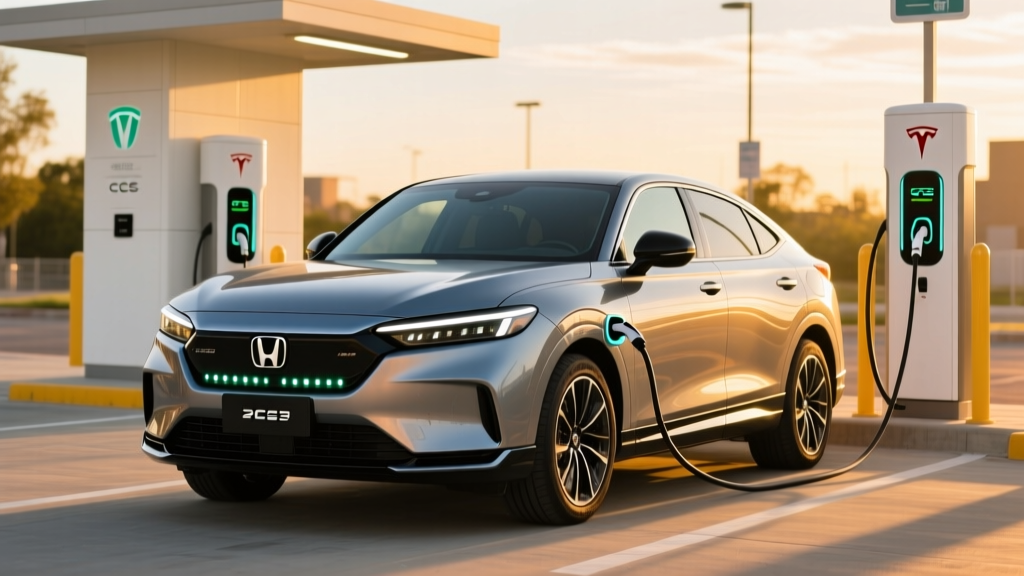
Charging speed is where Tesla still holds an edge over most competitors, not just because of peak kW but because of network reliability.
| Charging Level | Power | Speed / Time | Notes |
|---|---|---|---|
| Level 1 (120V) | ~1.4 kW | ~4–5 mi/hr | Emergency/trickle only |
| Level 2 (240V, 48A) | 11.5 kW | ~44 mi/hr | Full charge in ~7.5 hrs; requires NACS wall connector or J1772 adapter |
| DC Fast (V3 Supercharger) | Peak 250 kW | 10–80% in ~25 min | Sustained ~170–200 kW through 50% SoC, then tapers |
| DC Fast (V4 Supercharger) | Up to 250 kW (current vehicles) | Similar to V3 | V4 stalls support future higher-power vehicles |
| DC Fast (CCS via adapter) | Up to 150–350 kW (station dependent) | Varies | EA, EVgo compatible with Tesla CCS adapter (included) |
The charge curve matters more than the peak number. The Model Y holds near 250 kW only briefly (roughly 10–20% SoC), then settles into a 170–200 kW plateau through about 50%, tapering further above 80%. The 10–80% time of ~25 minutes is realistic at a V3 stall that isn't shared. Tesla's NACS connector is now the North American standard, meaning the Model Y has first-party access to every Supercharger plus an expanding network of NACS-equipped Electrify America and EVgo stations — a genuine advantage over CCS-only rivals.
Performance, Ride, and Interior: Refined but Firm
The dual-motor AWD setup delivers 384 hp and a 4.8-second 0–60 time, which is brisk for a family SUV. Throttle response is instant and linear, as expected from a BEV. Where the Model Y shows its age — even post-refresh — is ride quality. The suspension is tuned firm, and 20-inch wheels (standard on Long Range) transmit more road imperfections than a Hyundai Ioniq 5 or Ford Mustang Mach-E on comparable rubber. Road noise is noticeably improved in the Juniper generation thanks to acoustic glass and added insulation, but it's still not Lexus-quiet.
Interior updates for 2026 include ventilated front seats (finally), a rear 8-inch touchscreen for passengers, ambient lighting, and power-folding second-row seats. Cargo volume is 30.2 cu ft behind the second row and 72.1 cu ft with seats folded — competitive with the segment. The front trunk (frunk) adds 4.1 cu ft, useful for charging cables or a small bag. Rear legroom is 41.6 inches, adequate for adults on longer trips.
On the tech side, the 15.4-inch center touchscreen runs Tesla's latest software, which remains the most responsive and feature-rich infotainment system in any EV. Navigation with live Supercharger routing, over-the-air updates, Sentry Mode, and the Tesla app ecosystem are all best-in-class. The trade-off: there are no physical buttons for climate or volume, which frustrates some buyers and has drawn scrutiny from NHTSA regarding touchscreen-only gear selectors in certain scenarios.
Pricing, Trims, and Federal Tax Credit Eligibility
| Trim | MSRP | Est. After $7,500 Credit* | Notes |
|---|---|---|---|
| Long Range AWD | $44,990 | $37,490 | Qualifies if buyer meets income caps and battery sourcing rules hold |
| Performance AWD | $48,990 | $41,490 | Same credit eligibility; 0–60 in 3.5 sec |
*Federal §30D credit is not guaranteed for every buyer. As of 2026, the IRS requires:
- MSRP cap: SUVs must be under $80,000 — both Model Y trims qualify.
- Buyer income cap: Modified AGI must not exceed $150,000 (single), $225,000 (head of household), or $300,000 (joint).
- Battery sourcing: Critical minerals and battery components must meet phased-in percentages from US or FTA-partner countries. Tesla's Austin-built packs have largely met these thresholds, but specific eligibility can shift with supply chain changes.
- Point-of-sale transfer: Qualified buyers can apply the credit as an immediate price reduction at the dealer, subject to IRS registration.
Always verify eligibility on fueleconomy.gov at the time of purchase, as sourcing compliance is updated periodically. Consult a tax professional for your specific situation.
Model Y vs. the Competition: Why Tesla Still Wins on Paper
The refreshed Model Y competes directly with the Hyundai Ioniq 5, Kia EV6, Ford Mustang Mach-E, and the upcoming Volkswagen ID.4 refresh. Here's how it stacks up on the metrics buyers actually care about:
Efficiency: At 122 MPGe combined (28 kWh/100 mi), the Model Y Long Range is among the most efficient AWD electric SUVs sold. The Ioniq 5 AWD is close at 113 MPGe, but the Mach-E Extended Range AWD trails at ~101 MPGe. Over 12,000 miles/year, that efficiency gap translates to real electricity cost savings.
Charging network: No competitor matches Supercharger access. While the NACS standard is opening the network to Ford, GM, and Rivian owners in 2026, Tesla owners still get native plug-and-charge with no adapters and priority routing in the Tesla navigation system.
Software and OTA: Tesla's over-the-air updates remain the deepest in the industry, adding features (not just bug fixes) years after purchase. Competitors are closing the gap, but none match the cadence or scope.
Ride and comfort: This is where rivals win. The Ioniq 5 and EV6 ride more compliantly, and the Mach-E has a more traditional, button-heavy interior that appeals to EV-curious buyers transitioning from gas cars.
Autopilot and FSD: Still Level 2, Still Requires You
Autopilot (standard) provides adaptive cruise + lane centering. FSD (Supervised) adds automatic lane changes, traffic light/stop sign response, and city street navigation. The driver must remain fully engaged at all times. This is not self-driving. Level 4 robotaxi service (Waymo, Zoox) operates without a driver in geofenced areas — Tesla does not offer this.
Tesla's Autopilot is standard and competent for highway cruising. Full Self-Driving (Supervised), a $8,000 add-on or $99/month subscription as of 2026, handles more complex scenarios but requires constant vigilance. It has improved significantly in urban environments, but IIHS and NHTSA data continue to show that Level 2 systems, across all brands, can foster over-reliance. Budget-conscious buyers should skip FSD and invest in a quality home Level 2 charger instead.
Ownership Costs, Warranty, and Long-Term Outlook
Tesla covers the Model Y battery and drive units for 8 years or 120,000 miles (whichever comes first), with a minimum 70% capacity retention threshold during that period. The limited vehicle warranty is 4 years / 50,000 miles. Real-world degradation data from fleet sources suggests NMC packs in Teslas lose roughly 8–12% capacity over the first 100,000 miles, with the curve flattening significantly afterward.
Insurance remains a pain point: the Model Y is one of the more expensive EVs to insure, averaging $2,200–$2,800/year depending on state and driver profile — roughly 25–40% higher than a comparable gas-powered RAV4. Get quotes before committing.
Total cost of ownership over 5 years still favors the Model Y over gas alternatives for most buyers, thanks to lower fuel and maintenance costs, but the advantage narrows if you lack home charging and rely exclusively on DC fast charging at $0.35–$0.50/kWh.
Pros
- Best-in-class efficiency (122 MPGe combined)
- Supercharger network: 6,000+ V3/V4 stalls in North America with native plug-and-charge
- Strong real-world range (~275 mi highway, ~300 mi city)
- Fast DC charging: 10–80% in ~25 minutes
- Class-leading software, OTA updates, and app integration
- Spacious cargo area (72.1 cu ft max) and practical frunk
- Federal §30D tax credit eligible (subject to buyer/sourcing rules)
Cons
- Firm ride quality, especially on 20-inch wheels
- No physical buttons — all controls via touchscreen
- Insurance premiums significantly above segment average
- FSD ($8,000) is expensive and still Level 2, not autonomous
- NMC battery loses more range in extreme cold than LFP alternatives
- Minimalist interior still polarizing; some materials feel mid-tier at this price
Who Should Buy the 2026 Model Y — and Who Should Look Elsewhere
- You road-trip frequently and want the most reliable DC fast-charging network
- You value efficiency and want to minimize per-mile electricity cost
- You want a tech-forward cabin with best-in-class software
- You have home Level 2 charging and can take advantage of cheap overnight rates
- Ride comfort is your top priority (try the Ioniq 5 or EV6)
- You want physical buttons and a more traditional cockpit (Mach-E, ID.4)
- You live in extreme cold and want LFP chemistry or a larger battery buffer
- You want a third row (Kia EV9 or upcoming Tesla Model Y 7-seat is limited)
Frequently Asked Questions
What is the real-world range of the 2026 Tesla Model Y?
The EPA rates it at 320 miles, but expect ~265–285 miles on the highway at 70–80 mph and ~230–260 miles in sub-30°F weather. City and suburban driving with regenerative braking gets closest to the sticker number, around 295–315 miles.
How fast does the Model Y charge at home and on the road?
At home on a 240V/48A Level 2 Tesla Wall Connector, it charges at 11.5 kW, adding about 44 miles of range per hour (full charge in ~7.5 hours). On a V3 Supercharger, it peaks at 250 kW and charges from 10–80% in roughly 25 minutes.
Does the 2026 Model Y qualify for the $7,500 federal EV tax credit?
It can, but eligibility depends on your income (under $150K single / $300K joint), the vehicle's MSRP (under $80K for SUVs — both trims qualify), and battery-sourcing compliance at time of purchase. Check fueleconomy.gov and consult a tax professional before relying on the credit.
Is the Model Y worth buying over the Ioniq 5 or Mach-E?
If charging network access, efficiency, and software are your priorities, yes. If ride comfort, interior button layout, or a more traditional dealership experience matter more, the Ioniq 5 and Mach-E are strong alternatives worth test-driving.
What are the biggest drawbacks of the Model Y?
Firm ride quality, a touchscreen-only interface with no physical controls, above-average insurance costs, and an $8,000 FSD package that remains Level 2 (not self-driving) are the most common owner complaints.
Is Tesla stock soaring a reason to buy (or avoid) the car?
Stock performance and product quality are separate decisions. The 2026 Model Y is a strong EV on its own merits. A rising stock price reflects investor confidence in volume and margins — it doesn't make the car better or worse for you. Buy based on your commute, charging access, and budget, not the ticker.